















How to Avoid Long Queues at Popular Ujjain Attractions
Discover how to avoid long queues at popular Ujjain attractions. Master the art of timing, pre-booking Bhasma Aarti passes, and using insider strategies for a peaceful, crowd-free darshan at Mahakaleshwar, Kal Bhairav, Harsiddhi, and more.


The Pre-Dawn Gateway and the Magic of the Early Morning Window
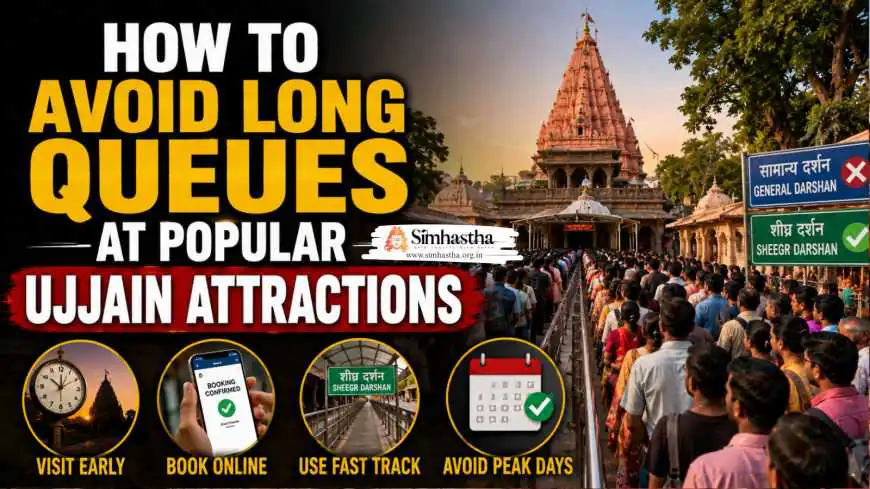
The single most transformative piece of advice for the Ujjain pilgrim is deceptively simple, and it is the same advice that has been whispered by seasoned devotees for centuries: wake up before the sun. The pre-dawn hours, from the moment the great temple gates open until about an hour after sunrise, are a sacred, liminal time when the city is still half-dreaming, the air is cool and fragrant with incense, and the crushing crowds of the day have not yet materialised. At Mahakaleshwar, the general darshan begins shortly after the Bhasma Aarti concludes, typically around 6:00 AM. If you are not attending the aarti itself, arriving at the temple by 5:30 AM and joining the general queue immediately after the aarti crowd disperses will often grant you a darshan that is not only significantly shorter—often under thirty minutes—but also remarkably peaceful. The lingam is still damp and fragrant from the sacred ash and the earlier ablutions, and the priests, though already at work for hours, are moving with a more deliberate, less harried rhythm. The early morning window is not just about avoiding the queue; it is about experiencing the temple in its most intimate, unguarded, and authentically sacred state. The same principle applies to almost every major shrine in Ujjain: Harsiddhi Mata in the gentle morning light, before the tour buses arrive, is a sanctuary of quiet feminine grace. Kal Bhairav in the early hours, before the smell of country liquor becomes overpowering and the queue snakes out into the street, offers a fierce but strangely calm darshan. The pilgrim who conquers the temptation to sleep in has already won the most important battle of the day. ⏰
The Digital Key and Mastering the Online Pass and the Official Portal
For the most sought-after ritual in Ujjain, the pre-dawn Bhasma Aarti, there is only one strategy that eliminates the queue entirely: book your pass online, weeks in advance, through the official Shri Mahakaleshwar Temple Management Committee portal. The era of arriving at the temple counter at 3:00 AM, hoping for a miracle, and then being bitterly disappointed is, for the digitally literate pilgrim, mercifully over. The passes are released in limited batches, and they sell out with the speed of a Tatkal train ticket, but they are absolutely attainable if you know your travel dates and you are ready at your computer or phone the moment the booking window opens. An official Bhasma Aarti pass is not merely a ticket; it is a golden key that unlocks a separate, fast-tracked queue, a designated, uncrowded space within the sanctum, and an experience of the sacred ash ritual that is immersive, profound, and free from the desperate, crushing press of the general crowd.
The same digital strategy applies, albeit in a less formalized way, to other temples. While Kal Bhairav and Harsiddhi do not have a complex online pass system, the growing digital infrastructure of the Simhastha 2028 planning means that more and more special darshan and puja bookings are migrating online. The pilgrim who checks the official temple websites and the Madhya Pradesh Tourism portal before their journey, and who books whatever is bookable, is a pilgrim who glides past a great deal of unnecessary physical waiting. A crucial warning, however, must be etched into every pilgrim's consciousness: never, under any circumstances, buy a "VIP pass" from a tout or a stranger outside the temple. These are, without exception, frauds. The official pass is the only pass. The money you hand to a smiling, lying stranger in the lane is the price of a bitter, humiliating lesson. The official portal is the only true shortcut. 💻
The Day-of-Week Compass and Choosing the Quietest Days for Each Temple
Ujjain's temples, like the deities they house, pulse with distinct rhythms according to the ancient Vedic calendar. To know which day to visit which shrine is to possess a sacred compass that guides you effortlessly away from the densest crowds. The most important rule of all is simple, brutal, and non-negotiable: avoid Mahakaleshwar, Kal Bhairav, and all major Shaivite shrines on a Monday. Monday, or Somvar, is the day of Lord Shiva, and the city of Mahakal transforms into a solid, slow-moving ocean of saffron-clad devotees. The queues can stretch for kilometers and last for six, eight, even ten hours. Unless you are a pilgrim who specifically seeks the intense, collective, and overwhelming energy of the Monday crowd as a spiritual practice in itself, you should schedule your primary darshans for any other day of the week.
Trending Guides Now

Ujjain Simhastha 7 Day Itinerary for Families

Is Phone Allowed in Mahakaleshwar Temple Ujjain?

How Many Days Are Enough for Ujjain? Complete Trip Planner

How to Travel Inside Ujjain During Simhastha 2028: Routes, Maps and Movement Plans

Ujjain Railway Station to Mahakaleshwar Temple Distance (2026 Guide)

Ujjain Simhastha 2028 Dates Announced: Full Shahi Snan & Event Timeline
Ujjain Railway Station to Kal Bhairav Temple: Distance, Auto Fare and Best Route

Ujjain Simhastha Update: CM Mohan Yadav Reviews 2028 Works
Tuesday is the day of Mangal (Mars), and the Mangalnath Temple will be at its busiest, drawing devotees from across the country for the Mangal Dosh Nivaran puja. If your personal astrology demands a Tuesday visit, you must embrace the crowd as part of the remedy. But if you are a general pilgrim seeking a peaceful riverside sunset, a Wednesday or Thursday visit to Mangalnath will offer you the ghat almost to yourself. Wednesday, Thursday, and Friday are, generally, the most peaceful days across Ujjain's temple circuit. The crowds are local, the queues are manageable, and the atmosphere is one of quiet, daily devotion rather than festival frenzy. The simple act of shifting your pilgrimage by a single day, from Monday to Wednesday, can transform the entire experience from a grueling physical endurance test into a serene and deeply personal spiritual journey. 🗓️
The Temple-Specific Playbook and Beating the Queue at Every Major Shrine
Beyond the general principles of timing and booking, each major temple in Ujjain has its own specific, often unspoken, architecture of crowd flow, and the wise pilgrim learns to navigate these micro-geographies.
Mahakaleshwar Temple: The magnificent Mahakal Lok corridor has revolutionized the queue experience, transforming the once-claustrophobic crush of the old city lanes into a wide, organized, and aesthetically uplifting flow. The key here is to understand that the corridor itself is a fast-track pathway. Entering through the official Mahakal Lok entrance, rather than trying to find a "shortcut" through the old city alleys, is almost always faster and far less stressful. If you have a Bhasma Aarti pass, you will be directed to a separate, dedicated entry line. Without a pass, the general queue moves with a steady, predictable rhythm, and the early morning window is your greatest ally.
Kal Bhairav Temple: The temple is compact, and the queue, which often snakes through the narrow lane, can feel intimidating. However, the ritual itself is swift and efficient. The priests handle each devotee with practiced speed. The key to a shorter wait here is, again, an early morning visit on a non-Sunday, non-Tuesday. The dedicated offering queue moves faster than the general darshan queue, so if you are bringing a sealed bottle of liquor, you are in the faster lane by default.
Harsiddhi Mata Temple: The vast, open courtyard of Harsiddhi absorbs crowds remarkably well. There is rarely a sense of crushing claustrophobia, but the queue for the inner sanctum can build up on festival evenings. Visiting in the late morning or early afternoon on a weekday will often grant you a darshan with only a handful of other devotees, allowing you to linger in the serene, red-hued courtyard in near solitude.
Mangalnath Temple: This temple is, by its location on the quieter southern bank of the Shipra, naturally less crowded than the central shrines. The only day to actively avoid, unless you are there for a specific astrological reason, is Tuesday. On any other day, especially in the late afternoon before sunset, you can expect a peaceful, uncrowded, and deeply contemplative experience.

Bade Ganeshji Ka Mandir: This ancient temple, located a short, pleasant walk from the Mahakaleshwar temple, is a jewel. Because it is on the standard pilgrim circuit just after Mahakal, it experiences a mid-morning surge. The smartest strategy is to visit before you go to Mahakaleshwar, in the very early morning, when it is often completely empty, and you can offer your coconut and your prayers to the remover of obstacles in a profound, undisturbed silence. ✅
The Festival Season Strategy and the Art of Surrender Versus Avoidance
There are times when the entire concept of "avoiding the queue" becomes a spiritual oxymoron. The great festivals—Mahashivratri, the Mondays of Shravan, and the Simhastha Kumbh Mela—are not events from which you can gracefully extract yourself. The queue is the pilgrimage. The dense, sweating, chanting, and slowly moving river of humanity is the very body of the collective faith that you have come to join. If you choose to visit during these times, the strategy shifts from avoidance to management. For Shravan and Mahashivratri, pre-book your accommodation months in advance, arrive in the city a day early to acclimatize, and resign yourself, with a full and willing heart, to the long wait. Carry a generous supply of water, wear the most comfortable clothes you own, and shift your inner posture from one of impatient frustration to one of meditative surrender. The queue becomes your sadhana, the slow, shuffling steps a walking meditation, the chant of the crowd your mantra. For the Simhastha, the administration's entire, multi-crore infrastructure plan—the ring roads, the shuttle buses, the digital crowd density maps—is designed to manage, not to eliminate, the queue. The smart pilgrim uses the official Simhastha app, books the designated shuttles, and follows the real-time route guidance. The festival queue is the ocean; you cannot part it, but you can learn to float. 🚶
The Solo Pilgrim's Edge and the Single-Queue Shortcut
A quiet, unadvertised advantage in the great temple queues of India belongs to the solo pilgrim. A single person, moving alone through the dense, slow-moving crowd, can often slip into a small, unexpected gap that a family of five simply cannot occupy. The security guards, who are managing the flow with a practiced eye, will often wave a single devotee forward to fill a space, keeping the human river flowing smoothly. A couple traveling together can also benefit from this, moving as a compact, agile unit. The solo pilgrim also has the profound luxury of time. There is no restless child to soothe, no elderly relative whose physical limits must be constantly monitored. The solo pilgrim can arrive at 4:30 AM without a second thought, can wait with a calm, unpressured patience, and can linger in the sanctum's periphery for an extra few minutes after the darshan, simply absorbing the atmosphere, without feeling the tug of a group's collective schedule. This is not to say that families cannot have a peaceful darshan—they absolutely can, with careful planning—but the solo traveler possesses a natural, logistical lightness that is, in the crowded context of Ujjain's temples, a genuine and valuable spiritual asset. 🧍
Common Mistakes That Land You in the Longest Lines
A few predictable, easily correctable errors are responsible for a vast amount of unnecessary queuing. The first is the late start. The pilgrim who leaves their hotel at 8:00 AM has already surrendered to the day's peak crowd. The second is the leather mistake. Walking into the security check at Mahakaleshwar with a leather belt, wallet, or bag will get you pulled out of the queue, sent back to the lockers, and forced to start the entire, now much longer, process again. Wear a cotton belt or drawstring pants, and carry a simple cloth wallet. The third is the wrong gate. At Mahakaleshwar, the designated entry and exit points are clearly marked and enforced. Attempting to enter through the exit will result in a sharp, humiliating, and time-wasting rebuke. The fourth is the festival shock. Arriving on the first Monday of Shravan with the logistical expectations of a quiet Wednesday is a recipe for physical and emotional overwhelm. The final, and perhaps most spiritually significant, mistake is the inner attitude of entitlement. The pilgrim who fumes, pushes, and complains their way through the queue is in a self-created hell far more painful than the physical discomfort of the wait. The queue is not a personal insult; it is a congregation of souls, and your patience is a more valuable offering than any material item you could place at the deity's feet. ⚠️
The Inner Alchemy and the Spiritual Art of the Queue
The greatest masters of the Ujjain darshan are not necessarily those who find the shortest queue, but those who have learned the secret of transforming the queue itself into a sacred space. The long, slow wait in the Mahakal Lok corridor, surrounded by the carved stories of Shiva, the gentle sound of water, and the quiet, murmured prayers of fellow devotees, is not an obstacle standing between you and the divine. It is, if you allow it, the divine. The queue is a teacher of patience, a crucible of humility, and a silent, gentle reminder that you are not the centre of the universe. It is a time for chanting your mantra, for observing the faces of the faithful—the old woman in a faded cotton saree who has saved for years for this moment, the young couple holding hands with a quiet, nervous hope, the sadhu with eyes that have seen the inside of a Himalayan cave. Let the queue soften your ego. Let it wear down your impatience. Let it prepare you, physically and spiritually, for the fleeting, transcendent moment when your eyes finally meet the dark, ash-smeared stone of the lingam. The queue is the pilgrimage, and the pilgrim who understands this has already arrived. 🙏
Practical Pre-Darshan Checklist and Final Grace Notes
Before you even leave your hotel room, a simple, two-minute ritual can save you hours of waiting and a world of stress. Remove your leather belt. Transfer your phone, wallet, and a small amount of cash into a simple, non-leather cloth bag. Ensure your power bank is charged. Download your offline map of Ujjain and your Bhasma Aarti pass. Slip on your simplest, easiest-to-remove sandals. Take a deep, conscious breath, and set your intention: not to conquer the queue, but to experience the full, living, breathing journey of the darshan, of which the queue is an integral, sacred, and ultimately beautiful part. Leave your valuables and your impatience in the hotel safe. The Lord of Time, who has watched a thousand generations of pilgrims wait, and cry, and sing, and shuffle forward towards his ancient, south-facing gaze, is in no hurry. And neither, in the quiet, still centre of your heart, should you be. 🔱
Frequently Asked Questions