













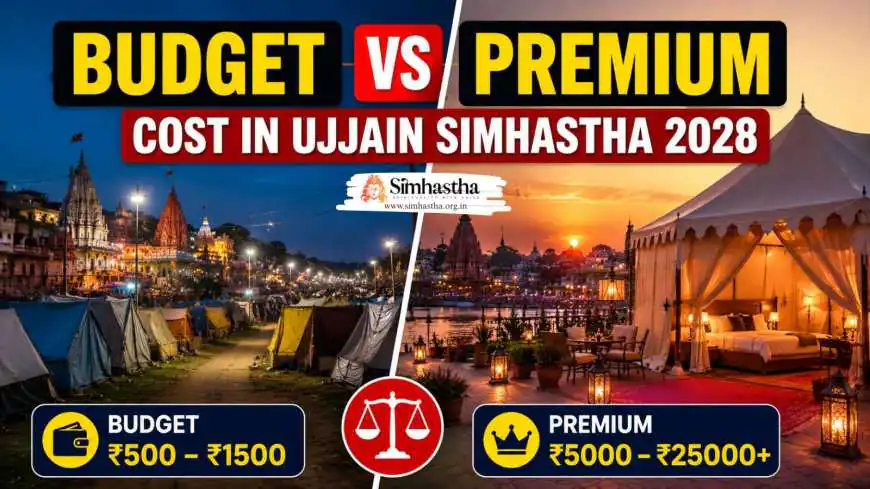
Budget vs Premium Cost in Ujjain Simhastha 2028
Budget vs premium cost comparison for Simhastha 2028. Real price differences across accommodation, food, transport, and experiences. Choose your pilgrimage style.


Two Pilgrims, One River, Very Different Price Tags
Imagine two people standing on the same Kshipra ghat, taking the same holy dip, whispering the same prayers. One spent ₹12,000 on her entire Simhastha trip. The other spent ₹1,20,000. Same divine experience. Wildly different bank balances afterward.
Neither is wrong. Neither is "better." They just chose differently.
And that's the truth about Simhastha 2028 that most guides won't tell you. The pilgrimage accommodates almost every budget—from the solo traveler sleeping in a ₹300 dharamshala to the NRI family booking a ₹15,000-per-night luxury suite. The spiritual outcome? Identical. The daily experience? Worlds apart.
I've done both ends of the spectrum. I've stayed in a basic lodge where the geyser worked only between 6 and 8 AM. I've also stayed in a service apartment with air conditioning, a private balcony, and someone to fetch my chai. Both trips brought me to Lord Mahakal's feet. But the journey itself—the textures, the comforts, the hassles, the surprises—could not have been more different.
Trending Guides Now
2 Days Ujjain Itinerary for Senior Citizens Easy Travel

Ujjain Simhastha 5 Day Itinerary for Couples

Safety Guidelines Every Ujjain Simhastha Pilgrim Must Follow
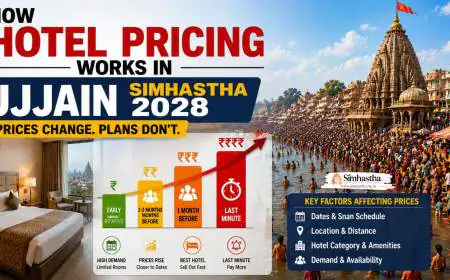
How Hotel Pricing Works in Ujjain Simhastha 2028

Ujjain Railway Station to Mahakaleshwar Temple Distance (2026 Guide)

Ujjain Simhastha 2028 Dates Announced: Full Shahi Snan & Event Timeline
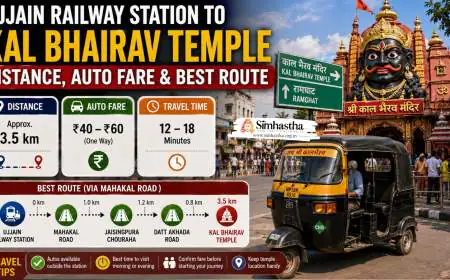
Ujjain Railway Station to Kal Bhairav Temple: Distance, Auto Fare and Best Route

Ujjain Simhastha Update: CM Mohan Yadav Reviews 2028 Works
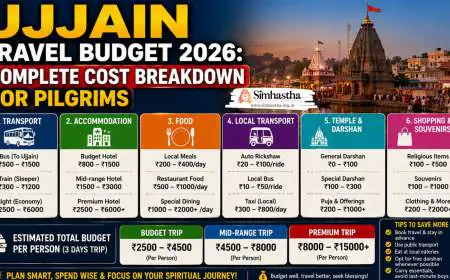
This guide lays out the real budget vs premium cost comparison for Ujjain Simhastha 2028. Category by category. Number by number. Without judgment. Because the right choice isn't the expensive one or the cheap one. It's the one that fits your life, your savings, and your soul. 💰
The Big Picture: What Different Budgets Actually Look Like
Before we dive into line items, let me paint you a picture of a full Simhastha trip (5 nights in Ujjain, plus travel from a major Indian city like Mumbai or Delhi) at three different spending levels.
Bare Bones Budget (₹10,000 - ₹15,000 per person)
Accommodation: Dharamshala or very basic lodge (₹400-₹800/night). Shared bathroom sometimes. Fan only, maybe old AC. No elevator. No restaurant. But clean enough and safe.
Food: Langars (free or ₹10-₹20 meals), self-cooked if kitchen access, occasional street food. Chai from roadside stalls. Reusable water bottle filled at RO stations.
Transport: Walking everywhere possible. Shuttle buses (₹10-₹30) or shared tempos (₹20-₹40) when walking isn't feasible. Maybe one auto ride for the entire trip.
Experience highlights: You're in the crowds, in the mess, in the middle of everything. You sleep where pilgrims have slept for generations. You eat what pilgrims eat. It's raw, real, and unforgettable. But also exhausting.

Who it's for: Young pilgrims, solo travelers, those with more time than money, anyone seeking an authentic "renunciant" experience.
Mid-Range Comfort (₹25,000 - ₹40,000 per person)
Accommodation: Mid-range hotel in Freeganj or Nanakheda (₹2,000-₹3,500/night). Private room with AC, attached bathroom, hot water, elevator. Clean, comfortable, reliable.
Food: Mix of self-catering (if service apartment) and restaurant meals. Thalis at Shree Bhojnalaya (₹120-₹180). Occasional nicer dinner. Fresh juice, packaged snacks.
Transport: Autos for most trips (₹60-₹100 per ride). Maybe a dedicated tempo for a full day of temple visits. Shuttle buses when convenient.
Experience highlights: You're comfortable but not isolated. You experience the pilgrimage fully but return to a room that lets you rest properly. You're not worrying about money constantly. You're not spending extravagantly either.
Who it's for: Families with children, couples, first-time pilgrims, anyone who wants a "nice but not crazy" trip.
Premium Luxury (₹60,000 - ₹1,00,000+ per person)
Accommodation: Luxury hotel (₹6,000-₹12,000/night) or large service apartment in prime location. Premium bedding, excellent bathrooms, room service, restaurant, parking, concierge. Maybe a room with a temple view.
Food: Hotel restaurants (₹400-₹800 per thali). Specialized vegetarian cuisine. Private dining. Fresh juices, mineral water, packaged snacks. Zero cooking or cleaning.
Transport: Private taxi on call for the entire duration (₹2,500-₹4,000/day). No waiting, no negotiating, no sharing. Car with AC. Driver who knows the shortcuts.
Experience highlights: You never stand in a queue (VIP darshan arranged by hotel). You never carry your own bags. You never eat standing up. You're protected from the chaos while still being part of it.
Who it's for: Senior citizens with health concerns, international travelers with limited time, those celebrating a special occasion, anyone who values comfort above all.
Accommodation: The Widest Cost Gap
Let me start with the biggest variable in any Simhastha budget: where you sleep.
| Accommodation Type | Normal Day Price (₹) | Simhastha Peak (₹) | What You Get |
|---|---|---|---|
| Dharamshala / ashram | 200 - 500 | 500 - 1,500 | Basic bed, shared bathroom, fan, no frills. Spiritual atmosphere. |
| Budget lodge (no AC) | 500 - 800 | 1,000 - 2,000 | Private room, attached bathroom (basic), fan, old building. |
| Budget hotel (AC) | 800 - 1,500 | 1,800 - 3,500 | Clean room, AC, hot water, TV, maybe elevator. No restaurant. |
| Mid-range hotel | 1,500 - 3,000 | 3,500 - 7,000 | Comfortable room, good AC, restaurant, elevator, parking, reliable service. |
| Service apartment (1BHK) | 2,000 - 3,500 | 4,500 - 8,000 | Full kitchen, living room, separate bedroom, modern building. |
| Luxury hotel | 3,500 - 6,000 | 8,000 - 15,000 | Premium room, excellent service, restaurant, concierge, temple views possible. |
| Premium service apt (2BHK) | 4,000 - 7,000 | 10,000 - 20,000 | Large space, full kitchen, multiple bedrooms, prime location. |
What the price difference actually buys you:
Budget (₹500-₹1,500 peak): You'll sleep. Probably fine. But the bathroom might be down the hall. The hot water might be scheduled. The walls might be thin. You'll hear the 5 AM temple bells—which could be a blessing or a curse depending on how tired you are.
Mid-range (₹3,500-₹7,000 peak): You'll sleep well. Private bathroom with instant hot water. AC that actually works. Room service if you want it. You won't think about your room much because it just... works. That's the luxury of mid-range—the absence of problems.
Premium (₹8,000-₹15,000+ peak): You'll sleep like royalty. Premium bedding. Blackout curtains. Spa-like bathroom. Someone turns down your sheets. Someone brings you morning chai. The room becomes part of the experience, not just a place to crash.
My take: For most families, mid-range is the sweet spot. You get comfort without the "am I paying too much?" anxiety. Service apartments (mid-range to premium) are especially good for groups or longer stays—the kitchen alone saves ₹1,000-₹2,000 per day on food.
Food and Daily Meals: You Can Eat Like a King or Like a Pilgrim
Food costs vary almost as wildly as accommodation—but with less correlation to quality. Some of Ujjain's best meals cost ₹20. Some of its most disappointing meals cost ₹500.
| Food Type | Budget (₹) | Mid-Range (₹) | Premium (₹) |
|---|---|---|---|
| Breakfast | 10-30 (chai + biscuit) | 80-150 (poha, upma, coffee) | 250-500 (hotel breakfast buffet) |
| Lunch | 20-50 (langar or simple thali) | 120-200 (restaurant thali) | 400-800 (luxury hotel restaurant) |
| Dinner | 30-60 (dal-roti from small eatery) | 150-250 (good thali or multiple dishes) | 500-1,200 (fine dining, multiple courses) |
| Snacks | 10-30 (samosa, banana, bhutta) | 50-100 (fresh juice, sandwich) | 150-300 (packaged premium snacks, coffee shop) |
| Water (daily) | 0-10 (RO refill station) | 40-80 (bottled water) | 100-200 (premium mineral water) |
| Daily total | ₹70-₹180 | ₹440-₹780 | ₹1,400-₹3,000 |
What the price difference actually buys you:
Budget (₹70-₹180/day): You're eating like a local pilgrim. Langar meals (free or ₹10-₹20) are simple, nutritious, and made with devotion. Street chai is ₹10 and delicious. You're not choosing restaurants—you're eating where it's available and cheap. The food is good. The experience is authentic. You might miss variety.
Mid-range (₹440-₹780/day): You're eating well. One thali meal at Shree Bhojnalaya (₹120-₹180) is filling and tasty. You can afford fresh juice (₹50-₹80). You can order multiple dishes at dinner. You have options—different cuisines, different restaurants. You're not worrying about the cost of a samosa.
Premium (₹1,400-₹3,000/day): You're dining. Hotel restaurants with linen napkins. Freshly squeezed pomegranate juice. Imported coffee. Multi-course thalis with 15 items. You're paying for ambiance, presentation, service, and air conditioning. The food isn't necessarily better than mid-range—just fancier.
My take: The mid-range food budget is the sweet spot for most travelers. You eat well, you have choices, and you're not spending an extra ₹1,000/day for tablecloths. That said, everyone should eat at least one langar meal. The taste of food made as seva (service) is different. And it's free.
Local Transport: Walking Is Free, Luxury Is Expensive
Getting around Ujjain during Simhastha is a spectrum from "my two feet" to "my private driver."
| Transport Type | Budget (₹) | Mid-Range (₹) | Premium (₹) |
|---|---|---|---|
| Walking (per day) | 0 | 0 | 0 |
| Shuttle bus (per ride) | 10-30 | 10-30 | 10-30 |
| Shared tempo (per ride) | 20-40 | 20-40 | 20-40 |
| Auto rickshaw (per 3km ride) | 60-100 (peak: 200-400) | 60-100 (peak: 200-400) | 60-100 (peak: 200-400) |
| Dedicated tempo for group (per day) | N/A | 1,500-2,500 (split) | 1,500-2,500 (single) |
| Private taxi with driver (per day) | N/A | N/A | 2,500-5,000 |
| Daily total (per person) | ₹0-₹50 | ₹100-₹300 | ₹500-₹1,500 |
What the price difference actually buys you:
Budget (₹0-₹50/day): You walk. A lot. You learn the city by foot. You discover small temples, hidden chai stalls, and quiet corners that autos zoom past. You're tired at the end of the day, but you've earned your rest. Sometimes you splurge on a ₹20 shared tempo when your feet hurt.
Mid-range (₹100-₹300/day): You take autos when convenient—to the temple in the morning, back to the hotel after lunch, to dinner in the evening. You walk some. You take shared tempos sometimes. You're not thinking about transport costs constantly, but you're not throwing money at every ride either.
Premium (₹500-₹1,500/day): You have a private driver on call. A car (with AC) picks you up from your hotel, waits while you're at the temple, and takes you to the next destination. No waiting. No negotiating. No crowds in your vehicle. You're insulated from the chaos.
My take: Most pilgrims overpay for transport during Simhastha. Autos charge 4x normal rates because they know you're desperate. The budget strategy (walk + shuttle bus) saves real money—we're talking ₹2,000-₹5,000 over a 5-day trip. The premium strategy (private taxi) is only worth it if you have elderly family members or very limited time. Mid-range is fine, but you're still paying the auto mafia's inflated rates.
Darshan and Temple Experiences: Can You Pay for Closeness to God?
This is the most emotionally charged category. Some say VIP darshan is "cheating." Others say it's practical. Here's what it actually costs.
| Experience | Budget (₹) | Mid-Range (₹) | Premium (₹) |
|---|---|---|---|
| Regular queue darshan | 0 | 0 | 0 |
| Small donation for slightly faster queue | 50-200 | 50-200 | 50-200 |
| VIP darshan ticket (hotel arranged) | N/A | 500-1,500 | 500-1,500 |
| Special puja booking (official temple) | 200-1,000 | 200-1,000 | 200-1,000 |
| Private guide for temple visit | N/A | N/A | 1,000-2,500 |
| Professional photographer for rituals | N/A | N/A | 1,500-3,000 |
| Total for darshan/pujas | ₹0-₹500 | ₹500-₹2,000 | ₹2,000-₹7,000+ |
What the price difference actually buys you:
Budget (₹0-₹500): You stand in the same queue as millions of other devotees. You wait 2, 4, 6 hours. You're packed tight, sweating, sometimes overwhelmed. And then you see Him. That moment—after all that waiting—hits differently. The struggle becomes part of the offering.
Mid-range (₹500-₹2,000): You pay for a VIP darshan ticket arranged by your hotel. You skip 70% of the queue. You wait 30-60 minutes instead of 3-6 hours. You're still in a crowd, but a smaller, more organized one. You see the deity, have your moment, and leave with time and energy for something else.
Premium (₹2,000-₹7,000+): You have a private guide who navigates every crowd, every checkpoint, every queue. You're escorted past thousands of waiting pilgrims. You have a photographer capturing your puja. You're in and out in 20 minutes. You barely feel the crowds.
My take: This is deeply personal. I've done both. The long queue taught me patience. The VIP pass gave me time. Neither is spiritually superior. If you're traveling with elderly parents or young children, VIP darshan is not a luxury—it's a necessity. If you're young and able-bodied, consider the regular queue. The wait becomes part of your pilgrimage story.
Sample Side-by-Side: Two Real 5-Day Simhastha Trips
Let me show you exactly how these categories add up for two different pilgrims traveling from Delhi.
Budget Pilgrim: Ramesh (28, solo, from Delhi)
| Expense Category | Cost (₹) | Notes |
|---|---|---|
| Train (Delhi-Ujjain return, sleeper class) | 1,200 | Booked 120 days in advance |
| Accommodation (dharamshala, 5 nights) | 3,000 | ₹600/night, basic but clean |
| Food (langar + self-cooked + street) | 800 | ₹160/day average |
| Local transport (walking + 2 shuttle buses) | 100 | Mostly walked everywhere |
| Darshan/offerings | 500 | Regular queue, small donations |
| Misc (water, snacks, phone charging) | 300 | |
| Emergency buffer (unused, returned) | 500 | |
| Total | ₹6,400 |
Ramesh's experience: He walked 15,000 steps daily. He ate simple meals. He waited 4 hours for Mahakal darshan and cried when he finally reached the sanctum. He slept on a thin mattress but slept deeply. He returned home exhausted, transformed, and ₹6,400 poorer. Worth every paisa.
Premium Pilgrim: The Mehta Family (4 people, from Delhi)
| Expense Category | Cost (₹) | Notes |
|---|---|---|
| Train (Delhi-Ujjain return, 2AC for 4) | 16,000 | ₹4,000 per person return |
| Accommodation (2BHK service apartment, 5 nights) | 60,000 | ₹12,000/night peak rate |
| Food (hotel breakfasts, restaurant lunches/dinners) | 25,000 | ₹1,250/person/day average |
| Local transport (private taxi on call, 5 days) | 15,000 | ₹3,000/day |
| VIP darshan arrangements (4 people) | 4,000 | ₹1,000 per person |
| Special puja booking | 3,000 | |
| Misc (snacks, water, offerings, tips) | 8,000 | |
| Total for family of 4 | ₹1,31,000 | |
| Per person | ₹32,750 |
The Mehta family's experience: They walked less, waited less, and worried less. The grandparents rested comfortably in an air-conditioned apartment between temple visits. The children ate familiar food. Everyone slept well. They had a beautiful, smooth, comfortable pilgrimage. They spent ₹1,31,000. They'd do it again.
The Gray Area: Where Spending More Actually Makes Sense
Not all premium spending is foolish. Here's where I recommend spending up.
1. Elevator access if traveling with elderly. Pay ₹500-₹1,000 more per night for a hotel with an elevator. Your parents' knees will thank you.
2. 3AC or 2AC train class for overnight journeys. Sleeper class is fine for young solo travelers. For families or anyone over 50, spend the extra ₹500-₹1,000. The AC, cleaner sheets, and quieter coach are worth it.
3. Travel insurance. ₹1,000-₹2,000 for a family. This is not "premium." This is common sense. One medical emergency without insurance costs ₹50,000+. Just buy it.
4. Service apartment with kitchen for stays of 5+ nights. The kitchen pays for itself within 3 days. You'll save ₹1,000-₹2,000 daily on food.
5. VIP darshan for elderly or disabled family members. Standing for 4-6 hours in a crowd can be dangerous for seniors. ₹500-₹1,000 for a VIP pass is not extravagance. It's care.
Where Spending More Is Just Spending More
And here's where premium doesn't add value.
1. "Luxury" hotels near Mahakal Temple. You're paying for location, not quality. Many "luxury" properties in the old city are old buildings with new wallpaper. You'll get better quality in Freeganj or Nanakheda for half the price.
2. Fancy restaurants. Ujjain's best food is not in hotels. It's in small thali places, street stalls, and langars. A ₹500 restaurant thali is not 5x better than a ₹100 thali. Often it's worse.
3. Private autos for every single trip. Mix walking and shared transport. You'll save ₹2,000-₹3,000 over 5 days and experience the city more authentically.
4. Overpriced "spiritual" souvenirs. Rudraksha, gemstones, "holy" ash sold by touts near temples. These are often fake or marked up 500%. Buy from government emporiums or trusted shops recommended by your hotel.
5. Professional guides who promise "hidden" temples. Most of Ujjain's spiritual sites are well-signposted. A ₹2,000 guide is rarely necessary. Do your research before you go.
The Emotional Truth: No One Asks What You Spent
I've stood on the Kshipra ghat next to a millionaire in a silk kurta and a farmer in a torn dhoti. Both had tears in their eyes. Both were speaking to the same Lord. Neither asked the other about their hotel rate.
Simhastha 2028 will give you what you bring to it. Not what you pay for it.
The budget pilgrim who walks 10 kilometers to the temple and waits 5 hours in the sun might arrive more broken, more humble, more open than the premium pilgrim who glides through the VIP entrance. Or maybe not. Maybe the premium pilgrim, free from exhaustion and worry, has more space in their heart for the divine.
There's no answer. There's only your answer.
So look at your bank account honestly. Look at your family's needs honestly. Look at your own energy and patience honestly. Then choose. Budget or premium. Somewhere in between. It doesn't matter to the Kshipra. It only matters to you.
The river doesn't check your receipt. Neither should anyone else. 🙏
Frequently Asked Questions