













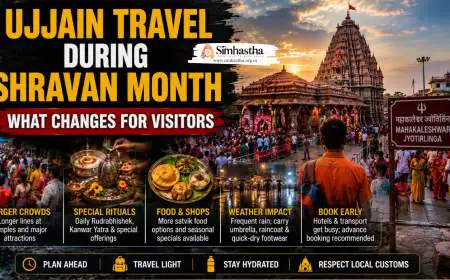

Family vs Solo Travel Budget for Ujjain Simhastha 2028
Planning Simhastha 2028? Compare family vs solo travel budget for Ujjain Simhastha with real costs, insider tips, and money-saving strategies.


What Does It Really Cost to Attend Simhastha 2028?
The Simhastha Kumbh Mela in Ujjain happens once every twelve years, and for millions of devotees, it is the pilgrimage of a lifetime. But here is the question that keeps people awake at night: how much money do I actually need to set aside? The answer depends entirely on whether you are traveling alone or bringing the whole family. A solo pilgrim can manage on a surprisingly lean budget by staying in dormitories and eating simple meals. A family of four needs more space, more privacy, and often more comfort — which changes the budget equation dramatically. This guide breaks down the family vs solo travel budget for Ujjain Simhastha 2028 with real numbers, honest insights, and practical strategies to help you plan a financially stress-free pilgrimage. No fluff. Just what you actually need to know.
Why Your Travel Style Changes Everything at Simhastha
Before we talk numbers, let me share something I learned the hard way. I attended Simhastha once as a solo traveler and once with my extended family. The experiences were so different that they barely felt like the same event.
As a solo traveler, I was flexible. I slept in a shared dharamshala room with five strangers. I ate when I was hungry from whatever stall looked clean. I walked everywhere. My total expenses for ten days were shockingly low.
With my family — parents, uncle, and two young cousins — everything changed. We needed a private room. We needed reliable AC because my uncle has health issues. We needed meals at predictable times. We needed transportation because my parents could not walk five kilometers in the heat.
Trending Guides Now

Ujjain Simhastha 7 Day Itinerary for Families
How Many Days Are Enough for Ujjain? Complete Trip Planner

Ujjain Simhastha 5 Day Itinerary for Couples
2 Days Ujjain Solo Female Travel Plan Safe Guide

Ujjain Railway Station to Mahakaleshwar Temple Distance (2026 Guide)

Ujjain Simhastha 2028 Dates Announced: Full Shahi Snan & Event Timeline

Ujjain Simhastha Update: CM Mohan Yadav Reviews 2028 Works
Omkareshwar Trip Budget Guide: Transport, Stay, Food and Local Travel Costs
The family vs solo travel budget for Ujjain Simhastha is not just about multiplying a solo budget by the number of people. It is a completely different category of spending. Let me show you exactly where the differences show up.
Accommodation: The Biggest Budget Difference
Where you sleep will eat up the largest chunk of your Simhastha budget. And this is where family vs solo travel diverges most dramatically.
Solo Traveler Accommodation Costs
As a solo pilgrim, you have options that families simply cannot use.
Dharamshala dormitory: Many dharamshalas offer dormitory-style rooms with four to ten beds. You get a cot, a blanket, and a shared bathroom. Cost: ₹200 to ₹500 per night.
Government tent city basic section: A small basic tent shared with one or two other solo pilgrims. Cost: ₹150 to ₹300 per night.
Solo private room in budget hotel: If you want privacy, the cheapest private room in a budget hotel near the ghats during Simhastha will cost ₹2000 to ₹4000 per night. This is expensive for solo travelers, but some choose it for the rest and privacy.

Average solo accommodation budget for 7 nights: ₹1,400 to ₹5,000 (depending on choices)
Family Traveler Accommodation Costs
A family of four cannot fit into a dormitory. You need private space. And during Simhastha, private space is the most expensive commodity in Ujjain.
Private tent city family tent: A four-person tent in a mid-range private tent city with cots, bedding, and shared bathroom block. Cost: ₹5000 to ₹8000 per night.
Premium private tent with attached bathroom: A larger tent with private attached bathroom, hot water, and meals included. Cost: ₹10,000 to ₹18,000 per night.
Hotel room for family: A single hotel room that accommodates four people (usually two double beds) during Simhastha. Cost: ₹12,000 to ₹25,000 per night depending on proximity to Mahakaleshwar Temple.
Average family accommodation budget for 7 nights: ₹35,000 to ₹120,000
The difference is staggering. A solo pilgrim might spend ₹3,000 on a week of sleeping. A family of four might spend ₹70,000 for the same number of nights. This is the single biggest factor in the family vs solo travel budget for Ujjain Simhastha 2028.
Food and Meals: Feeding One vs Feeding Four
Food costs at Simhastha are manageable if you know where to eat. But the multiplier effect of feeding multiple people adds up quickly.
Solo Traveler Food Costs
As a solo pilgrim, you can eat simply and cheaply.
Langar or community meal: Many dharamshalas and spiritual organizations offer free or donation-based meals during Simhastha. A plate of dal, rice, roti, and sabzi. Cost: ₹0 to ₹50 donation.
Street food near ghats: Kachori, samosas, poha, jalebi, chai. A filling meal from street vendors. Cost: ₹40 to ₹80 per meal.
Simple restaurant thali: Vegetarian thali at a basic eatery. Cost: ₹80 to ₹150.
Average solo daily food budget: ₹150 to ₹300 per day
Average solo food budget for 7 days: ₹1,050 to ₹2,100
Family Traveler Food Costs
A family of four needs more food, more variety, and often more reliable hygiene.
Family thali at mid-range restaurant: Four thalis at a clean vegetarian restaurant. Cost: ₹400 to ₹800 per meal.
Tent city included meals: Many private tent cities include three vegetarian meals in their package. This is expensive upfront but convenient and predictable. Cost: Already included in the ₹5000+ per night tent rate.
Packed snacks and water for family: Bottled water, biscuits, fruit, nuts for four people throughout the day. Cost: ₹300 to ₹500 per day.
Splurge meal at a good restaurant: One nicer dinner for the family during the week. Cost: ₹1200 to ₹2000.
Average family daily food budget: ₹800 to ₹1,500 (excluding included meals in tent packages)
Average family food budget for 7 days: ₹5,600 to ₹10,500
A solo pilgrim can eat well on ₹2,000 for a week. A family of four will spend at least three to five times that, even while eating modestly.
Transportation and Local Travel
Getting to Ujjain and moving around during Simhastha creates different cost structures for solo vs family travelers.
Solo Traveler Transport Costs
Train to Ujjain: Sleeper class or 3AC ticket from a major city like Mumbai, Delhi, or Ahmedabad. Cost: ₹500 to ₹1,500 one way.
Local movement: Walking is the primary mode for solo pilgrims. You walk to the ghats. You walk to the temple. You walk to your accommodation. Cost: ₹0.
Occasional auto-rickshaw: When you are tired or carrying luggage. Cost: ₹50 to ₹150 per ride (though auto drivers will try to charge more during Simhastha).
Average solo transport budget for 7 days: ₹1,500 to ₹3,000 (including round-trip train)
Family Traveler Transport Costs
Train to Ujjain: Four tickets. Sleeper or 3AC class. Cost: ₹2,000 to ₹6,000 one way.
Local movement: Families cannot walk everywhere, especially with children or elderly members. You will need auto-rickshaws or small taxis for many trips.
Auto-rickshaw for family: A single auto can fit four people. Cost during Simhastha: ₹100 to ₹300 per short trip. Longer trips or waiting charges add more.
Taxi for day trips: If you want to visit nearby temples like Omkareshwar or Indore, you will need a private taxi. Cost: ₹2,500 to ₹5,000 for a day trip.
Average family transport budget for 7 days: ₹8,000 to ₹20,000 (including round-trip train and local travel)
Holy Dip and Puja Expenses
The spiritual core of Simhastha involves bathing in the Kshipra River and making offerings at the temple. These costs are relatively fixed per person.
Solo Traveler Puja Costs
Holy dip: Free. The river accepts everyone equally.
Puja thali and offerings: A small basket with flowers, coconut, incense, and diyas. Cost: ₹50 to ₹200.
Dakshina or donation at temple: Whatever you feel comfortable giving. Cost: ₹50 to ₹500.
VIP darshan pass (optional): To skip the massive queues at Mahakaleshwar Temple. Cost: ₹200 to ₹500.
Average solo puja budget for 7 days: ₹500 to ₹1,500
Family Traveler Puja Costs
Holy dip for four: Free, but you may want to rent a small changing area or locker. Cost: ₹100 to ₹300 total.
Puja thalis for four: Either one large thali for the family or individual thalis. Cost: ₹150 to ₹500 total.
Dakshina and donations: The family may give more collectively. Cost: ₹200 to ₹1,000.
VIP darshan passes for four: Cost: ₹800 to ₹2,000.
Pandit or guide for rituals (optional): Some families hire a priest to guide them through the proper bathing and offering rituals. Cost: ₹500 to ₹1,500.
Average family puja budget for 7 days: ₹1,500 to ₹5,000
Miscellaneous and Emergency Expenses
Things go wrong during Simhastha. Phones die. Someone gets dehydrated. You need an extra blanket. These small costs add up differently for solo vs family travelers.
Solo Traveler Miscellaneous
Power bank rental or charging: Cost: ₹20 to ₹50 per charge.
Bottled water: ₹20 per liter. You will need 2-3 liters daily in the heat.
Medical supplies: ORS packets, bandages, basic medicines. Cost: ₹100 to ₹300.
SIM card or data pack: ₹200 to ₹500.
Average solo miscellaneous budget: ₹1,000 to ₹2,000
Family Traveler Miscellaneous
Power banks or charging for four devices: Cost: ₹100 to ₹200 per day if paying for charging.
Bottled water for four: 8-12 liters daily. Cost: ₹160 to ₹240 per day.
Medical supplies for family: More ORS, more medicines, possibly a doctor visit if a child gets sick. Cost: ₹500 to ₹2,000.
Emergency taxi to clinic (worst case): Cost: ₹300 to ₹600.
Extra bedding or blankets: ₹200 to ₹500 per item.
Toiletries and sanitary supplies for family: ₹500 to ₹1,000.
Average family miscellaneous budget: ₹3,000 to ₹8,000
Side-by-Side Budget Comparison: 7 Days at Simhastha 2028
Let me put everything together so you can see the family vs solo travel budget for Ujjain Simhastha 2028 in one clear picture. These are realistic ranges based on actual pilgrim spending from previous Kumbh Melas.
Solo Traveler – Bare Bones Budget (Dharamshala, Langar Food, Walking)
-
Accommodation (7 nights): ₹1,400 to ₹2,100
-
Food (7 days): ₹1,050 to ₹1,500
-
Transport (train + local): ₹1,500 to ₹2,500
-
Puja and donations: ₹500 to ₹1,000
-
Miscellaneous: ₹1,000 to ₹1,500
-
Total solo bare bones: ₹5,450 to ₹8,600
Solo Traveler – Comfort Budget (Private Tent, Restaurant Meals, Some Autos)
-
Accommodation (7 nights): ₹5,000 to ₹10,000
-
Food (7 days): ₹2,000 to ₹3,500
-
Transport (train 3AC + occasional auto): ₹3,000 to ₹5,000
-
Puja and donations: ₹1,000 to ₹1,500
-
Miscellaneous: ₹1,500 to ₹2,500
-
Total solo comfort: ₹12,500 to ₹22,500
Family of Four – Basic Budget (Shared Private Tent, Simple Meals, Limited Autos)
-
Accommodation (7 nights): ₹25,000 to ₹40,000
-
Food (7 days): ₹6,000 to ₹8,000
-
Transport (train sleeper + local auto): ₹6,000 to ₹10,000
-
Puja and donations: ₹1,500 to ₹2,500
-
Miscellaneous: ₹3,000 to ₹5,000
-
Total family basic: ₹41,500 to ₹65,500
Family of Four – Comfort Budget (Private Tent with Bathroom, Included Meals, Taxi as Needed)
-
Accommodation (7 nights): ₹60,000 to ₹90,000
-
Food (7 days – often included in tent price): ₹0 to ₹5,000 extra
-
Transport (train 3AC + local taxi/auto): ₹12,000 to ₹20,000
-
Puja and donations: ₹2,500 to ₹5,000
-
Miscellaneous: ₹5,000 to ₹8,000
-
Total family comfort: ₹79,500 to ₹128,000
Family of Four – Premium Budget (Hotel Room, AC, Private Transport, VIP Darshan)
-
Accommodation (7 nights): ₹80,000 to ₹150,000
-
Food (7 days – restaurant meals): ₹8,000 to ₹15,000
-
Transport (train 2AC or flight + private car): ₹20,000 to ₹40,000
-
Puja and donations: ₹5,000 to ₹10,000
-
Miscellaneous: ₹8,000 to ₹15,000
-
Total family premium: ₹121,000 to ₹230,000
As you can see, the range is enormous. A disciplined solo pilgrim can attend Simhastha 2028 for under ₹10,000. A family seeking comfort will likely spend ₹60,000 to ₹1,20,000. Neither is right or wrong. But knowing these numbers before you go prevents painful surprises.
Where Solo Travelers Save Money That Families Can't
Let me highlight the specific advantages that make solo travel so much cheaper at Simhastha.
Flexibility with accommodation. Solo travelers can sleep anywhere — a crowded dharamshala, a basic tent, even a sleeping bag in a designated shelter. Families need private, secure, and often larger spaces. That costs money.
No need for prime location. A solo pilgrim can stay 20 minutes walking distance from the ghats without much complaint. A family with young children or elderly parents needs to be closer, which commands higher prices.
Eating on the move. Solo travelers graze. A samosa here. A plate of poha there. Families need structured meals with seating and hygiene. Structured meals cost more.
Walking vs riding. Solo pilgrims walk miles without thinking about it. Families pay for autos and taxis for even medium distances.
Shared resources. Solo travelers join group pujas and share offerings. Families buy their own.
None of this means families are wasteful. It just means the family vs solo travel budget for Ujjain Simhastha is structurally different. You are not overpaying. You are paying for different needs.
Hidden Costs That First-Timers Never Anticipate
After watching hundreds of pilgrims arrive at Simhastha, I have noticed the same surprise expenses catching people off guard. Here are the hidden costs in the family vs solo travel budget for Ujjain Simhastha 2028.
Last-minute accommodation inflation. Even if you book in advance, some properties add "festival surcharges" at check-in. Ask about all fees before paying.
Deposit for room keys and linens. Many dharamshalas and tent cities require a refundable deposit. For a family, this could be ₹1000 to ₹3000 cash that you need upfront.
Pandit fees at the ghat. Once you reach the Kshipra River, pandits will offer to guide your bath and rituals. They expect payment. Solo pilgrims can politely decline. Families often feel more social pressure to accept and pay. Budget ₹200 to ₹500 per pandit interaction.
Storage lockers. If you arrive early before check-in or leave late after checkout, you may need to rent a locker for your luggage. Cost: ₹100 to ₹300 per bag per day.
Charging your electronics. Many budget accommodations do not have enough plug points. You will pay per device at charging stations near the ghats. A family with four phones and two power banks could spend ₹500 daily on charging.
Emergency purchases. You will forget something. Someone will need a specific medicine. A child will ruin their only pair of sandals. Keep a separate ₹2000 to ₹5000 emergency fund for a family, ₹500 to ₹1000 for solo travelers.
How to Save Money Regardless of Group Size
Whether you are traveling solo or with family, these strategies reduce your Simhastha 2028 budget.
Book accommodation at least ten months in advance. The earliest bookers get the best rates. Late bookers pay peak prices or find nothing.
Consider staying slightly farther from the main ghats. A 15-minute walk vs a 5-minute walk can cut your accommodation cost by 30-50%. The walk becomes part of your pilgrimage.
Eat langar food whenever possible. Free or donation-based community kitchens at Simhastha serve hygienic, simple meals. Solo travelers can eat most meals this way. Families can supplement langar with one paid meal per day.
Travel by train, not by flight or private car. Train tickets to Ujjain during Simhastha are regulated and affordable. Flights to Indore (the nearest airport) plus taxi to Ujjain cost significantly more.
Bring your own bedding, water bottle, and snacks. Buying these items in Ujjain during Simhastha means paying inflated pilgrimage prices. Pack from home.
Share resources with other families. If you know another family attending Simhastha, share a larger tent or apartment-style accommodation. Splitting costs four ways instead of two changes everything.
Avoid the absolute peak bathing days for holy dip. The main bathing dates draw the largest crowds and highest prices. Bathing a day before or after the peak is spiritually equally valid and logistically much cheaper.
Real Pilgrims Share Their Simhastha Budget Stories
I spoke with several people who attended the last Simhastha in 2016 to understand how their actual spending compared to their planning.
Rajesh, solo traveler from Pune: "I planned ₹15,000 for eight days. I spent ₹12,800. I stayed in a dharamshala dormitory, ate mostly langar food, and walked everywhere. The only unexpected cost was a ₹500 pandit fee at the ghat that I felt pressured to pay. Next time, I will politely say no."
The Mehta family (four people) from Ahmedabad: "We budgeted ₹80,000 for seven days and spent ₹95,000. The accommodation cost more than expected because the private tent we booked turned out to be farther from the ghats than advertised. We ended up taking more autos than planned. Also, our children got dehydrated and needed medical help — that was an extra ₹3000 we had not anticipated."
Kavita, solo female traveler from Bangalore: "I stayed in a women-only section of a government tent city for ₹200 per night. My total seven-day expense was ₹7,500 including train fare from Bangalore. It was not comfortable. But it was exactly what I wanted — a true pilgrim experience without any luxury."
The Patil family (three generations, seven people) from Mumbai: "We spent ₹2,50,000 for ten days. That sounds insane, but we had elderly parents who needed AC and attached bathrooms. We booked two premium tents in a private tent city with meals included. Was it expensive? Yes. Was it worth it to see my 80-year-old father bathe in the Kshipra? Absolutely."
These stories show the honest truth about the family vs solo travel budget for Ujjain Simhastha 2028. You can spend very little. You can spend a lot. What matters is that your spending aligns with your needs and your values.
Booking Timeline to Lock in the Best Rates
The single most effective way to control your Simhastha budget is booking early. Here is a timeline for both solo and family travelers.
12 to 14 months before Simhastha 2028:
-
Research accommodation options (dharamshalas, tent cities, hotels)
-
Join online Simhastha planning communities
-
Set your budget range
10 to 12 months before:
-
Contact dharamshalas directly to ask about booking for Simhastha
-
Email private tent city operators for rates and availability
-
Begin following official Ujjain Simhastha social media channels
8 to 10 months before:
-
Book your accommodation. Pay deposits. Get written confirmations.
-
Book train tickets as soon as the booking window opens (IRCTC typically allows 120 days advance)
-
Arrange travel insurance (especially for families with elderly members)
6 months before:
-
Reconfirm all bookings
-
Create a detailed daily budget based on actual booked costs
-
Start purchasing essentials (bedding, medicines, toiletries)
3 months before:
-
Make a packing list
-
Arrange for any necessary medical checkups for family members
-
Set aside emergency cash
1 month before:
-
Reconfirm everything one last time
-
Print all bookings and confirmations
-
Inform your bank of travel dates (to avoid card blocks)
The Emotional Investment Matters as Much as the Financial One
I want to end this budget breakdown with something softer than numbers. The family vs solo travel budget for Ujjain Simhastha 2028 is important. You should plan. You should save. You should book early and spend wisely.
But do not let budget anxiety steal your pilgrimage.
I have seen solo travelers sleeping on railway platforms, grinning from ear to ear because they just bathed in the Kshipra. I have seen families in premium tents, stressed about the cost, missing the joy right in front of them.
Money buys comfort. It does not buy devotion. It does not buy the feeling of standing on the ghat as the sun rises over millions of pilgrims. It does not buy the chant that gets stuck in your heart and stays there for years.
So plan your budget. Save your rupees. Book your tent or your dharamshala or your hotel room. And then let go. The river does not check your bank account before blessing you. 🙏
Frequently Asked Questions