



























How to Plan a Temple-Focused Ujjain Trip Without a Guide
Learn how to plan a temple-focused Ujjain trip without a guide—from booking Bhasma Aarti online to navigating temples, transport, and budget. Your complete DIY pilgrimage guide.



How to Plan a Temple-Focused Ujjain Trip Without a Guide
Let me tell you a secret: you don't need a guide to experience Ujjain. 🕉️
I know what you're thinking. "But isn't Ujjain complicated? Won't I get lost? Don't I need someone to explain the rituals?"
The honest answer? No.
Ujjain is one of India's most pilgrim-friendly cities. Its temples are clustered, its people are helpful, and its spiritual energy is so palpable that you could feel it blindfolded. With a little planning—and this guide—you can navigate every sacred step of this ancient city completely on your own.
Trending Guides Now

Ujjain Temple Photography Rules Every Visitor Should Know

Ujjain Simhastha 5 Day Itinerary for Couples

2 Days Ujjain Itinerary: Complete Temple Darshan Plan
Surat to Ujjain Travel Guide: Routes, Distance and Time

Ujjain Railway Station to Mahakaleshwar Temple Distance (2026 Guide)

Ujjain Simhastha 2028 Dates Announced: Full Shahi Snan & Event Timeline

How ISKCON Ujjain Engages Young Devotees Through Programs

Benefits of Becoming a Simhastha Volunteer
Mahakaleshwar Temple is one of the twelve Jyotirlingas and the only one where Shiva is worshipped in a south-facing form. It draws lakhs of pilgrims every year. Thousands of devotees visit daily, especially for the famous Bhasma Aarti.
But here's the thing: the city is compact. Most major temples and ghats are within 3–5 kilometers of each other. The old city zone around Mahakaleshwar Temple contains multiple temples within walking distance—Harsiddhi Temple is just a 5-minute walk, and Ram Ghat is about 1 kilometer away.
So take a deep breath. Let go of the anxiety. And let me show you exactly how to plan a temple-focused Ujjain trip without a guide—from the first click of the booking button to the last glimpse of the Shipra River at sunset. 🙏✨
🗓️ Step 1: Choose Your Dates Wisely
The first rule of a successful self-guided Ujjain trip is simple: pick the right time to visit.
The Best Season: October to March
The best time to visit Ujjain is from October to March, when temperatures range from a pleasant 15°C to 30°C. The weather is ideal for temple visits, Mahakaleshwar darshan, and sightseeing.
February is the most comfortable month for covering all of Ujjain's temples. March is extraordinary because Holi celebrations in Ujjain are among the oldest in India.

What to Avoid
-
April to June: Scorching heat. Temple hopping becomes exhausting.
-
July to September: Monsoon. While the Shipra River looks beautiful, the rain can make temple visits uncomfortable.
-
Festival peaks: If you're visiting during Shravan month (July–August) or Mahashivratri, be prepared for massive crowds. The temple zone is built for devotion, not speed, so move slowly and stay patient.
The Festival Factor
If you want to witness something truly extraordinary, plan your trip around:
-
Mahashivratri (February–March): The most powerful night for Shiva worship
-
Shravan month (July–August): Daily crowds swell with devotees carrying holy water
-
Navratri (March–April and September–October): The Harsiddhi Temple comes alive with its unique Deep Stambh lighting
-
Simhastha 2028 (March–May 2028): The largest religious gathering on earth—but be prepared for 40 crore pilgrims
🖥️ Step 2: Master the Online Booking System
This is the most important step. If you book nothing else, book your Bhasma Aarti in advance.
The Mahakaleshwar Temple Official Portal
The temple trust has introduced online services to make darshan and puja arrangements easier. All bookings must be done through the official portal:
👉 https://www.shrimahakaleshwar.mp.gov.in/
Only use the official portal to avoid fraudulent sites.
Step-by-Step Booking Process
-
Register or Login: Click on "Online Services" or "Darshan/Puja Booking." New users must register with name, mobile number, email, and ID proof.
-
Choose Your Service: The temple offers multiple online services:
-
Darshan Booking – General, VIP, Garbh Grah Darshan
-
Bhasma Aarti Booking – Limited seats, book early
-
Special Pujas – Rudrabhishek, Mahamrityunjaya Jaap, Navgrah Shanti, Pitra Dosh Nivaran
-
Donations/Seva – Contribute to temple activities
-
-
Select Date & Time: Temple timings are 4:00 AM to 11:00 PM (closed 11:00 AM – 12:00 PM).
-
Make Payment: Pay securely via UPI, Net Banking, Debit/Credit Card.
-
Download E-Pass: After payment, download or print the e-pass. Carry a valid photo ID along with the e-pass for entry.
The Bhasma Aarti: What You Need to Know
The Bhasma Aarti is the pre-dawn ritual where the Shivalinga is bathed with sacred ash. It takes place between roughly 3:00 AM and 5:00 AM daily and is considered the most powerful darshan of the day.
Here's what you need to know:
| Detail | Information |
|---|---|
| Time | 3:00 AM – 5:00 AM (booking required) |
| Online Cost | ₹200 per person |
| Booking Window | Opens roughly 30 days in advance |
| Peak Dates | Slots fill quickly—log in at 12:00 AM IST on release day |
| Documents Required | Government photo ID + booking confirmation print |
| Dress Code | Dhoti for men, saree for women is mandatory |
The temple administration releases additional slots for festival days and Mondays of Shravan month, but they go in minutes.
VIP Darshan Options
If you miss the Bhasma Aarti or want a faster darshan:
-
Garbh Grah Darshan: ₹750 (single), ₹1,500 (couple)
-
VIP Darshan (Sheeghra): ₹500 per person
-
Sthayi Sashtra (paid VIP queue): ₹250 per person—significantly faster than the free queue, especially on Mondays
Important Tips:
-
Arrive at least 30–45 minutes before your slot
-
Book only via the official portal
-
Refunds are not available—double-check date/time before payment
-
ID proof is mandatory—mismatch may lead to denial of entry
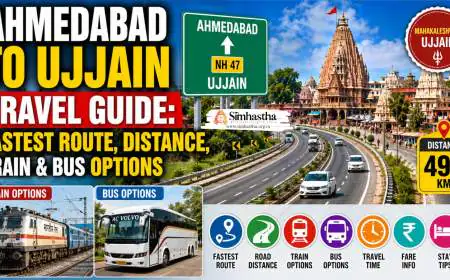
🚆 Step 3: Getting to Ujjain—Your Transport Options
By Train: The Pilgrim's Choice
Ujjain Junction (UJN) is well-connected to Delhi, Mumbai, Indore, Bhopal, and Ahmedabad.
| Route | Approx Time | Cost |
|---|---|---|
| Delhi to Ujjain | 14–15 hours | ₹500 – ₹1,800 |
| Indore to Ujjain | 1.5–2 hours | Regular trains and shared taxis available |
| Mumbai to Ujjain | Direct trains available | Varies by class |
Pro tip: From Indore, regular trains and shared taxis take 1.5–2 hours.
By Air: Fastest Option
The nearest airport is Devi Ahilyabai Holkar Airport (IDR) in Indore, located about 55 kilometers away.
-
Direct flights from Delhi, Mumbai, Bengaluru, Hyderabad, Pune
-
Flight + taxi: 4–5 hours including transfers, cost ₹3,000 – ₹6,500
-
Taxis are available outside the terminal for Ujjain
By Road: For the Adventurous
Ujjain is well-connected by road:
-
Indore: 53 km
-
Bhopal: 183 km
-
Ahmedabad: 402 km
-
Delhi: 774 km
Regular bus services connect Ujjain with Indore, Bhopal, Ratlam, Gwalior, and other cities.
🏨 Step 4: Where to Stay—Accommodation Made Simple
Budget Hotels Near Mahakaleshwar Temple
You don't need to spend a fortune. Here are some budget-friendly options near Mahakaleshwar Temple:
| Hotel | Distance from Temple | Approx Price |
|---|---|---|
| Hotel Shikhar Darshan | Closest to temple | Under ₹1500 |
| Hotel Satyam Palace | Near Mahakal area | Under ₹1500 |
| Hotel My Budget | 15 min walking | Budget-friendly |
| Hotel Suryodaya | Near major attractions | Budget-friendly |
Location matters: Staying in Madhav Nagar (1.2 km from temple) offers proximity but fewer pure vegetarian eateries. Freeganj is cheaper (₹400–800) but requires transport every time.
Booking Tips
-
Book at least 2-3 months in advance if visiting during festival season
-
Check if your hotel offers temple shuttle services
-
Look for hotels with pure vegetarian restaurants on-site
-
Read recent reviews—especially about cleanliness and hot water availability
🚶 Step 5: Navigating Ujjain Without a Guide
The Temple Geography
Ujjain's temples are not scattered randomly—they form natural clusters:
The Old City Cluster (Walkable):
The Outer Ring (Need Transport):
Transport Options
Auto-Rickshaws: The most popular and practical mode of transport for Ujjain temple tours. They are affordable, readily available, and can navigate narrow streets.
-
Short rides: ₹30-50
-
Longer rides to outer temples: ₹80-150
-
From railway station to temple: ₹100-150
E-Rickshaw (Toto): Ask to be dropped at "Char Dham Mandir" or "Bada Ganesh" side.
City Bus: ₹10 per ride.
Walking: The most authentic way to experience the spiritual heart of Ujjain. The narrow lanes around Mahakal Temple are filled with the sounds of temple bells, the scent of incense, and the energy of pilgrims.
Pro tip: For the cluster of temples around Mahakaleshwar, walking is unbeatable.
🏛️ Step 6: The Ultimate Temple-Focused Itinerary
One-Day Ujjain Plan (Fully Optimized)
This is a realistic, experience-focused plan designed from a spiritual traveller's perspective.
🌅 4:00 AM – Begin Your Day at the Ghats
Start at Ram Ghat, Dutt Akhada Ghat, or Bhukhi Mata Ghat. Witness:
-
Pre-sunrise silence
-
River mist
-
First temple bells
-
Soft chants
-
Pilgrims performing snan (holy dip)
The morning at Kshipra is a blessing by itself.
🔱 5:00 AM – Mahakaleshwar Temple
If you booked the Bhasma Aarti, you should already be inside by now. If not, 5:00 AM is still a great time for darshan. Inside the temple, experience:
-
Nandi Mandapam
-
Darshan of Mahakal
-
Deepam fragrance
-
Ancient stone carvings
-
Priest chants
-
South-facing Jyotirlinga energy
This single darshan gives peace for months.
🙏 6:30 AM – Harsiddhi Mata Temple
A 5-minute walk from Mahakaleshwar. This is one of the 51 Shakti Peethas and a must-visit. Spend about 45–60 minutes here.
The temple gets busy, but the move from one sacred spot to the next feels natural. Just follow the flow of the old city.
🍛 8:00 AM – Breakfast Break
Grab something simple and vegetarian near the temple corridor. Local favorites:
-
Poha (flattened rice with spices)
-
Jalebi (sweet spiral)
-
Kachori (fried stuffed pastry)
Budget: ₹50–150 per person.
🐉 9:00 AM – Kal Bhairav Temple
This temple is 7 km from Mahakal—take an auto (₹80-150). This is where liquor is offered as prasad—a unique tradition you won't find anywhere else.
Best time: Early morning or late evening. Weekends, festivals, and afternoons are highly crowded.
🪐 10:30 AM – Mangalnath Temple
About 6 km from Mahakal. Believed to be the birthplace of Mars—best for Mangal dosh related prayers. Early morning is best.
🐘 11:30 AM – Chintaman Ganesh Temple
Located along the Shipra River. Best visited before the day heats up, ideally around 7:00–8:00 AM.
🍽️ 1:00 PM – Lunch Break
Many places near the Mahakal corridor or railway station serve good thali food.
Malwa-style thali: ₹200–500 per person.
🧘 2:00 PM – Rest and Reset
Use this window to hydrate and reset. The temple area can be intense in the heat. Return to your hotel or find a quiet lane for rest.
🌊 4:00 PM – Ram Ghat and Shipra River
Head to Ram Ghat on the Shipra riverfront in the late afternoon, when the light softens and the ghat activity picks up.
This is the best time for:
-
A slow walk
-
People-watching
-
Daily ritual life
-
The setup for evening aarti
Give yourself 1–1.5 hours here. You can sit quietly, watch the water, or just wander the steps.
🪔 6:00 PM – Evening Aarti at Shipra River
Attend the evening aarti at Shipra River. Reach early for a peaceful experience. The ghat activity becomes more layered—pilgrims, offerings, sadhus, families, and the setup for evening aarti all give the riverbank its own rhythm.
🌃 7:00 PM – Mahakal Lok Corridor at Night
Don't miss this. The Mahakal Corridor is the city's most photographed walk. It's especially striking in the evening light, when the sculptures and open promenade feel calmer than the temple queue outside.
The lighting, sculptures, and spiritual atmosphere feel divine after sunset. The Light and Sound Show is an experience you should not miss.
Allocate at least 45–60 minutes.
🛍️ 8:30 PM – Shopping and Dinner
Before ending your day, explore the ritual items market near Mahakaleshwar. Browse:
-
Incense
-
Prasad boxes
-
Malas (prayer beads)
-
Flowers
-
Simple offerings
Keep your comparisons sharp—prices can vary, and some sellers near the busiest entry lanes will quote tourist rates first.
Two-Day or Three-Day Plan
If you have more time, consider:
Day 2:
-
Sandipani Ashram: Lord Krishna's education story
-
Gadkalika Temple: Associated with poet Kalidas. One of 18 MahaShaktipeeths, ideal for students, artists, and knowledge seekers
-
Bhartrihari Caves: Quiet heritage spot near Ganga Ghat
-
Baglamukhi Mandir: Powerful tantric temple for protection and victory
Day 3:
-
Rinmukteshwar Mahadev: Often overlooked but deeply powerful
-
Ganga Ghat (Mounteerth Ghat): Home to the 108-year Mahamrityunjaya Mahayagya
-
Vikram Kirti Mandir: Heritage stop with exhibits on Ujjain's history
📜 Step 7: The Dress Code—Don't Get Turned Away
This is non-negotiable.
For Men
-
Entering the sanctum requires traditional dhoti or sovala (a wrapped white cotton garment)
-
Western clothes not permitted in the inner sanctum
-
Dhotis are available for rent at the temple for ₹50–₹100
For Women
-
Saree or full-sleeved suit
-
Western clothes are restricted in the inner sanctum
General Rules
-
Shoes off before entering temples
-
Respectful attire—cover shoulders and knees
-
No loud vibes inside spiritual areas
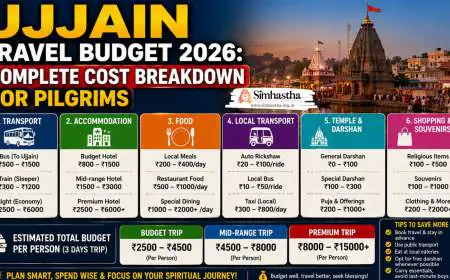
💰 Step 8: Budget Planning—What Will It Cost?
Estimated Costs for a 2-Day Trip
| Category | Budget | Mid-Range |
|---|---|---|
| Accommodation (2 nights) | ₹800–1,500 | ₹2,000–4,000 |
| Food (2 days) | ₹500–1,000 | ₹1,000–2,000 |
| Transport (local) | ₹300–500 | ₹500–1,000 |
| Bhasma Aarti | ₹200 | ₹200 |
| VIP Darshan (optional) | ₹500 | ₹500 |
| Total | ₹2,300–3,700 | ₹4,200–7,700 |
A realistic 2-day trip budget ranges from ₹6,000-12,000 including travel from major cities.
⚠️ Step 9: Common Mistakes to Avoid
❌ 1. Not Booking Bhasma Aarti Early
Many visitors assume tickets can be booked at the last moment. Due to high demand, bookings often get full weeks in advance.
✅ Solution: Book online well in advance. Check official booking dates regularly—it mostly opens 60 days before. Avoid agents claiming "guaranteed entry".
❌ 2. Skipping Mahakal Corridor at Night
Tourists visit the corridor during the day and leave, missing its true beauty.
✅ Solution: Visit the Mahakal Corridor at night. The Light and Sound Show is an experience you should not miss.
❌ 3. Not Visiting Harsiddhi Mandir
Many travelers focus only on Mahakal and skip Shakti temples.
✅ Solution: Visit Harsiddhi Mandir, one of the Shakti Peeths. Attend the evening aarti and witness the Deep Stambh.
❌ 4. Visiting Kal Bhairav at the Wrong Time
People go randomly without knowing ideal timings.
✅ Solution: Visit early morning or late evening.
❌ 5. Missing Shipra River Aarti
Many visitors skip the river believing it's optional.
✅ Solution: Attend evening aarti at Shipra River. Reach early for a peaceful experience.
❌ 6. Not Carrying Cash
Many auto drivers and small vendors prefer cash.
✅ Solution: Carry sufficient cash for auto rides, temple offerings, and small purchases.
🌅 Step 10: The Spiritual Mindset—Beyond the Checklist
Here's the thing about planning a temple-focused Ujjain trip without a guide: the guide isn't the point. The experience is.
Ujjain is not the kind of city you simply "visit"—it is a place you experience. A place that breathes ancient wisdom, temple bells, rituals, ascetic energy, and the living presence of Mahakal. People come here seeking peace, clarity, blessings, transformation, karmic release, or simply the feeling of standing in one of the oldest continuously lived spiritual cities in the world.
If you truly want to understand Ujjain's soul, you need more than a checklist:
-
2 days for pilgrims
-
3 days for spiritual seekers
-
4–5 days for meditative travellers
But even if one day is all you have, you can still create a powerful connection.
🙏 Final Thoughts: Your Self-Guided Pilgrimage Awaits
Planning a temple-focused Ujjain trip without a guide isn't just possible—it's empowering. You'll move at your own pace. You'll linger where the energy pulls you. You'll discover hidden corners that no guidebook mentions.
From the 4:00 AM Bhasma Aarti to the night-lit Mahakal Corridor, from the 5-minute walk to Harsiddhi to the 7-kilometer auto ride to Kal Bhairav—every step of this journey is designed to bring you closer to the divine.
Your checklist before you go:
-
✅ Book Bhasma Aarti online (30+ days in advance)
-
✅ Book accommodation (2+ months in advance for festivals)
-
✅ Download e-pass and carry ID proof
-
✅ Pack appropriate clothing (dhoti/saree for temple)
-
✅ Carry cash for autos and offerings
-
✅ Download offline maps of Ujjain
-
✅ Save the official portal: shrimahakaleshwar.mp.gov.in
Har Har Mahadev! 🙏🔱
Frequently Asked Questions