





























Ujjain Simhastha 2028 Budget Saving Strategy
Smart budget strategies for Simhastha Kumbh Mela 2028 in Ujjain. Cut costs on stay, food, travel without losing the spiritual experience.
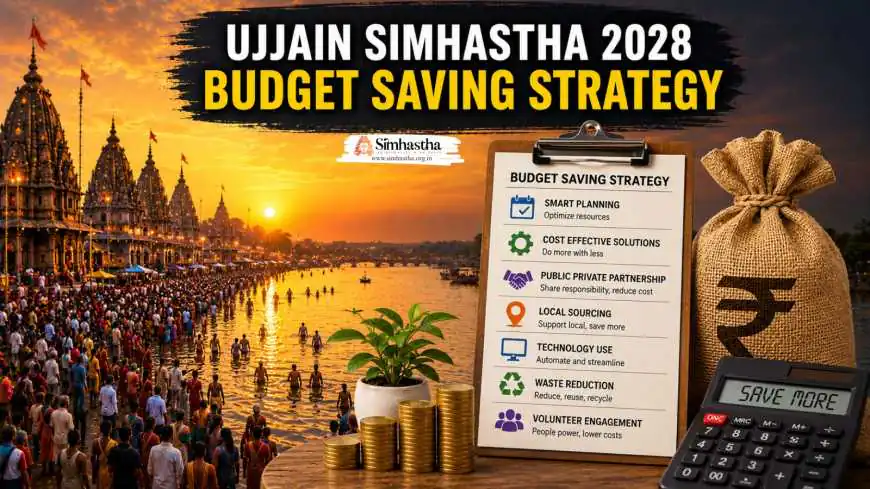


You Don't Need to Be Rich to Have a Sacred Simhastha
Twelve years of waiting. A lifetime of faith. And then comes the practical reality: how do you actually afford the Ujjain Simhastha 2028 without breaking your family's savings?
I've stood on the banks of the Kshipra during the last Kumbh, watching pilgrims from tiny villages and big cities alike. The ones with the deepest smiles weren't the ones who spent the most money. They were the ones who planned well, spent wisely, and understood something beautiful: spiritual travel shouldn't become financial trauma.
The truth is, Simhastha costs can vary wildly—from a modest ₹8,000 for a week to an eye-watering ₹80,000 for the exact same duration. The difference isn't luxury. It's information. It's timing. It's knowing where the system overcharges and where it doesn't.
This budget pilgrimage guide is everything I wish someone had handed me before my first Kumbh. No fluff. No judgment. Just real, actionable Simhastha 2028 budget strategies that protect both your wallet and your soul. Let's dive in.
Trending Guides Now
Ujjain Travel Budget 2026: Complete Cost Breakdown for Pilgrims
Ahmedabad to Ujjain Travel Guide: Fastest Route, Distance, Train & Bus Options

Kota to Ujjain Travel Guide: Routes, Distance and Travel Time

Ujjain Temple Tour by Auto, Taxi or Walking: Best Choice

Ujjain Railway Station to Mahakaleshwar Temple Distance (2026 Guide)

Ujjain Simhastha 2028 Dates Announced: Full Shahi Snan & Event Timeline
Mangalnath Temple Trip Budget: Puja, Local Transport, Food and Stay Planning
Omkareshwar Trip Budget Guide: Transport, Stay, Food and Local Travel Costs
Why Your Simhastha Budget Gets Destroyed (And How to Fix It)
Let me be blunt. Most pilgrims overpay for three reasons only.
First, they arrive on peak dates. The main shahi snan days see prices explode by 300-500%. Hotels know you have nowhere else to go. Autos know you're desperate. Even chai wallahs double their rates. The fix? Arrive two days before or after. Spiritually, the holy dip holds the same power. Financially, you save a fortune.
Second, they book Hotels Near Ram Ghat. That premium location costs 4x more than a perfectly comfortable stay 15 minutes away. One auto ride each way costs ₹60. Saving ₹4,000 per night on a hotel? That math works everywhere.
Third, they don't negotiate. In India, especially during large gatherings, prices are suggestions, not rules. Guesthouse owners expect bargaining. Auto drivers prepare for it. Even temple donation counters (unofficially) accept whatever you genuinely can give.
The Ujjain Simhastha 2028 budget saving strategy starts with acknowledging these three leaks and plugging them before you even book your train ticket.
The Golden Rule of Simhastha Spending
Here's a principle that has never failed me: spend on safety and health, save on comfort and convenience.

Let me explain.
Worth spending on: travel insurance (₹1,000-₹2,000 for a family), comfortable walking shoes (₹800-₹1,500), a reliable power bank (₹1,200), basic medicines (₹500), and one meaningful puja or donation that connects you deeply to the experience.
Safe to save on: fancy hotels (choose dharamshalas or budget lodges instead), restaurant meals (cook or eat at langars), private autos (walk or take shared tempos), souvenirs from touts (shop at government emporiums), and multiple temple visits in one day (slow down, choose quality over quantity).
This isn't about being cheap. It's about being intentional. Every rupee saved on overpriced comfort can either stay in your pocket or go toward something that genuinely matters to you.
Accommodation: Where Most Money Disappears
Let me walk you through real options for cheap Simhastha stay that won't make you feel like you're roughing it.
The Dharamshala Goldmine
Ujjain has dozens of dharamshalas that don't appear on any booking app. Shri Ramkrishna Mission, Geeta Bhawan, Anand Dham, and numerous akhara-run guesthouses offer clean, basic rooms for ₹300–₹800 per night. No surge pricing. No minimum stay. Just honest pilgrimage accommodation.
How to find them? Start calling 4-5 months before Simhastha 2028. Ask for "simple room with attached bathroom." Most don't take online bookings, but they'll note your name in a register. Send a family member or friend in Ujjain to book in person if possible.
Government Tent Cities
The Ujjain administration sets up subsidized tent accommodations near the bathing ghats. These are basic but safe—cots, shared toilets, drinking water, first aid. Prices range from ₹500–₹1,500 per person per night. The biggest advantage? Zero transport costs. You wake up, walk 200 meters, and you're at the holy river.
Register through the official Simhastha website when bookings open (around December 2027). These tents sell out within days.
Shared Service Apartments
For families or groups of 6-10 people, service apartments become surprisingly economical. A 3BHK in Nanakheda or Freeganj during non-peak mela days costs ₹4,000–₹5,500 per night. Split between two families? That's ₹2,000–₹2,750 per family. You get a full kitchen, multiple bathrooms, air conditioning, parking, and privacy.
The key is booking directly with the owner (search on Google Maps, not aggregators) and negotiating a weekly rate. Mention "pilgrimage travel" and "long stay"—owners often offer discounts.
Private Rooms in Local Homes
Here's a hidden gem. Many Ujjain families rent out a room or two during Simhastha. You live with locals, eat home-cooked food if you request, and pay ₹800–₹1,500 per night. Search on Facebook groups like "Ujjain Homestay Pilgrims" or ask in local forums. Always ask for a video call before sending any advance.
Food Strategies That Save Thousands
Eating during Simhastha can quietly drain ₹3,000-₹5,000 per person over a week. Here's how to eat well while protecting your Simhastha 2028 budget.
The Langar Network
Temples, mathas, and spiritual organizations run community kitchens offering free or ₹10-₹20 meals. The food is simple dal-roti-sabzi, prepared in large quantities, and surprisingly good. Locals know where these langars are. Ask any shopkeeper away from the main ghats, and they'll point you to the nearest one.
One langar meal per day saves a family of four ₹800-₹1,200. Over 6 days? That's ₹5,000-₹7,000 saved.
Self-Catering Is a Superpower
If your accommodation has a kitchen (even a basic one with a single induction stove), use it. Carry rice, dal, spices, tea, and sugar from home. Buy vegetables, milk, and bread from local markets away from the mela zone—prices there are normal, not inflated.
Breakfast of tea and biscuits? ₹50 for a family. Lunch of khichdi? ₹80. Dinner of dal-rice? ₹100. Compare that to ₹500 per person for a single restaurant thali.
Smart Snacking
Carry dry snacks from home: roasted chana, peanuts, biscuits, dates, energy bars. Melas overcharge for even a simple packet of chips (₹50 for something that costs ₹10 elsewhere). A well-packed snack bag prevents impulsive hunger purchases.
Water: The Silent Budget Killer
Buying bottled water repeatedly kills your wallet. Carry a 2-liter reusable bottle each. Fill it at RO water kiosks set up by the municipal corporation—they're free or charge ₹2-₹5 per liter. One family of four drinking 8 liters daily would otherwise spend ₹200-₹300 daily on bottled water. Over a week, that's ₹1,400-₹2,100 saved.
Transportation: Getting There and Around Without Getting Ripped Off
Reaching Ujjain
Train remains king for budget travel. Book tickets for Simhastha 2028 at least 4 months in advance. Use multiple waiting lists if necessary. Consider trains to Indore (55 km) or Dewas (30 km) if Ujjain direct tickets are unavailable. From there, take a state bus (₹40-₹80) or shared cab (₹150-₹250).
State buses from Bhopal, Indore, Ratlam cost 60-70% less than private luxury buses. The journey takes one hour longer. That hour saves you real money.
Driving your own car? Calculate carefully. Fuel, tolls, parking (₹200-₹500 daily during mela), and driver fatigue. Often, train plus local transport works out cheaper and much less stressful.
Moving Around Ujjain
Here's your affordable Simhastha travel mantra: walk first, shuttle bus second, shared tempo third, auto only when desperate.
Walking is free, healthy, and lets you absorb the mela atmosphere. Most distances between ghats, temples, and accommodation zones are 15-25 minutes on foot.
Shuttle buses run by the municipal corporation cost ₹10-₹30 per ride. They connect major parking areas, railway station, bus stand, and bathing ghats. Look for the yellow boards.
Shared tempos charge ₹20-₹50 for longer routes. Just ask other passengers what the normal fare is before handing over money.
Autos during peak days will demand ₹300-₹500 for a 10-minute ride. Negotiate hard, or better yet, use ride-hailing apps which cap surge pricing somewhat.
Where Most Pilgrims Waste Money Unnecessarily
Let me save you from five silent budget killers.
1. "VIP Darshan" touts – They charge ₹500-₹2,000 promising skip-the-line access. Most deliver nothing except a slightly shorter queue that you could have found yourself. Don't pay.
2. Overpriced prasad near temple gates – The same packet of sweets or rudraksha costs half as much just 100 meters away. Walk a little. Save a lot.
3. Phone charging kiosks – ₹20-₹50 for 30 minutes of charging adds up. Carry two power banks (20,000 mAh each) and charge them fully every night at your accommodation.
4. Last-minute train tickets – Booking one week before departure costs 3-4x more than booking 4 months in advance. Plan your exit the day you arrive, if not earlier.
5. Unnecessary "guides" – Simhastha is well-signposted. Free maps are available at information booths. Volunteers guide crowds. You don't need to pay ₹500 for someone to point at a temple.
A Realistic Daily Budget for Simhastha 2028
Let me give you a low cost pilgrimage breakdown for one adult per day (non-peak mela days):
| Category | Budget Option | Comfort Option | Luxury (Avoid) |
|---|---|---|---|
| Accommodation | Dharamshala ₹400 | Service apartment share ₹1,200 | Hotel near ghat ₹4,000+ |
| Food | Langar + self-cook ₹150 | Simple restaurants ₹500 | Fancy thalis ₹1,200+ |
| Local transport | Walking + shuttle ₹30 | Auto + tempo ₹150 | Private cab ₹800+ |
| Temple offerings | Planned ₹50 | Planned ₹200 | Impulsive ₹1,000+ |
| Miscellaneous | ₹70 (water, snacks) | ₹200 | ₹600+ |
| Daily total | ₹700 | ₹2,250 | ₹7,600+ |
Over a 6-day Simhashta trip, the budget option costs ₹4,200. The luxury option? ₹45,600. For the exact same spiritual experience.
The choice isn't about how much money you have. It's about where you choose to put it.
Timing Your Trip for Maximum Savings
The Ujjain Simhastha 2028 budget saving strategy is 60% about timing. Here's the calendar you need.
Peak prices (avoid if possible): Main shahi snan dates + two days before and after. Accommodation 5x normal. Food 2.5x. Transport 4x. Crowds unbearable.
Moderate prices (good compromise): Secondary bathing dates (Purnima, Amavasya, Ekadashi). Accommodation 2x normal. Crowds manageable. Spiritual significance still high.
Lowest prices (best for budget): Regular mela days with no major bathing event. Accommodation near normal rates. Peaceful darshan. Shorter queues. You still take your holy dip—just not on a "royal" date.
Pro tip: Arrive 3 days before a major snan date. Prices are still low. You settle in, learn the layout, find the best langars. Then on the snan day, you already know exactly where to go and how to avoid chaos. Leave 2 days after the snan—prices drop again.
Packing Smart = Spending Less
Every item you forget becomes an emergency purchase at inflated mela prices. Here's your economical Simhastha packing list.
Essential spending (do not skip):
-
Power bank (20,000 mAh minimum) – ₹1,200
-
Comfortable walking shoes – ₹800-₹1,500
-
Basic first aid kit – ₹400-₹600
-
Reusable water bottle (2 liters) – ₹200
-
Small torch or headlamp – ₹300
Save by bringing from home:
-
Dry snacks, tea, coffee, sugar
-
Basic spices, rice, dal (if self-catering)
-
Old bedsheet (for sitting in queues or on riverbank)
-
Plastic bags (for wet clothes, garbage)
-
Hand sanitizer, wet wipes, soap bar
-
Earplugs and sleep mask (for noisy dharamshalas)
Leave at home (avoid loss/theft):
-
Expensive jewelry
-
Laptop or tablet
-
Multiple credit cards
-
Large amounts of cash beyond daily need
Hidden Free Resources Most Pilgrims Don't Know About
Simhastha offers free services that can dramatically reduce your Simhastha 2028 budget. Use them.
Free drinking water stations – Located every 500 meters in the mela zone. Refill your bottle endlessly.
Free medical camps – Run by the government and charitable trusts. Basic checkups, first aid, ORS, and common medicines at zero cost.
Free shoe storage – Many larger temples offer this. Look for the counters. Paying ₹10-₹20 per pair elsewhere adds up.
Free SIM cards with data – Some telecom companies offer temporary SIMs with limited free data during Kumbh Melas. Check closer to 2028.
Free maps and guides – Information booths at entry points. Take one. It prevents getting lost (which leads to costly auto rides).
Free bhajan sessions – Evening spiritual programs at various pandals. Rich cultural experience. Zero rupees.
The Emotional Side of Budget Pilgrimage
Here's something no financial guide will tell you. Budget travel to Simhastha can feel uncomfortable at first—especially if you're used to hotels and organized tours. The dharamshala bed is harder. The langar meal is simpler. The walk is longer.
But here's what happens after day two. You stop comparing. You start belonging. The pilgrim next to you in the langar queue becomes a friend. The old sadhu who shares his chai becomes a teacher. The fatigue of walking becomes a meditation.
Reducing your Simhastha 2028 budget isn't about deprivation. It's about removing the layers of comfort that separate you from the raw, real, sacred experience. The pilgrims who spend the least often leave with the most—because they had nothing to distract them from the divine.
Your Action Plan Starting Today
Six months before Simhastha 2028:
-
Start a dedicated pilgrimage savings fund (₹200-₹500 weekly)
-
Research dharamshalas and call them
-
Form a group of 2-3 families to share apartments
Four months before:
-
Book train tickets (all major routes)
-
Book accommodation (send advances only after verification)
-
Purchase travel insurance
Two months before:
-
Buy comfortable shoes and break them in
-
Assemble medical kit and power bank
-
Notify employer about leave dates
One month before:
-
Confirm all bookings via phone
-
Exchange ₹5,000-₹8,000 into small denominations
-
Pack your bag, then remove one-third of items (you won't need them)
One week before:
-
Charge all devices
-
Download offline maps of Ujjain
-
Share your itinerary with family not traveling
What Success Looks Like
A successful Ujjain Simhastha 2028 isn't measured by how much you spent. It's measured by what you brought home.
Did you feel the chill of the Kshipra at dawn? Did your heart stir when the chants rose from ten thousand voices? Did you leave your anxieties at the temple door and walk out lighter?
If yes, then your budget worked. Whether you spent ₹5,000 or ₹50,000 becomes irrelevant. What matters is that you came, you prayed, and you returned home with something money cannot buy.
The sacred doesn't check your bank balance. And neither should you. 🙏
Frequently Asked Questions