
















Best Places to Eat Near Ujjain's Major Temples
Discover the best places to eat near Ujjain's major temples. From iconic poha-jalebi breakfasts and buttery kachoris to serene ISKCON meals and soulful Malwa thalis, fuel your pilgrimage with the city's sacred street food and pure vegetarian delights.



The Mahakaleshwar Temple Food Trail and the Dawn of Poha-Jalebi
The narrow, winding lanes that radiate from the Mahakaleshwar Temple and the magnificent Mahakal Lok corridor are the undisputed epicentre of Ujjain's sacred street food. The ritual is as old as the temple itself: you emerge from the dark, lamp-lit sanctum, the sacred ash still cool on your forehead, and the first thing your senses register is the sizzle of hot ghee and the intoxicating, sweet aroma of frying jalebis being plunged into sugar syrup. The undisputed king of this early morning feast is the poha-jalebi combination. The poha here is not the dry, yellow, peanut-studded snack of other regions; it is a soft, fluffy, turmeric-golden mound of flattened rice, steamed to perfection and gently tossed with fresh green chilies, mustard seeds, curry leaves, and a generous squeeze of lemon, creating a light, savoury, and profoundly comforting base. It is then topped with a nest of crisp, orange, syrup-filled jalebis, the hot sweetness melting in your mouth and cutting through the gentle spice of the poha with a perfect, divine balance. A steaming cup of milky, sweet "cutting chai" served in a small glass completes the trinity.
The most famous and reliable spots are the stalls and small shops directly on the Mahakal Path and in the lanes leading to the temple's main entrance. They open as early as 4:00 AM to catch the post-aarti crowd. The quality is consistent, the turnover is incredibly high ensuring freshness, and the experience of sitting on a simple plastic chair or even standing, sharing the pavement with sadhus, families, and wide-eyed pilgrims from distant villages, is an essential, unmissable Ujjain ritual. A plate of this iconic breakfast will cost you less than fifty rupees, but the warmth and energy it provides will fuel your pilgrimage for hours. ✅
Kal Bhairav, Kachoris, and the Flavour of Fierce Devotion
A short, bustling auto-rickshaw ride from the Mahakal temple brings you to the area around the fierce Kal Bhairav Temple. The offerings to the guardian deity are unique, and so is the food that sustains his devotees. The narrow street leading to the temple, lined with shops selling sealed liquor bottles and black sesame offerings, is also home to a few legendary kachori vendors. Ujjain's kachori is a distinct, deeply satisfying entity. It is not the small, soft, lentil-filled disc of other regions; it is a palm-sized, deep-fried, multi-layered pastry that is at once flaky, crispy, and substantial. The outer shell shatters into a hundred buttery shards, giving way to a spicy, fragrant filling of mashed urad dal, red chili, and fennel seeds, all of which has been carefully fried to a deep, golden brown. Each kachori is served fresh from the massive, blackened kadhai, piping hot, and is traditionally accompanied by a generous bowl of a fiery, thin, and intensely savoury potato curry, often with a piece of a raw, crunchy green chili and a slice of lemon on the side. The combination is explosive, soul-satisfying, and, for many pilgrims, the definitive taste of Ujjain. The most authentic spots are the nameless stalls right outside the temple, run by families who have been serving pilgrims for three or four generations. The wooden benches are crowded, the oil is always fresh, and the taste is an uncompromising, fierce, and unforgettable flavour of the city's sacred street food. It is the perfect, robust meal to follow the intense spiritual encounter with the Kotwal of Ujjain. 🌶️
Harsiddhi Mata and the Comfort of a Pure-Vegetarian Thali
After offering your prayers to the wish-fulfilling goddess at the magnificent Harsiddhi Temple, your body will naturally crave a more settled, unhurried, and restorative meal. The area between Harsiddhi and the adjacent Bade Ganeshji Mandir is dotted with small, family-run, and spotlessly clean vegetarian restaurants and dhabas that specialise in the traditional Malwa thali. This is the heart of Ujjain's home-style cooking, and it is a world away from the greasy, fast-food culture. The Malwa thali is a beautiful, balanced, and deeply nourishing culinary ritual. A large, stainless-steel plate arrives, laden with an array of small steel bowls. There will be a simple, light dal, a seasonal, stir-fried vegetable, a creamy, slow-cooked kadhi, a portion of dry, spiced aloo, and the star of the show: the bafla, a hard, wheat-flour dumpling that has been boiled, baked, and then generously drenched in pure, molten ghee. It is accompanied by a sweet, crushed chutney, a soft phulka roti, and a small, sweet dish, often a simple, fragrant rice kheer. The food is prepared without onion and garlic, adhering to the sattvic dietary principles of the pilgrim, and the flavours are gentle, comforting, and deeply soulful. The owners and servers, often the mothers and sons of the family, serve with a quiet, maternal care, and the entire meal feels like a blessed, home-cooked prasad. This is the meal that will ground you, rest your senses, and prepare you for the evening aarti on the Shipra. 🍛
Trending Guides Now

Ujjain Travel Budget 2026: Complete Cost Breakdown for Pilgrims

Ahmedabad to Ujjain Travel Guide: Fastest Route, Distance, Train & Bus Options

Kota to Ujjain Travel Guide: Routes, Distance and Travel Time

Ujjain Temple Tour by Auto, Taxi or Walking: Best Choice

Ujjain Railway Station to Mahakaleshwar Temple Distance (2026 Guide)

Ujjain Simhastha 2028 Dates Announced: Full Shahi Snan & Event Timeline

Ujjain Simhastha Update: CM Mohan Yadav Reviews 2028 Works
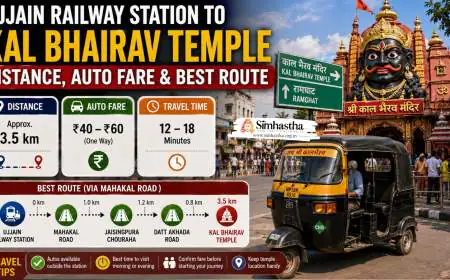
Ujjain Railway Station to Kal Bhairav Temple: Distance, Auto Fare and Best Route
Mangalnath, River Breezes, and the Romance of Evening Snacks
The temple of Mangalnath, perched on the serene banks of the Shipra and painted in the deep, cosmic red of the planet Mars, offers not just a powerful planetary puja but one of the most romantic and peaceful evening food spots in the city. As the sun begins its spectacular descent over the river, a small cluster of street food vendors sets up near the temple gate, their stalls illuminated by soft, flickering bulbs. This is the place for the lighter, more whimsical flavours of the pilgrimage. A steaming hot cup of masala chai, boiled with fresh ginger, cardamom, and a generous dose of sweetness, is the perfect companion to the view. A vendor may be selling pakoras, a mixed medley of potato, onion, and spinach slices dipped in a spiced gram flour batter and fried fresh, their crisp, golden exterior giving way to a soft, steaming interior. During the monsoon and winter months, the area becomes a haven for the local favourite: bhutta, roasted sweet corn on the cob, its kernels blackened and smoky from the open flame, generously rubbed with a wedge of lemon and a fiery, spicy salt mixture. There is a deep, meditative pleasure in sitting on the wide, ancient steps of the ghat, the cool river breeze on your face, a piping hot bhutta in your hands, and the vast, orange-and-purple sky of Ujjain stretching out before you. This is not just a snack; it is a quiet, edible, and unforgettable sunset ritual. 🌽
The ISKCON Ujjain Sanctuary and a Meal of Pure, Sacred Grace
For the pilgrim seeking a guaranteed, spotlessly clean, purely sattvic, and deeply peaceful dining experience, the restaurant at the ISKCON Ujjain temple in the Nanakheda area is an unmissable sanctuary. The journey itself, a short auto-rickshaw ride through quieter residential streets, prepares you for a different kind of nourishment. The ISKCON restaurant is a model of calm, order, and spiritual hospitality. The dining hall is clean, airy, and decorated with images of Krishna's pastimes. The menu is a well-curated selection of North Indian, South Indian, and a few mild Continental sattvic dishes, all prepared with the purest ingredients, without any onion, garlic, or tamasic elements, and offered first to the temple deities before being served as sanctified prasadam. The thalis are balanced, nutritious, and beautifully presented. Their chapatis are always soft and fresh, their dal is light and fragrant, and their sweet rice is a divine, comforting delicacy. Even a simple dish like their masala dosa is executed with a care and purity that is deeply satisfying. For the international pilgrim or the family with young children who may be cautious about street food, the ISKCON restaurant is a safe, reliable, and genuinely blessed dining option. The gentle, devotional music playing in the background, the peaceful conversations of fellow diners, and the smiling, selfless service of the devotees who run the establishment turn a simple meal into a continuation of the temple's spiritual embrace. 🙏
Offbeat Pilgrim Fuel and the Nourishing Bowls of the City
Beyond the famous street food staples, Ujjain offers a few unique, deeply nourishing culinary experiences that are closely tied to the local culture and the specific seasons. During the monsoon, an absolute must-try is Bhutte ka Kees, a unique Malwa specialty that is hard to find elsewhere. Grated sweet corn is slow-cooked in a kadhai with a little ghee, milk, and a tempering of mustard seeds and green chilies, until it becomes a thick, creamy, porridge-like dish. It is served hot, garnished with fresh coriander and a squeeze of lime, and it is a gentle, comforting, and utterly delicious monsoon bowl of gold. In the winter months, the streets near the temples come alive with vendors selling hot, frothy, saffron-infused milk, often topped with a pat of melting malai (cream) and crushed almonds, a natural, health-giving, and warming drink that is far superior to any cappuccino. The city's small, old-school sweet shops are also a treasure. A simple, cool rabdi in a clay bowl, a warm, syrup-soaked malpua fried on a slow griddle, or the legendary, velvety smooth kulfi from a decades-old shop near the Gopal Mandir are not just desserts; they are liquid, edible history. Exploring these offbeat, seasonal, and deeply local bowls and sweets is a way of going deeper into the true soul of Ujjain's sacred culinary tradition. 🍨
Practical Wisdom and a Pilgrim's Guide to Eating Well
A few simple, practical rules will ensure that your culinary pilgrimage is a source of joy and not of physical distress. The most important rule is to follow the crowd. A stall with a high turnover of customers, especially families and locals, is almost always a safe and delicious bet. The fresh ingredients are used quickly, the oil is constantly refreshed, and the sheer volume of business ensures a basic standard of hygiene. Drink only filtered or bottled water, and take advantage of the new Water ATMs and refill stations being installed across the city to carry a clean, reusable bottle. For the first-time pilgrim, it is wise to ease into the street food. Start with a cooked, hot item like kachori or poha, and allow your stomach to adjust for a day before experimenting with raw chutneys or cut fruits from a street vendor. When eating at a small restaurant or dhaba, a simple, vegetarian thali of dal, rice, and a well-cooked vegetable is always the safest and most easily digestible option. Always wash your hands thoroughly before a meal, or use a hand sanitizer, especially after visiting the temples and touching the often dusty, crowded surfaces. And above all, listen to your body. If a particular dish feels too heavy or spicy, stop. The pilgrimage is a marathon, not a sprint, and a happy, healthy stomach is the foundation of a focused, joyful, and deeply rewarding spiritual journey. 🥤
The Holy Meal and the Taste of the Eternal City
To eat in Ujjain, near the shadow of its ancient, echoing spires and within the scent of its timeless river, is to understand that the act of nourishing the body is, in itself, a sacred rite. The same hands that offer bel patra and water to the stone lingam of Mahakaleshwar later offer a steaming plate of kachori to the hungry pilgrim. The food here is not a diversion from the sacred; it is an integral, fragrant, and deeply satisfying chord in the great, continuous symphony of the city's devotion. The memory of a perfect, crisp jalebi eaten at dawn, the fierce, lingering warmth of a spicy kachori, the quiet, restorative peace of a Malwa thali, and the simple, sublime joy of a roasted bhutta by the Shipra at sunset—these become as much a part of the pilgrim's inner treasury as the darshan itself. The Lord of Time, who presides over all hunger and all fulfilment, has set this table for you. Come, eat, and be blessed. 🔱

Frequently Asked Questions