

































How Ujjain Became a Center of Learning in Ancient India
Discover how Ujjain became a center of learning in ancient India. Explore its role as the prime meridian, home to Varahamihira and Brahmagupta, and the intellectual capital that shaped global mathematics and astronomy.


The Cosmic Anchor and the Selection of a City by the Stars
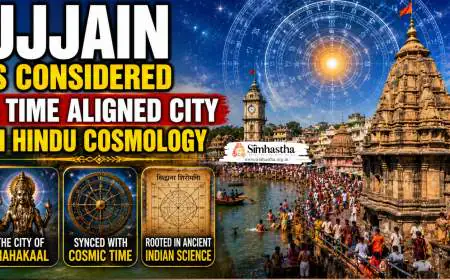
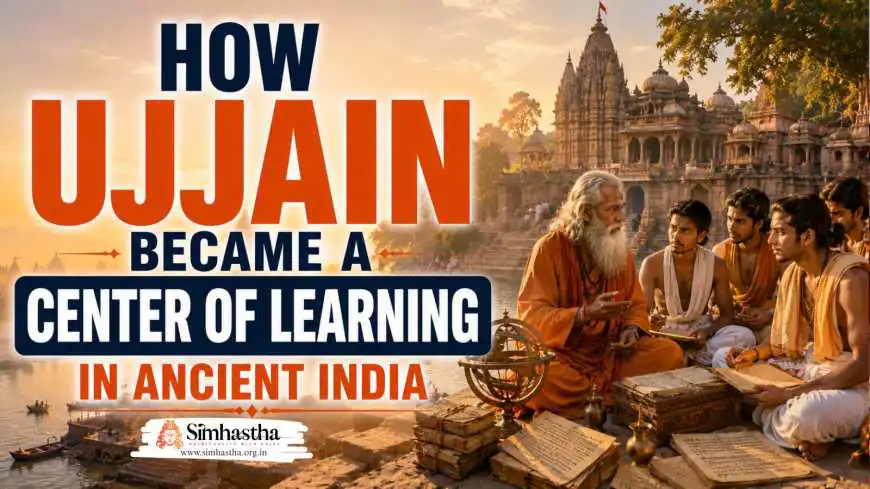
The story of Ujjain's intellectual dominance begins not with a king or a library, but with a line drawn on the face of the earth by the sun itself. The city lies, with an almost miraculous precision, on the Tropic of Cancer, that invisible line where the sun, on the summer solstice, stands directly overhead and casts no shadow. This was not a metaphorical or mythic placement for the ancient rishis; it was a stark, observable, and mathematically verifiable fact. The foundational astronomical text of the subcontinent, the Surya Siddhanta—a treatise of breathtaking scientific rigor whose origins are lost in the mists of the first millennium BCE—declares with absolute clarity that the line of zero-degree longitude, the prime meridian of the earth, passes through the city of Avanti. It states that Ujjain is the navel of the world, the reference point from which the longitudes of all other places on the planet are to be measured.
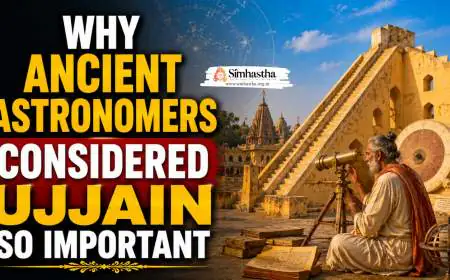
This was not poetry; it was a coordinate. The ancient Indian astronomers recognized that to understand the motion of the heavens, one needed a fixed, absolute point on the terrestrial plane, and Ujjain, straddling both the prime meridian and the Tropic of Cancer, was the perfect, nature-given candidate. A physical Shanku Yantra, a precisely calibrated gnomon, was erected here. By measuring the shadow of this pillar at noon every day, the sages could not only determine the exact moments of the solstices and equinoxes but could also calculate the earth's circumference and the precise length of the solar year with an accuracy that, even today, elicits a stunned silence from modern astronomers. This geographic destiny transformed the city into a massive, open-air observatory, a cosmic laboratory that naturally attracted the most brilliant minds of the age, who came not to pray alone, but to measure, to calculate, and to understand. 📐
The Unbroken Chain of Genius and the Mathematicians Who Gave Us Zero
The great wonder of Ujjain's intellectual history is not the presence of a single great mind, but an unbroken, multi-generational chain of them, a succession of teacher and disciple that stretches across centuries like a bright, unflickering lamp. This is the Ujjain school of mathematics and astronomy, one of the most significant scientific lineages the world has ever produced. In the 6th century CE, Varahamihira, a polymath of staggering breadth, made Ujjain his home and laboratory. In his magnum opus, the Pancha Siddhantika, he compiled, compared, and refined five of the most advanced astronomical systems of his time, standardizing the methods for calculating eclipses, planetary conjunctions, and the precise timing of sacred rituals. His work on the refraction of light, the nature of rainbows, and the movement of the stars elevated Indian astronomy from a tool of ritual into a mature, predictive science.
Varahamihira's intellectual torch was taken up, just a generation later, by a mind even more foundational to the history of global thought: Brahmagupta. As the head of the astronomical observatory at Ujjain in the 7th century, Brahmagupta composed the Brahmasphutasiddhanta, a text of profound consequences. In its crisp, mathematical verses, Brahmagupta did something that no human being had ever done before: he formalized the mathematical properties of zero. He defined it as the result of subtracting a number from itself, and he laid out the rules for arithmetic operations involving zero and negative numbers. This was not a casual mention; it was a rigorous, formal, and complete mathematical treatise. From Ujjain, this concept of zero as a number, a placeholder, and a philosophical symbol of the void, began its long, silent journey through the Arabic world and into medieval Europe, where it would eventually shatter the limits of Roman-numeral mathematics and make modern science, technology, and commerce possible. The digital age, in a very real sense, began with a man writing on a palm leaf on the banks of the Shipra. The chain did not end with Brahmagupta. In the 12th century, Bhaskaracharya II, another genius of the Ujjain school, wrote the Siddhanta Shiromani, in which he calculated the earth's orbital period around the sun to a precision that differs from the modern value by only a few minutes. He also made foundational contributions to what would later be known as calculus, centuries before Newton and Leibniz. This continuous, cumulative, and profoundly rigorous intellectual tradition, centered in one city for over five hundred years, is without parallel in the ancient world. 🧮
Trending Guides Now

Why is Kumbh Mela Celebrated? Origin Story, History & Spiritual Significance
Why Ujjain Is Called the Navels of the Earth: Ancient Secrets Behind Simhastha

Why Travel to Ujjain Before the First Snan Is Sacred

Spiritual Importance of Ujjain Simhastha in Sanatan Dharma

Ujjain Railway Station to Mahakaleshwar Temple Distance (2026 Guide)

Ujjain Simhastha 2028 Dates Announced: Full Shahi Snan & Event Timeline

Mangalnath Temple Trip Budget: Puja, Local Transport, Food and Stay Planning

Omkareshwar Trip Budget Guide: Transport, Stay, Food and Local Travel Costs
The Patronage of Kings and the Flourishing of a Secular Temple of Thought
No great center of learning rises without the protective and generous shade of royal patronage, and Ujjain was, for a thousand years, the beneficiary of a succession of rulers who understood that the glory of a kingdom is measured not only in gold but in the brilliance of the minds it nurtures. The Gupta Empire, often referred to as the Golden Age of India, made Ujjain one of its most important provincial capitals and a vital node in its vast, enlightened network of trade and culture. The Guptas, particularly Chandragupta II Vikramaditya, are famously associated with the legendary Navaratnas, the "Nine Jewels" of his court, a collection of the finest poets, artists, and scientists of the age. While the historical accuracy of a formal court of nine is debated, the tradition reflects a deep cultural memory of Ujjain as a place where intellectual and artistic excellence was actively sought, lavishly funded, and celebrated.
The legendary King Vikramaditya himself, whose very name is synonymous with a golden age of wisdom and justice, is indelibly tied to Ujjain. The Vikram Samvat calendar, which begins in 57 BCE and is still widely used, is a direct, living legacy of this royal association with the city's astronomical and time-keeping expertise. This royal backing was not merely financial; it was a public declaration that the work of the astronomer, the mathematician, the grammarian, and the poet was as essential to the kingdom's well-being as the work of the soldier and the farmer. It created a secular temple of thought, a protected space where the mind could pursue its highest callings, secure in the knowledge that the throne itself was its patron and guardian. 👑
The Poet, the Word, and the University of the Sanskrit Muse
The intellectual life of ancient Ujjain was not confined to the cold, hard clarity of numbers and equations. It bloomed, with an intoxicating and sensuous fragrance, in the gardens of the Sanskrit language and literature. The city was the karmabhumi, the land of his life's work, of the greatest poet and dramatist of classical India: Kalidasa. Whether Kalidasa was a historical figure at the court of a specific king or a composite of the era's literary genius is less important than the undeniable fact that his surviving works—the Abhijnana Shakuntalam, the Meghaduta, the Raghuvamsa—are saturated with the sights, sounds, and spirit of Ujjain. His lyrical, ecstatic descriptions of the city's perfumed lanes, the gentle flow of the Shipra, the graceful balconies of its palaces, and the sacred rituals of the Mahakala Temple did more to immortalize Ujjain as a symbol of high civilization than any political chronicle ever could.
Kalidasa was not an isolated phenomenon. He was the brightest star in a vibrant constellation of writers, grammarians, and philosophers who made Ujjain the capital of Sanskrit learning. The presence of these great literary minds presupposes a sophisticated ecosystem of education—a network of gurukuls, temple schools, and court-sponsored academies where the rigorous disciplines of grammar (vyakarana), logic (nyaya), and philosophy were taught alongside the arts. The city's status as the prime meridian gave it a cosmopolitan character, attracting students and scholars from across the subcontinent and beyond, creating a rich, polyglot intellectual atmosphere where ideas were debated, refined, and disseminated. Ujjain was, in effect, an ancient university without walls, its campus the entire city, its curriculum the universe. 📜
The Synthesis of the Sacred and the Scientific and the Medicine of the Mind
What distinguishes ancient Indian science in general, and the Ujjain school in particular, from its modern counterpart is the complete, seamless integration of the sacred and the scientific. The same astronomer who calculated the precession of the equinoxes also worshipped at the feet of the Mahakaleshwar Jyotirlinga, and these two acts were not seen as contradictory but as complementary expressions of the same universal quest for truth. The Ujjain observatories were frequently attached to temples, and the priests and the astronomers were often the same people, trained in both the Vedas and the Siddhantas. The spiritual practices of meditation and the philosophical concept of the void (shunya) are often cited by historians as providing the fertile psychological soil in which the mathematical concept of zero could germinate. At Ujjain, the transcendent and the rational were not at war; they were the left and right eyes of the same face, looking at the same reality.
Beyond the stellar sciences and mathematics, Ujjain was also a significant center for the study of Ayurveda, the ancient science of life and longevity. The tradition holds that the great physician Sushruta, the father of surgery, was connected to the region, and the intellectual climate of a city that celebrated precise observation and the systematic ordering of knowledge was a natural breeding ground for medical inquiry. The holistic Ujjain view, that a healthy body, a clear mind, and a purified soul are all necessary for the complete human being, made the city a destination for those seeking not just intellectual enlightenment but a complete, integrated system of living. The scholars of Ujjain did not just map the outer stars; they mapped the inner constellations of the human body and consciousness with equal precision. 🩺

The Transmission of Knowledge and the Eternal Light of the Ujjain Meridian
The true measure of a center of learning is not what it holds within its own walls, but what it radiates outward into the vast, interconnected world. The knowledge born and systematized on the banks of the Shipra did not remain there. It traveled, primarily through the great translation movements of the Islamic Golden Age, where the Surya Siddhanta became the Arabic Sindhind, and the works of Brahmagupta were translated and studied in the courts of Baghdad. The decimal place-value system, anchored by the zero that was mathematically defined at Ujjain, was transmitted to the West, where it eventually replaced the cumbersome Roman numeral system and made the scientific revolution possible. The precise astronomical tables developed by the Ujjain school were used by navigators, calendar makers, and astronomers across continents for a thousand years. The city may be gone as a political capital, its ancient observatories reduced to the magnificent, silent masonry of Jai Singh's Jantar Mantar, but the intellectual light that was kindled here has never been extinguished. It is present every time a satellite is launched with coordinates that trace back to a zero-degree meridian, every time a computer processes a binary operation, and every time a poet, in some far corner of the world, seeks the perfect word to describe the ache of love. Ujjain, the eternal city, is also the eternal university, and its final, most profound lesson is that true knowledge, like the Shipra herself, is a river that flows forever. 🔱
Frequently Asked Questions