





























The First Ever Kumbh Mela: Complete History, Rituals & Legacy That Continue Today
Discover the story of the first ever Kumbh Mela — how it began, what rituals were performed, and the spiritual legacy that continues unchanged even today across Ujjain, Haridwar, Prayagraj and Nashik.


The First Ever Kumbh Mela Explained: Events, Rituals, and Legacy That Still Continue Today
Kumbh Mela is much more than the world’s largest pilgrimage — it is the spiritual heartbeat of India. Even in an age of technology and acceleration, millions still gather along sacred rivers to remember something eternal: that beyond human identity, every soul is divine, and the purpose of life is liberation.
To understand the first ever Kumbh Mela, we must explore both the mythological and documented historical origins. One represents the cosmic truth of faith; the other, the cultural reality of history. Together, they reveal how Kumbh became the most powerful spiritual gathering on Earth.
For Every pilgrims, understanding Simhastha 2028 dates and the official Shahi Snan timeline is essential before booking flights or accommodation, as these sacred dates are completely non-negotiable.
Mythological Origin — When the Cosmos Became a Festival
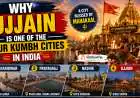
The spiritual origin of Kumbh starts with the Samudra Manthan, the churning of the ocean of milk by devas (gods) and asuras (demons). When the Kumbh — pot filled with Amrit, the nectar of immortality — emerged, a cosmic battle broke out. To protect the nectar, Garuda (the divine eagle and vehicle of Vishnu) flew away with the pot, and four drops of Amrit spilled upon Earth at:
Trending Guides Now
Why is Kumbh Mela Celebrated? Origin Story, History & Spiritual Significance
Why Ujjain Is Called the Navels of the Earth: Ancient Secrets Behind Simhastha

Why Travel to Ujjain Before the First Snan Is Sacred

Spiritual Importance of Ujjain Simhastha in Sanatan Dharma

Ujjain Railway Station to Mahakaleshwar Temple Distance (2026 Guide)

Ujjain Simhastha 2028 Dates Announced: Full Shahi Snan & Event Timeline

Mangalnath Temple Trip Budget: Puja, Local Transport, Food and Stay Planning

Omkareshwar Trip Budget Guide: Transport, Stay, Food and Local Travel Costs
1.Prayagraj
2.Haridwar
3.Nashik
4.Ujjain
These four places became eternal gateways of liberation. The Mela is celebrated to honor these sacred points where human and divine reality touched each other.
From that moment forward, taking a dip in these rivers during specific celestial alignments became a path to purification, enlightenment and liberation.
The First Documented Kumbh Mela — 644 CE
While the mythology establishes the cosmic origin, history provides the first recorded proof of the Kumbh Mela in 644 CE at Prayagraj.
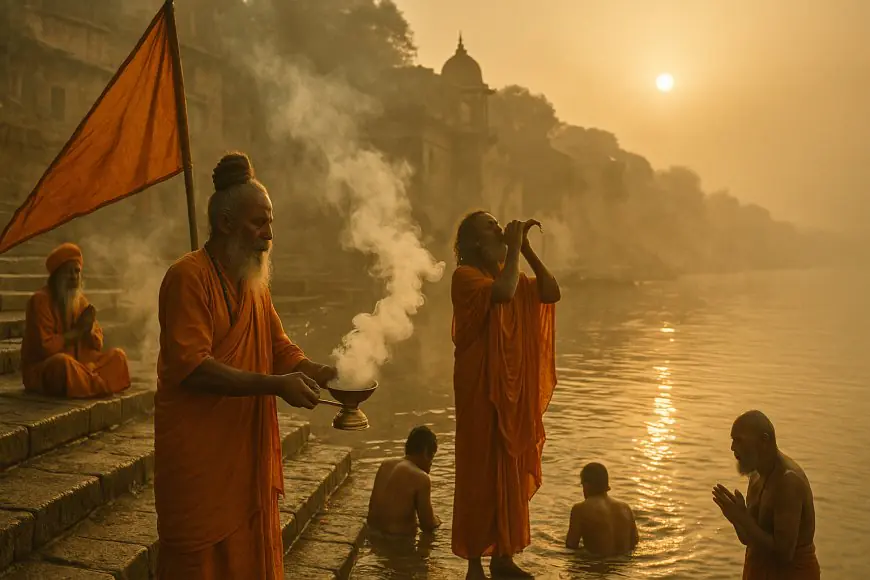
During the reign of King Harshavardhana, the Chinese Buddhist traveler Hiuen Tsang (Xuanzang) visited Prayagraj and left detailed descriptions of a grand spiritual gathering on the banks of the Triveni Sangam — the confluence of Ganga, Yamuna and Saraswati.
His writings describe:

-
Countless saints and ascetics taking a ritual bath
-
King Harshavardhana distributing massive charity to pilgrims
-
Public feeding (anna-daan) on a monumental scale
-
Spiritual discourses attended by scholars and yogis
-
Presence of Naga ascetics
-
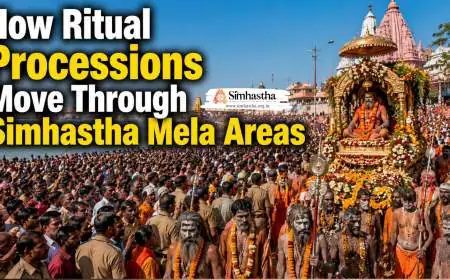
Processions to the river led by spiritual orders
This record stands as the first historical evidence of Kumbh Mela as a mass spiritual congregation.
So the story of Kumbh has two beginnings:
| Origin Type | Beginning |
|---|---|
| Spiritual / Mythological | Samudra Manthan, cosmic nectar |
| Historical / Documented | 644 CE, Prayagraj, recorded by Xuanzang |
Both layers are authentic and together shape the identity of Kumbh.
Rituals of the First Kumbh That Continue Today
Even though thousands of years have passed, the core rituals of the first Kumbh remain untouched:
| Ritual from First Kumbh | Still Practiced Today |
|---|---|
| Holy dip during sunrise | ✔ |
| Priority bathing of Akharas (Shahi Snan) | ✔ |
| Ceremonial processions of saints | ✔ |
| Recitation of Vedic mantras | ✔ |
| Fire rituals (Yagna, Homa) | ✔ |
| Community kitchens (langar / anna-daan) | ✔ |
| Philosophical discussions | ✔ |
| Blessings from saints | ✔ |
This unbroken continuity is what makes Kumbh one of the oldest surviving religious traditions on Earth.
Why the Holy Bath Became the Central Act
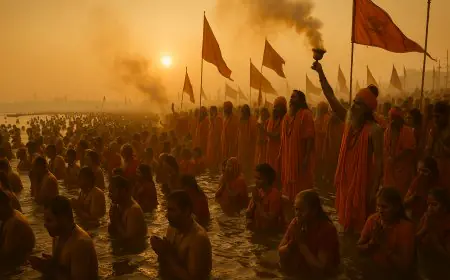
Bathing in the sacred rivers during Kumbh is not merely symbolic — it is a powerful spiritual act.
The ancient belief states that:
When nectar touched the rivers, the waters became a direct gateway to the divine.
The holy bath cleanses:
-
Internal negativity
-
Emotional burdens
-
Karmic impressions
It is a ritual of release, surrender and rebirth.
The Early Kumbh Was Not Just a Pilgrimage — It Was Civilisation Gathering
Even in the first gatherings, Kumbh became a meeting point for:
-
Spiritual seekers
-
Monks and saints
-
Philosophers and scholars
-
Kings and warriors
-
Merchants and travelers
-
Artists and storytellers
It was a festival of ideas, devotion and cultural exchange, not just a bath in the river.
The Timeless Legacy — Why the First Kumbh Still Exists Today
Kumbh did not survive because it was an event; it survived because it was meaningful.
Across centuries, people kept returning because Kumbh helped them:
-
Remember their spiritual identity
-
Feel unity beyond caste, class and status
-
Experience peace beyond routine life
-
Receive blessings and inner direction
The legacy that began with the first Kumbh continues today like a sacred echo across time.
The Message of Kumbh for the Modern World
The world has changed — empires rose and fell, borders shifted, technologies emerged — but Kumbh stands unchanged because it reminds humanity of something unbreakable:
True victory is victory over ignorance, ego and inner suffering.
Kumbh teaches:
-
Shared humanity
-
Compassion and service
-
Devotion and surrender
-
Self-realisation as life’s purpose
This is why millions still gather — not to escape the world, but to renew their inner world.
Frequently Asked Questions