






























Why Ujjain Simhastha Is One of the Largest Religious Gatherings
Ujjain Simhastha is one of the largest religious gatherings in the world due to rare astrological timing, sacred geography, Akhara participation, and the Mahakaleshwar Jyotirlinga, drawing millions of pilgrims during Simhastha 2028 and every 12-year cycle.


Why Ujjain Simhastha Is One of the Largest Religious Gatherings in the World
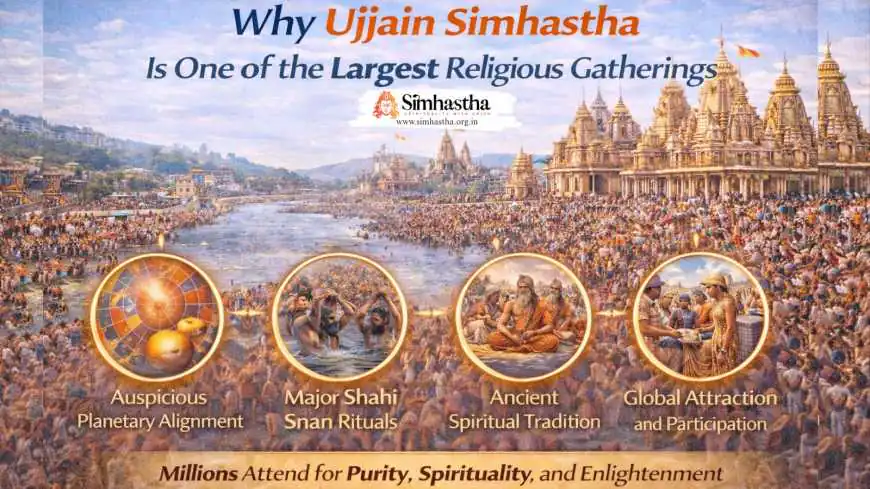
Ujjain Simhastha is one of the largest religious gatherings in the world because it occurs only once every 12 years under a rare astrological alignment, is centered on the sacred Shipra River and the Mahakaleshwar Jyotirlinga, and brings together millions of pilgrims, saints, and Akharas from across India and abroad. During major cycles such as Simhastha 2028, the event expands into a massive temporary spiritual city, placing Ujjain Simhastha among the largest human congregations ever recorded.
For Every pilgrims, understanding Simhastha 2028 dates and the official Shahi Snan timeline is essential before booking flights or accommodation, as these sacred dates are completely non-negotiable.
Why This Question Matters
Events like simhastha, the Simhastha Kumbh Mela, and the Ujjain Kumbh Mela are often mentioned for their scale, yet the exact reasons behind their size are rarely explained clearly. Understanding why Ujjain Simhastha reaches such extraordinary numbers requires examining astrology, sacred geography, religious authority, and collective tradition together.
This article answers those questions directly, reason by reason, with no assumptions or exaggeration.
Trending Guides Now

Ujjain Simhastha
Ujjain Is Considered a Time Aligned City in Hindu Cosmology
Why Ancient Astronomers Considered Ujjain So Important
Was Ujjain the First Scindia Headquarters? Did Ranoji Start Simhastha? Full Spiritual Truth Revealed

Ujjain Railway Station to Mahakaleshwar Temple Distance (2026 Guide)

Ujjain Simhastha 2028 Dates Announced: Full Shahi Snan & Event Timeline

Mahakaleshwar Sandhya Aarti Online Booking 2026: Fee, Timings, Entry Gate and Step-by-Step Process

Mangalnath Temple Trip Budget: Puja, Local Transport, Food and Stay Planning
Reason 1: Why Does Simhastha Occur Only Once Every 12 Years?
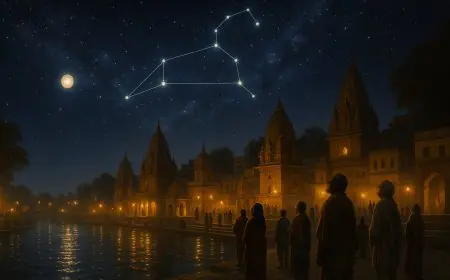
Simhastha occurs once every 12 years because it is governed by a specific astrological alignment in which Jupiter (Brihaspati) enters Leo (Simha Rashi). This planetary cycle defines the timing of the Simhastha Kumbh Mela in Ujjain.
Since Jupiter takes nearly 12 years to complete one revolution, this alignment cannot occur frequently. As a result, pilgrimages that might otherwise be spread over many years become concentrated into a single period.
This rarity is a primary reason why Ujjain Simhastha attracts such massive crowds, especially during cycles like Simhastha 2028.
Simhastha becomes exceptionally large because its 12-year cycle concentrates millions of pilgrims into one rare and highly significant event.
Reason 2: Why Does the Shipra River Draw Millions During Ujjain Simhastha?
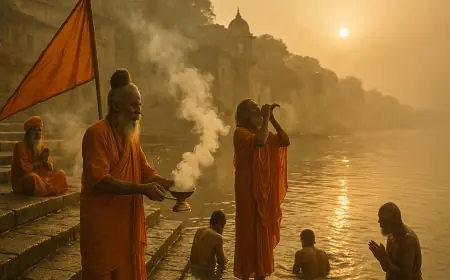
The Shipra River becomes the focal point of Ujjain Simhastha because ritual bathing there during the Simhastha period is believed to offer spiritual purification that is not available at ordinary times.
During the Ujjain Kumbh Mela, devotees believe that cosmic alignment amplifies the spiritual merit of the Shahi Snan. This belief crosses regional, linguistic, and sectarian boundaries, drawing pilgrims from across the country.

For Ujjain Kumbh 2028, extensive riverfront infrastructure is prepared to manage this unprecedented influx.
The Shipra River attracts millions during Ujjain Simhastha because Simhastha-period bathing is believed to provide unique spiritual benefits tied to cosmic timing.
Reason 3: Why Is Mahakaleshwar Temple Central to Ujjain Simhastha?
Mahakaleshwar Temple plays a decisive role in the scale of Ujjain Simhastha because it is one of the twelve Jyotirlingas, making Ujjain a permanent spiritual destination rather than a temporary pilgrimage site.
For many devotees attending the Simhastha Kumbh Mela, bathing in the Shipra is inseparable from darshan at Mahakaleshwar. This dual pilgrimage significantly increases footfall during major cycles such as Simhastha 2028.
Ujjain Simhastha draws enormous crowds because it uniquely combines a rare Kumbh bathing ritual with worship at a Jyotirlinga.
Reason 4: Why Do Akharas Multiply the Scale of Simhastha?
Akharas are central to the identity of simhastha and the Simhastha Kumbh Mela. Their participation transforms the event into a nationwide religious assembly rather than a local festival.
Each Akhara arrives with thousands of saints, disciples, and followers. Their Shahi Snan processions during the Ujjain Kumbh Mela attract vast additional crowds, further expanding attendance.
The scale of Ujjain Simhastha increases dramatically because Akhara participation turns it into a pan-Indian convergence of Hindu spiritual traditions.
Reason 5: Why Is Ujjain Simhastha Larger Than Ordinary Pilgrimages?
Ujjain Simhastha is larger than ordinary pilgrimages because it is not an open-ended religious visit but a time-bound convergence. Most pilgrimages can be undertaken any day of the year. In contrast, simhastha occurs only during a fixed astrological window, forcing millions of devotees to arrive within a limited number of days.
This compression of time creates extreme density. Pilgrims who might otherwise visit Ujjain gradually over years intentionally plan their journey around the Simhastha Kumbh Mela, knowing that missing the window means waiting another 12 years.
During cycles like Simhastha 2028, this effect becomes even stronger due to improved transport, digital awareness, and national-level coordination.
Ujjain Simhastha becomes one of the largest gatherings because its fixed timing concentrates decades of pilgrimage demand into a single short period.
Reason 6: Why Is Simhastha Considered a Kumbh Mela Despite Being in Ujjain?
Simhastha is considered a Kumbh Mela because it is one of the four officially recognized Kumbh locations in Hindu tradition, alongside Prayagraj, Haridwar, and Nashik. In Ujjain, the Kumbh is specifically known as the Simhastha Kumbh Mela due to its association with Leo (Simha Rashi).
This classification is not symbolic. It determines:
-
Akhara participation
-
Shahi Snan protocols
-
National religious recognition
-
Government-level planning
Because it is a Ujjain Kumbh Mela, participation is not limited to regional devotees. Pilgrims who attend Kumbh Melas across India also travel to Ujjain, significantly expanding the scale.
Simhastha reaches Kumbh-level scale because it is formally recognized as a full Kumbh Mela, not a regional festival.
Reason 7: Why Does Ujjain Simhastha Attract Nationwide Participation?
Ujjain Simhastha attracts nationwide participation because it represents a rare intersection of Shaiva tradition, Kumbh ritual authority, and ancient Indian astronomy.
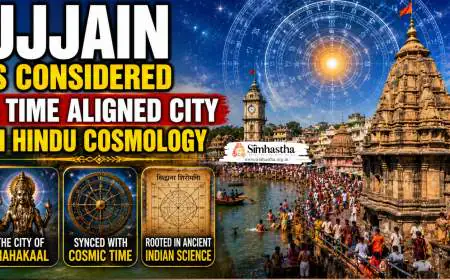
Ujjain has historically been a center for timekeeping, astrology, and religious scholarship. This gives simhastha legitimacy across sects and regions, unlike localized fairs that appeal mainly to nearby populations.
As a result, pilgrims from North India, South India, Central India, and even international Hindu communities consider attendance at the Ujjain Kumbh Mela as spiritually equivalent to other major Kumbh sites.
The scale of Ujjain Simhastha increases because it carries pan-Indian religious authority, not regional significance.
Reason 8: Why Does Temporary City Infrastructure Increase the Crowd Size?
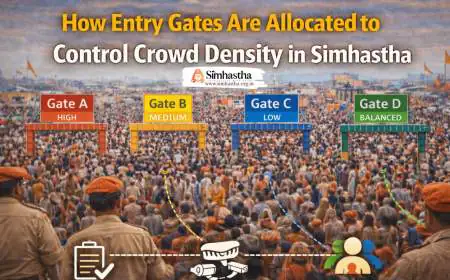
One of the defining features of Ujjain Simhastha is the creation of a fully functional temporary city. Roads, pontoon bridges, tent settlements, medical centers, sanitation systems, and transport corridors are built specifically for the event.
This infrastructure removes natural limits on attendance. When accommodation, movement, and safety are systematically planned, far more people are able to participate than during normal pilgrimage seasons.
For Ujjain Kumbh 2028 and Simhastha 2028, this infrastructure is expected to be larger, more technologically integrated, and more accessible than in previous cycles.
Simhastha becomes massive because temporary city planning allows millions to arrive and stay safely at the same time.
Reason 9: Why Is Ujjain Simhastha Compared With the World’s Largest Gatherings?
Ujjain Simhastha is compared with the world’s largest gatherings because its attendance reaches levels rarely seen outside major Kumbh Melas. Crowd numbers during peak Shahi Snan days rival or exceed those of global religious, cultural, and sporting events.
What distinguishes simhastha is that participation is voluntary, decentralized, and spiritually motivated, yet still reaches extraordinary scale without ticketing, invitations, or central registration.
This organic mass participation is why international observers often classify the Simhastha Kumbh Mela among the largest human assemblies ever formed.
Ujjain Simhastha ranks among the world’s largest gatherings because millions assemble voluntarily, simultaneously, and repeatedly across centuries.
Reason 10: Why Will Simhastha 2028 Likely Be Larger Than Previous Cycles?
Simhastha 2028 is expected to surpass earlier cycles due to population growth, improved national connectivity, digital awareness, and expanded pilgrimage culture.
Unlike earlier eras, information about Ujjain Simhastha now spreads instantly through digital platforms, enabling wider participation. Improved rail, road, and urban planning further reduce barriers to attendance.
These factors combine to amplify scale without altering the core religious structure of simhastha.
Simhastha 2028 is likely to be larger because modern connectivity and infrastructure amplify an already massive religious tradition.
Why Has Ujjain Simhastha Remained One of the Largest Religious Gatherings for Centuries?
Ujjain Simhastha has remained one of the largest religious gatherings for centuries because it is rooted in a self-sustaining civilizational system rather than a single historical event. Its scale does not depend on rulers, institutions, or modern promotion, but on recurring belief systems that renew participation every generation.
Each cycle of simhastha reactivates the same spiritual motivations, pilgrimage routes, and ritual authorities that have functioned continuously across time. This continuity ensures that attendance does not decline but regenerates naturally.
Ujjain Simhastha remains massive across centuries because its scale is renewed by living tradition, not one-time momentum.
Why Is Simhastha Not Comparable to Ordinary Festivals or Fairs?
Simhastha differs fundamentally from ordinary festivals because it combines astrological inevitability, religious authority, and collective obligation. Most festivals are celebratory and optional. Attendance fluctuates based on convenience.
In contrast, the Simhastha Kumbh Mela is perceived as a once-in-a-lifetime or once-in-a-generation spiritual duty. Missing it carries a sense of loss rather than mere absence.
This psychological dimension elevates Ujjain Simhastha from a cultural event to a collective spiritual commitment.
Simhastha surpasses ordinary festivals because it is viewed as a rare spiritual obligation, not an optional celebration.
Why Does Ujjain Hold a Unique Position Among Kumbh Locations?
Ujjain holds a unique position among Kumbh locations because it represents the convergence of time, geography, and Shaiva tradition. While other Kumbh sites are river-centric, Ujjain Simhastha integrates river ritual with Jyotirlinga worship.
This dual axis of devotion creates a depth of participation unmatched by single-focus pilgrimage centers. For devotees attending the Ujjain Kumbh Mela, the journey fulfills multiple spiritual objectives simultaneously.
Ujjain Simhastha is uniquely significant because it unites Kumbh ritual authority with one of Hinduism’s most sacred temples.
Why Will Ujjain Simhastha Continue to Rank Among the World’s Largest Gatherings?
Ujjain Simhastha will continue to rank among the world’s largest gatherings because its foundational drivers remain unchanged: rare timing, shared belief, institutional continuity, and adaptive infrastructure.
As long as simhastha continues to occur once every 12 years, demand will never dissipate. Modern systems may alter logistics, but they amplify participation rather than reduce it.
Events like Simhastha 2028 and Ujjain Kumbh 2028 demonstrate how ancient tradition and modern capacity combine to sustain global-scale gatherings.
Ujjain Simhastha will remain among the largest religious gatherings because its spiritual demand is permanent while its logistical capacity keeps evolving.
Final Definitive Answer
Ujjain Simhastha is one of the largest religious gatherings in the world because it occurs during a rare 12-year astrological cycle, centers on the sacred Shipra River and Mahakaleshwar Jyotirlinga, brings together Akharas and saints from across India, and concentrates nationwide pilgrimage into a fixed period. This structure, sustained across centuries and amplified by modern infrastructure, ensures that simhastha, including major cycles such as Simhastha 2028 and the Ujjain Kumbh Mela, consistently attracts millions, placing it among the largest human congregations ever recorded.
Frequently Asked Questions