

































Best Digital Tools and Apps for Visiting Ujjain
Discover the best digital tools and apps for visiting Ujjain. From Mahakaleshwar temple booking portals and offline maps to UPI payments, IRCTC, and safety apps, equip your smartphone for a seamless, soulful pilgrimage to Mahakal's city.


The Temple in Your Pocket and Booking Darshan, Aarti, and Donations Online
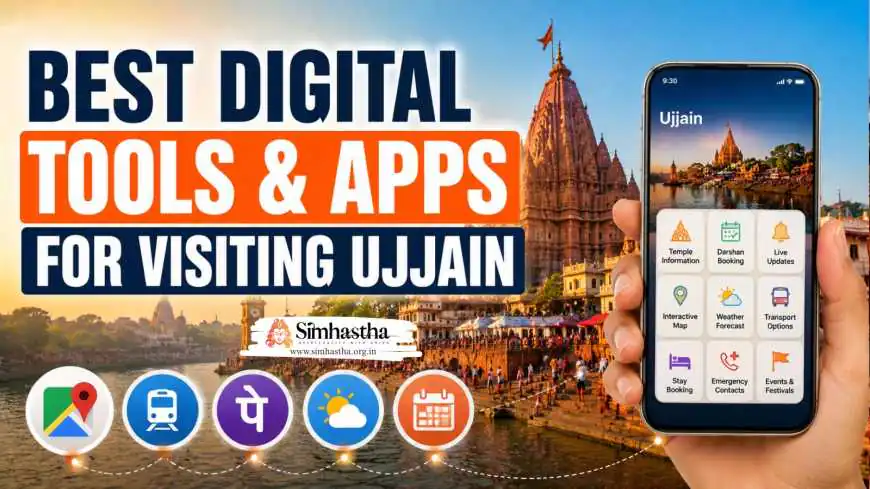
The most critical digital tool for any Ujjain pilgrim is the official ecosystem for the Mahakaleshwar Temple. The Shri Mahakaleshwar Temple Management Committee operates a dedicated website and is progressively integrating its services into a mobile-responsive interface and upcoming applications. This is the single most important digital address to know. Through this official portal, you can book the coveted Bhasma Aarti passes in advance, a task that was once a chaotic scramble at the temple counter and is now, for those who plan ahead, a clean, online transaction. The website typically releases passes in batches, and being registered on the portal and knowing the release dates is the difference between a life-changing pre-dawn darshan and a long, disappointed queue. Beyond the Bhasma Aarti, the portal also allows you to book special pujas, make official donations that are eligible for a receipt, and check the daily temple timings, which shift subtly with the seasons and festivals. A dedicated mobile app, sometimes referred to as the Mahakal Ujjain app, is often promoted and provides similar functionality with the added convenience of push notifications. Never use any third-party app or person promising VIP passes; the official portal is the only legitimate channel. 🎫
The Simhastha 2028 and Madhya Pradesh Tourism Digital Ecosystem
As the 2028 Simhastha approaches, the state government and the Simhastha Special Purpose Vehicle (SPV) will launch a unified Simhastha 2028 mobile application. This app, which will likely be available in late 2026 or early 2027, is designed to be the single-window digital guide for the Kumbh. It will integrate real-time crowd density maps, navigation to the exact entry point of your designated bathing ghat, emergency alerts, a lost-and-found digital reunification system, the booking of tent cities and homestays, and the complete schedule of Shahi Snans and cultural programmes. This app will be indispensable during the Mela itself. Outside of the Simhastha period, the Madhya Pradesh Tourism Board's official app and website remain the most reliable sources for verified information on Ujjain's heritage sites, approved guides, and government-accredited accommodations. Downloading these before you leave ensures that the information you are getting is authentic and not filtered through a tout. 🚶
Navigating the Ancient Lanes and the Power of Offline Maps
The lanes around the Mahakaleshwar Temple, the Gopal Mandir, and the old city bazaars are a beautiful, bewildering maze where GPS signals often weaken and mobile data becomes frustratingly slow. The single most important pre-trip digital act you can perform is to download an offline map of Ujjain on Google Maps. This is simple and free. On a stable WiFi connection, open the Google Maps app, search for "Ujjain, Madhya Pradesh," tap on the city name at the bottom, and select "Download offline map." Define a rectangle that covers the entire temple zone, the major ghats, the railway station, and your hotel. Once downloaded, your phone's GPS will continue to pinpoint your location with reasonable accuracy even when there is absolutely no cellular data, allowing you to navigate the narrowest gully without a signal. An alternative for hikers and the more adventurous pilgrim is Maps.me, which offers highly detailed offline maps based on OpenStreetMap, often including temple compounds, pedestrian paths, and water points that mainstream maps miss. For the solo pilgrim, the simple, reassuring blue dot of an offline map is a quiet, powerful companion, replacing anxiety with the confidence that you are never truly lost. 🗺️
The Journey to the Lord and IRCTC and Transport Aggregator Apps
The journey to Ujjain is often booked through the ubiquitous IRCTC Rail Connect app, which is the official and most reliable way to book Indian Railways tickets, check PNR status, and get live train running updates. Given the popularity of Ujjain as a pilgrimage destination, tickets, particularly during festivals and the Simhastha, sell out very quickly. Having the IRCTC app with your saved passenger details and a linked payment method is essential for a swift, successful booking.
Trending Guides Now

Ujjain Simhastha 7 Day Itinerary for Families

2 Days Ujjain Wheelchair Travel Plan Senior Guide

Ujjain Temple Tour by Auto, Taxi or Walking: Best Choice

Ujjain Family Trip Guide: Temples, Hotels and Travel Tips

Ujjain Railway Station to Mahakaleshwar Temple Distance (2026 Guide)

Ujjain Simhastha 2028 Dates Announced: Full Shahi Snan & Event Timeline

Mahakaleshwar Sandhya Aarti Online Booking 2026: Fee, Timings, Entry Gate and Step-by-Step Process

Mangalnath Temple Trip Budget: Puja, Local Transport, Food and Stay Planning
Within the city, the transport landscape is dominated by auto-rickshaws. While ride-hailing apps like Ola and Uber have a limited and often unreliable presence in Ujjain's core temple area, they can be useful for longer journeys, such as from the Indore airport to Ujjain, or from your hotel on the outskirts to the city centre. For the more adventurous and budget-conscious pilgrim, apps like Rapido (for bike taxis) operate in some areas and can be a quick way to navigate traffic. The most reliable digital transport tool, however, is simply storing the number of a trusted local auto-rickshaw driver, recommended by your hotel or guesthouse, in your phone. A direct call to a known driver for your 3:00 AM Bhasma Aarti pickup is a far safer and more reliable system than any app. 🚆
Digital Wallets and the Cashless Pilgrim and UPI, PhonePe, and GPay
Ujjain's spiritual economy runs on cash, but the digital payment revolution has made significant inroads, especially after the COVID-19 pandemic. For the pilgrim, carrying huge wads of cash is both a security risk and a logistical headache. A well-functioning Unified Payments Interface (UPI) app is now an essential travel tool. Apps like Google Pay (GPay) , PhonePe, and Paytm are widely accepted at hotels, larger restaurants, temple donation counters, and even by a growing number of street vendors who display their QR codes prominently. Before your trip, ensure that your UPI app is linked to your bank account, that your transaction limit is sufficient, and that you have completed a small test transaction. A crucial tip is to carry a backup: have a second UPI app linked to a different bank account, as server issues on one platform can sometimes occur. The ability to scan a QR code and pay instantly for a puja thali or a bottle of liquor at the Kal Bhairav Temple's authorized shops reduces the need to fumble for change and creates a clear, traceable record of your expenditure. Keep a modest amount of cash, however, for the smallest vendors, the flower sellers, and the chaiwallahs whose hands are too busy to hold a phone. 💸
A Roof for the Night and Booking Accommodation in the City of Faith
Finding a safe and affordable place to stay in Ujjain has been digitized through a combination of mainstream hotel aggregators and specialized pilgrimage portals. For the standard hotel experience, apps like MakeMyTrip, Goibibo, and OYO offer a wide range of options. However, their prices can be inflated, and the location descriptions in the old city can be inaccurate. It is always wise to cross-check the hotel's exact location on a map and read recent reviews, paying special attention to comments about cleanliness and the availability of hot water, which is a precious commodity in many budget lodges. For the most spiritually aligned and often safest accommodation, the digital world is now catching up. The Mahakaleshwar Temple Trust is gradually moving its dharamshala booking system online. For the Simhastha 2028, the official Simhastha Portal will be the definitive platform for booking everything from luxury tent cities to budget shivirs and registered homestays. For those seeking a more community-driven experience, the ISKCON Ujjain temple operates a clean, well-managed guesthouse that can often be contacted via their official website and social media channels. A direct booking through a temple's digital platform is almost always safer and more honest than a random listing on a generic travel site. 🏨
The Spiritual Companion and Panchang, Kirtan, and Scripture Apps
A pilgrimage is an inner journey, and your smartphone can serve as a portable temple. For the ritually precise pilgrim, a Panchang (Hindu calendar) app is indispensable. Apps like Drik Panchang provide accurate, location-based daily tithis, muhurtas, festival dates, and the local timings for the sunrise and sunset, which are crucial for planning your temple visits. For the devotee who wishes to immerse themselves in the sound of the Mahamantra or a particular bhajan, apps like Hare Krishna Gold or a simple YouTube Music playlist can create a continuous, personal spiritual ambiance, especially useful during long waits in queues. A dedicated Bhagavad Gita app, with multiple commentaries and a simple, bookmarkable interface, allows you to study a verse in the quiet of the ghats. For those visiting Ujjain's many Shaivite shrines, an app that contains the Shiva Tandava Stotram, the Linga Ashtakam, and the Rudram is a powerful tool for personal worship, allowing you to chant along with the priest or offer your own silent prayers with the correct pronunciation. These apps transform the wait in a queue from a frustrating delay into a sacred opportunity for study and devotion. 🕉
Staying Safe and Connected and Emergency and Family Locator Apps
The safety of the solo pilgrim, particularly a woman, is greatly enhanced by a few key digital tools. The Government of India's "112 India" emergency app is a must-have. With a single tap or even a shake of the phone, it can send an emergency alert with your location to the nearest police control room. The app integrates women's safety features and is connected to the national emergency response system. For a more personal layer of security, apps like Google Maps' location sharing feature allow you to share your real-time location with a trusted family member or friend back home for a chosen duration. A simple WhatsApp video call to your family from a well-lit, public area can also be a powerful deterrent to any potential harasser. Before you travel, save the local police station number, the women's helpline (1091), and the contact of your accommodation's front desk in your phone's contacts. A quick-access widget or an SOS app configured to dial these numbers is a silent, invisible bodyguard, ensuring that help is always just a tap away. 🛡️
Capturing the Eternal and Photography and Editing Apps for the Pilgrim
Ujjain is a visual banquet, but the sacred spaces come with strict rules about photography. Your smartphone camera is the only one you will likely be able to use in the open courtyards and along the ghats. A manual camera app, such as the built-in "Pro" mode on many Android phones or apps like Adobe Lightroom Mobile, allows you to control the ISO and shutter speed to capture the flames of the Deep Malika at Harsiddhi without the harsh glare of a flash. For editing, a simple, free app like Snapseed can help you enhance the soft, golden glow of the evening aarti, subtly brighten the dark stone of the Mahakal Lok corridor, and correct the perspective on the soaring temple shikharas. Remember, the sanctum of every major temple is a strict no-phone zone. The most profound images you will take in Ujjain will be the ones you capture with your eyes in the silent, camera-free darkness of the garbhagriha. The phone is for the beautiful periphery; your soul is the camera for the core. 📸

Language, Translation, and the Bridge Over the Tongue
Ujjain is a deeply Hindi-speaking city, and while the priests and many shopkeepers have a functional transactional vocabulary, a translation app can be a beautiful bridge. Google Translate is the most powerful tool, and its ability to download an entire offline Hindi-English dictionary is a game-changer. It allows you to type or even speak a phrase and get a translation, or to simply point your camera at a sign in Devanagari and see it magically transform into English on your screen. Even more useful is its "Conversation" mode, which can facilitate a basic, slow, and respectful dialogue with a non-English-speaking priest, a flower seller, or a fellow pilgrim. The attempt to speak a few words of the local language, even through an app, is an act of profound cultural respect that will open more doors and hearts than any other digital tool. 🙏
Offline Survival and Note-Taking for the Unplugged Pilgrim
The final category of essential digital tools are the ones that function when everything else fails. A simple, robust note-taking app like Google Keep or Evernote should contain your offline survival kit. Before you leave connectivity, copy and paste into a note: the full address and phone number of your hotel (in Hindi and English), your train PNR and seat number, a backup copy of your ID, a list of emergency contacts, and a simple, offline diary of your spiritual notes. A power bank is not an app, but it is the most critical physical-digital companion; a dead phone is not just an inconvenience for a solo pilgrim, it is a safety risk. Carry a high-capacity power bank and the correct charging cable at all times. A simple compass app, which works entirely offline, can be a charming and practical way to orient yourself in the city that was once the prime meridian of the ancient world, even if the blue dot on your map has temporarily frozen. 📝
The Divine Digital Toolkit and the Balance of the Sacred and the Screen
The ultimate wisdom of using digital tools on a pilgrimage lies in knowing when to put the phone away. The apps are the servants, not the masters, of your journey. Use the booking app to secure your Bhasma Aarti pass, then put the phone deep in your sling bag and let the ash and the chant take over. Use the map to find the quiet, hidden ghat, then sit on its steps and watch the Shipra flow without the mediation of a screen. The greatest digital tool is the one that facilitates an unmediated, sacred encounter and then silently, gracefully, disappears. Ujjain is the city of Mahakal, the Lord of Time, and time itself, in his presence, ceases to be a schedule and becomes an eternal, unfolding now. The apps get you there. The presence of the divine keeps you. Let the digital guide you to the sanctum, and then, with a quiet, conscious breath, switch it off, and be present with the Lord who existed before all time and all technology. 🔱
Frequently Asked Questions