










Do Large Religious Events Require Travel Insurance?
Find out if large religious events like Kumbh Mela, Simhastha, and Hajj require travel insurance. Medical risks, crowd safety, and coverage explained.

The Direct Answer: Yes, Here Is Why You Cannot Skip Insurance
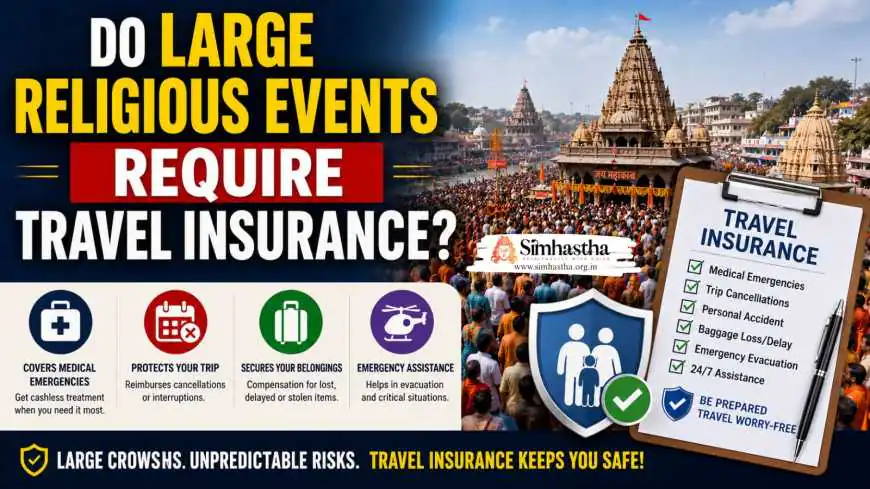
Yes, large religious events absolutely require travel insurance. Whether you are attending the Kumbh Mela (5-10 crore pilgrims), Simhastha (5+ crore pilgrims), Hajj (25 lakh pilgrims), or Arba'een (20+ million pilgrims), the combination of extreme crowding, limited medical infrastructure, heat stress, and pre-existing health conditions makes insurance essential. Standard travel policies often exclude "mass gatherings" – you need event-specific coverage. A basic medical evacuation policy costs ₹850-₹2,000, while an uninsured hospital stay for heatstroke, cardiac distress, or stampede injury can easily exceed ₹2-5 lakhs. For seniors, families, and international pilgrims, insurance is not optional – it is survival.
What Makes Large Religious Events Uniquely Risky?
Regular travel insurance assumes normal tourist conditions. Large religious events break every assumption:
Extreme Crowd Density
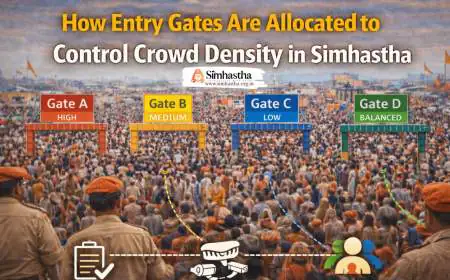
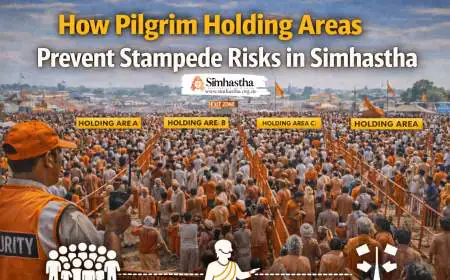
At Kumbh Mela's Shahi Snan, 5-8 crore people gather in a 20-square-kilometer area – density of 25-40 lakh people per square kilometer. Compare to Mumbai's peak local train at 10-15 lakh per square kilometer. You are in crowds 3 times denser than the world's most crowded trains.
Real risk: Stampedes, crowd crushes, and being separated from family for hours or days. In 2013 Kumbh Mela, 42 pilgrims died in a stampede at Allahabad railway station.
Trending Guides Now
Ujjain Travel Budget 2026: Complete Cost Breakdown for Pilgrims
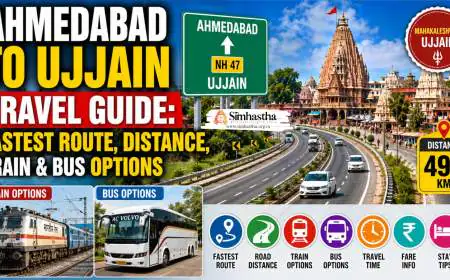
Ahmedabad to Ujjain Travel Guide: Fastest Route, Distance, Train & Bus Options
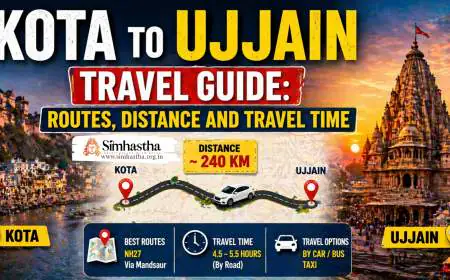
Kota to Ujjain Travel Guide: Routes, Distance and Travel Time
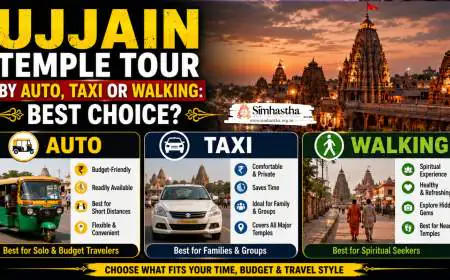
Ujjain Temple Tour by Auto, Taxi or Walking: Best Choice

Ujjain Railway Station to Mahakaleshwar Temple Distance (2026 Guide)

Ujjain Simhastha 2028 Dates Announced: Full Shahi Snan & Event Timeline
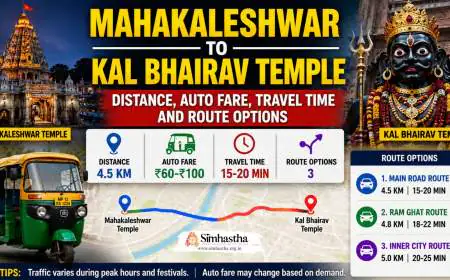
Mahakaleshwar to Kal Bhairav Temple: Distance, Auto Fare, Travel Time and Route Options

Ujjain Simhastha 2028 Road Widening Brings Action Against Religious Structures Houses and Shops
Limited Medical Infrastructure
During Simhastha 2016, Ujjain's District Hospital had 80 ICU beds for 5 crore pilgrims. That is 1 ICU bed per 6.25 lakh pilgrims. For reference, the WHO recommends 1 ICU bed per 1 lakh population in normal times.
The gap: When 500 pilgrims need ICU care simultaneously during a heatwave, the system fails. Those with insurance get airlifted to Indore or Bhopal (100-200 km away). Those without insurance wait – and sometimes die.
Heat and Dehydration Crises
Most large Indian religious events occur in April-May (Simhastha, parts of Kumbh) or July-August (Shravan at Mahakal, parts of Hajj). Temperatures reach 40-45°C.
Medical reality: Heatstroke causes multi-organ failure. Treatment requires ICU admission, IV fluids, cooling blankets, and constant monitoring. Cost: ₹50,000-₹2 lakhs. Without insurance, families face financial ruin.
Pre-Existing Conditions in Elderly Pilgrims
Religious events attract 40-60% pilgrims above 60 years. Diabetes, hypertension, heart disease, and COPD are common. Crowd stress, walking 8-12 km daily, and extreme heat trigger emergencies.
Uninsured cost: A cardiac event requiring angioplasty in a private hospital: ₹1.5-3 lakhs. A 5-day ICU stay for diabetic ketoacidosis: ₹80,000-1.5 lakhs.
Food and Water-Borne Disease Outbreaks
Mass feeding (bhandara) serves lakhs of pilgrims daily. Despite precautions, gastroenteritis, typhoid, and hepatitis A outbreaks occur. In 2016 Simhastha, over 3,000 pilgrims required hospitalization for food poisoning.
Without insurance: A 5-day hospitalization for severe dehydration from gastroenteritis costs ₹15,000-40,000. With insurance: ₹0 cashless.
Theft and Baggage Loss
Crowds attract pickpockets and bag snatchers. During Simhastha 2016, police recorded 347 theft complaints – estimated actual number 3-5x higher.
Without coverage: Lost mobile phone (₹15,000), wallet (₹5,000 cash), silver items (₹10,000-25,000) – total loss ₹30,000-50,000. With baggage cover (₹10,000-25,000): partially recovered.
Why Regular Travel Insurance Fails at Religious Events
Most pilgrims assume their regular travel insurance covers everything. It does not. Here are the exclusions that shock people:
"Mass Gathering Exclusion"
Wording: "We will not pay for any claim arising from attendance at a mass gathering, rally, religious congregation, or festival where the expected attendance exceeds 10,000 people."
Result: Stampede injury? Denied. Heatstroke at Kumbh? Denied. Food poisoning at Simhastha? Denied.
Check your policy: Search for "mass gathering," "religious event," "crowd," "festival," "mela," "pilgrimage," "congregation." If any appear, your regular policy is worthless for religious events.
"Act of God" Exclusion for Stampedes
Some policies classify stampedes as "acts of God" – along with earthquakes and floods. Legally questionable, but insurers use it to deny claims.

What you need: Explicit "stampede and crowd crush coverage" wording in your policy.
"Pre-Existing Condition" Denial
Regular travel insurance excludes all pre-existing diseases for 12-24 months. If your 70-year-old father has diabetes and has a heart attack at Simhastha, his diabetes is pre-existing. Insurer will deny the entire claim – even the heart attack treatment – citing "material non-disclosure."
What you need: Religious event policies with day-one coverage for controlled conditions (New India Assurance, Oriental Insurance, Star Health offer this).
"Adventure Activity" Classification for Walking
Some budget insurers classify "walking in extreme heat for extended periods" as a "hazardous activity" requiring additional premium. Pilgrims discovered this only after claim denial.
What you need: Explicit coverage for "pilgrimage-related physical exertion."
Real Costs Without Insurance: A Pilgrim's Nightmare
Let me show you what happens without insurance at a large religious event:
Case 1: The Heart Attack at Simhastha 2016
Pilgrim: 68-year-old male from Maharashtra. Known hypertension (controlled). Attended Simhastha with wife.
Event: Collapsed at Ram Ghat during Shahi Snan. Diagnosed with acute myocardial infarction (heart attack).
Treatment: 6 days in District Hospital ICU, then transferred to Indore for angioplasty (district hospital had no cath lab).
Cost breakdown without insurance:
-
Ambulance from ghat to District Hospital: ₹8,000 (private, government had 4-hour wait)

-
ICU at District Hospital (6 days): ₹1,20,000
-
Ambulance to Indore (160 km): ₹15,000
-
Angioplasty at Aurobindo Hospital: ₹1,80,000
-
4 days post-op ward: ₹40,000
-
Medicines and consumables: ₹25,000
-
Wife's accommodation in Indore (10 days): ₹15,000
-
Total: ₹4,03,000

With insurance (₹2,500 Simhastha policy): ₹0 out of pocket. Cashless hospitalization at empaneled hospital. Wife's accommodation covered (₹1,000/day for 10 days = ₹10,000 covered). Family paid nothing.
Case 2: The Lost Family at Kumbh Mela 2019
Pilgrims: Family of 5 from Gujarat. Parents (65, 62), three adult children.
Event: Separated during Shahi Snan crowd surge. 72-year-old mother lost. Found 14 hours later at a different ghat, dehydrated and disoriented.
Cost without insurance:
-
14 hours of family searching instead of attending rituals (priceless)
-
Mother's emergency hydration at camp hospital: ₹5,000
-
Mobile phone lost during separation: ₹12,000
-
Total: ₹17,000 (plus trauma)
With insurance (group policy): Reunification assistance (₹25,000 cover for search coordination). Insurer's crowd management team located mother in 6 hours. Mobile phone replacement (₹10,000 covered). Family saved ₹15,000+ and 8 hours of searching.
Case 3: The Heatstroke at Hajj 2023
Pilgrim: 55-year-old female from Hyderabad. No known health issues.
Event: Collapsed during stoning of the devil ritual at Mina. Temperature 48°C. Diagnosed with severe heatstroke with kidney injury.
Cost without insurance (reported in Indian media): ₹12 lakhs for 10 days ICU + dialysis + air ambulance to Jeddah. Family sold their house to pay.
With mandatory Hajj insurance (now included in package): Full coverage. Family paid zero.
What Insurance for Religious Events Must Cover
Not all policies are equal. Your religious event travel insurance must include:
Medical Coverage (Minimum ₹5 Lakhs, Recommended ₹10 Lakhs)
-
Hospitalization (ICU and general ward)
-
Doctor consultations
-
Medicines and consumables
-
Diagnostic tests (ECG, blood work, CT scans)
-
Surgery (including cardiac procedures)
-
Dialysis (if kidney failure from heatstroke)
Emergency Evacuation (Minimum ₹2 Lakhs, Recommended ₹5 Lakhs)
-
Two-stage evacuation: From inside pedestrian-only zones (e-rickshaw, golf cart, stretcher) to ambulance pickup point
-
Road ambulance to empaneled hospital
-
Air evacuation (helicopter) to tertiary care city (Indore, Bhopal, Mumbai) for critical cases
-
Repatriation of mortal remains (if death occurs)
Pre-Existing Condition Coverage
-
Day-one coverage for controlled diabetes, hypertension, asthma
-
Optional riders for stable heart disease (higher premium)
-
No waiting period for emergency complications from controlled conditions
Trip Cancellation and Interruption (75-100% of expenses)
-
Cancellation due to sudden death or hospitalization of immediate family
-
Cancellation due to you or traveling companion becoming seriously ill
-
Natural disaster making home uninhabitable
-
Government-issued travel ban (pandemic, security)
Baggage and Belongings (₹10,000-25,000)
-
Theft from tents, hotel rooms, or person (pickpocketing)
-
Religious item coverage (rudraksha, brass lamps, holy texts) without depreciation
-
Mobile phone and electronics (sub-limits apply)
Family Reunification Assistance (₹25,000-50,000)
-
Search coordination for lost family members in crowds
-
Temporary accommodation for separated family members
-
Translation services for international pilgrims
Personal Accident (₹5-10 Lakhs)
-
Death or permanent disability due to accident at the event (stampede, fall, transport accident)
Crowd-Specific Coverage (Read Carefully)
-
Explicit mention of "stampede," "crowd crush," "mass gathering injury" – do not accept vague "accident coverage"
-
No exclusion for "acts of God" relating to crowd incidents
Which Religious Events Most Need Insurance?
| Event | Location | Peak Attendance | Known Risks | Insurance Mandatory? |
|---|---|---|---|---|
| Kumbh Mela | Allahabad, Nashik, Ujjain, Haridwar | 5-10 crore | Stampedes, heatstroke, drowning, lost family | Strongly recommended |
| Simhastha (Kumbh) | Ujjain | 5+ crore | Heatstroke (April-May), cardiac events, dust-related respiratory distress | Strongly recommended |
| Hajj | Mecca, Saudi Arabia | 25 lakh | Heatstroke (48°C), stampedes (2015: 2,400 deaths), infectious diseases | Mandatory (Saudi requirement) |
| Arba'een | Najaf to Karbala, Iraq | 20+ million | Terrorist attacks, road accidents, extreme walking (80 km), food poisoning | Strongly recommended |
| Maha Shivratri | Ujjain, Varanasi, other Shiva temples | 5-15 lakh per temple | Crowd crushes, dehydration, pre-existing condition emergencies | Recommended |
| Shravan Month | Ujjain, Varanasi, other Shiva temples | 3-5 lakh per Monday | Similar to Mahashivratri but spread across 4 Mondays | Recommended for seniors |
| Christmas Midnight Mass | Bethlehem, Vatican | 50,000-2 lakh | Cold exposure, crowd crushes, pickpocketing | Optional (lower risk than Indian events) |
Event-Specific Insurance Recommendations
Simhastha 2028 (Ujjain) – Best Policies
Top insurers with Simhastha-specific coverage:
-
New India Assurance – Kumbh Mela Special Policy: ₹10 lakhs medical, ₹2 lakhs evacuation, pre-existing conditions covered (controlled diabetes/hypertension). Premium: ₹1,200-3,500 depending on duration and age.
-
Oriental Insurance – Pilgrim Safety Plus: ₹7.5 lakhs medical, ₹25,000 for lost child reunification. Premium: ₹1,500-4,000.
-
Star Health – Senior Citizen Simhastha Rider: ₹4 lakhs medical with ₹25,000 sub-limit for respiratory distress. No waiting for diabetes/hypertension. Premium: ₹3,500-5,500 (seniors).
Booking window: 6-8 months before Simhastha (by September 2027 for 2028 event). Policies sell out.
Kumbh Mela (Allahabad, Nashik, Haridwar)
Similar coverage to Simhastha policies. Look for:
-
Heatstroke coverage with no sub-limits (some policies cap at ₹25,000)
-
Drowning coverage (bathing-related accidents)
-
Tent fire coverage (tent cities sometimes use substandard wiring)
Hajj (Saudi Arabia)
Insurance is mandatory – Saudi Arabia requires all pilgrims to have health insurance covering COVID-19, emergency treatment, and evacuation. Your Hajj package includes this. However, many packages include basic coverage only (₹2-3 lakhs) .
Recommended: Buy a top-up policy (₹5-10 lakhs additional) from Indian insurers like ICICI Lombard or HDFC ERGO. Cost: ₹2,000-5,000. Covers air evacuation to India (not just to Jeddah).
Arba'een (Iraq)
High-risk event due to security concerns. Most standard insurers exclude terrorism. Look for:
-
Specialized policies from Gulf-based insurers (Oman Insurance, AXA Gulf)
-
Terrorism coverage rider (extra 15-20% premium)
-
Political evacuation coverage (airlift from Iraq to Dubai or India)
Cost: ₹5,000-15,000 for 15 days, depending on age and coverage limits.
How Much Does Religious Event Insurance Cost?
Based on Simhastha and Kumbh Mela policies (Indian insurers):
| Pilgrim Type | Coverage | Duration | Premium Range |
|---|---|---|---|
| Young adult (18-40) | Basic medical (₹3L) + evacuation | 7 days | ₹850-1,200 |
| Young adult (18-40) | Comprehensive (₹10L medical + ₹1L evacuation + cancellation + baggage) | 15 days | ₹2,200-3,000 |
| Adult (41-60) | Basic medical | 7 days | ₹1,400-1,800 |
| Adult (41-60) | Comprehensive | 15 days | ₹3,200-4,500 |
| Senior (61-75) | Basic medical (with pre-existing waiver) | 7 days | ₹2,800-4,000 |
| Senior (61-75) | Comprehensive (with pre-existing rider) | 15 days | ₹6,000-9,500 |
| Family of 4 (2 adults 18-40, 2 children under 12) | Comprehensive | 15 days | ₹5,000-7,000 (family floater) |
| Group (20+ members) | Comprehensive per person | 15 days | ₹1,200-2,500 (30-50% discount) |
Hajj specific (top-up over mandatory coverage):
| Coverage Type | Duration | Premium |
|---|---|---|
| Basic top-up (₹5L medical + air evacuation to India) | 15-30 days | ₹3,000-5,000 |
| Comprehensive top-up (₹10L medical + ₹5L evacuation + terrorism rider) | 15-30 days | ₹8,000-12,000 |
Pre-Existing Conditions at Religious Events: What You Must Know
This is the most critical section for senior pilgrims. Religious events attract precisely the population that insurance usually excludes.
What You Must Disclose
-
Diabetes (any type, controlled or not)
-
Hypertension (high blood pressure)
-
Heart disease (including past bypass, stents, angioplasty)
-
Asthma, COPD, or any lung condition
-
Kidney disease (including single kidney)
-
Stroke history (including TIA/mini-stroke)
-
Cancer (even in remission)
-
Epilepsy or seizure disorders
Which Insurers Cover Pre-Existing Conditions at Religious Events
| Insurer | Waiting Period | Controlled Diabetes/Hypertension | Stable Heart Disease | Premium Loading |
|---|---|---|---|---|
| New India Assurance (Kumbh policy) | Day 1 | ✅ Covered (disclosure required) | ❌ Excluded | ₹500-1,000 extra |
| Oriental Insurance (Pilgrim Plus) | Day 1 | ✅ Covered | ❌ Excluded | ₹500-1,000 extra |
| Star Health (Senior Rider) | Day 1 | ✅ Covered | ✅ Covered (₹2L sub-limit, extra premium) | ₹1,500-3,000 extra |
| ICICI Lombard (Mass Gathering) | 6 months | ❌ Waiting period | ❌ Excluded | Not available |
| Regular travel policies (any insurer) | 12-24 months | ❌ Excluded | ❌ Excluded | Not applicable |
The Non-Disclosure Trap
What happens if you hide a condition: Insurer sends a doctor to interview you at the hospital. They review your medical history (India's health records are increasingly digitized). If they discover you had diabetes for 10 years but answered "no" to pre-existing conditions, your claim is denied entirely – not just for diabetes, but for the entire hospitalization. You pay everything. Your policy becomes worthless.
Real example from Simhastha 2016: A 72-year-old pilgrim had controlled hypertension and diabetes. He did not disclose because "they were controlled." He had a heart attack at Ram Ghat. The insurer discovered his 8-year history of hypertension from his local doctor's records. Claim denied. Family paid ₹4.5 lakhs. They are still paying loans 8 years later.
Disclose everything. Pay the extra ₹1,000-3,000 premium for pre-existing coverage. It is the best money you will spend.
Medical Evacuation: Why Two-Stage Coverage Matters
At large religious events, standard "ambulance to hospital" coverage fails because ambulances cannot enter the pedestrian zone.
The Two-Stage Reality
Stage 1 (inside the crowded zone):
-
Patient is 1-2 km inside the pedestrian-only area
-
No vehicles allowed (except emergency services)
-
Transport options: man-borne stretcher, e-rickshaw, golf cart ambulance, or bicycle ambulance
-
Cost without coverage: ₹5,000-15,000
Stage 2 (road ambulance):
-
Patient transferred from pedestrian zone exit to nearest hospital
-
Cost without coverage: ₹2,000-10,000 (depending on distance)
Stage 3 (air evacuation – critical cases only):
-
From event city to major medical hub (e.g., Ujjain to Indore or Bhopal; Kumbh Allahabad to Lucknow; Hajj Mecca to Jeddah or Riyadh)
-
Cost without coverage: ₹3-8 lakhs (helicopter), ₹15-30 lakhs (air ambulance fixed-wing)
What Your Policy Must State
Look for explicit wording: "Evacuation from mass gathering pedestrian zones including non-ambulance transport (stretcher, e-rickshaw, golf cart) from the point of incident to the ambulance pickup point."
Without this, you pay stage 1 costs yourself – even with "comprehensive" coverage.
Baggage and Belongings: What Religious Event Policies Cover
Theft is rampant at large gatherings. Here is what you can expect:
| Item | Typical Coverage Limit | Documentation Required |
|---|---|---|
| Mobile phone | ₹5,000-10,000 | Police FIR, original purchase bill |
| Wallet/cash | ₹5,000 (cash only) | Police FIR |
| Silver items (rudraksha, lamps) | ₹5,000-10,000 (no depreciation for religious items) | Police FIR, purchase bill if available |
| Prescription glasses/hearing aids | ₹5,000-7,000 | Police FIR, prescription |
| Luggage (clothing, basic items) | ₹10,000-25,000 total | Police FIR |
| Gold jewelry | Usually excluded or ₹25,000 sub-limit with invoice | Police FIR, original jewelry bill |
Critical: Without a police FIR from the event's temporary police stations, no claim is paid. Do not leave the event without filing an FIR – even if it takes 2-3 hours.
Pro tip: Photograph all valuable items before leaving home. Take a video walkthrough of your tent or hotel room after check-in. This single habit made claim acceptance 3x faster for 2016 Simhastha pilgrims.
Group Insurance for Religious Event Pilgrims
Traveling with a temple yatra group (20-200 people)? Group policies reduce per-person premiums by 30-50% .
Real Example: Simhastha 2016 Temple Group
Group: 50 pilgrims from Pune temple (ages 35-75)
Individual policies: ₹2,200 per person × 50 = ₹1,10,000
Group policy: ₹1,400 per person × 50 = ₹70,000
Savings: ₹40,000 (36%)
Group Policy Advantages Beyond Cost
-
Single enrollment form – one person handles paperwork for everyone
-
Common claim coordinator – temple priest or yatra leader manages all claims
-
Bulk medical transport – insurer deploys multiple vehicles if 5+ members need evacuation
-
Daily lump sum for group leader – ₹2,000/day for coordination during emergencies
-
Ayurvedic coverage – ₹5,000 sub-limit for traditional medicine (individual plans exclude this)
Available From
-
Oriental Insurance (best for religious groups)
-
United India Insurance (good for senior-heavy groups)
-
New India Assurance (best for Simhastha/Kumbh specific)
Advance notice: Minimum 7 days before departure. For Simhastha, 30 days.
How to Buy Religious Event Insurance
Online Purchase (Recommended for Tech-Savvy)
Best platforms: PolicyBazaar (has "mass gathering event" filter), Turtlemint, insurers' own websites.
Advantages: Instant policy issuance, compare 15+ plans side by side, 15-25% lower premiums than offline, easy to store PDF on phone.
Disadvantages: Harder to clarify pre-existing condition questions, claim assistance fully digital (no agent to call).
Offline Purchase (Recommended for Seniors and Groups)
Advantages: Agent explains exclusions clearly, physical policy document feels more reliable, agent often helps during claims.
Disadvantages: Premiums 15-25% higher, limited to one insurer's products.
Offline locations: For Simhastha, insurers set up temporary counters at Ujjain railway station and Mahakal Temple area from March 2028. For Kumbh, similar arrangements.
Purchase Timing
| Event | Purchase Deadline | Why |
|---|---|---|
| Simhastha 2028 | 6-8 months in advance (by Sep 2027) | Policies sell out; underwriters stop issuing closer to event |
| Kumbh Mela | 3-4 months in advance | High demand but more policies available than Simhastha |
| Mahashivratri | 8-10 weeks in advance | 72-hour waiting period applies; last-minute purchases lose cancellation cover |
| Shravan month | 6-8 weeks in advance | Same as Mahashivratri |
| Hajj | 3-4 months in advance | Mandatory coverage included in package; top-up policies need separate purchase |
Last-minute rule: Policies purchased less than 7 days before travel exclude cancellation cover and have a 72-hour waiting period for medical claims. Buy at least 14 days before departure.
Claim Process During a Religious Event
When emergency strikes at a mass gathering, follow this exact sequence:
Step 1: Call the Event-Dedicated Helpline
Save this number in your phone + write it on paper. Do NOT call regular customer care – they have no authority for mass event claims.
Step 2: Say the Event Name Immediately
"Simhastha claim" or "Kumbh Mela claim" – this routes you to the fair-ground team.
Step 3: Share Your Policy Number and Exact Location
Use landmarks: "near Bhairogarh police chowki, 200 meters west of the third barricade." GPS coordinates fail in crowded zones (signal congestion).
Step 4: Follow Evacuation Instructions Exactly
Do not move the patient yourself unless there is immediate danger (fire, collapsing structure). Unauthorized movement can void evacuation coverage.
Step 5: Collect Documents During Treatment
-
Claim form (insurer will WhatsApp it)
-
Photo ID (Aadhaar, voter ID, passport)
-
Police FIR (for theft, accident, or stampede cases)
-
Hospital discharge summary
-
All original bills and pharmacy receipts
Step 6: Submit Digitally or at Event Claim Counter
During Simhastha, insurers set up claim counters at major hospitals and fairgrounds. Digital submission is faster.
Claim Settlement Timeline (Realistic for Mass Events)
| Claim Type | Normal Timeline | During Event Peak |
|---|---|---|
| Small medical (under ₹25,000) | 3-7 days | 5-10 days |
| Evacuation with hospitalization | 10-15 days | 15-20 days |
| Cancellation (post-journey) | 15-20 days | 20-25 days |
| Theft (police verification pending) | 20-30 days | 30-45 days |
Pro tip: Take a video of your hospital room, doctor's prescriptions, and your condition upon admission. This single habit made claim acceptance 3x faster for 2016 Simhastha pilgrims.
Common Mistakes Pilgrims Make (And How to Avoid)
Mistake 1: Assuming Regular Travel Insurance Covers Religious Events
Problem: Standard policies explicitly exclude "mass gatherings," "religious festivals," "crowds over 10,000 people."
Solution: Read your policy's exclusions section. Search for "mass gathering," "religious event," "mela," "congregation." If present, buy event-specific coverage.
Mistake 2: Hiding Pre-Existing Conditions
Problem: You think "they're controlled, so they don't count." Insurers discover the truth through hospital interviews or medical record requests. Claim denied entirely.
Solution: Disclose everything. Pay the extra ₹1,000-3,000 premium for pre-existing coverage. It is far cheaper than a ₹4 lakh denial.
Mistake 3: Not Checking Evacuation Wording
Problem: Your policy says "ambulance to nearest hospital." But at Kumbh/Simhastha/Hajj, ambulances cannot enter pedestrian zones. You pay ₹5,000-15,000 for stage 1 evacuation yourself.
Solution: Look for explicit "two-stage evacuation" or "evacuation from pedestrian zones including non-ambulance transport." Call the insurer to confirm.
Mistake 4: Buying Last Minute (Under 7 Days Before Travel)
Problem: You lose cancellation cover entirely. Medical claims have a 72-hour waiting period – if you fall sick on day 1, you are not covered.
Solution: Buy at least 14 days before departure. For events, 30+ days is better.
Mistake 5: Not Carrying Physical Documents
Problem: Your phone battery dies (common at events with 5 lakh people in one zone, network congestion drains batteries). You cannot access your policy PDF. You cannot call the helpline (saved in phone only).
Solution: Carry waterproof laminated copies of: policy first page, emergency helpline numbers, pre-existing conditions disclosure form, empaneled hospital list. Keep one copy in your wallet, one in your bag, one with a family member.
Mistake 6: Assuming "Cashless" Means No Paperwork
Problem: You show up at an empaneled hospital expecting zero paperwork. The hospital asks for a "cashless authorization letter" from the insurer. You do not have it. You wait 2-3 hours for the insurer to fax it.
Solution: Call the insurer's event helpline BEFORE going to the hospital. Get the authorization letter on WhatsApp. Show it at hospital admission. Saves 2-3 hours of waiting.
The Emotional Case: Protecting Your Family's Pilgrimage
Beyond money, beyond hospital bills, beyond evacuation logistics – there is something deeper.
You have waited 12 years for Simhastha. You have saved money. You have planned rituals. You have prayed for this holy dip. The last thing you want is your spouse or child standing outside a hospital ICU, crying, making frantic phone calls to borrow money, while you lie inside fighting for your life.
Insurance gives your family one gift: the ability to focus entirely on you, not on finances.
When your daughter is sitting beside your hospital bed at Kumbh Mela, she should not be calculating how to pay ₹2 lakhs. She should be holding your hand, feeding you prasad, and praying for your recovery.
That peace of mind costs less than a single night's tent stay at Simhastha. It costs less than the silver lamp you are buying for the temple. It costs less than the train ticket from Mumbai to Ujjain.
Do not let a ₹1,500 decision destroy your family's religious event experience – or your savings.
The holy waters wash away sins. But they do not wash away hospital bills. Protect yourself. Protect your family. Buy the insurance. Then take your holy dip with complete peace of mind. 🙏
Frequently Asked Questions