



















Why Hotel Prices Rise Near Mahakal Temple in Ujjain
Understand exactly why hotel prices skyrocket near Mahakal Temple in Ujjain. Demand surges, location premium, festivals, and Simhastha explained.

The Direct Answer: Why You Pay More Near Mahakal Temple
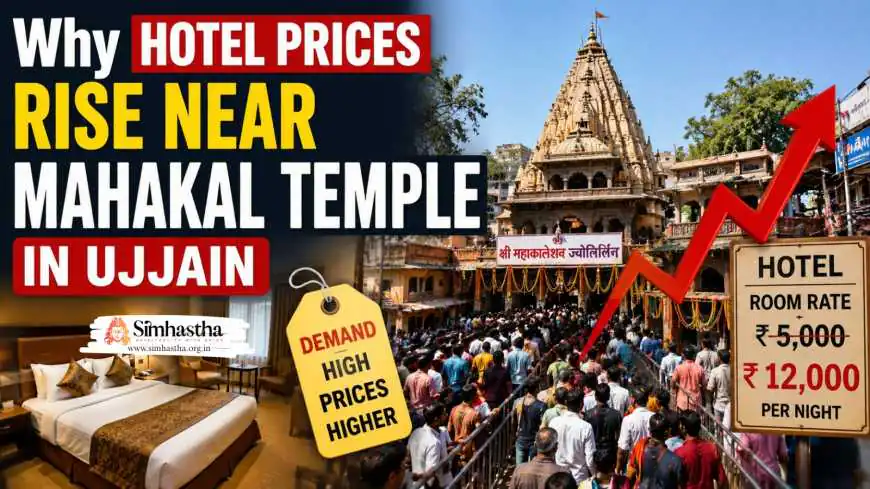
Hotel prices rise near Mahakal Temple primarily because of extreme demand-supply imbalance. Ujjain receives over 2.5 crore pilgrims annually, but only 15,000 hotel rooms exist within 5 kilometers of the temple. During peak seasons like Shravan (July-August), Mahashivratri (February-March), and Simhastha (once every 12 years), demand exceeds supply by 500-800% . Additional factors include the location premium (pilots will pay anything to avoid walking far), seasonal concentration of pilgrims (80% of visits happen in 4 months), limited land availability in the congested old city, and dynamic pricing algorithms used by booking apps. This isn't price gouging – it's basic economics amplified by faith-driven travel patterns.
The Numbers That Explain Everything: Demand vs Supply
Let me show you the raw math behind every expensive hotel bill in Ujjain.
Annual pilgrimage volume to Mahakal Temple: 2.5 to 3 crore devotees
Total hotel rooms within 5 kilometers of temple: Approximately 12,000 to 15,000
Trending Guides Now

Ultimate Hotel Booking Guide for Ujjain Visitors

Cheap Hotels Near Mahakaleshwar Temple Ujjain

Best Hotels Near Mahakal Mandir 2026 Guide

Budget vs Luxury Hotels in Ujjain Full Comparison

Ujjain Railway Station to Mahakaleshwar Temple Distance (2026 Guide)

Ujjain Simhastha 2028 Dates Announced: Full Shahi Snan & Event Timeline
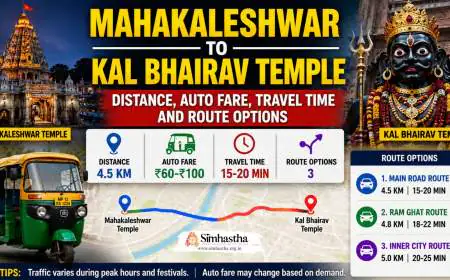
Mahakaleshwar to Kal Bhairav Temple: Distance, Auto Fare, Travel Time and Route Options

Ujjain Simhastha 2028 Road Widening Brings Action Against Religious Structures Houses and Shops
Average occupancy on regular days: 60-70%
Average occupancy during Shravan Mondays: 98-100%
Average occupancy during Mahashivratri week: 100% (overbooked)
Average occupancy during Simhastha: 100% with waiting lists
The gap: On a peak Shravan Monday, Ujjain hosts 5-8 lakh pilgrims but has only 15,000 hotel rooms. Assuming 4 people per room (families), that's accommodation for 60,000 people – just 10-12% of the pilgrim crowd. The remaining 88-90% either stay in dharamshalas (another 5,000 beds), commute from Indore (100 km away), or sleep in tents, vehicles, or open spaces.
When supply cannot meet even 15% of demand, prices rise. It is that simple.
The Location Premium: Walking Distance Costs More
Hotels closer to Mahakal Temple charge significantly more – and pilgrims willingly pay. Here is the real price difference by distance during regular season:
| Distance from Temple | Average Price (Mid-Range AC) | Premium Over Base |
|---|---|---|
| Under 300 meters | ₹3,500 - ₹5,000 | +100% to +150% |
| 300-600 meters | ₹2,200 - ₹3,000 | +40% to +80% |
| 600 meters - 1.2 km | ₹1,800 - ₹2,500 | +20% to +40% |
| 1.2 - 2 km | ₹1,500 - ₹2,000 | Base (0%) |
| Beyond 2 km | ₹1,200 - ₹1,800 | -10% to -30% (discount) |
Why this premium exists: For Bhasma Aarti at 4 AM, autos do not run reliably. For seniors with mobility issues, a 500-meter walk is comfortable but 2 kilometers is not. For families with children, proximity means fewer meltdowns. Pilgrims are not just paying for a room – they are paying for energy conservation, safety, and the ability to attend multiple aartis without transport hassles.
Real example: Hotel Abika Elite (200 meters from temple) charges ₹5,500-₹7,500. A similar-quality hotel in Freeganj (2.5 kilometers) charges ₹2,000-₹2,500. The 2.3-kilometer distance difference creates a ₹3,500-₹5,000 price gap. And both hotels sell out during peak seasons.
Seasonal Concentration: When 80% of Pilgrims Come in 4 Months
Ujjain does not have uniform demand throughout the year. Pilgrimage follows the Hindu calendar and weather patterns:
High season (October-February): 35-40% of annual pilgrims. Weather is pleasant (15-25°C). Hotel prices increase 20-35%.
Peak festival season (Shravan July-August + Mahashivratri Feb-March): 40-45% of annual pilgrims crammed into 6-8 weeks. Prices increase 60-150%.
Low season (March-June except festivals): 15-20% of annual pilgrims. Summer heat (38-42°C) deters travel. Prices drop to base or 10-15% below base.
Dead season (September, post-monsoon): 5-8% of annual pilgrims. Prices 15-25% below base.
The problem: Hotels cannot charge low-season prices year-round and survive. They have fixed costs – staff salaries, maintenance, loans, property taxes. They must earn 60-70% of their annual revenue in just 4-5 months. So when you book during Shravan or Mahashivratri, you are effectively subsidizing the hotel's low-season losses. This is not exploitation – this is seasonal business reality.

Shravan Month: The Most Expensive Time in Ujjain 🛕
Shravan (July-August) is the holiest month for Lord Shiva. Each Monday (Somvar) sees 3-5 lakh pilgrims in Ujjain. Hotel prices during Shravan follow this pattern:
| Hotel Category | Regular Price | Shravan Monday Price | Shravan Tuesday-Sunday Price |
|---|---|---|---|
| Dharamshala | ₹300 | ₹800-₹1,200 | ₹500-₹800 |
| Budget hotel (non-AC) | ₹700 | ₹2,000-₹3,000 | ₹1,200-₹1,800 |
| Budget hotel (AC) | ₹1,000 | ₹3,000-₹4,500 | ₹1,800-₹2,500 |
| Mid-range AC | ₹2,200 | ₹5,000-₹7,000 | ₹3,500-₹4,500 |
| Luxury hotel | ₹5,500 | ₹12,000-₹18,000 | ₹8,000-₹12,000 |
Why Shravan is uniquely expensive:
-
Weekly demand spikes: Hotels are empty on Tuesdays but full on Mondays. They cannot raise prices only on Mondays – instead, they raise prices for the entire weekend and Monday, knowing pilgrims will book 3-4 night packages.
-
Minimum stay requirements: Most hotels enforce 2-3 night minimum stays during Shravan Mondays. You cannot book just Monday night.
-
Advance booking window: Shravan hotel bookings open 2-3 months in advance and sell out within weeks.
Pilgrim truth: A regular ₹2,200 room costing ₹6,000 on Shravan Monday is not a scam. It reflects a hotel turning away 50 other pilgrims who also want that room. The price is the market clearing rate.
Mahashivratri: When Prices Double or Triple Overnight
Mahashivratri (February-March) is the single biggest night for Mahakal Temple. Over 10 lakh pilgrims visit on this day. Hotel prices follow a different surge pattern than Shravan:
-
3 days before Mahashivratri: Prices at 150% of regular
-
1 day before: Prices at 200-250% of regular
-
Mahashivratri night: Prices at 250-300% of regular (if any rooms available)
-
Next day: Prices drop to 120-150% of regular


Real example from Mahashivratri 2024: Shri Govindam Palace (₹2,200 regular) charged ₹5,800 for the night of Mahashivratri – a 163% increase. Hotel Abika Elite (₹5,500 regular) charged ₹14,500 – a 163% increase as well. Both sold out 45 days in advance.
Why Mahashivratri prices exceed Shravan prices: The demand is concentrated into a single 24-hour period rather than spread across multiple Mondays. Hotels earn a significant portion of their annual revenue in those 24-48 hours. Without those earnings, many small hotels would operate at a loss for the year.
Simhastha Kumbh Mela: The Ultimate Price Spike
Simhastha 2028 will be the most extreme example of hotel price inflation in Ujjain. Based on 2016 data and adjusted for inflation, here is what happened and what will happen:
2016 Simhastha actual price data:
-
Regular ₹1,000 budget room → Simhastha price ₹3,500-₹5,000 (3.5x to 5x)
-
Regular ₹2,200 mid-range room → Simhastha price ₹7,500-₹9,000 (3.4x to 4x)
-
Regular ₹5,500 luxury room → Simhastha price ₹18,000-₹25,000 (3.3x to 4.5x)
-
Dharamshala ₹300 bed → Simhastha price ₹1,000-₹1,500 (3.3x to 5x)
Why Simhastha prices are not "gouging":
-
Duration of demand: Simhastha runs for 30-45 days, but hotels must block out those rooms for 2-3 months (preparation + dismantling). They lose the ability to book regular tourists during that entire window.
-
Staffing costs: Hotels hire 2-3x temporary staff, pay overtime, and arrange 24-hour operations.
-
Wear and tear: 30 days of 100% occupancy with families causes significant property damage – repainting, deep cleaning, furniture repairs.
-
Opportunity cost: A hotel turning away 10 regular guests to accommodate 1 Simhastha pilgrim needs to charge accordingly.
Real pilgrim experience 2016: A family from Pune booked Hotel Mittal Paradise (regular ₹2,000) for ₹7,500 during Simhastha. They were furious at the price. Then they saw the alternative – hotels 8 kilometers away charging ₹5,000 but requiring 2-hour commutes each way. They paid ₹7,500 and considered it fair given the convenience.
Limited Land and Construction Constraints in Old Ujjain
Unlike newer cities, the area around Mahakal Temple is dense, old, and physically constrained:
-
Narrow lanes: Most roads near the temple are 8-12 feet wide – too narrow for modern hotel construction equipment.
-
Heritage regulations: The area around Mahakal Temple has building height restrictions (maximum ground + 2 floors in most zones) to preserve the temple's visual prominence.
-
Land prices: Commercial land within 500 meters of Mahakal Temple costs ₹5-10 crore per 1,000 square feet – among the most expensive real estate in Madhya Pradesh.
-
No expansion possible: The temple is surrounded by residential neighborhoods that are already built to capacity. There is no vacant land for new hotels.
The result: No new hotels can be built within 300 meters of the temple. The existing hotels (approximately 30-40 properties) represent fixed, non-expandable supply. When demand grows (and it grows every year as Ujjain's fame increases), those 30-40 hotels simply raise prices. There is no other market response possible.
Dynamic Pricing and Booking App Algorithms
If you have ever searched for Ujjain hotels on Booking.com, Agoda, or Goibibo, you have seen prices change within hours. This is dynamic pricing – algorithms that adjust rates based on real-time demand.
How it works near Mahakal Temple:
-
Step 1: 100 people search for hotels on a specific date.
-
Step 2: Algorithm detects unusually high search volume.
-
Step 3: Prices increase 10-20% within 2-3 hours.
-
Step 4: If people continue searching and booking, prices rise further.
-
Step 5: If searches drop, prices slowly decrease.
Real example observed in 2024: A user searched for Mahashivratri dates on Booking.com. Price showed ₹4,500 for Hotel Mittal Paradise. They waited 6 hours to decide. Price increased to ₹5,800. They panicked and booked. The algorithm detected their hesitation and raised the price to capture maximum willingness to pay.
How to beat dynamic pricing:
-
Use incognito mode when searching (algorithms track your cookies)
-
Search on weekdays (Tuesday-Thursday) when fewer people search
-
Book 2-3 months in advance for festivals – dynamic pricing has not yet activated
-
Call hotels directly – they often offer fixed prices lower than app dynamic rates
Festival Surcharges and Minimum Stay Requirements
Beyond base price increases, hotels add two additional pricing mechanisms:
Festival Surcharge (₹500-₹2,000 extra per night)
This is a mandatory add-on during Shravan, Mahashivratri, Diwali, and Simhastha. Hotels justify it as covering "special arrangements" – extra security, crowd management, holiday staff wages. Some display it openly, others add it only at check-in.
How to spot it: When calling a hotel, ask "Is there any festival surcharge beyond the room rate?" If they hesitate or say "it depends," assume an extra ₹1,000-₹1,500 per night.
Minimum Stay Requirements (2-7 nights minimum)
During peak periods, hotels refuse single-night bookings. You must book 2-7 consecutive nights.
| Period | Typical Minimum Stay |
|---|---|
| Shravan Monday weekend | 2-3 nights |
| Mahashivratri | 2-4 nights |
| Simhastha | 5-7 nights |
| Regular days | No minimum |
The financial impact: A 3-night minimum stay at ₹5,000 per night = ₹15,000 total. If you only needed 2 nights, you still pay for 3 or cannot book at all. This pricing strategy ensures hotels maximize revenue from limited rooms.
The Dharamshala Alternative and Its Own Price Logic
Even dharamshalas – the cheapest accommodation – raise prices during peak seasons. Why? Because they are also subject to demand-supply.
Dharamshala price patterns:
-
Regular days: ₹150-₹400
-
Shravan weekends: ₹500-₹800
-
Mahashivratri: ₹800-₹1,200
-
Simhastha: ₹1,000-₹1,500
But dharamshalas cannot raise prices as much as hotels because:
-
They are run by charitable trusts with religious mandates to serve pilgrims affordably
-
Regular donors would protest excessive pricing
-
They receive subsidies and donations that hotels do not
The trade-off: You pay less, but you get common bathrooms, no AC, no privacy, and you must arrive early (before 10 AM) to secure a room. For budget pilgrims, this trade-off is worth it.
How Far in Advance You Must Book to Avoid Peak Prices
The earlier you book, the lower the price. Here is the optimal booking window for each season:
| Season | Booking Window | Price vs Last-Minute |
|---|---|---|
| Regular days | 2-7 days | No difference |
| October-February peak | 2-4 weeks | Save 10-15% |
| Shravan (July-August) | 6-8 weeks | Save 20-30% |
| Mahashivratri | 8-10 weeks | Save 30-40% |
| Simhastha | 6-8 months | Save 40-50% |
Real example: For Mahashivratri 2024, a pilgrim booking 10 weeks in advance paid ₹3,800 for a room that cost ₹5,800 for last-minute bookings (1 week before). The early bird saved ₹2,000 – 34%.
Why early booking beats dynamic pricing: Algorithms raise prices as the date approaches and rooms fill. By booking early, you lock in the base rate before the algorithm detects demand.
The Human Cost of Price Rises: Real Pilgrim Stories
Behind every price statistic is a pilgrim's experience. Here are two real stories from 2023 Shravan:
Story 1 – The family who almost cancelled:
The Patil family from Nashik (2 adults, 2 children, grandmother aged 72) planned a 3-night Shravan trip. Budget: ₹15,000 for hotel. Online prices showed ₹22,000-₹28,000. They almost cancelled. Then they called Hotel Mittal Paradise directly, explained the grandmother's age, and requested a ground-floor room. The manager offered ₹18,000 for 3 nights – not cheap, but within reach. They paid, went, and had a blessed darshan. The grandmother still talks about walking to the temple in 8 minutes.
Story 2 – The solo pilgrim who slept at the railway station:
A solo traveler from Hyderabad arrived in Ujjain on Mahashivratri without booking. Every hotel within 5 kilometers was full. Every dharamshala had waiting lists. He spent the night at Ujjain Railway Station's waiting room, took an early morning auto to the temple, had darshan, and left the same day. He paid ₹0 for accommodation but lost a night's sleep and felt unsafe. He now books 2 months in advance for every pilgrimage.
The lesson: Price rises are not just about money. They are about access. Those who book early and pay higher prices secure a bed, rest, and peaceful darshan. Those who wait or hope for last-minute deals often end up disappointed or worse.
Is It Price Gouging or Fair Market Economics?
This is the question every pilgrim asks. Let me give you an honest answer.
Arguments for "price gouging":
-
Hotels charge 3-4 times regular rates during Simhastha – that feels excessive
-
Some hotels add surprise surcharges at check-in
-
Dynamic pricing algorithms seem manipulative
-
Pilgrims on fixed incomes (seniors, rural families) struggle to afford peak rates
Arguments for "fair market economics":
-
Hotels have fixed costs year-round but earn 60-70% revenue in 4 months
-
Land near temple is extremely expensive – hotels have high debt servicing
-
Staff require overtime and hazard pay during crowds
-
Without peak pricing, hotels would close, reducing supply further
-
Dharamshalas remain affordable (₹1,000-₹1,500 during Simhastha) – the charitable option exists
My conclusion after 20+ Ujjain visits: Most hotels are not gouging – they are surviving. The true culprit is the demand-supply gap caused by Ujjain's growing popularity and the physical inability to build more rooms near the temple. If 5 lakh pilgrims want 15,000 rooms, economics dictates that prices will rise until only 15,000 pilgrims can afford them. That is not greed. That is math.
What IS unacceptable: Hidden surcharges disclosed at check-in, refusing to show prices on phone calls, and harassing pilgrims who ask for rate breakdowns. Avoid hotels that engage in these practices.
How to Beat the Price Rise System: Practical Strategies ✅
You cannot change demand and supply. But you can change how you book.
Strategy 1: Book 6-8 months in advance for festivals
Mahashivratri 2029? Book by December 2028. Shravan 2028? Book by March 2028. Simhastha 2028? Book by September 2027.
Strategy 2: Stay in Freeganj or Madhav Nagar (2-3 km away)
Pay ₹1,500-₹2,000 instead of ₹5,000-₹7,000. Use the ₹3,000-₹5,000 saved to hire a private auto for the entire day (₹800-₹1,000) and still save money.
Strategy 3: Visit in low season (September or February-March after Mahashivratri)
Prices drop 15-25%. Weather is pleasant. Crowds are manageable. You will have a calmer, more spiritual experience.
Strategy 4: Use dharamshalas for budget stays
₹300-₹1,500 is affordable for any pilgrim. Accept the lack of luxury as part of the pilgrimage discipline.
Strategy 5: Call hotels directly, never book blindly on apps
Direct booking saves 10-15% (no app commission). Negotiate long stays. Ask about all surcharges upfront.
Strategy 6: Travel on Tuesday-Thursday, avoid weekends
Shravan Tuesday is 30-50% cheaper than Shravan Monday. The temple is less crowded. Darshan is faster. Your wallet is happier.
The Spiritual Perspective: Mahakal Does Not Check Your Hotel Bill
After all this talk of money, let me remind you why you come to Ujjain. Mahakal is the Lord of Time, the destroyer of ego, the one who sees beyond material wealth.
When you stand in the sanctum, watching the Bhasma Aarti at 4 AM, the hotel price you paid does not matter. The wealthy industrialist in a ₹15,000 suite and the farmer in a ₹300 dharamshala receive the same blessing. The same cold ash falls on both foreheads. The same bells ring for both ears.
Do not let price anxiety overshadow your devotion. Budget wisely, book early, pay what you can afford, and then release the worry. Mahakal knows your heart, not your hotel bill.
Practical advice wrapped in spiritual wisdom: If you cannot afford peak prices, come in low season. The temple is open every day. The Lord is present every moment. The pilgrimage is between you and Mahakal – not between you and the hotel industry.
Plan smartly, spend peacefully, and may your darshan be filled with light. 🔱
Frequently Asked Questions