





















Ultimate Hotel Booking Guide for Ujjain Visitors
The ultimate hotel booking guide for Ujjain visitors covers everything from temple proximity to cancellation policies. Book safely and save money on your pilgrimage.


Ultimate Hotel Booking Guide for Ujjain Visitors
The ultimate hotel booking guide for Ujjain visitors starts with a simple truth that most travel blogs won't tell you – booking a room in this sacred city has almost nothing to do with hotel quality and everything to do with understanding the unique rhythm of pilgrim travel. Ujjain is not a leisure destination. It is a living temple town where hotel prices triple overnight during Shravan month, where "walking distance" can mean completely different things depending on the season, and where the difference between a peaceful stay and a logistical nightmare comes down to three things: timing, location, and knowing exactly what you are booking.
I have helped hundreds of pilgrims navigate Ujjain's accommodation landscape, and I have seen every possible booking mistake you can imagine. This guide brings together everything I have learned – from the best booking windows to the red flags that signal trouble, from refund strategies to the secret dharamshalas that never appear on booking apps. Whether you are visiting for the first time or the twentieth, these strategies will save you money, protect your peace of mind, and ensure your focus stays exactly where it belongs – on Mahakal's darshan.
When to Book Your Ujjain Hotel – A Month-by-Month Strategy 📅
The single biggest mistake pilgrims make is treating Ujjain like a normal tourist city where you can book a week ahead. You cannot. The booking calendar looks completely different depending on when you travel.
Regular Weeks (February to June, excluding festivals)
Booking window: 1 to 3 weeks in advance
Trending Guides Now

Top Rated Hotels Near Mahakal Temple Ujjain
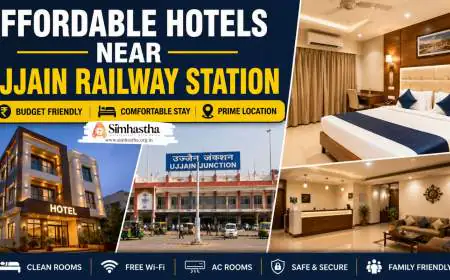
Affordable Hotels Near Ujjain Railway Station

Couple Friendly Hotels Near Mahakal Temple Ujjain: Latest Update for 2026

15 Budget Hotels Near Mahakal Temple Ujjain Under ₹1500

Ujjain Railway Station to Mahakaleshwar Temple Distance (2026 Guide)

Ujjain Simhastha 2028 Dates Announced: Full Shahi Snan & Event Timeline
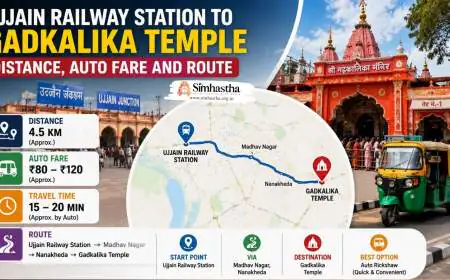
Ujjain Railway Station to Gadkalika Temple: Distance, Auto Fare and Route
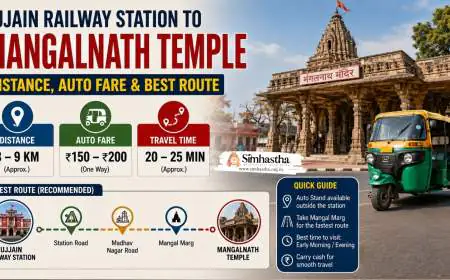
Ujjain Railway Station to Mangalnath Temple: Distance, Auto Fare and Best Route
These months offer the most flexibility. February and March have pleasant weather, and hotels operate at 60–70% occupancy on non-festival weekends. You can book 7–10 days ahead and still find decent options. However, avoid the Mahashivratri week (usually February/March) – that requires completely different timing.
Pro tip: Weekdays (Monday to Thursday) see much lower demand. If your schedule allows, arrive on a Tuesday or Wednesday for the best walk-in deals. Hotels often offer 20–30% lower rates for weekday stays compared to Friday–Sunday.
Monsoon Season (July to September)
Booking window: 2 to 4 weeks in advance, but book refundable
Monsoon brings unpredictable train cancellations and road flooding. You absolutely need refundable bookings during these months, even if they cost 15–20% more. The good news? Hotel demand drops slightly because some pilgrims avoid rain travel. However, Shravan month (usually July–August) completely changes the picture – see below.
Pro tip: When booking refundable for monsoon, set a calendar reminder for the cancellation deadline. Trains get cancelled 24–48 hours in advance. Do not miss your window.
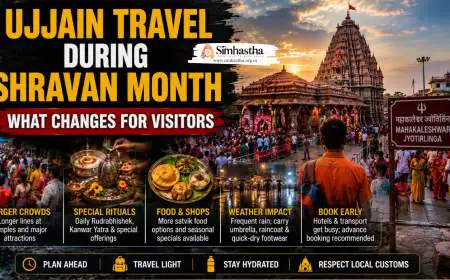
Shravan Month (July–August, especially Mondays) 🔱
Booking window: 6 to 8 weeks in advance, immediately when booking opens
Shravan is Ujjain's busiest month. Every Monday sees massive crowds. Hotels operate at 95–100% occupancy. Refundable options practically vanish – you will pay non-refundable rates and like it. The best properties book solid for the entire month within 2–3 weeks of opening reservations.
Pro tip: For Shravan Mondays, book the entire weekend (Friday to Monday) even if you only want Monday. Hotels impose minimum 2–3 night stays. Trying to book just the Monday night often results in "no rooms" – hotels prefer longer bookings.
Post-Monsoon to Winter (October to February)
Booking window: 3 to 5 weeks in advance
This is Ujjain's high season for comfortable weather. October to February offers cool temperatures perfect for temple visits. Weekends see heavy domestic tourism. Book at least a month ahead for weekend stays. Weekday bookings remain flexible at 2 weeks.
Pro tip: December and January mornings are cold (5–10°C). If you plan early morning Bhasm Aarti, confirm the hotel has geyser or solar hot water. Many budget properties do not.
Festival Weeks (Mahashivratri, Kartik Purnima, etc.)
Booking window: 8 to 12 weeks in advance
During Mahashivratri week, Ujjain transforms. Hotel rates multiply by 3–5 times. Non-refundable bookings with 100% advance payment become standard. You are competing with pilgrims from across India and international visitors.
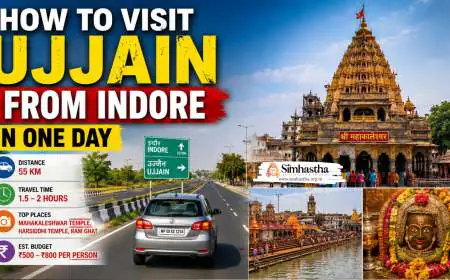
Pro tip: If you cannot secure Ujjain accommodation for Mahashivratri, consider staying in Indore (55 km) or Dewas (30 km) and traveling for the main darshan. Indore has hundreds of hotels at normal prices. Early morning trains and buses connect easily.
Where to Stay – Zone-by-Zone Location Guide
Ujjain's accommodation divides into five distinct zones. Each serves different pilgrim needs.

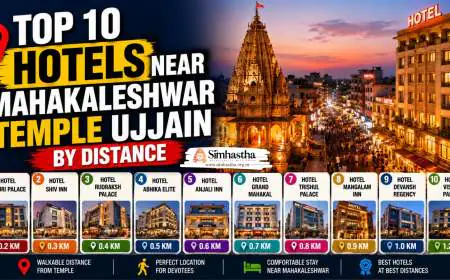
Zone 1: Inside Mahakal Temple Walled City (0–500 meters) 🛕
Walking time to temple: 2–8 minutes
What you get: Unbeatable proximity. You can attend Bhasm Aarti at 4 AM without transportation. Return to your room between darshans. Feel the temple's energy throughout your stay.
What you sacrifice: Narrow lanes, street noise until late night, very limited parking, smaller rooms, generally older buildings.
Price range: ₹1,500–₹6,000 (budget hotels and premium properties)
Best for: Bhasm Aarti attendees, elderly pilgrims who cannot walk far, first-time visitors wanting the full experience.
Representative hotels: Hotel Abika, Hotel Atharva, Shri Mahakal Dham
Booking advice: Book these 4–8 weeks ahead for regular weekends. For Shravan, book as soon as reservations open. They sell out first.
Zone 2: Station Area (Near Ujjain Junction, 1–2 km from temple)
Walking time to temple: 20–30 minutes (auto 5–10 minutes, ₹30–50)
What you get: Better room sizes, lower prices (30–50% less than Zone 1), easier parking, modern buildings, quieter at night.
What you sacrifice: Need auto or taxi for each temple visit. Late night returns after Aarti require negotiating with drivers.
Price range: ₹800–₹3,000

Best for: Train travelers, budget pilgrims, families with children needing space, car travelers.
Representative hotels: Hotel Siddhi Vinayak, Hotel Shanti Palace
Booking advice: These have more inventory than Zone 1. Book 2–4 weeks ahead. During festivals, still book early – they fill too.
Zone 3: Nanakheda / Dewas Road (2–4 km from temple)
Walking time to temple: Not walkable (auto 10–15 minutes, ₹80–120)
What you get: Largest rooms, modern amenities, excellent parking, peaceful surroundings, newer properties.
What you sacrifice: Complete dependence on transportation. Each temple trip requires planning. Spiritual atmosphere less immediate.
Price range: ₹1,500–₹5,000
Best for: Families with young children, long stays (4+ nights), car travelers, visitors who prioritize comfort over proximity.
Representative hotels: Hotel Shri Ganesha, Hotel Mittal Avenue, Hotel Dev Palace
Booking advice: More availability than central zones. Book 2–3 weeks ahead. This zone has the most last-minute options.
Zone 4: Dharamshala Area (Mix of locations, mostly near temple)
Walking time to temple: 5–15 minutes
What you get: Lowest prices (₹150–₹800), spiritual atmosphere, community kitchens, connection with fellow pilgrims.
What you sacrifice: Basic facilities (shared bathrooms, bucket hot water), strict rules (early gates close, silence requirements), no frills.
Price range: ₹150–₹1,000
Best for: Serious pilgrims on tight budgets, long-term spiritual seekers, those who value atmosphere over amenities.
Representative dharamshalas: Shri Ramkrishna Ashram, Gayatri Teerth, Jain Dharamshalas
Booking advice: Phone booking only. Call 4–8 weeks ahead for festivals. Walk-ins possible on regular days but not guaranteed.
Zone 5: Rural Homestays (Villages 5–15 km from Ujjain)
Walking time to temple: Not applicable (require own transport or arranged pickups)
What you get: Peaceful rural atmosphere, authentic local experiences, farm-fresh meals, escape from city crowds.
What you sacrifice: Distance from temple – each visit requires planned travel. Limited dining options.
Price range: ₹2,000–₹8,000 (often includes meals)
Best for: Extended stays (5+ days), families wanting retreat atmosphere, Simhastha period overflow.
Representative options: MP Tourism registered village homestays (Undasa, etc.)
Booking advice: Book through MP Tourism official portal. These are expanding for Simhastha 2028 but limited inventory.
How to Choose Between Hotels, Dharamshalas, and Homestays
This decision shapes your entire pilgrimage experience. Let me help you match your needs to the right accommodation type.
Choose a hotel if: You want private attached bathroom, 24-hour hot water, AC, room service, parking, and flexible timings. Hotels cost ₹1,200–₹10,000. Best for families, elderly, first-time visitors, and those with specific comfort needs.
Choose a dharamshala if: You are comfortable with basic facilities, want to save money (₹150–₹800), value spiritual atmosphere, and do not mind shared bathrooms or strict rules. Best for solo pilgrims, students, long-term stays, and devotees focused entirely on temple visits.
Choose a homestay if: You want authentic local experience, home-cooked food, peaceful surroundings, and do not mind being outside the city center. Best for families on extended stays, cultural travelers, and Simhastha overflow accommodation.
Hybrid strategy: Book a hotel for the first 2 nights to get comfortable, then shift to a dharamshala for the remaining stay. This works well for 5+ day pilgrimages.
Booking Platforms – Which One Should You Use?
Different platforms serve different needs. Here is my honest assessment after years of Ujjain bookings.
MakeMyTrip – Best for Overall Selection
Strengths: Largest inventory of Ujjain hotels, clear refundable/non-refundable labels, reliable customer service, good cancellation process.
Weaknesses: Slightly higher prices than direct booking (10–15% commission built in), interface can be busy.
Best for: First-time bookers, family bookings, when you want comparison across many properties.
Goibibo – Best for Discounts and Coupons
Strengths: Frequent coupon codes (5–15% off), GO Cash rewards for repeat bookings, good for budget properties.
Weaknesses: Smaller inventory than MakeMyTrip, customer service sometimes slower.
Best for: Budget pilgrims, repeat Ujjain visitors with GO Cash saved.
Agoda – Best for International Pilgrims
Strengths: Handles international payments smoothly, foreign language support, good for last-minute bookings.
Weaknesses: Some Ujjain hotels not listed, refund process can be slower.
Best for: International pilgrims, those booking from outside India.
Booking.com – Best for "Pay at Hotel" Options
Strengths: Widest selection of "Book Now, Pay Later" properties, free cancellation on many bookings, no advance payment required.
Weaknesses: Prices sometimes higher than Indian platforms, fewer discount coupons.
Best for: Pilgrims wanting maximum flexibility, those uncomfortable with advance payment.
Direct Hotel Booking – Best for Lowest Prices
Strengths: 10–20% lower than platform prices, hotels prefer direct bookings, direct communication for special requests.
Weaknesses: Harder to compare multiple hotels, no platform protection if something goes wrong, require phone calls.
Best for: Repeat visitors who know their preferred hotels, groups needing multiple rooms, confident negotiators.
How to do it: Find the hotel on MakeMyTrip for reference price. Call the hotel directly and ask: "Your room shows ₹3,000 on MakeMyTrip. What is your direct booking rate?" Most offer ₹2,500–2,700.
Red Flags – How to Spot Problem Hotels Before Booking ⚠️
After helping pilgrims recover from bad bookings, I have developed this checklist of warning signs.
On Booking Platforms:
Red flag #1: No recent reviews (last review older than 3 months)
What it means: Hotel may have changed management, declined in quality, or been removed from platform for violations.
Red flag #2: Multiple 5-star reviews from accounts with only 1 review
What it means: Fake reviews. Sort by "lowest rating" first. Read 1-star and 2-star reviews carefully.
Red flag #3: Vague location description ("near temple" without distance)
What it means: Hotel is likely far. Type the address into Google Maps and check actual walking distance to Mahakal Temple.
Red flag #4: "Free cancellation" with 14+ days notice required
What it means: Not truly free. Look for 24–72 hour cancellation windows.
Red flag #5: Prices 50% below market average for peak season
What it means: Too good to be true usually is. Scam or terrible property.
When Calling the Hotel:
Red flag #6: No clear answer about hot water availability
What it means: They probably do not have reliable hot water. Ask specifically: "Is there a geyser in the room? What hours is hot water available?"
Red flag #7: Requests full payment via bank transfer
What it means: Potential scam. Legitimate hotels accept cards, UPI through registered apps, or cash on arrival.
Red flag #8: Cannot provide a clear address or landmark
What it means: Hotel may not exist at the claimed location. Ask for "nearest landmark" and verify on Google Maps street view.
Red flag #9: Pressures you to book immediately ("only 1 room left")
What it means: High-pressure sales tactic. During regular days, Ujjain always has rooms. Only during festivals is urgency real.
Red flag #10: Unwilling to confirm cancellation policy in writing (text or email)
What it means: They will change terms later. Get everything in writing.
Refundable vs Non-Refundable – The Right Choice for Your Trip
This decision costs pilgrims thousands of rupees every year. Here is exactly how to decide.
Book Refundable When:
✅ You are traveling during monsoon (July–September)
✅ You have not confirmed train or flight tickets
✅ Your travel dates are more than 60 days away
✅ Elderly or young children are in your group
✅ Your work leave is not yet approved
✅ You want peace of mind more than saving ₹500–1,000
Book Non-Refundable When:
✅ Your train/flight tickets are confirmed and non-changeable
✅ You are traveling during festival season (refundable options may not exist)
✅ Your travel dates are absolutely fixed (weddings, confirmed group trips)
✅ The price difference exceeds 25–30%
✅ You have travel insurance that covers cancellation
The math: For a 3-night stay at ₹3,000/night, refundable might cost ₹3,600/night (₹1,800 extra total). If your cancellation risk is 15%, expected loss from non-refundable is ₹9,000 × 15% = ₹1,350. Since ₹1,350 < ₹1,800, non-refundable is mathematically better if your risk is under 20%. Most pilgrims overestimate their cancellation risk.
Festival Season Booking – Survival Strategies 🔱
Ujjain during festivals operates under completely different rules. Here is your survival guide.
Shravan Month (July–August)
The reality: Hotels at 95–100% occupancy. Non-refundable rates only. Minimum 2–3 night stays.
Strategy: Book 6–8 weeks ahead. If you cannot find rooms, stay in Indore and take early morning trains (5 AM, 6 AM) to Ujjain. Return to Indore at night. This adds travel time but guarantees accommodation.
Alternative: Look for MP Tourism tent cities – they expand capacity during Shravan. Not luxury, but clean and safe.
Mahashivratri Week
The reality: Ujjain's busiest single festival. Hotel rates triple to quintuple. Bookings open 3 months ahead and sell out in days.
Strategy: Book as soon as reservations open. Have all guest details ready. Consider arriving 2 days before Mahashivratri and leaving 1 day after – avoiding the peak night reduces competition.
Extreme alternative: Stay in Dewas (30 km) or Indore (55 km). Buses and trains run through the night on Mahashivratri. Many pilgrims use this strategy successfully.
Kartik Purnima and Other Full Moons
The reality: High demand but not as extreme as Shravan or Mahashivratri. Prices increase 50–100%.
Strategy: Book 4–6 weeks ahead. If you are flexible, arrive 1 day before or after Purnima – the temple still has special rituals on adjacent days with smaller crowds.
Last-Minute Booking – How to Find Rooms When Everything Shows "Sold Out"
You arrive in Ujjain, open MakeMyTrip, and every hotel shows "sold out." Do not panic. Here is what works.
Step 1: Go to the MP Tourism office near the railway station. They maintain a live list of available rooms across the city, including dharamshalas that do not list online.
Step 2: Visit the Temple Trust office near Mahakal Temple. They sometimes have basic accommodation for genuine pilgrims stranded without rooms.
Step 3: Expand your search to Dewas (30 km) . Many pilgrims overlook this. Trains and buses run frequently. Auto from Dewas to Ujjain costs ₹300–400.
Step 4: Check rural homestays through MP Tourism portal. These often have availability when city hotels are full.
Step 5: As absolute last resort, Ujjain railway station retiring rooms (with confirmed train ticket) provide basic shelter. Also, 24-hour dhabas on Dewas Road sometimes allow pilgrims to rest overnight for a small fee.
What does NOT work: Walking into Zone 1 hotels and asking for rooms during festivals. They have been booked for weeks.
Special Pilgrim Needs – Booking for Elderly, Disabled, and Solo Travelers
For Elderly Pilgrims (70+ years)
Non-negotiable requirements: Ground floor or elevator, attached bathroom with grab bars, 24-hour hot water, quiet room for afternoon rest, easy auto access.
Recommended zones: Zone 1 (walking distance) but verify elevator – many older Zone 1 hotels have stairs only. Zone 2 station area hotels often have elevators and better accessibility.
Booking advice: Call the hotel and speak to the manager. Explain mobility constraints. Ask specifically: "Is there a step from the parking area to the room?" Many "ground floor" rooms still have 2–3 steps.
For Pilgrims with Disabilities
Non-negotiable requirements: Wheelchair accessibility (ramps, wide doors), accessible bathroom, staff trained to assist, proximity to temple.
Recommended hotels: Hotel Abika (ramp access, wheelchair-friendly rooms), Hotel Imperial (full accessibility, trained staff), MP Tourism Yatri Niwas (government accessibility standards).
Booking advice: Book 6–8 weeks ahead. Confirm accessible room types directly with hotel manager. Do not rely on booking platform accessibility filters – call to verify.
For Solo Female Pilgrims 🚺
Non-negotiable requirements: 24-hour staffed reception, secure room locks, good lighting in corridors, CCTV in common areas, female staff available.
Recommended dharamshalas: Shri Ramkrishna Ashram (women's wing with female staff), Gayatri Teerth (family-oriented, night security).
Recommended hotels: Hotel Kalinga (good security reviews), Hotel Abika (professional front desk).
Booking advice: Read reviews mentioning "solo female" specifically. Avoid properties in isolated lanes – verify on Google Maps street view. Share live location with family. Arrive before dark.
Money-Saving Strategies That Actually Work
Strategy 1: Book longer stays – Hotels offer better rates for 3+ nights. A 3-night booking might cost ₹2,800/night while 1 night costs ₹3,500/night.
Strategy 2: Travel Tuesday to Thursday – Weekend rates (Friday–Sunday) run 20–40% higher. Midweek savings alone often fund your entire prasadam budget.
Strategy 3: Call the hotel directly – After finding prices on MakeMyTrip, call the hotel. "Can you match ₹2,800 if I book direct?" Most will offer ₹2,500–2,600.
Strategy 4: Skip AC rooms in winter – November to February, Ujjain nights are cool (10–15°C). Non-AC rooms cost 30–40% less and are perfectly comfortable.
Strategy 5: Use GO Cash and reward points – If you book Ujjain hotels regularly, stick to one platform (Goibibo or MakeMyTrip) and accumulate rewards.
Strategy 6: Book refundable early, then switch – Book a refundable room 3 months ahead at a slightly higher rate. Two months before travel, check if non-refundable rates dropped. Cancel refundable and book non-refundable. This works only if you remember to cancel.
Your Booking Checklist – Before You Click "Pay"
Run through this checklist for every Ujjain hotel booking:
-
Confirmed walking distance to Mahakal Temple (Google Maps verified)
-
Read 5 lowest-rated reviews completely
-
Verified cancellation policy (24–72 hours ideal, not 14+ days)
-
Confirmed hot water availability (geyser or solar, with hours)
-
Checked parking availability if driving
-
Verified elevator or ground floor if mobility challenged
-
Screenshotted booking confirmation and cancellation policy
-
Set calendar reminder for cancellation deadline
-
Saved hotel phone number for check-in day contact
-
Shared booking details with family
The Smart Pilgrim's Booking Philosophy
After all the strategies, platforms, and price comparisons, here is what I have learned watching thousands of pilgrims book their Ujjain stays.
The perfect hotel does not exist. The hotel that puts you closest to Mahakal might have uncomfortable beds. The hotel with the best reviews might be further than you want. The cheapest dharamshala might have cold water some mornings.
But here is the truth that changes everything – you are not coming to Ujjain for the hotel. You are coming for Mahakal's darshan. A few hours of imperfect sleep will not diminish the moment you stand before the Jyotirlinga. The hotel is just the container for your rest, not the content of your pilgrimage.
Book smart. Book safe. But once you book, let go. Trust that Mahakal has brought you this far, and he will take care of the rest. The right room will be there – maybe not the one you expected, but the one you needed.
Now go book your stay. And then come stand in Mahakal's queue. That is where the real journey begins. 🛕🔱🙏
Frequently Asked Questions