




























What Is Trinetra in Ujjain? Mahakal AI Project, Award & Railway Theme
Discover what Trinetra means in Ujjain, from Mahakaleshwar Temple’s AI surveillance project to the Trinetra-inspired Ujjain Railway Station redevelopment theme.
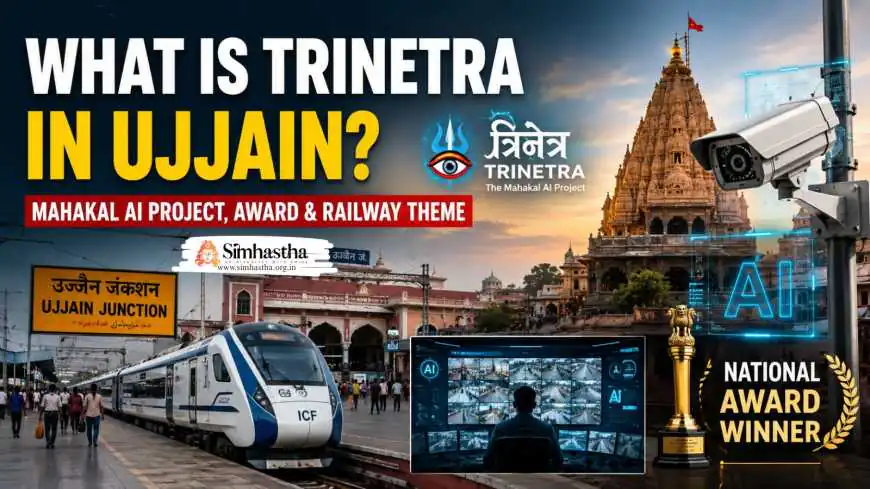


What Is Trinetra in Ujjain? Mahakal AI Project, Gold Award and Railway Station Theme Explained
Ujjain is a city where ancient faith and modern development walk side by side 🕉️🏙️. Over the last few years, one word has started carrying a special meaning in the city’s public conversation: Trinetra 👁️. For devotees, Trinetra naturally evokes Lord Shiva’s third eye, a symbol of divine awareness, power, protection, and cosmic vision 🔱. But in today’s Ujjain, the word has moved beyond symbolism. It now refers to one of the city’s most important modern transformation stories, linked both to Mahakaleshwar Temple security and to the new identity-driven infrastructure of Ujjain.
When residents, pilgrims, and researchers search for “Trinetra Ujjain”, they are usually referring to two separate but related developments 👇
1️⃣ TRINETRA AI Surveillance System
This is the AI-powered surveillance and crowd management project associated with the Mahakal Rudrasagar Integrated Development Area (MRIDA) around the Shri Mahakaleshwar Temple 📹🛕. Its purpose is to improve security, public safety, crowd monitoring, and real-time response in one of India’s busiest pilgrimage destinations.
2️⃣ Trinetra-Inspired Ujjain Railway Station Redevelopment
This is a separate infrastructure story 🚆✨. The redevelopment of Ujjain Railway Station has been linked to a Trinetra-inspired architectural theme, bringing Lord Shiva’s sacred symbolism into the city’s transport gateway.
Trending Guides Now

Simhastha 2028 Mega Development Plan Revealed: How Ujjain Is Being Transformed Forever
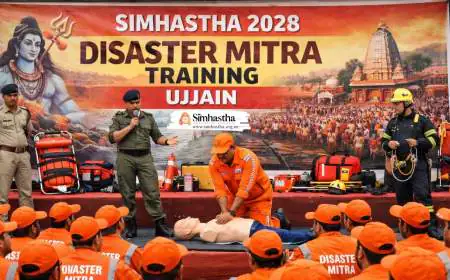
Simhastha 2028 Latest Update: Disaster Mitra Training Begins in Ujjain

Big Update: Who Will Handle the Ujjain–Maksi Four-Lane Road and When Does It Start?”

Ujjain Airport Project: A Historic Leap Before Simhastha 2028

Ujjain Railway Station to Mahakaleshwar Temple Distance (2026 Guide)

Ujjain Simhastha 2028 Dates Announced: Full Shahi Snan & Event Timeline

Mangalnath Temple Trip Budget: Puja, Local Transport, Food and Stay Planning

Omkareshwar Trip Budget Guide: Transport, Stay, Food and Local Travel Costs
Both of these developments matter deeply for Ujjain ❤️. One is about protecting a major pilgrimage zone with advanced technology, while the other is about reimagining how the city presents itself to devotees and visitors arriving by rail. Together, they show how Ujjain is blending faith, security, tourism infrastructure, digital governance, and spiritual identity into one larger story 🌆🔱📡.
In this detailed guide, we will understand what Trinetra means in Ujjain, how the TRINETRA AI project works around Mahakaleshwar Temple, why it earned national attention, how it connects to MRIDA and Simhastha planning, and why the railway station’s Trinetra-inspired redevelopment is also part of Ujjain’s changing future.
What Does Trinetra Mean in Ujjain?
The word Trinetra literally means “three eyes” and is strongly associated with Lord Shiva 🔱👁️. Shiva’s third eye symbolizes wisdom, vigilance, destruction of evil, awareness, and supreme consciousness. In Ujjain, the city of Mahakal, this symbolism is especially powerful because Mahakaleshwar is not just a temple deity here, but the spiritual center of the city’s identity, economy, pilgrimage movement, and cultural memory 🛕🙏.
That is why the word Trinetra fits Ujjain so naturally. It combines devotion with watchfulness. It represents both Shiva’s divine gaze and the idea of a city that sees, monitors, protects, and manages itself intelligently 👁️📡.
In practical terms, Trinetra in Ujjain is now associated with two major public narratives:
- The TRINETRA AI-based surveillance and crowd management project in the Mahakal and Rudrasagar development area 📹
- The Trinetra-inspired design concept of Ujjain Railway Station redevelopment 🚉
This distinction is important because many people think these are the same project. They are not ❌. They are two separate initiatives, but both draw inspiration from Shiva’s Trinetra symbolism.

The First Meaning of Trinetra in Ujjain: The Mahakal AI Surveillance Project
The most important meaning of Trinetra in Ujjain today is the TRINETRA AI surveillance system associated with the Mahakal Rudrasagar Integrated Development Area (MRIDA) and the Shri Mahakaleshwar Temple zone 🛕📡.
This project is best understood as a smart surveillance and security ecosystem built to improve crowd monitoring, law and order support, emergency response, temple-area management, and public safety 🚨👮♂️📹. Instead of treating surveillance as just a few cameras on walls, the Trinetra project has been presented as a more advanced AI-assisted monitoring framework capable of helping authorities understand crowd density, track vehicle movement, improve response time, and keep a closer watch on sensitive areas.
The significance of such a system becomes obvious when one understands the scale of Ujjain’s religious footfall 🙏🚶♂️🚶♀️. The Mahakaleshwar Temple is one of the 12 Jyotirlingas, attracts pilgrims from all over India, and sees enormous crowd surges during Mahashivratri, Sawan, Nag Panchami, long weekends, school vacations, and major temple events 🔱🌙.
After the development of Mahakal Lok, the Mahakal area became even more dynamic, with a larger movement of devotees, tourists, local visitors, VIPs, and festival crowds 🌟. That is why Ujjain needed a system that could go beyond manual policing and scattered CCTV feeds. It needed real-time situational awareness. That is where Trinetra enters the picture 👁️⚙️.
Where Is the TRINETRA AI Project Deployed?
The Trinetra AI system is associated with the Mahakal Rudrasagar Integrated Development Area (MRIDA), which includes the wider Mahakaleshwar Temple precinct and surrounding development zone 🛕🌊🏙️.
This distinction matters. The project should not be understood as a few cameras placed only inside the temple premises. Rather, it is linked to the broader Mahakal area redevelopment ecosystem, which includes the temple access zone, surrounding public movement corridors, Rudrasagar-linked development, and areas where high pilgrim concentration, vehicle flow, queue pressure, and security sensitivity overlap 🚶♂️🚗📍.
In a city like Ujjain, the challenge is not only to secure the sanctum-side approach of a major temple. The challenge is to manage the entire pilgrim environment around it. That includes:
- temple entry and exit routes 🚪
- public congregation areas 👥
- parking and vehicle movement 🚗
- crowd buildup before darshan 🙏
- festival-time movement spikes 🎉
- vulnerable points for lost persons or medical emergencies 🚑
- coordination between civic, temple, and security systems 🏛️
That is why the Trinetra project fits into the larger pilgrimage management ecosystem of Ujjain rather than just a simple temple CCTV upgrade.
Why Ujjain Needed the TRINETRA AI Surveillance System
Ujjain’s religious geography creates a very specific governance challenge 🧭. The city is not only a place of worship, but a major destination for ritual tourism, temple visits, spiritual events, local festivals, and future mega-gatherings like Simhastha 2028 🛕🌍.
There are several reasons why an AI-assisted surveillance and management project became important:
1. Massive Pilgrim Footfall at Mahakaleshwar Temple 🙏
Mahakaleshwar is one of the most famous Shiva temples in India. Daily darshan numbers can rise sharply, and special days create huge crowd pressure. A system like Trinetra helps authorities monitor crowd accumulation before it becomes dangerous.
2. Bhasma Aarti and High-Sensitivity Ritual Timings 🔥
The Bhasma Aarti is one of the biggest attractions in Ujjain. The movement of devotees, special-entry management, and security arrangements around early-morning temple access require strong coordination. AI-assisted surveillance can support crowd discipline and quick response in these time windows.
3. Mahakal Lok and Expanded Visitor Circulation 🌟
The rise of Mahakal Lok has increased the physical spread of visitor activity around the temple zone. More movement zones mean more points that need monitoring and management.
4. Public Safety and Emergency Response 🚨
When lakhs of devotees move through a sacred corridor, even a small disruption can become a big problem. Smart monitoring can help identify bottlenecks, unusual crowd density, or movement disruptions before they turn into emergencies.
5. Vehicle and Route Management 🚗
The temple area is affected not only by pedestrian movement but also by traffic flow, parking congestion, VIP movement, and public access control. A system that can track vehicle patterns and alert administrators is extremely useful.
6. Future Simhastha Readiness 🕉️
Even when Trinetra is discussed mainly in relation to Mahakal and MRIDA, its deeper importance lies in the fact that Ujjain is preparing itself as a smarter pilgrimage city ahead of future mega-events, especially Simhastha 2028.
Key Features of Ujjain’s TRINETRA AI Surveillance System
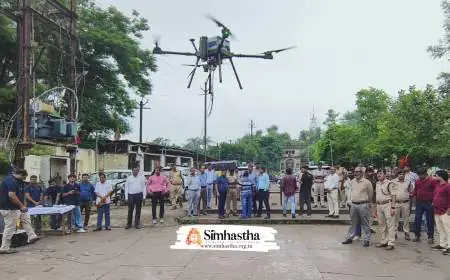
Public reporting around the project describes Trinetra as a large-scale, AI-enabled surveillance framework using 500+ cameras and advanced monitoring tools 📹🧠. While exact operational details remain with the administration and implementing teams, the project has been publicly associated with several important capabilities.
1. AI-Enabled Camera Network 📹
At the heart of the Trinetra system is a large network of cameras deployed across the Mahakal and MRIDA zone. These are not passive cameras alone, but part of an AI-enabled monitoring system capable of smarter detection and analysis.
2. Real-Time Crowd Monitoring 👥
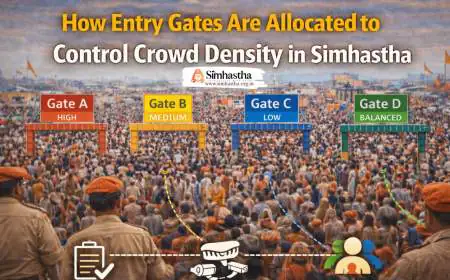
One of the most important use cases of Trinetra is crowd management. In a pilgrimage city, the ability to monitor crowd build-up in real time can help authorities redirect movement, slow entries, increase deployment at pressure points, or issue local control measures before a dangerous bottleneck forms.
3. Facial Recognition-Linked Monitoring 🧑💻
Recent reports have linked Trinetra with facial recognition-based capability. In a public safety context, such a system can potentially assist in identifying flagged individuals, locating missing persons, or strengthening incident investigation support.
4. Automatic Number Plate Recognition (ANPR) 🚘
Vehicle movement is a major issue around temple zones, especially in cities that receive a mix of local visitors, outstation pilgrims, buses, taxis, and VIP traffic. ANPR can help authorities read and track vehicle numbers more efficiently.
5. Suspicious Activity and Incident Awareness ⚠️
Smart surveillance systems are valuable because they help detect situations that require attention even before a complaint reaches the control room. Unusual movement, crowd clustering, route blockage, or traffic anomalies can potentially be flagged faster.
6. Better Command-and-Control Support 🖥️
A surveillance project becomes truly useful only when it feeds into a decision-making and response framework. Trinetra helps create a more integrated picture of what is happening across the Mahakal zone so that local administration and security teams can respond faster.
How Trinetra Can Help Devotees and Pilgrims at Mahakaleshwar Temple
Many people hear the words “AI surveillance” and think only of technology or policing 🤖. But the Trinetra project is important for devotees because, if used well, it can improve the pilgrimage experience in practical ways too 🙏✨.
Safer Crowd Movement 👥
If crowd density is being watched more intelligently, authorities can act earlier to reduce dangerous pressure points near entry gates, barricades, waiting zones, or darshan corridors.
Faster Response During Emergencies 🚑
If a person falls sick, gets separated from family, or if a crowd surge starts building in one part of the temple area, a well-integrated surveillance system can support quicker intervention.
Improved Traffic and Access Management 🚗
Many devotees struggle not only inside the temple zone but also in reaching it. Monitoring tools can support smoother route planning and control.
Support During Peak Religious Events 🔱
During Mahashivratri, Sawan Mondays, Nag Panchami, and major Mahakal festivals, the temple area becomes intensely crowded. Trinetra can help the administration maintain better control over pilgrim flow.
Better Security in a Sensitive Religious Zone 🛡️
A famous Jyotirlinga destination requires strong vigilance. Surveillance can help discourage crime, improve monitoring of sensitive spots, and strengthen public confidence.
More Efficient Management of the Wider Mahakal Area 🌆
Since the project is linked to a larger development area rather than a single shrine room, it can support not only temple security but also the management of surrounding visitor zones, roads, congregation spaces, and access corridors.
TRINETRA and the Mahakal Rudrasagar Integrated Development Area (MRIDA)
To understand why the Trinetra project matters so much, one must understand MRIDA 🏙️. The Mahakal Rudrasagar Integrated Development Area is not just a beautification label. It represents a broader redevelopment and management vision for the area around the Mahakaleshwar Temple and Rudrasagar zone 🌊🛕.
This is the same environment in which Ujjain has been seeing:
- temple-area transformation 🛕
- enhanced pilgrimage infrastructure 🚶♀️
- public realm improvements 🌆
- tourism-facing redevelopment 🧳
- and stronger identity-driven city planning linked to Mahakal 🔱
In that context, Trinetra should be seen as a digital governance layer added to the physical transformation of the Mahakal area 💻📡. Roads, corridors, entry points, public spaces, and temple surroundings are one side of the story. But a high-footfall spiritual destination also needs an intelligent monitoring backbone to manage that environment safely and efficiently. Trinetra fills that role.
In simple words, if Mahakal Lok and MRIDA represent the visible face of modern Ujjain’s spiritual redevelopment, then Trinetra represents the watchful digital nervous system behind that public space 👁️⚡.
Why the Trinetra Project Earned National Attention
The Trinetra project did not remain just a local Ujjain initiative. It attracted national attention after being recognized at the National Awards for e-Governance 2026, where Ujjain’s model received a Gold Award 🏆🇮🇳. That is a major development because it indicates that the project is being seen not merely as a temple surveillance arrangement, but as a notable example of technology-enabled governance in a high-footfall public environment.
This recognition matters for several reasons:
🌟 It puts Ujjain on the national smart-governance map
Ujjain is not being seen only as a religious city now, but also as a city capable of building award-winning digital public management systems.
🛕 It highlights the special needs of pilgrimage cities
Managing a temple city is very different from managing an ordinary civic zone. There are unique challenges related to ritual timings, visitor surges, faith-sensitive crowd behavior, and emergency coordination.
📈 It turns Trinetra into a model, not just a project
Once a system receives national recognition, it becomes something other cities and departments start studying as a possible template.
Can Ujjain’s Trinetra Model Be Used Across India?
One of the most exciting aspects of the Trinetra story is the idea that the Ujjain model may influence other cities as well 🌍. Recent reports indicate that the project has drawn attention at a national level and that there is interest in using the Ujjain experience more widely.
This makes sense because India has many high-footfall pilgrimage destinations and heritage cities where the administration must balance:
- faith and public order 🛕
- tourism and security 🧳
- open access and controlled movement 🚶
- heritage atmosphere and modern monitoring 🏛️📡
- festive crowds and emergency preparedness 🚨
Cities like Varanasi, Haridwar, Ayodhya, Omkareshwar, and Nashik all face versions of the same challenge. Ujjain’s Trinetra model suggests that a sacred city can adopt advanced surveillance and crowd intelligence systems without losing its cultural identity. In fact, when designed sensitively, such systems may make the experience safer, more organized, and more scalable.
For Ujjain, this is a matter of pride ❤️. The city is not just receiving pilgrims. It is now being watched as a case study in smart pilgrimage governance.
The Second Meaning of Trinetra in Ujjain: The Railway Station Redevelopment Theme
While the AI surveillance project is the strongest public meaning of Trinetra in Ujjain today, there is a second important use of the term that readers should understand 🚆👁️. This is the Trinetra-inspired design concept of the Ujjain Railway Station redevelopment project.
This is a separate story from the AI project. It is not the same system, not the same implementation, and not the same functional objective ❌. But it uses the same symbolic universe: Lord Shiva’s third eye 🔱.
The redevelopment of Ujjain Railway Station has been discussed as part of a larger effort to modernize the station into a more advanced, pilgrim-friendly, city-identity-driven transport hub 🚉✨. Reports about the project have highlighted a Trinetra-inspired architectural design language, connecting the station’s new visual identity with the spiritual and cultural identity of Ujjain as the city of Mahakal.
This is a powerful urban branding choice. Railway stations are often the first impression a visitor gets of a city. In a city like Ujjain, where millions arrive with religious emotion, pilgrimage expectations, and cultural curiosity, the station cannot remain just a functional transit point. It becomes a symbolic gateway 🚉🛕.
Why the Trinetra Theme at Ujjain Railway Station Matters
The station story matters because it shows that Ujjain’s transformation is not limited to temple beautification alone. The city is increasingly being redesigned as a cohesive pilgrimage destination, where transport, public spaces, temple access, urban branding, and tourism-facing infrastructure all work together 🌆🚆🛕.
1. It gives Ujjain a distinct visual identity 🎨
Many redeveloped stations in India are becoming modern, but not all of them are spiritually rooted in a way that reflects the city’s character. Ujjain’s Trinetra-linked station concept helps create that identity.
2. It connects arrival experience with Mahakal symbolism 🔱
A pilgrim arriving in Ujjain does not experience the city only at the temple gate. The experience begins at the railway station, bus stand, road entry, and hotel zone.
3. It supports tourism and pilgrimage branding 🧳
Ujjain is no longer competing only as a traditional temple town. It is emerging as a nationally visible spiritual tourism destination with Mahakal Lok, improved public spaces, and future mega-event potential.
4. It shows that Ujjain’s development is thematic, not random 🏙️
The Trinetra connection between security narratives, spiritual symbolism, and station design suggests a larger pattern: Ujjain is trying to modernize without severing itself from its sacred identity.
TRINETRA AI Project vs Trinetra-Themed Railway Station: What Is the Difference?
Because both stories use the word Trinetra, many readers assume they are talking about one mega-project. They are not. Here is the difference in simple terms:
| Point | TRINETRA AI Project | Trinetra Railway Station Theme |
|---|---|---|
| Type of project | Smart surveillance and crowd management system | Railway station redevelopment design theme |
| Main location | Mahakaleshwar Temple and MRIDA zone | Ujjain Railway Station |
| Core purpose | Security, monitoring, public safety, crowd control | Infrastructure modernization and city identity |
| Main technology/design role | AI cameras, surveillance, real-time monitoring | Architecture and visual symbolism |
| Link to Lord Shiva | Trinetra symbolizes vigilance and watchfulness | Trinetra symbolizes sacred identity and design inspiration |
| Public significance | Smart governance model for pilgrimage security | City branding and pilgrim arrival experience |
Why Trinetra Is Important for Simhastha 2028
For a site like simhastha.org.in, the biggest reason to cover Trinetra in detail is its connection to Simhastha 2028 🕉️🌊.
Simhastha is not a routine festival. It is one of the largest religious gatherings in the world. It demands:
- large-scale crowd planning 👥
- route intelligence 🛣️
- security coordination 👮
- public surveillance support 📹
- lost-and-found management 🔍
- vehicle regulation 🚗
- emergency readiness 🚑
- synchronized work between multiple departments 🏛️
Any city that wants to host a successful Simhastha must prepare not just roads and ghats, but also its monitoring systems, data-driven control capacity, and command infrastructure ⚙️📡.
That is why the Trinetra story is so important. Even if the current project is discussed mainly in the context of Mahakaleshwar Temple and MRIDA, its larger value lies in what it says about Ujjain’s direction. It suggests that Ujjain is moving toward becoming a smart pilgrimage city, where sacred geography is supported by intelligent public management systems.
In other words, Trinetra is not just about cameras 🎥. It is about how Ujjain is preparing to see, understand, and manage itself better in moments of spiritual intensity and massive public movement 👁️🛕🌍.
What Trinetra Says About the Future of Ujjain
The rise of Trinetra as a civic and symbolic keyword tells us something larger about Ujjain’s future 🔮. The city is moving toward a model where heritage, devotion, technology, tourism, security, and urban design are no longer treated as separate silos.
The Mahakaleshwar Temple is the spiritual heart of Ujjain ❤️🛕. But around that heart, a larger urban body is taking shape:
- Mahakal Lok and temple precinct development 🌟
- smart surveillance and crowd monitoring 📹
- station redevelopment with Shiva-inspired architecture 🚉
- hospitality expansion 🏨
- improved pilgrim movement systems 🚶♂️
- and preparations for future mega religious events 🕉️
This integrated transformation is exactly why the Trinetra concept feels so powerful in Ujjain. It works on three levels at once:
🔱 Spiritual level
Shiva’s third eye as sacred symbolism.
📡 Administrative level
AI-backed vigilance and crowd management.
🏙️ Urban identity level
City branding through Trinetra-themed infrastructure.
That is why Trinetra is becoming more than a project name. It is becoming a shorthand for a new kind of Ujjain , one that remains rooted in Mahakal while also building the tools required for the future.
Conclusion
So, what is Trinetra in Ujjain? The answer is richer than a single headline 👁️✨.
At one level, Trinetra is the AI-powered surveillance and monitoring project associated with the Mahakaleshwar Temple area and the Mahakal Rudrasagar Integrated Development Area, created to improve security, crowd management, public safety, and administrative awareness in one of India’s most important pilgrimage destinations 🛕📹🚨. Its recognition at the national level has turned it into a model worth watching.
At another level, Trinetra is also part of the architectural and symbolic language of Ujjain’s railway station redevelopment 🚉🔱, showing how the city is aligning its infrastructure with the spiritual identity of Lord Mahakal and the symbolism of Shiva’s third eye.
Together, these two stories reveal something important: Ujjain is not simply expanding as a pilgrimage destination. It is evolving into a smarter, more organized, more identity-driven spiritual city 🌆🙏⚙️.
For devotees, travelers, urban planners, and followers of Simhastha 2028, Trinetra is therefore a word worth remembering. It captures the spirit of a changing Ujjain, one that seeks to remain sacred, secure, and ready for the future under the watchful symbolism of Mahakal’s divine third eye 👁️🔱.
Frequently Asked Questions