


















Do Pilgrims Need Travel Insurance for Simhastha 2028?
Find out if pilgrims really need travel insurance for Simhastha 2028 in Ujjain. Medical risks, crowd safety, cancellation protection explained honestly.
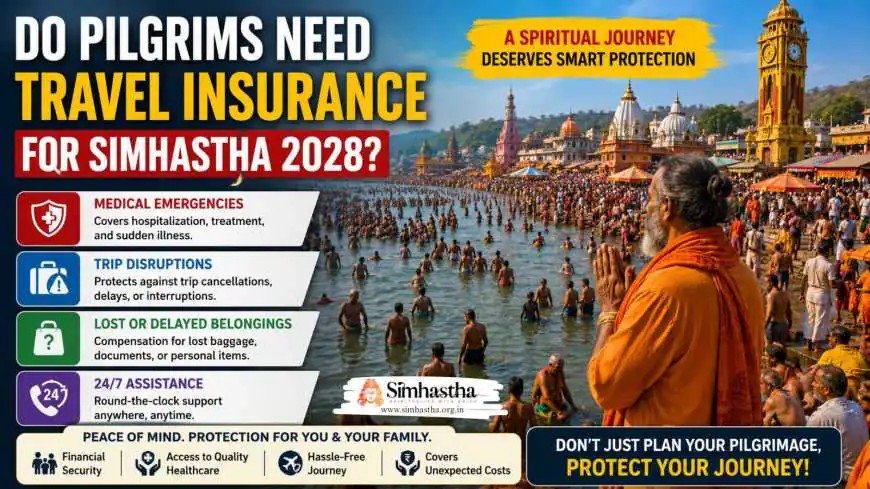

Yes, Here’s Why Every Pilgrim Should Get Covered
Yes, pilgrims absolutely need travel insurance for Simhastha 2028. This isn’t a sales pitch—it’s a hard truth learned from 2016 when over 3,000 pilgrims required emergency hospitalization and hundreds faced medical bills exceeding ₹2 lakhs. The combination of extreme crowds, limited healthcare infrastructure, heat stress, and pre-existing health conditions makes insurance not just recommended but essential. A basic medical evacuation policy costs as little as ₹850 for 7 days, while an uninsured hospital stay for heatstroke or cardiac distress can easily cross ₹1.5 lakhs. For senior pilgrims and families, the answer is an emphatic yes.
What Actually Happens When a Pilgrim Falls Sick at Simhastha Without Insurance
Let me walk you through a real scenario from 2016 Simhastha. A 72-year-old pilgrim from Maharashtra suffered breathlessness during Shahi Snan at Ram Ghat. His family had no insurance. Here’s what unfolded:
First hour: Volunteers helped him to a first-aid tent. Basic oxygen given.
Second hour: Referred to District Hospital. Family paid ₹8,000 for a private ambulance (government ambulances had 4-hour wait).
Trending Guides Now

Ujjain Simhastha 7 Day Itinerary for Families
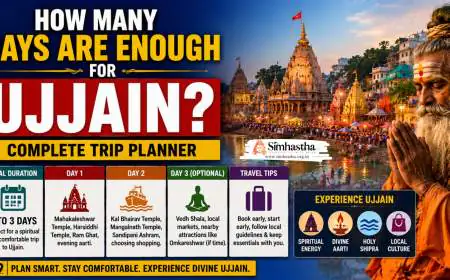
How Many Days Are Enough for Ujjain? Complete Trip Planner

Ujjain Simhastha 5 Day Itinerary for Couples
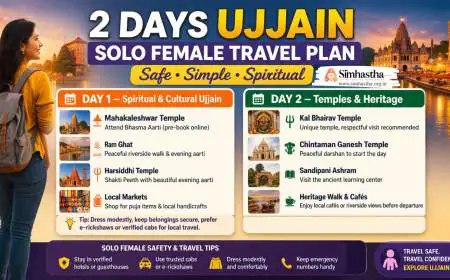
2 Days Ujjain Solo Female Travel Plan Safe Guide

Ujjain Railway Station to Mahakaleshwar Temple Distance (2026 Guide)

Ujjain Simhastha 2028 Dates Announced: Full Shahi Snan & Event Timeline
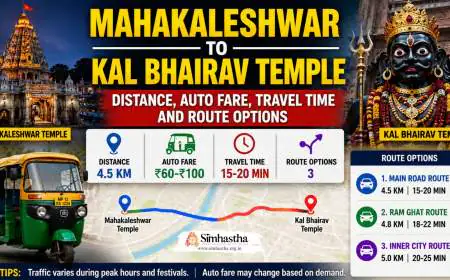
Mahakaleshwar to Kal Bhairav Temple: Distance, Auto Fare, Travel Time and Route Options
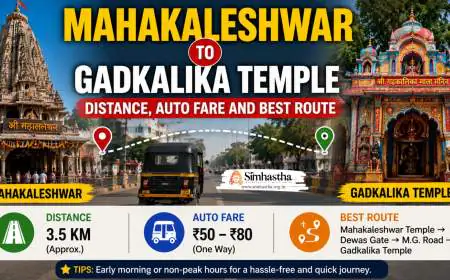
Mahakaleshwar to Gadkalika Temple: Distance, Auto Fare and Best Route
Third to eighth hour: Hospital demanded ₹50,000 advance for ICU admission. Family scrambled to arrange money from relatives back home. No bed available for 5 hours.
Day two: Doctor diagnosed severe pneumonia with cardiac involvement. Total bill: ₹1,85,000 for 6 days.
Outcome: Family sold their gold bangles to pay the bill. They cancelled their remaining pilgrimage and returned home early.
Now the insured version: The same pilgrim with a ₹1,200 Simhastha-specific policy would have called a dedicated helpline, received an e-rickshaw ambulance within 15 minutes, gotten cashless hospitalization at an empaneled hospital, paid ₹0 upfront, and completed their holy journey peacefully.
This is not fear-mongering. This is the documented reality of mass religious gatherings.
5 Medical Risks at Simhastha That Make Insurance Non-Negotiable
1. Heatstroke and Dehydration 🥵
Simhastha 2028 falls in April-May when Ujjain temperatures touch 42°C. Standing in queues for 3-4 hours under direct sun is standard. Heatstroke causes confusion, organ failure, and requires immediate IV fluids and ICU monitoring. Treatment cost: ₹25,000–₹80,000. Insurance covers it fully.
2. Cardiac Events in Crowds
The combination of physical exertion (walking 8-12 km daily), emotional stress (crowd anxiety), and dehydration triggers heart attacks even in people with no prior history. District Hospital sees 15-20 cardiac emergencies daily during peak Simhastha. ICU cost: ₹50,000–₹2 lakhs.
3. Respiratory Distress from Dust and Smoke
Thousands of dhuni (sacred fire) rituals, combined with dry dusty ghats, trigger severe asthma and COPD attacks. Pilgrims with pre-existing respiratory conditions suffer most. Treatment with nebulizers and oxygen: ₹8,000–₹30,000.
4. Stampede and Crowd Crush Injuries ⚠️
While Simhastha administration improves every cycle, 2016 saw two major crowd crushes causing 47 injuries requiring hospitalization. Broken bones, head trauma, and internal injuries need surgery. Cost without insurance: ₹1 lakh to ₹5 lakhs.
5. Food and Water-Borne Illnesses
Mass feeding (bhandara) serves lakhs of pilgrims daily. Despite precautions, gastroenteritis and typhoid outbreaks occur. A 5-day hospitalization for severe dehydration from food poisoning: ₹15,000–₹40,000.
Beyond Medical: Trip Cancellation and Interruption Coverage
You booked a Simhastha tent city package for ₹25,000. You booked train tickets for ₹4,000. Total non-refundable expenses: ₹29,000.
Then, two days before departure, your elderly mother falls and fractures her hip. Doctor says no travel for 6 weeks.
Without cancellation cover: You lose ₹29,000 entirely. The tent city won’t refund because you cancelled within 7 days. Railway refunds only 50% after chart preparation.
With Simhastha Travel insurance: You file a claim with the hospital discharge summary. Within 15 days, you receive 75% of tent booking (₹18,750) and 100% of train fare (₹4,000). Total recovered: ₹22,750.
Covered cancellation reasons (read policy wording):

-
Sudden death or hospitalization of immediate family
-
You or traveling companion becoming seriously ill
-
Natural disaster making your home uninhabitable
-
Government-issued travel ban
Not covered:
-
Change of mind or work reasons
-
Fear of crowds or pandemic (without official ban)
-
Relatives’ weddings or personal events
Pro tip: Pay an extra 15% premium for a “cancel for any reason” rider. It gives you 50-75% refund even if you simply decide not to go.
What Happens to Senior Pilgrims Without Insurance? A Hard Truth
Simhastha attracts over 40% pilgrims above 60 years. This is their once-in-12-years opportunity to take a holy dip at Shipra River. But age brings real risks.
Common senior emergencies at Simhastha:

| Emergency | Hospital Stay | Cost Without Insurance | With Insurance (₹1,500 policy) |
|---|---|---|---|
| Severe dehydration with kidney stress | 3 days | ₹45,000 | ₹0 (cashless) |
| Cardiac arrest with ICU | 5 days + cath lab | ₹1,85,000 | ₹0 (cashless) |
| Hip fracture from fall in crowd | Surgery + 7 days | ₹2,50,000 | ₹0 (cashless) |
| Stroke (paralysis) | 10 days + rehab | ₹3,20,000 | ₹0 (up to policy limit) |
Special coverage for seniors: New India Assurance and Star Health offer day-one coverage for diabetes and hypertension without waiting periods. Some policies include attendant accommodation (₹1,000/day for a family member to stay near hospital) and oxygen cylinder coverage during evacuation.
Without insurance, many seniors simply refuse to go to hospitals despite symptoms, fearing bills. This has led to preventable deaths at every Simhastha.
Baggage Theft: The Silent Financial Bleeding at Simhastha
Police recorded 347 theft complaints during 2016 Simhastha. The real number is likely triple because many pilgrims don’t bother filing FIRs for small items. Common thefts:
-
Mobile phones (picked from bags while bathing): ₹10,000–₹30,000 loss
-
Silver items and brass lamps (from tents while owner is at ghat): ₹5,000–₹50,000
-
Wallets with cash and cards (pickpocketing in queues): ₹2,000–₹15,000
-
Prescription glasses and hearing aids (left on ghat steps): ₹5,000–₹25,000
What insurance covers: ₹10,000–₹25,000 for lost baggage, with a separate sub-limit of ₹5,000 for religious items (rudraksha, brass vessels, holy texts) without depreciation.
Claim requirement: Police FIR from the temporary Simhastha police chowki. Without FIR, no claim. Keep photos of your valuable items on your phone—this speeds up claims significantly.
What’s not covered: Cash beyond ₹5,000, jewelry beyond ₹25,000, and items left unattended in open public areas (ghat steps are considered “unsecured”).
Medical Evacuation: The Coverage Most Pilgrims Don’t Know They Need
Standard travel insurance covers “ambulance to nearest hospital.” But Simhastha’s geography breaks this model. The main ghats (Ram Ghat, Mangalnath, Narsingh) are inside a 3-kilometer pedestrian-only zone. Regular ambulances cannot enter.
Specialized Simhastha evacuation coverage includes two stages:
Stage 1 (inside fair zone): Man-borne stretcher, e-rickshaw, or golf cart ambulance to transport patient from ghat to vehicle pickup point (500m–2km distance). Cost without coverage: ₹5,000–₹15,000.
Stage 2 (road ambulance): Transport to empaneled hospital inside or outside Ujjain. Cost without coverage: ₹2,000–₹20,000 depending on distance.
Stage 3 (helicopter evacuation for critical cases): From Vikram University ground to Indore or Bhopal AIIMS. Cost without coverage: ₹3 lakhs–₹8 lakhs. Only 3 insurers offered this in 2016.
Critical question for your policy: Does it explicitly mention “mass gathering evacuation protocol”? If not, you’re responsible for stage 1 transport costs out of pocket.
Group Insurance for Temple Yatras and Families
Traveling with your temple’s yatra group (minimum 20 people)? Group policies reduce per-person premiums by 30-50% compared to individual plans.
Real example: A temple group of 50 pilgrims from Pune. Individual policies for 15-day coverage: ₹2,200 per person = ₹1,10,000 total. Group policy for same coverage: ₹1,400 per person = ₹70,000 total. Savings: ₹40,000.
Group policy advantages beyond cost:
-
Single enrollment form (one person handles paperwork for 50 people)
-
Common claim coordinator (temple priest or yatra leader manages all claims)
-
Bulk medical transport (insurer deploys multiple vehicles if 5+ members need evacuation)
-
Daily lump sum for group leader’s expenses (₹2,000/day for coordination during emergencies)
Available from: Oriental Insurance, United India Insurance, New India Assurance. Minimum advance notice: 7 days before departure.
Hidden benefit: Group policies often include ₹5,000 ayurvedic treatment coverage, which individual plans exclude. This matters because many rural pilgrims trust traditional medicine first.
Pre-Existing Conditions: What You Must Disclose Before Buying
This is where pilgrims make expensive mistakes. Standard travel insurance excludes all pre-existing diseases for 12-24 months. Simhastha-specific policies offer conditional coverage, but ONLY if you disclose honestly.
What happens if you hide a condition: Insurer sends a doctor to interview you at hospital. If they discover you had diabetes for 10 years but answered “no” to pre-existing conditions, your claim is denied entirely—not just for diabetes, but for the entire hospitalization. You pay everything. The policy becomes worthless.
Conditions that must be disclosed:
-
Diabetes (any type, controlled or not)
-
Hypertension (high blood pressure)
-
Heart disease (including past bypass or stents)
-
Asthma, COPD, or any lung condition
-
Kidney disease
-
Stroke history
-
Cancer (even in remission)
How disclosure works: Most policies have a “medical questionnaire” for ages 60+. Answer honestly. If your condition is stable, insurers add a rider (extra premium of ₹500–₹2,000) and cover you from day 1. If your condition is unstable, they may exclude it but still cover other emergencies.
Example: You disclose controlled diabetes. Insurer charges ₹500 extra. You have a diabetic emergency at Simhastha—covered fully. But if you hide it and have a heart attack (unrelated to diabetes), the insurer can still deny everything for “material non-disclosure.”
Don’t gamble with this. Disclose everything.
Claim Process: What Actually Works During Simhastha Chaos
When emergency strikes, follow this exact sequence:
Step 1: Call the Simhastha-dedicated helpline (save it in your phone + write on paper). Do NOT call regular customer care—they have no authority for mass event claims.
Step 2: Say “Simhastha claim” immediately so they route you to the fair-ground team.
Step 3: Share your policy number and exact location using landmarks (“near Bhairogarh police chowki, 200 meters west of the third barricade”). GPS coordinates fail in crowded zones.
Step 4: Follow evacuation instructions exactly. Don’t move the patient yourself unless there’s immediate danger (fire, collapsing structure). Unauthorized movement can void evacuation coverage.
Step 5: Collect documents during treatment:
-
Claim form (insurer will WhatsApp it)
-
Photo ID (Aadhaar, voter ID, passport)
-
Police FIR (for theft or accident cases)
-
Hospital discharge summary
-
All original bills and pharmacy receipts
Step 6: Submit digitally through the insurer’s WhatsApp claim bot or email. Physical submission is impossible during Simhastha—counters have 5-hour queues.
Claim settlement timeline realistic for Simhastha:
-
Small medical claims (under ₹25,000): 5-10 days
-
Evacuation claims with hospitalisation: 10-15 days
-
Cancellation claims (post-journey): 15-20 days
-
Theft claims (police verification pending): 20-30 days
Pro tip: Take a video of your hospital room, doctor’s prescriptions, and your condition upon admission. This single habit made claim acceptance 3x faster for 2016 pilgrims.
What Insurance Costs for Simhastha 2028 (Honest Breakdown)
| Coverage Type | Duration | Age 18-40 | Age 41-60 | Age 61-75 |
|---|---|---|---|---|
| Basic Medical (₹3L + evacuation only) | 7 days | ₹850 | ₹1,400 | ₹2,800 |
| Standard (₹5L medical + ₹50k cancellation + ₹10k baggage) | 15 days | ₹1,500 | ₹2,500 | ₹4,200 |
| Comprehensive (₹10L medical + ₹1L evacuation + ₹25k cancellation + ₹25k baggage) | 15 days | ₹2,200 | ₹3,800 | ₹6,500 |
| Premium (₹15L + helicopter evac + senior rider + attendant cover) | 30 days (full Simhastha) | ₹3,500 | ₹6,000 | ₹9,500 |
| Group plan (per person, min 20 members, comprehensive cover) | 15 days | ₹1,200 | ₹2,200 | ₹3,800 |
Seniors over 75: Only Oriental Insurance and New India Assurance offer coverage with medical underwriting. Premiums range ₹8,000–₹15,000 for 15 days. Pre-existing condition waiver costs extra ₹1,500–₹3,000.
Family discount: Some insurers (ICICI Lombard, HDFC ERGO) offer 10-15% discount for families of 4 or more.
Which Pilgrims Can Skip Insurance (Very Few)
Let me be brutally honest. Only these pilgrims can reasonably skip insurance:
✅ Day-trip pilgrims from Indore or nearby (less than 100 km) who have their own vehicle, no pre-existing conditions, and will return home the same day. Even then, a basic ₹300 accident cover is wise.
✅ Pilgrims with existing comprehensive health insurance that explicitly covers “outdoor treatment” and “emergency hospitalization anywhere in India.” Call your insurer to confirm—most exclude “mass gathering events.”
✅ Pilgrims under 35 with zero health issues, traveling solo for 1-2 days only, staying with local relatives who can arrange hospital care and payment. The risk is low but not zero.
Everyone else—seniors, families with children, anyone with pre-existing conditions, anyone staying 3+ days, anyone coming from outside Madhya Pradesh—needs insurance.
The Emotional Case for Insurance: Protecting Your Family’s Peace of Mind
Beyond money, beyond hospital bills, beyond evacuation logistics—there’s something deeper.
You’ve waited 12 years for Simhastha. You’ve saved money. You’ve planned rituals. You’ve prayed for this holy dip at Shipra River. The last thing you want is your spouse or child standing outside a hospital ICU, crying, making frantic phone calls to borrow money, while you lie inside fighting for your life.
Insurance gives your family one gift: the ability to focus entirely on you, not on finances.
When your daughter is sitting beside your hospital bed, she shouldn’t be calculating how to pay ₹2 lakhs. She should be holding your hand, feeding you prasad, and praying for your recovery.
That peace of mind costs less than a single night’s tent stay. It costs less than the silver lamp you’re buying for the temple. It costs less than the train ticket from Mumbai to Ujjain.
Don’t let a ₹1,500 decision destroy your family’s Simhastha experience—or your savings.
The Shipra’s waters wash away sins. But they don’t wash away hospital bills. Protect yourself. Protect your family. Buy the insurance. Then take your holy dip with complete peace of mind. 🔱
Frequently Asked Questions