














How Much Cash Should Pilgrims Carry in Ujjain Today?
Plan your pilgrimage budget wisely with this practical guide on how much cash pilgrims should carry in Ujjain today. Learn the perfect cash-UPI mix for autos, offerings, and street food.


The Cash-UPI Equation and the Digital Shift in Mahakal's City
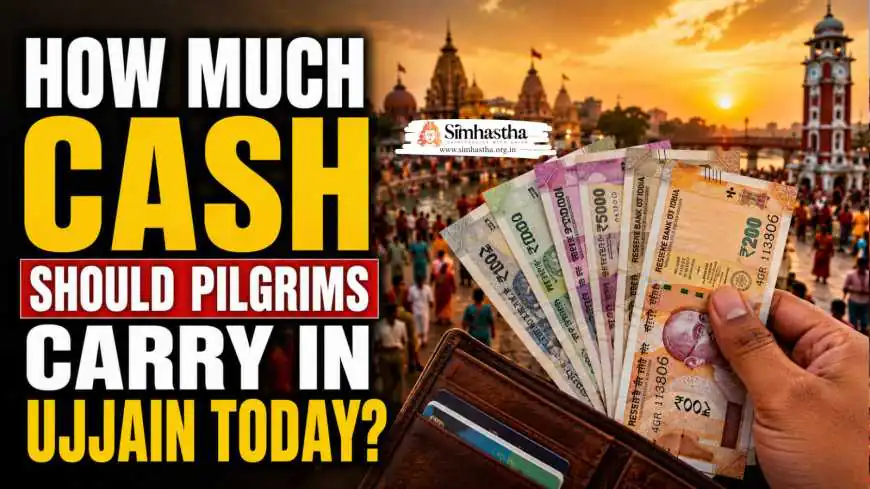
Ujjain, in 2026, is a city in a fascinating state of financial transition. The digital payment revolution, driven by the ubiquity of UPI apps like Google Pay, PhonePe, and Paytm, has swept through the city's hotels, its larger restaurants, its established sweet shops, and even the official donation counters of the major temples. The Mahakaleshwar Temple Trust, for example, now accepts digital payments for its receipted donations and for some categories of special puja bookings. The smart, modern pilgrim can, and should, use UPI for the major, predictable blocks of their expenditure: the hotel bill, a sit-down meal at a decent restaurant, a purchase at a well-stocked bookstore, or a donation to a temple trust where a clear, printed QR code is displayed. This is convenient, safe, and provides an automatic, indisputable record of the transaction. However, this digital surface is a thin, gleaming veneer over a vast, bustling, and deeply cash-dependent economic substratum. The auto-rickshaw driver who picks you up at 3:00 AM does not have a QR code. The small, nameless stall that sells the most incredible, piping-hot kachoris in the Kal Bhairav lane operates on cash. The woman who sits on the ghat steps, weaving garlands, will only accept coins. The official, authorized liquor shop outside the Kal Bhairav Temple will likely accept UPI for a bottle, but the small, quick exchange at the temple counter for a packet of black sesame seeds or a small coconut is purely cash. The golden rule for the Ujjain pilgrim is this: rely on UPI for the large, planned, and formal; rely on cash for the small, spontaneous, and sacred. A practical, daily cash reserve of ₹2,000 to ₹3,000 per person is a sensible baseline for a comfortable, stress-free pilgrimage, allowing for autos, street food, small offerings, and the constant, tiny, beautiful expenses that make up the texture of a day in the city. 🪙
The Denominations That Matter and the Importance of Small Change
The single most valuable piece of financial advice for an Ujjain pilgrim is not about the total amount of cash, but about the denominations in which it is carried. The city's auto-rickshaw drivers, chaiwallahs, flower sellers, and small puja-item vendors operate in a perpetual state of a "change crisis." They will, almost without exception, claim to have no change for a ₹500 note, and a ₹2,000 note is often treated as a near-insult, a piece of expensive, unspendable paper. The pilgrim who steps out of their hotel with a wallet full of crisp, high-value notes is effectively illiquid and will spend a frustrating, significant portion of their day trying, and often failing, to break them. The solution is to visit your bank before your journey and consciously build a change reservoir. This should consist of a generous quantity of ₹100 notes, a good number of ₹50 notes, and, crucially, a thick stack of ₹20 and ₹10 notes, along with a handful of ₹5 and ₹10 coins. The ₹100 note is the workhorse of the Ujjain street economy. It pays for a short auto ride, a simple meal for one, or a basic puja thali. The smaller notes and the coins are the sacred currency of the quick, humble offering: a single marigold garland, a cup of sweet, milky chai, a small donation to a wandering sadhu, or the two or three bel patra leaves you grab from a roadside seller as you rush towards the temple. Whenever you receive change in the form of smaller notes, hoard it. Treat every ₹10 and ₹50 note as a small, precious jewel that will unlock a seamless, frictionless, and deeply satisfying flow of sacred commerce. 💰
The Daily Pilgrim Budget and a Practical Breakdown of Expenses
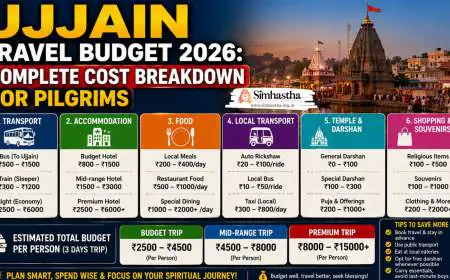
A clear-eyed, practical budget is an essential spiritual tool. It frees the mind from constant, low-grade financial anxiety and allows the pilgrim to focus entirely on the darshan. For a modest, spiritually-focused pilgrim, a comfortable daily budget, excluding pre-booked accommodation, falls in the range of ₹1,000 to ₹1,500 per person. This assumes you are staying in a dharamshala or a simple guesthouse, eating primarily at local, simple vegetarian dhabas and street stalls, and using shared or reasonably negotiated auto-rickshaws. A more detailed breakdown illuminates the flow of this money. A short auto-rickshaw ride will cost between ₹50 and ₹100. A simple, soul-satisfying breakfast of poha-jalebi and chai is around ₹60-80. A mid-day Malwa thali at a clean, family-run restaurant is typically between ₹150 and ₹250. A plate of evening kachoris with the fiery potato curry is between ₹60 and ₹100. A bottle of water is ₹20, and a fresh coconut water is ₹50. A simple puja thali, assembled from a street vendor, might cost ₹100-200. A modest donation at a temple's offering box is entirely at your discretion, but keeping a stack of ₹10 and ₹20 notes for this purpose is a beautiful practice. This budget covers the essentials with a small, gentle buffer. For a pilgrim who prefers a mid-range hotel with an attached restaurant, air-conditioned comfort, and private transport, the daily budget, again excluding accommodation, can comfortably rise to ₹3,000 to ₹5,000. The luxury, of course, is in the peace of mind, the saved time, and the physical comfort that allows for a deeper, more sustained spiritual focus. ✅
Kal Bhairav's Bottle and the Unique Cash Ritual
The ritual offering of liquor at the Kal Bhairav Temple requires a specific, dedicated cash transaction that is unlike any other in the city. The sealed bottle of country liquor or a standard brand of spirits must be purchased from the authorized, government-licensed shops that line the narrow road leading to the temple. While some of these shops may now accept UPI, the transaction is often still a cash one, and it is wise to carry a dedicated amount of cash—typically ₹200 to ₹500—specifically for this purpose. The bottle itself is the offering, and its cost is a sacred, non-negotiable part of the ritual. The pilgrim then joins the queue, and after the priest opens the bottle, pours a measure against the deity's lips, and returns the blessed remainder as prasad, a small, traditional dakshina is offered to the priest. This dakshina, usually a ₹20, ₹50, or ₹100 note, is given directly by hand into the priest's palm or placed on the small, silver tray near the deity. This is an intimate, unmediated, and purely cash-based moment of sacred exchange. The entire ritual is a powerful reminder that in Ujjain, some of the most profound spiritual transactions remain, and will likely always remain, a matter of the physical currency passing from the devotee's humble hand to the guardian's sacred domain. 🍾
Trending Guides Now

Ujjain Simhastha 7 Day Itinerary for Families
Is Phone Allowed in Mahakaleshwar Temple Ujjain?

Best Time to Visit Ujjain Simhastha 2028 Crowd Levels & Pilgrim Guide

How Many Days Are Enough for Ujjain? Complete Trip Planner

Ujjain Railway Station to Mahakaleshwar Temple Distance (2026 Guide)

Ujjain Simhastha 2028 Dates Announced: Full Shahi Snan & Event Timeline
Ujjain Railway Station to Kal Bhairav Temple: Distance, Auto Fare and Best Route

Ujjain Simhastha Update: CM Mohan Yadav Reviews 2028 Works
ATMs, Banking, and the Emergency Cash Strategy
The ATM network in Ujjain is adequate but, like the city's mobile network, can be unpredictable, especially during the peak hours of major festivals and the immense crush of the Simhastha. The most reliable ATMs are those attached to the major nationalized banks—the State Bank of India, Bank of Baroda, and Punjab National Bank—located on the main arterial roads and near the railway station. ATMs tucked away in the narrow, old city lanes are often out of cash or out of service, and you should not depend on them for your primary cash supply. A wise pilgrim will carry a minimum of two functional ATM cards, linked to two different bank accounts, stored in separate, secure locations. This provides a crucial redundancy if one card is declined, lost, or swallowed by the machine. It is also essential to inform your bank of your travel dates to prevent your card from being automatically blocked for suspicious, out-of-pattern transactions. The golden rule is to never let your cash reserve drop to zero. When your wallet falls below the ₹500 mark, immediately start looking for a reliable ATM on a main road. Do not wait until you are deep in the old city with a dead phone, a tired child, and an empty wallet. The emergency cash strategy is simple: treat your last ₹1,000 as untouchable, an iron reserve for a sudden medical need, a lost phone, or the unexpected, urgent necessity of a private taxi back to your distant hotel. 🏧
The Temple Counters, Official Pujas, and the Receipt Economy
Within the great temples of Ujjain, the economy of the divine operates on a strict, official, and transparent system of receipted payments. If you wish to book a specific, formal puja—a Mangal Shanti Puja at Mangalnath, a special abhishek at Mahakaleshwar, or a designated, named donation—you will go to the official temple trust counter. This counter is the only legitimate place for such transactions, and it will almost certainly accept digital payments via UPI or a card swipe, in addition to cash. The counter will issue you a printed, official receipt, which is your spiritual and legal proof of the transaction. This is the only arena within the temple where you can confidently use your UPI app. Never, under any circumstances, hand cash to a stranger, a tout, or a self-proclaimed "priest" who approaches you in the courtyard offering a special, secret, or fast-track puja. That cash will vanish into a black hole of fraud, and you will have no receipt, no puja, and a lingering, bitter sense of violation. The rule is absolute: the official counter is the only channel for formal, large temple offerings. Everything else, the small, spontaneous offerings of a few rupees into the hundi (donation box), the purchase of a garland from a stall outside, or the dakshina given to the priest who directly assists you with a small, personal ritual, is the domain of the small, humble, and essential cash in your pocket. 🧾
The Street Food Trail and the Currency of the Beloved Stalls
The entire, magnificent, and soul-nourishing universe of Ujjain's street food operates, almost exclusively, on the simple, ancient, and beautiful currency of cash. The legendary poha-jalebi stall that opens at 4:30 AM near the Mahakal Path, the third-generation kachori vendor outside the Kal Bhairav Temple, the man roasting smoky, blackened bhutta on the steps of Mangalnath, the chaiwallah whose sweet, milky brew restores your spirit after a long queue, and the small, nameless shop that sells the most incredible, velvety kulfi in the Gopal Mandir area—none of them will accept a digital payment. Their hands are perpetually dusty with flour, or sticky with sugar syrup, or blackened with charcoal, and their world is one of immediate, tactile, and deeply human transactions. A cup of chai costs ₹10 or ₹15. A plate of kachoris with the fiery potato curry costs ₹60. A perfectly roasted bhutta costs ₹30. The total cash outlay for a day's complete, glorious street food trail is often less than ₹300, but the satisfaction and the cultural immersion it provides are priceless. The pilgrim who arrives with a pocket full of small notes and coins is a pilgrim who can spontaneously, joyfully, and effortlessly partake of this sacred, edible tradition, while the pilgrim who relies solely on their phone is condemned to watch, with a hungry, wistful gaze, from the digital sidelines. 🍛
The Auto-Rickshaw Economy and the Unspoken Cash Code
The auto-rickshaw, the three-wheeled, rattling, and indispensable chariot of the Ujjain pilgrim, operates on a strict, unspoken, and almost universally cash-based code. While a few drivers in the city may now display a UPI QR code, they are the rare exception. The vast majority of the city's thousands of auto drivers function purely in the informal, unregulated, and deeply cash-dependent economy. The negotiation of the fare is a rapid, face-to-face ritual conducted before you even step into the vehicle, and the payment, in the exact, agreed-upon amount, is made at the journey's end, directly into the driver's hand. The most reliable, safe, and fair transaction for a pilgrim is at the prepaid auto-rickshaw counter at the Ujjain Junction railway station. Here, you pay a fixed, printed fare in cash, receive a receipt with the driver's details, and are then escorted to the designated auto. This eliminates all haggling and anxiety. For any other journey, you should keep a dedicated, easily accessible pocket in your wallet or sling bag specifically for your auto-rickshaw cash, stocked primarily with ₹50 and ₹100 notes. This allows you to pay the exact fare, or close to it, without needing change, which the driver will almost certainly claim not to have. The auto-rickshaw cash is a separate, sacred fund, and the pilgrim who manages it well glides through the city with a quiet, frictionless ease. 🛺
The Locker, The Leather, and the Cash You Keep on Your Body
The great temples of Ujjain, particularly the Mahakaleshwar Temple, enforce a strict protocol that has a direct and significant impact on how you carry your cash. Before entering the inner sanctum queue, you are required to deposit all bags, mobile phones, electronic devices, and, crucially, any leather items—including belts and wallets—in the secure temple locker rooms. If your entire cash reserve is neatly tucked into a stylish leather wallet that you habitually carry in your back pocket, you will be forced to surrender that wallet at the locker, and you will enter the most sacred space of the pilgrimage with absolutely no money on your person. This is a practical and spiritual error. The solution is simple and elegant: before you leave your hotel, transfer a modest, dedicated temple offering fund—perhaps ₹300 to ₹500 in small notes and coins—into a simple, non-leather, preferably cloth, drawstring pouch. This small, sacred purse can be placed in the secure, inner pocket of your kurta or your salwar kameez, close to your body, and it will pass through the temple security without any issue. This is the cash that will allow you to make a small, heartfelt offering, to buy a packet of bel patra from a vendor on the temple steps, or to give a small dakshina to a priest who offers you the sacred ash. The leather wallet stays outside, with the bulk of your money, in the safety of the locker. The small, cloth-bound, sacred fund stays with you, a silent, humble companion on your journey to the feet of the Lord. 🎒
The Simhastha 2028 Factor and the Anticipated Digital-Cash Balance
The approaching Simhastha 2028 will dramatically reshape the financial landscape of Ujjain. The administration's massive push for a "Smart Kumbh" includes a significant, integrated digital payment infrastructure. The official Simhastha mobile app will be the central hub for booking tent cities, shuttle buses, and even, it is planned, for some categories of pre-paid darshan and puja passes. The official tent cities, the major transport hubs, and the larger, organized food courts will be designed to be overwhelmingly cashless, operating on a unified, QR-code-based or common mobility card system. However, the temporary city of the Kumbh will also attract a floating, massive, and deeply traditional cash economy. Tens of thousands of temporary vendors, small food stalls, independent auto-rickshaw drivers, and the vast, unorganized economy of the pilgrimage will continue to operate, almost exclusively, on cash. The official rate cards for autos, the signages at the tent cities, and the price lists for essential items like bottled water and simple snacks will be displayed in rupees, and while digital payments will be encouraged, the small, sacred transactions—the offering to the flower seller, the chai at a tiny stall, the dakshina to a sadhu—will remain the beautiful, irreplaceable domain of cash. The pilgrim who plans to attend the Simhastha should expect to carry a significantly larger cash float than they would for a non-festival visit. A daily cash reserve of ₹3,000 to ₹5,000 per person is a prudent baseline for the Mela period, given the inevitable surge pricing for transport and the sheer volume of small, spontaneous, and profoundly sacred transactions that define the Kumbh experience. 📅

The Inner Posture of the Pilgrim's Purse
In the sacred geography of Ujjain, the money in your pocket is not merely a secular tool of commerce; it is, in a very real sense, an instrument of your devotion. The crisp, clean ₹20 note you place in the weathered hand of a flower seller is not just a purchase; it is an act of human connection, a small, silent acknowledgment of her labour, her dignity, and her role in the great, continuous drama of the temple. The ₹50 you give to an auto-rickshaw driver who navigates the dark, pre-dawn lanes with a quiet, uncomplaining skill is not just a fare; it is a gesture of respect for his service. The handful of coins you drop into the offering box is not just a donation; it is a tangible, physical, and irrevocable act of surrender, a letting go of the material for the sake of the eternal. The pilgrim who understands this carries their cash not with a nervous, suspicious grip, but with a calm, open-handed, and generous spirit. The budget is a discipline, but the heart that gives is free. The cash in your pocket is the small, practical, and profoundly sacred fuel that powers your journey through the ancient, chaotic, and endlessly loving city of the Lord of Time. Carry it wisely, spend it generously, and let it be, like everything else in this holy city, a humble, silent, and beautiful offering at the feet of Mahakal. 🔱
Frequently Asked Questions