

























How Safe Is Ujjain for Solo Female Travelers in 2026?
Discover how safe Ujjain is for solo female travelers in 2026. From temple etiquette and trusted transport to safe stays and cultural respect, get the honest, practical guide for a secure, soulful pilgrimage to Mahakal's city.


The Pilgrimage City's Unique Protective Aura
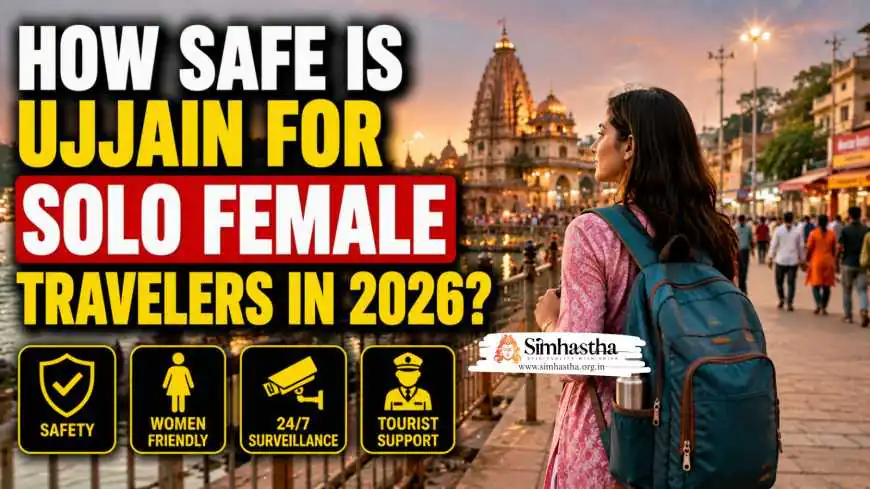
Ujjain is not a typical tourist destination; it is a moksha nagari, a city of liberation, and its daily rhythm is defined by the rituals of faith. This spiritual identity creates a protective container that a solo woman can lean into. The primary flow of humanity—from the pre-dawn Mahakaleshwar-temple" class="contextual-link" data-post-id="268">Bhasma Aarti to the late-night temple closures—is made up of families, elderly couples, and groups of devotees whose focus is fixed firmly on the divine, not on the stranger beside them. The police presence around the Mahakal Lok corridor, the Mahakaleshwar Temple complex, and the major ghats like Ram Ghat is consistent and, during festivals, overwhelming. You will see metal detectors, bag scanners, and uniformed officers who are accustomed to managing crowds of millions and are generally responsive to a solo pilgrim in need of assistance.
That said, this protective aura is strongest within the sacred core. The outer, purely residential neighbourhoods and the long, dark stretches of road leading to the city's periphery do not enjoy the same perpetual illumination or security. The key to safety as a solo woman in Ujjain is to position yourself, quite literally, within the circle of the temple's light. Choose accommodation as close to the temple complex as your budget allows, so that your walk home after the evening aarti is a short one through busy, well-lit streets. The city's spiritual heartbeat is also its safest pulse, and by anchoring yourself within it, you wrap yourself in an invisible, ancient shield. 🔱
Dressing the Part and the Grace of Blending In
One of the most immediate and effective ways a solo female traveler can ensure her own comfort and safety in Ujjain is to embrace the local dress code. This is not about suppressing your identity; it is about moving through a traditional space with the ease of a local rather than the visibility of an outsider. A simple salwar kameez or a modest kurta with leggings and a dupatta draped across the chest is the ideal uniform. The dupatta is more than an accessory; it is a portable veil that can be used to cover your head when entering a temple sanctum, shielding you from casual stares while simultaneously signaling cultural respect. Avoid shorts, sleeveless tops, or anything tight-fitting, not out of fear, but out of strategic blending. The less you stand out as a foreign or non-traditional presence, the less you will attract the mild, often harmless but persistent, curiosity that can feel exhausting over a long day. Darker, more muted colors are also practical, as the dust and the crush of the temple can quickly soil bright fabrics. This act of sartorial blending is, in itself, a form of self-care. It allows you to disappear into the crowd of devotees, to become one of the many, and in that anonymity, to find a profound and liberating freedom. ✅
Navigating Public Spaces and the Ghats After Dark
The ghats of Ujjain, particularly Ram Ghat, are magical at dusk, when the great lamps of the Shipra Aarti are lit and the river shimmers with a thousand floating flames. As a solo woman, you can and should experience this. The aarti area is crowded, well-lit, and policed. After the aarti concludes, the crowd disperses quickly. It is at this moment that you must make a clear, pre-planned decision about your return route. The smaller, quieter ghats like Narsingh Ghat or Siddhavat, while beautiful, are often isolated and poorly lit after sunset. They are best visited in the early morning or late afternoon, with the company of daylight. For the evening, stick to the central, busier ghats and the main temple complex. The Mahakal Lok corridor remains beautifully illuminated and patrolled well into the night, and it is perfectly safe for a solo walk.
Trending Guides Now

Ujjain Simhastha 7 Day Itinerary for Families
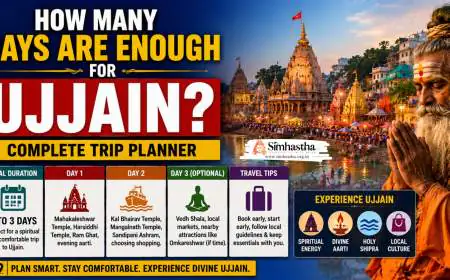
How Many Days Are Enough for Ujjain? Complete Trip Planner

Ujjain Simhastha 5 Day Itinerary for Couples
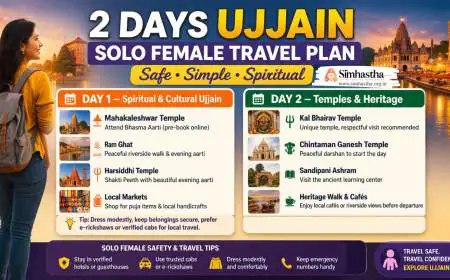
2 Days Ujjain Solo Female Travel Plan Safe Guide

Ujjain Railway Station to Mahakaleshwar Temple Distance (2026 Guide)

Ujjain Simhastha 2028 Dates Announced: Full Shahi Snan & Event Timeline

Mahakaleshwar Sandhya Aarti Online Booking 2026: Fee, Timings, Entry Gate and Step-by-Step Process
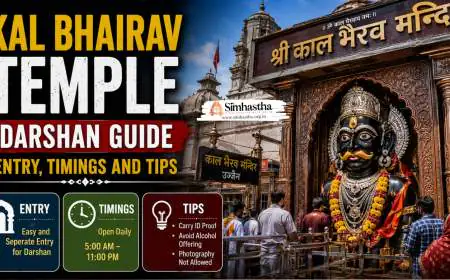
Kal Bhairav Temple Darshan Guide: Entry, Timings and Tips
Walking alone in the narrow, twisting lanes of the old city after the shops have closed is best avoided. The sudden stillness, the absence of people, and the dim lighting can feel unsettling and do pose a genuine, if low, risk. A short auto-rickshaw ride for even a few hundred meters is worth the investment. If you are staying a little further out, have the phone number of a trusted auto-rickshaw driver, or use a ride-hailing app if it is functional in the area, though availability can be patchy. The golden rule of solo female travel in Ujjain after dark is to remain among the crowd, within the circles of light that the temples and the main streets provide. 🚶
Transportation Safety: Autos, Trains, and the Solo Commute
Navigating transport as a solo woman in Ujjain requires a blend of confidence and clear-eyed pragmatism. The prepaid auto-rickshaw counter at the Ujjain Junction railway station is your most reliable friend upon arrival. It gives you a fixed, fair fare and a receipt with the driver's details, eliminating the exhausting, and sometimes intimidating, process of haggling with a cluster of drivers. When hailing an auto on the street, negotiate the fare calmly and firmly before you get in. If you are using a ride-hailing app, verify the vehicle and driver details before entering. A confident, assertive manner—speaking in a clear, unhesitating voice and having your destination ready—is often the best deterrent to any attempt at overcharging. If a driver seems evasive, overly familiar, or refuses to take you to your exact destination, simply step away and find another auto. The city is full of them, and you are never obliged to stay with a driver who makes you uncomfortable.
Shared autos are a very affordable way to travel along fixed routes, but they can be extremely crowded. As a solo woman, you may find yourself squeezed between strangers, and the potential for uncomfortable physical contact is real. If you are comfortable with this mode of transport, position yourself on an outer seat and be prepared for the close quarters. For the pre-dawn journey to the Bhasma Aarti, it is highly advisable to pre-arrange a specific auto-rickshaw driver you have used before, or to book one through your accommodation. Walking alone through dark, empty streets at 3:00 AM, even in a spiritual city, is a vulnerability you should not accept. The small extra cost of a pre-booked ride is a premium on your peace of mind. 🚆
Accommodation Wisdom: Where the Solo Pilgrim Finds a Safe Haven
Your choice of accommodation will define your sense of security in Ujjain. The most reassuring options for a solo woman are the temple trust dharamshalas, particularly those run by the Mahakaleshwar Temple Trust. These are basic, clean, and incredibly safe. They are designed for pilgrims, the staff is accustomed to solo travellers, and the environment is one of quiet, respectful devotion. Another excellent choice is the network of women-run ashrams or spiritual organizations that offer simple rooms. These spaces are deeply protective and will often have other women travelling alone, creating an instant, silent sisterhood. If you prefer a hotel, choose a well-reviewed, established property on a main road, not a budget lodge tucked away in a dark alley. Before booking, specifically search for reviews left by solo female travelers; their insights are invaluable.
When checking in, present yourself with calm confidence. Ask for a room on an upper floor, if possible, and one that is not at the far end of a deserted corridor. Ensure the door has a functioning bolt and a peephole. A portable door stopper or a small door alarm, which can be purchased cheaply online, is a tiny, empowering addition to your luggage that can provide immense psychological comfort. Do not hesitate to inform the reception staff, politely but firmly, that you are not expecting any visitors. This simple act establishes a boundary and signals that you are a vigilant, aware guest. The reputable accommodations of Ujjain are used to pilgrims and are generally very safe, but a woman alone must always claim her space with quiet, unwavering clarity. ✅
Common Scams and Unwanted Attention: How to Recognize and Deflect
As a solo woman, you are not likely to face violent crime in Ujjain, but you are far more likely to be seen as an easy target for scams and subtle forms of harassment. The touts who promise impossible-to-get VIP Bhasma Aarti passes for large sums are frauds. The auto-rickshaw driver who insists your booked hotel has burned down is lying. The overly helpful stranger at the temple who tries to guide you to a "special, secret puja" for an exorbitant fee is an imposter. The most powerful word in your vocabulary is a firm, unapologetic "Nahi." You do not need to be polite to someone who is trying to deceive you. A flat, unwavering refusal, delivered without a smile and without breaking your stride, is an invisible force field.

Unwanted attention can take the form of prolonged stares, intrusive personal questions from strangers, or the wandering hands in a particularly dense crowd. The traditional attire of a pilgrim and the dupatta are your first line of defense, making you look less like a tourist. In a crowd, if you feel uncomfortable physical contact, turn sharply, make direct eye contact, and say loudly and clearly, "Kya kar rahe ho?" (What are you doing?). Public shaming is a powerful tool in a culture where maintaining face is paramount. Do not suffer in silence. Indian grandmothers and mothers in a temple queue can be your most ferocious protectors; if you feel threatened, turn to a nearby family and state your distress. The solidarity of the devout is a real and potent force. The key is to project an aura of alert, unafraid strength. A woman who walks with her head up, her gaze steady, and her purpose clear is a far less appealing target than one who looks lost and uncertain. 🙅♀️
The Inner Armor: Confidence, Intuition, and the Spiritual Shield
Beyond the practical strategies of dress, transport, and accommodation, the most powerful safety tool you possess is your intuition. It is a gift that has been honed over millennia, and it will not fail you in Ujjain. If a lane feels too dark, turn back, even if it is the route on your map. If a person's offer of help feels charged with an unspoken, uncomfortable energy, refuse it, even if it seems rude. Your intuition is the voice of the divine feminine within you, and on a pilgrimage to the city of Mahakal, it is amplified. Trust it implicitly. You do not need a logical reason to extricate yourself from a situation that feels wrong; the feeling is the reason.
Carrying yourself with calm, grounded confidence is a learned skill, and Ujjain is a wonderful teacher. The city's energy invites you to slow down, to meditate, to connect with a deeper source of strength that is not dependent on anyone else's approval. The more you sink into the spiritual purpose of your journey—the sacred dip in the Shipra, the silent prayer in the courtyard of Harsiddhi, the offering of a lamp at the evening aarti—the more this inner armor will solidify around you. You are not just a tourist; you are a pilgrim. You are under the protection of the Lord of Time himself. This is not a superstitious fantasy; it is a psychological reality. When you feel divinely accompanied, your posture straightens, your gaze clarifies, and the petty predators of the world instinctively look elsewhere. 🙏
Practical Tips for a Seamless, Secure Pilgrimage
A few final, concrete measures will complete your fortress of safety. Store all important numbers—the local police (dial 112), the women's helpline (1091), your accommodation, and a trusted local contact—in your phone and on a piece of paper in your purse. A power bank is non-negotiable; a dead phone in an unfamiliar part of the city is a vulnerability you can easily avoid. Keep a copy of your ID and a small amount of emergency cash in a separate, concealed place from your main wallet. A simple crossbody sling bag, worn to the front, is far more secure than a backpack in the jostling temple queues. Do not wear expensive-looking jewelry. Your only adornments should be the simple rudraksha or tulsi mala of a pilgrim. If you are using your phone to navigate, do so discreetly, and download an offline map of Ujjain before you arrive. The less you appear to be a lost, digitally dependent tourist, the more you blend in. Finally, share your live location with a trusted friend or family member back home, and set up a few check-in times each day. This simple tether to your support system is a quiet, psychological anchor. ✅
The Sisterhood of the Pilgrim and the Unexpected Allies
One of the most beautiful and unexpected discoveries for the solo female traveler in Ujjain is the spontaneous, powerful sisterhood of the pilgrimage. In the queue for the Bhasma Aarti, you may find yourself standing beside an elderly woman from a distant village. She may speak no English, and you may speak no Hindi, but she will, without hesitation, adjust your dupatta, offer you a handful of prasad, and glare fiercely at anyone who bumps into you. The women who sell flowers at the temple gates, the families who invite you to share their floor mat at the aarti, the ashram mother who insists you drink a glass of hot milk before you leave—these are your allies. They are the living, breathing body of the Goddess, and they will look out for you in ways you cannot anticipate. Accept their kindness. It is the divine hospitality of the Kumbh, extended personally to you.
The priests inside the sanctums, while sometimes gruff and businesslike, are also custodians of a sacred trust. If you are feeling overwhelmed or unsafe, do not hesitate to approach a temple official, a security guard, or a uniformed police officer. State your concern clearly. The response you are likely to receive is one of practical, paternalistic help. Ujjain, for all its chaos, still runs on an ancient, deeply embedded code of atithi devo bhava—the guest is God. And when that guest is a woman travelling alone, that code often burns even brighter, a quiet flame of chivalry in the heart of the city of Mahakal. 🤝
The Eternal Gaze of Mahakal and the Journey Home
The deeper you go into your solo pilgrimage in Ujjain, the more you will sense a subtle, constant presence. It is in the steady rhythm of the Shipra, the unblinking stare of the dark lingam, the ash that smears your forehead like a silent blessing. The city of Mahakal is a city of death, and therefore, paradoxically, a city of ultimate safety. It teaches you to release your fears into the great cosmic flow of time, to understand that the soul is always, eternally, held. The practical precautions—the safe hotel, the prepaid auto, the covered shoulders—are the physical body of your pilgrimage. But the soul of it is the steady, growing realization that you are never truly alone. You are walking on ground that has been trodden by millions of solitary seekers before you, all of them held, all of them guided, all of them led home.
As a solo female traveler in Ujjain in 2026, you are not just safe; you are invited into a profound, intimate dialogue with the divine masculine, a protector who asks nothing but your sincere heart. So go. Book that train ticket. Pack that salwar kameez. Step into the pre-dawn darkness and follow the sound of the bells. The city of Mahakal is waiting for you, and in its ancient, protective shadow, you will find not just a pilgrimage, but a piece of your own fearless, eternal self. 🔱
Frequently Asked Questions