



























Ujjain During Monsoon: Pros, Cons and Travel Tips
Plan a soulful pilgrimage with our guide to Ujjain during monsoon. Discover the pros, cons, and essential travel tips for navigating rain-washed ghats, Shravan crowds, and the lush beauty of the Malwa landscape.


Why Ujjain in the Monsoon Is a Completely Different Pilgrimage
The first and most profound truth about visiting Ujjain in the rainy season is that the city sheds its skin. The harsh, bleaching light of summer gives way to a soft, diffused glow. The dust that hangs perpetually in the Malwa air is washed clean, and the entire city exhales. The trees along the Shipra and in the temple courtyards become a riot of deep green, and the river, which during the dry months can seem a little tired, comes roaring to life, its banks brimming with a fresh, urgent energy. This is not the Ujjain of frantic darshan queues and sunstroke warnings; this is an Ujjain that invites you to slow down, to sit for an hour on a sheltered ghat step, to watch the raindrops create a thousand fleeting ripples on the sacred water, and to feel that the divine is not just inside the garbhagriha but in the very air you breathe. The monsoon transforms the pilgrimage from a physical endurance test into a soulful, introspective retreat. It is the season when the city’s spiritual pulse, usually drowned out by the cacophony of peak tourism, becomes audible again. 🌿
The Soothing Pros and the Lush, Rain-Washed Beauty
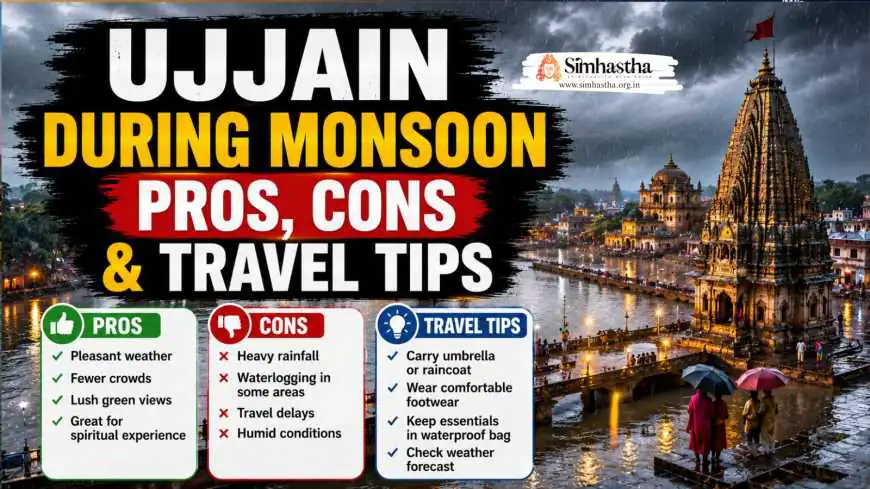
The list of pros for a monsoon pilgrimage to Ujjain is as long as a July afternoon. First and foremost is the dramatic drop in tourist numbers. Barring the intense, specific surge of the Shravan month (July-August), the long monsoon window from late June to mid-September offers a relative solitude that the city rarely sees. The queues at Mahakaleshwar are manageable, allowing for a more leisurely and profound darshan of the Jyotirlinga without the crush of bodies. The priests are less harried, the shopkeepers are more inclined to share a story over a cup of cutting chai, and the entire rhythm of the city shifts to a slower, more human pace.
The second great gift is the aesthetic and sensory transformation. The Mahakal Lok corridor, when wet, reflects the carved pillars and the sky in its polished stone, creating breathtaking photographic opportunities. The Harsiddhi Temple, with its red walls darkening to a deep vermillion in the rain, offers a stunning visual contrast against the grey monsoon sky. The Ram Ghat and the smaller, quieter ghats like Narsingh Ghat and Siddhavat are enveloped in a lush, verdant frame. The air is clean, crisp, and carries the petrichor of the Malwa soil, which has a distinct, earthy sweetness. For the photographer, the writer, or the meditative pilgrim, this is the season of Ujjain’s maximum beauty. 🌺
The Unavoidable Cons and the Challenges of the Rain
To romanticize the monsoon completely would be to do a disservice to the unprepared pilgrim. The cons are real, and they can bite. The most significant challenge is the condition of the ghats and the streets. The ancient stone steps that lead down to the Shipra become treacherously slippery. A moment of devotional distraction can result in a painful, pilgrimage-ending fall. The old city lanes, which are a labyrinthine joy in dry weather, turn into channels of muddy water, and navigating them requires constant vigilance. The risk of waterlogging in low-lying areas is genuine, and even a short auto-rickshaw ride can become a slow, damp, and bumpy affair. The humidity, while less punishing than the dry heat, clings to the skin and can make exploring on foot an exhausting experience.
Trending Guides Now

Ujjain Simhastha 7 Day Itinerary for Families

Is Phone Allowed in Mahakaleshwar Temple Ujjain?

How Many Days Are Enough for Ujjain? Complete Trip Planner

How to Travel Inside Ujjain During Simhastha 2028: Routes, Maps and Movement Plans

Ujjain Railway Station to Mahakaleshwar Temple Distance (2026 Guide)

Ujjain Simhastha 2028 Dates Announced: Full Shahi Snan & Event Timeline

Mahakaleshwar Sandhya Aarti Online Booking 2026: Fee, Timings, Entry Gate and Step-by-Step Process

Kal Bhairav Temple Darshan Guide: Entry, Timings and Tips
Another critical con is the unpredictability of the rain itself. The monsoon in central India is not a steady, day-long drizzle; it often arrives in sudden, violent downpours that can last for hours. A pilgrim who steps out on a clear morning can find themselves trapped in a temple doorway for an entire afternoon, their carefully planned itinerary washed away. The Bhasma Aarti still takes place in the pre-dawn hours, but reaching the temple at 3:00 AM through driving rain, with water sloshing into your shoes, requires a level of dedication that the dry-season pilgrim does not need. The dampness also means that clothes, once wet, will not dry, and the pervasive moisture can seep into bags, books, and even the spirit if one is not adequately prepared. ☔
Navigating the Ghats, Temples, and Slippery Streets Safely
Safety during the monsoon in Ujjain is not a matter of avoiding crime but of avoiding a catastrophic slip. The first rule is to choose your footwear with the care of a mountaineer. The ideal monsoon shoe is a sturdy, waterproof sandal with a deep, aggressive tread. The soles must grip wet stone. Avoid flip-flops entirely; they are a death sentence on a rain-slicked ghat. Avoid leather shoes or anything that will become waterlogged and heavy. Many local shops sell basic, rubber-soled sandals that are perfectly suited for the conditions, and buying a pair upon arrival is a wise and inexpensive investment. Second, walk slowly and deliberately on the ghats. Keep one hand free to hold a railing if it exists, and avoid walking at the very edge of the river. The Shipra's flow is deceptively strong during the monsoon, and what appears to be a shallow step may have a hidden drop-off or a strong current.
Within the temples, the floors are often a combination of polished stone and pooled water. The temple trusts do their best to keep the sanctum areas dry, but the outer corridors can be hazardous. Assume every wet surface is slippery. Do not run, do not allow the crowd to push you, and if you are with elderly relatives, hold their arm firmly. In the inner sanctums, the combination of dripping umbrellas, wet clothes, and devotional fervour can create a chaotic, damp press of bodies. Keep your valuables in a waterproof pouch, and keep your prayers in your heart. The line between a sacred shower and a soaking misery is often just a mindset, but it is a mindset best prepared for with the right gear. 🚶
Packing for Ujjain's Monsoon and the Sacred Wet Gear
The success of a monsoon pilgrimage to Ujjain is determined not by your luck with the weather, but by the wisdom of your packing. The golden rule is to pack for the rain, and then pack a little more for the damp. A high-quality, lightweight raincoat or poncho is infinitely more useful than an umbrella in the crowded temple queues, where an umbrella becomes a weapon and a nuisance. The poncho should be large enough to cover you and a small sling bag. Carry a small, collapsible umbrella for the open ghats and streets. Next, your bag should be a waterproof or water-resistant backpack, lined with a plastic bag inside for your dry clothes and electronics. A small dry bag or a simple zip-lock pouch for your phone, wallet, and any printed Bhasma Aarti passes is non-negotiable.
Clothing should be quick-dry and breathable. Avoid denim entirely; once wet, it becomes heavy, cold, and takes an age to dry. Pack a couple of pairs of light, synthetic trousers or quick-dry cotton dhotis. For the temple, a wet kurta is acceptable, but a dry shawl or a warm, light jacket is essential, as the post-downpour chill in the evenings can be surprising. Carry a microfiber towel that dries rapidly, and a few extra plastic bags to seal used, wet clothes. A small, portable power bank is crucial, as charging points may be scarce during an extended downpour, and you will need your phone for navigation. Pack a small, basic first-aid kit with an antiseptic cream and band-aids, specifically for cuts from slips. And above all, pack an extra, resilient spirit, a willingness to adapt, to sit out the rain, and to find the divine in the drumming of water on stone. ✅
The Shravan Surge and the Festival of the Monsoon
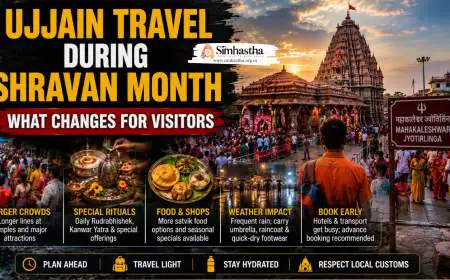
No guide to Ujjain during the monsoon can ignore the elephant in the room: Shravan month. This is the holiest month of the Hindu calendar, and every Monday of Shravan, the Shravan Somvar, is a festival of intense Shaivite devotion. For the devout, the monsoon is not a deterrent; it is a sacred call. The belief is that the rain is Shiva’s anointment, the water a divine abhishek, and to walk through the storm to his temple is a penance in itself. During these Mondays, the relative solitude of the monsoon season vanishes. The city is flooded with an entirely different kind of tide: a river of orange-clad, barefoot kanwariyas who have walked for days carrying the sacred Ganga or Narmada water to pour over the Jyotirlinga.

If you are visiting during Shravan, you must adjust your expectations. The queues at Mahakaleshwar will be massive, the Bhasma Aarti passes will be booked solid, and the streets will be packed with a fervent, singing, and undeterred crowd. This is both a con and a pro. The logistical chaos is a con. But witnessing the raw, ecstatic devotion of the kanwariyas, their clothes drenched, their bodies tired but their eyes blazing with faith, is a pro of the highest spiritual order. If you are a pilgrim seeking solitude, avoid Shravan Mondays at all costs. But if you are a seeker of the human spirit’s ultimate expression of love for Mahadev, then arriving during Shravan, and simply standing at the edge of this river of humanity, will be a memory that burns itself into your soul. 🕉️
Common Mistakes Monsoon Pilgrims Make in Ujjain
The first and most painful mistake is wearing the wrong footwear. We have said it before, but it bears repeating: wet stone and smooth soles are a marriage that ends in the emergency room. The second common error is relying on an umbrella in the temple queues. A queue for the general darshan, with the rain pouring, turns into a sea of jostling, sharp umbrella ribs. A poncho keeps you just as dry and makes you a far more considerate fellow devotee. The third mistake is failing to waterproof your documents. A wet, pulpy Bhasma Aarti pass or a soaked Aadhaar card can ruin a darshan as effectively as a closed gate. The fourth mistake is ignoring the risk of infection. Walking through flooded, muddy streets for hours and then entering a temple with wet, dirty feet is a health risk. Carry a small bottle of hand sanitizer and a packet of antiseptic wipes. When you exit the rain and enter your guesthouse, wash your feet thoroughly and dry them completely.
The fifth mistake is a spiritual one: arriving with a rigid itinerary and an unbending heart. The monsoon is a master teacher of surrender. The rain may disrupt your perfect plan to visit five temples in a day. You may be stranded in a teashop for two hours. The lesson is to accept this, to drink the extra chai, to talk to the shopkeeper, to watch the rain, and to understand that this, too, is darshan—a different kind, a slower kind, but no less sacred. The pilgrim who arrives with a flexible spirit and a waterproof bag is the one who will leave Ujjain with a heart full of grace, not frustration. ⚠️
The Quiet Corners and the Gift of Solitude in the Rain
One of the most sublime pros of a monsoon visit is the profound solitude that can be found in Ujjain’s quieter corners. While the central temples maintain a steady hum of activity, the lesser-known ghats and shrines are often completely deserted. Narsingh Ghat, with its small temple and its wide, rain-pelted view of the Shipra, becomes a private sanctuary. The Bhartrihari Caves, their dark, cool chambers smelling of wet earth, offer the perfect setting for a solitary meditation. The vast courtyard of the Jantar Mantar is almost empty, the rain washing the ancient astronomical instruments clean, the sky above a dramatic theatre of clouds. Siddhavat, the eternal banyan tree, provides a natural umbrella, its vast canopy sheltering the pilgrim who sits beneath it, listening to the symphony of the rain on the leaves. These moments of solitary, rain-soaked silence are the hidden treasure of the monsoon pilgrimage. They allow a kind of intimacy with the divine that the crowded festival days, for all their communal power, rarely afford. If you are a solo pilgrim, a writer, or simply a soul in need of quiet, the monsoon is your season. 🧘
Health Precautions and the Monsoon First-Aid Kit
The monsoon, for all its beauty, is also the season of fevers, colds, and mosquito-borne illnesses. The warm, wet conditions are a breeding ground for mosquitoes, and the risk of dengue and malaria, while not as high as in forested areas, is present. A basic monsoon health kit is a non-negotiable part of your luggage. It should include a strong mosquito repellent (cream or spray) to be applied liberally at dawn and dusk, a course of anti-allergy medication for the inevitable sniffles, a strip of paracetamol, some oral rehydration salts (ORS) , and a course of antibiotics and anti-diarrheal medication as a precaution. If you are prone to respiratory issues, the dampness can be a trigger, so carry your prescribed inhaler or medication. Drink only filtered or bottled water, and eat at clean, hygienic places. The rule of thumb for street food during the monsoon is simple: avoid cut fruits and anything raw. Stick to cooked, hot food like kachoris, poha, and steaming cups of chai, which are not only delicious but also safer. The monsoon is a time to nourish the body as well as the soul. 🩺
The Poetic, Emotional Heart of a Rain-Soaked Ujjain
Ultimately, to visit Ujjain during the monsoon is to see the city as the poets and saints have seen it for centuries. The rain is not an inconvenience; it is a participant in the worship. The sound of water dripping from the shikhara of Harsiddhi, the sight of a single, solitary sadhu sitting cross-legged on a flooded ghat, his ochre robes a bright flame against the grey world, the taste of hot, spicy bhutta (roasted corn) bought from a vendor sheltering under a plastic sheet—these are the experiences that cannot be scheduled or photographed. They are the soul of a monsoon pilgrimage. The city of Mahakal, the Lord of Time, takes on a timeless quality in the rain. The clock slows, the boundaries blur, and the pilgrim is invited not just to walk through a sacred city but to dissolve into its wet, green, and deeply living presence. This is the Ujjain that will stay with you, long after your clothes have dried and your photos have been uploaded, a quiet, rain-soaked seed of grace planted deep in your heart. 🌧️🔱
Frequently Asked Questions