


































What Makes Siddhavat Sacred for Generations of Pilgrims
Discover what makes Siddhavat sacred for generations of pilgrims in Ujjain. Explore the ancient banyan tree's legends, spiritual power, and timeless role in Hindu pilgrimage tradition.
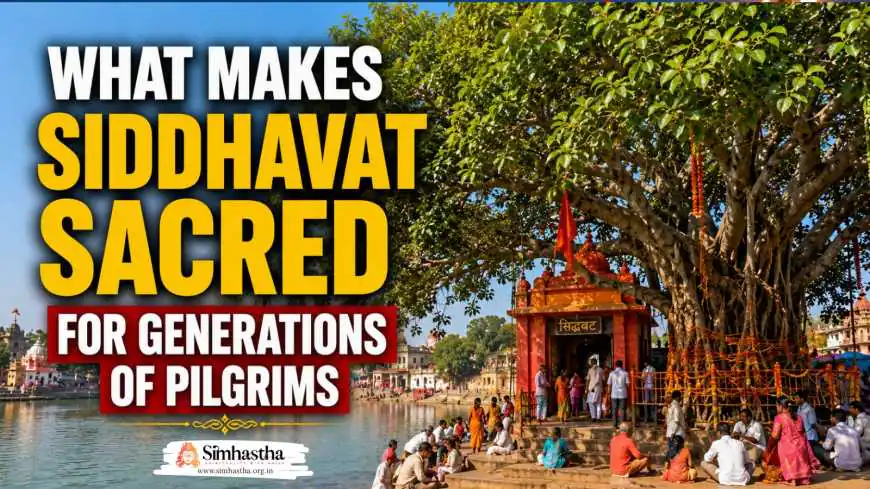


The Akhand Vat Vriksha That Has No Beginning
At the heart of Siddhavat's sacredness lies a radical theological claim: this banyan tree is akhand—unbroken, without end. Unlike ordinary trees that sprout, grow, decay, and die, the Siddhavat banyan is believed to be eternal, surviving the great cosmic dissolutions that erase everything else from existence. The Skanda Purana, in its Avanti Khanda section which elaborately details Ujjain's sacred geography, explicitly states that Siddhavat is one of the few entities that remains standing even through the pralaya—the dissolution of the universe at the end of a cosmic cycle. When the waters of dissolution rise and consume mountains, cities, and even the gods themselves, this tree endures. On its immortal leaves, it is said, the infant Lord Vishnu rests in the form of the vat patra shayee—the divine baby floating on a banyan leaf upon the primordial ocean. This is not folklore in the dismissive sense; it is foundational Puranic theology that places Siddhavat at the very center of Hindu cosmological understanding. For the pilgrim who stands beneath its shade, the experience is one of standing in the presence of something that predates time itself. 🛕
The Cosmological Anchor of Ujjain's Sacred Geography
To understand what makes Siddhavat sacred for generations of pilgrims, one must appreciate its role within Ujjain's larger spiritual ecosystem. Ujjain is not merely a city with many temples; it is a moksha nagari—a city of liberation—where every ghat, every shrine, every ancient tree is understood as a link in a carefully maintained chain of cosmic significance. Siddhavat functions as the vanaspati tirtha—the plant-life pilgrimage site—within this sacred geography. It anchors the southern bank of the Shipra, balancing the powerful Shaivite energy of Mahakaleshwar on the river's opposite side. Together, the Mahakal Jyotirlinga and the Siddhavat tree form a complementary spiritual polarity: one representing the cosmic destroyer and regenerator in his most intense form, the other representing the silent, rooted, life-giving patience of the eternal. Pilgrims for centuries have understood that a complete Ujjain yatra must include both—the fire of Mahakal and the shade of Siddhavat—to achieve spiritual equilibrium. This is not modern itinerary advice; it is wisdom embedded in the Puranic texts themselves.
Goddess Parvati's Penance and the Tree That Witnessed It
The most emotionally resonant of Siddhavat's sacred stories concerns Goddess Parvati. According to the Puranic narrative, after the self-immolation of Sati and her subsequent rebirth as Parvati, the daughter of the Himalayas, she yearned with her entire being to reunite with Lord Shiva. To purify herself and prove the intensity of her devotion, she undertook severe tapasya—austerities and penance—on the banks of the Shipra, precisely at the spot where the Siddhavat tree stands. The tree, already ancient beyond measure, served as her shelter and witness. She stood on one leg for thousands of years, exposed to the elements, her consciousness fixed entirely on Shiva. The tree's leaves did not wither; its shade did not diminish. It protected her, and in doing so, became sanctified by her presence. It was here, after her penance reached its culmination, that Shiva finally accepted her, and their divine union was re-established. For devotees, particularly women praying for marital harmony, fertility, or the strength to endure personal hardships, the Siddhavat Parvati connection transforms the tree into a deeply personal symbol of patient, unwavering love and the eventual fulfillment of sincere spiritual longing. 🔱
Pind Daan and the Ancestral Gateway at Siddhavat
If the Parvati story draws the living, the pind daan rituals at Siddhavat draw the departed. The banks of the Shipra at Siddhavat are one of Ujjain's most significant sites for performing shraddh and offering pind—ritual offerings of rice and sesame balls meant to nourish and liberate the souls of deceased ancestors. The logic of this practice is intimately tied to the tree's eternal nature. Just as the tree has endured through cosmic cycles, the blessings generated by pind daan performed in its presence are believed to endure and reach the ancestors regardless of which realm or lifetime they may currently inhabit. The Siddhavat's roots, plunging deep into the earth and extending invisibly in all directions, symbolize the connection between the living and the dead, between the material world and the subtle realms. During the Pitru Paksha period, the site draws thousands of families who arrive with priests, sacred grass rings, and the heavy, tender burden of filial love. They sit in the tree's shade, facing the Shipra, and perform rites that have been handed down through their own lineages for as long as anyone can remember. This is not morbidity; it is profound, emotionally charged devotion. It is the acknowledgment that the debt to one's ancestors—pitru rin—is sacred, and that Siddhavat is one of the rare places on earth where that debt can be most efficaciously repaid.
Trending Guides Now

Why Siddhavat Is Considered One of Ujjain's Eternal Sacred Sites

Ancient References to Siddhavat Found in Hindu Literature

Why Siddhavat Is Compared With Prayagraj's Akshayavat

Ujjain Railway Station to Mahakaleshwar Temple Distance (2026 Guide)

Ujjain Simhastha 2028 Dates Announced: Full Shahi Snan & Event Timeline

Benefits of Becoming a Simhastha Volunteer

Local Traditions and Rituals Associated With Bhukhi Mata Ghat

Mahakaleshwar Temple Entry Rules 2026: Dress Code, Mobile & Bag Policy
The Shipra's Embrace and the Ritual Landscape
The sacredness of Siddhavat cannot be separated from its location on the Shipra River's bank. In Hindu ritual tradition, the combination of flowing water and an immortal tree creates a tirtha of exceptional potency. The river provides the element of fluidity and purification; the tree provides stability and permanence. Together, they form the ideal environment for rituals that deal with transition—birth, death, and the journey of the soul. The ghat at Siddhavat, though less architecturally elaborate than Ram Ghat, carries a quieter, more intimate energy. Here, small groups of families can be observed throughout the year, the priests chanting in low, rhythmic Sanskrit, the smoke from small havans rising in lazy spirals through the tree's aerial roots. The practical accessibility of the site—its distance from the more crowded temple zones—has preserved its atmosphere of genuine, unhurried devotion. Pilgrims do not feel processed here; they feel held. The tree's immense canopy, which can shade hundreds of people at once, creates a natural cathedral where the only roof is leaves and the only walls are the gentle sound of the river and the rustle of branches.
The Ascetic Traditions and the Siddhas of the Tree
The name Siddhavat itself offers a crucial clue to its sacred identity. "Siddha" refers to an accomplished, perfected being—one who has attained supernatural powers and spiritual liberation through intense yogic practice. "Vat" is the banyan tree. Thus, Siddhavat is literally "the banyan of the perfected ones." Traditions maintain that countless siddhas, yogis, and realized masters have chosen this tree as the seat of their meditation over the millennia. Some traditions hold that eighty-four siddhas—a number of great symbolic significance in the Nath and Tantric lineages—performed their final sadhana here. The tree is believed to be a natural amplifier of spiritual practice, a place where the boundary between the practitioner and the universal consciousness becomes more permeable. Even today, you may encounter sadhus seated in meditation beneath the tree, their ochre robes blending with the brown of the aerial roots, their stillness so complete that birds perch nearby without fear. For the pilgrim, encountering one of these modern-day ascetics in the shade of Siddhavat is a powerful reminder that the tree's sacredness is not merely historical—it is living, renewable, and accessible to anyone who approaches with sincerity.
The Banyan in Hindu Symbolism and the Siddhavat Archetype
To fully grasp what makes Siddhavat sacred for generations of pilgrims, one must step back and consider the symbolic position of the banyan tree within Hindu consciousness. The vat vriksha is not one tree among many; it is the kalpavriksha—the wish-fulfilling tree—of Indian spiritual imagination. Its unique growth pattern, where branches send down aerial roots that become new trunks, creating a single organism that can theoretically live and expand forever, makes it the perfect botanical metaphor for eternal dharma. The Bhagavad Gita itself invokes the banyan as the symbol of the imperishable, with Krishna stating that the eternal ashvattha tree has its roots above and branches below, representing the manifest and unmanifest dimensions of existence. Siddhavat in Ujjain is the geographical embodiment of this scriptural archetype. It is not merely a specimen of banyan tree; it is the banyan tree of the Puranas, made locally present and accessible. Pilgrims who may have heard the Gita's verses or the Skanda Purana's stories since childhood find at Siddhavat the tangible, touchable reality of what they had only imagined. This meeting of text and earth, of cosmology and lived experience, is the engine of its enduring sacred appeal.
The Emotional Texture of a Siddhavat Pilgrimage
Let me try to convey what it actually feels like to be there. You arrive, typically after a short auto-rickshaw ride from the main temple zone, and the first thing you notice is the sound—or rather, the relative quiet. The relentless bustle of Ujjain's temple streets fades. You walk down a gentle slope toward the river, and the tree comes into view. It is larger than photographs can convey. Its canopy spreads like a green sky supported by countless subsidiary trunks. The air beneath it is noticeably cooler. You see families gathered in clusters, some laughing softly, some weeping quietly as they perform rituals for a recently departed parent. You see a young couple sitting hand-in-hand, absorbing the Parvati story they just heard from a local guide. You see an elderly woman, alone, simply sitting with her eyes closed, her lips moving in silent prayer. The tree holds all of them, all of their stories, all of their hopes and griefs, with a majestic, silent equanimity. You find a spot to sit, and for a moment, you feel connected not just to the people around you but to the entire lineage of pilgrims who have sat in this exact spot, feeling these exact feelings, for centuries without count.
The Preservation of Siddhavat and Its Future Sanctity
A living sacred site faces unique challenges. The Siddhavat tree, despite its theological immortality, is a biological organism that requires care. Over the decades, the Ujjain Municipal Corporation, the temple trust, and botanical experts from institutions like Vikram University have collaborated on preservation efforts. The primary threats are not supernatural but mundane—soil compaction from foot traffic, damage to aerial roots, and the occasional stress from extreme weather. Raised platforms and protective barriers now guide pilgrims along paths that minimize harm to the root system. The aerial roots are carefully trained and supported. Signage, written in both Hindi and English, explains the tree's significance and gently requests respectful behavior. These preservation efforts are themselves an act of modern pilgrimage—a recognition that the sacred must be actively protected if it is to remain available for future generations. The balance being struck at Siddhavat between accessibility and conservation is delicate and ongoing, but the awareness of the tree's vulnerability has only deepened the devotion of those who love it. ✅
Siddhavat and the Ujjain Pilgrimage Circuit
For the visiting pilgrim, Siddhavat is rarely the only destination. It exists within a sacred circuit that can be thoughtfully navigated. A typical and spiritually coherent itinerary might begin with the Bhasma Aarti at Mahakaleshwar in the pre-dawn hours, followed by visits to the Harsiddhi Temple and Bade Ganeshji Ka Mandir. Then, as the sun climbs higher and the temple crowds intensify, the pilgrim can retreat to Siddhavat. The tree's shade offers physical relief, and its atmosphere offers spiritual respite. After spending time at Siddhavat, the circuit can continue to Kal Bhairav Temple for the unique liquor offering ritual, and conclude at Mangalnath Temple for sunset views over the Shipra. In this circuit, Siddhavat functions as the contemplative interlude, the moment of stillness between the more active, ritual-intensive phases of the pilgrimage. It is the space where the pilgrim integrates the experiences of the day, sitting quietly and allowing the sacred geography to work its subtle, transformative magic. 🚶

The Oral Traditions and Family Pilgrimage Legacies
Perhaps the most touching dimension of Siddhavat's enduring sacredness is the way it is passed down within families. For countless Hindu households, particularly those with roots in Malwa, Gujarat, and Rajasthan, a pilgrimage to Ujjain is incomplete without visiting Siddhavat because their grandparents told them so, and their grandparents' grandparents told them so. These are not instructions from guidebooks; they are inherited devotions. A father brings his son to perform pind daan at the same spot where he came with his own father decades earlier. A grandmother tells her granddaughter the story of Parvati's penance while they sit together under the tree, and the granddaughter, decades later, will bring her own children to the same spot and tell the same story. This oral, familial transmission of Siddhavat's significance is perhaps the most powerful engine of its continued relevance. It bypasses the formal, textual routes of religious authority and embeds the tree directly into the emotional and narrative fabric of individual families. The tree becomes a character in the family's own sacred story, a silent, steadfast witness to their joys, losses, and ongoing journey through time.
The River, The Tree, and The Eternal Dialogue
Ultimately, what pulses at the heart of Siddhavat's sacredness is a dialogue—a continuous, unbroken conversation between the flowing water of the Shipra and the rooted stillness of the banyan. The river says: everything changes, everything flows, everything must be released. The tree says: everything endures, everything remains, everything is held. And the pilgrim, sitting at their intersection, learns to live in the truth of both. This is the wisdom that generations have sought at Siddhavat, and this is the wisdom that continues to draw them. They come seeking not miracles of the loud and dramatic kind, but the quieter, deeper miracle of perspective—the feeling, however fleeting, of being held in a story far larger than their own, of being connected to ancestors and descendants in an unbroken chain of love and memory, of sitting at the feet of something that has watched empires rise and fall and has not stirred from its sacred silence.
The banyan endures. The river flows. The pilgrims come, generation after generation, to sit in the shade, offer their pind, whisper their prayers, and feel, for a blessed moment, that they too are part of something eternal. That is what makes Siddhavat sacred. Not a single story, not a single ritual, but the accumulated, layered, living presence of devotion itself, growing slowly, patiently, endlessly, like the tree itself.
Frequently Asked Questions