
























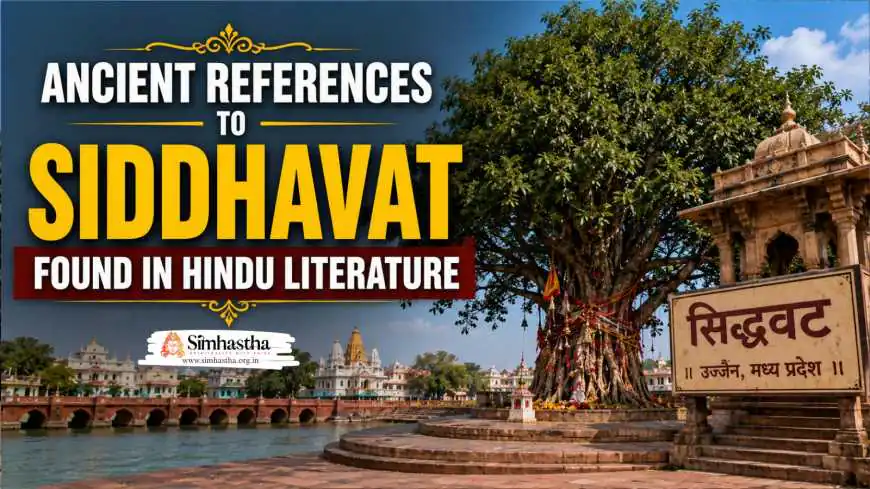
Ancient References to Siddhavat Found in Hindu Literature
Explore ancient references to Siddhavat found in Hindu literature including Puranas and scriptures. Discover the sacred banyan tree's spiritual significance in Hinduism.

The Tree That Witnesses Eternity: Unraveling the Siddhavat Mystery
Have you ever stood beneath a banyan tree and felt like you were in the presence of something ancient, something that has witnessed centuries of human history unfold? 🌳 There's a reason why these magnificent trees are called "vata" or "vatavriksha" in Sanskrit – they are the silent guardians of time, their roots reaching deep into the earth while their branches stretch toward the heavens.
Now, imagine a banyan tree so sacred that it's mentioned in ancient Hindu scriptures. A tree that is believed to grant moksha to those who touch it. A tree that connects the realms of the living, the ancestors, and the divine. This is Siddhavat.
In this article, we'll explore the ancient references to Siddhavat found in Hindu literature, from the Puranas to the Mahabharata, from Upanishadic philosophy to regional folklore. We'll uncover why this sacred banyan tree holds such an important place in Hinduism, and we'll trace its references through the vast ocean of ancient texts. 🌟
So, whether you're a spiritual seeker, a mythology enthusiast, or someone who simply loves the wisdom of ancient India, join me as we unravel the mysteries of Siddhavat. 🕉️
Trending Guides Now

Why Siddhavat Is Compared With Prayagraj's Akshayavat
Why Siddhavat Is Considered One of Ujjain's Eternal Sacred Sites
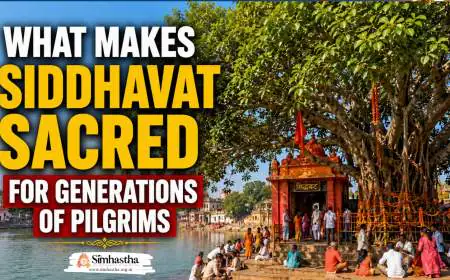
What Makes Siddhavat Sacred for Generations of Pilgrims

Ujjain Railway Station to Siddhavat: Distance, Auto Fare and Travel Time

Ujjain Railway Station to Mahakaleshwar Temple Distance (2026 Guide)

Ujjain Simhastha 2028 Dates Announced: Full Shahi Snan & Event Timeline

Ujjain Railway Station to Gadkalika Temple: Distance, Auto Fare and Route

Ujjain Railway Station to Mangalnath Temple: Distance, Auto Fare and Best Route
Understanding Siddhavat: The Sacred Banyan Tree
What Does "Siddhavat" Actually Mean?
Before we dive into the ancient references, let's understand what the word Siddhavat means. In Sanskrit, "Siddha" means "perfected," "accomplished," or "liberated," while "Vat" or "Vata" refers to the banyan tree (Ficus benghalensis). Together, Siddhavat translates to the "tree of the liberated ones" or the "tree where perfection is attained" .
The term appears in various contexts across Hindu literature, but it consistently refers to a sacred banyan tree that is believed to possess special spiritual power. These trees are often found near temples, especially Shiva temples, and are considered auspicious spots for performing rituals, meditation, and ancestral rites.
The Grammatical Roots of Siddhavat
From a linguistic perspective, "siddhavat" is derived from the root "sidh," which means "to succeed" or "to accomplish" . The word can function as an indeclinable, suggesting that it refers to a state of being "like the accomplished ones" or "pertaining to the liberated souls" .
Significance of the Banyan Tree in Hinduism
The banyan tree holds a special place in Hindu mythology. It is often associated with Lord Shiva, who is depicted meditating under a banyan tree as Dakshinamurti. The tree is also considered a symbol of the Trimurti – Brahma is believed to reside in its roots, Vishnu in its trunk, and Shiva in its branches.
In the Bhagavad Gita, Lord Krishna describes the vata tree as an inverted tree whose roots are in heaven, symbolizing the divine origin of all existence. This metaphor highlights the tree's role as a connection between the material and spiritual worlds.
Ancient References in Puranic Literature
The Brahma Purana and the Siddhavat Connection
The Brahma Purana, one of the eighteen major Mahapuranas, contains significant references to sacred banyan trees, including the Siddhavat. In Hindu tradition, the Brahma Purana is considered a highly revered text that details creation, cosmology, and the significance of pilgrimage sites .
According to the Brahma Purana, worshipping the banyan tree is believed to bestow blessings and spiritual merit. Pilgrims visiting sacred sites like Ujjain are encouraged to perform rituals under these sacred trees, as they are considered gateways to the divine realm.
The Skanda Purana and the Banyan Tradition
The Skanda Purana is another critical source of ancient references to Siddhavat. In its Avanti Khanda (the section dedicated to the Avanti region, which includes Ujjain), the Skanda Purana describes the importance of various sacred sites, including trees, rivers, and temples .
The Avanti Khanda of the Skanda Purana is particularly significant because it was compiled by Sage Sanatkumar and later divided into 20 parts by his disciples . This text contains detailed descriptions of pilgrimage sites in and around Ujjain, including references to sacred trees that are considered Siddhavat.
Other Puranic References
The Vishnu Purana, Linga Purana, and Varaha Purana also contain references to the vata tree . In the Linga Purana, for example, the tree is associated with Lord Shiva and is considered a symbol of longevity and spiritual growth .
Vayu Purana describes the spiritual significance of trees in general, highlighting how sacred flora serves as abodes of deities and ancestors. The Matsya Purana also references the Siddhavat as a site where spiritual seekers attain liberation .
The Siddhavat in the Mahabharata
Epic References to the Sacred Tree
The Mahabharata, one of the two major Sanskrit epics of ancient India, contains a fascinating reference to a tree that many scholars identify with the Siddhavat tradition.
According to the epic, after the Kurukshetra war, the Pandavas embarked on a great pilgrimage across India. During their journey, they visited a number of sacred sites, including one where a banyan tree was the center of worship.
The Mahabharata describes pilgrims circumambulating the tree, offering water and prayers, and seeking blessings for their ancestors. This tradition of tree worship is deeply embedded in the epic's narrative, and the tree in question is often associated with the concept of Siddhavat.
The Banyan Tree as a Witness to History
In the Mahabharata, the banyan tree is also portrayed as a witness to history. During the exile of the Pandavas, they often took shelter under such trees. The tree's ability to provide shade and shelter made it a natural gathering place for sages, kings, and commoners alike, further cementing its sacred status .

Upanishadic Wisdom and the Tree Symbolism
The Inverted Tree Metaphor
One of the most profound references to the banyan tree in Hindu literature comes from the Upanishads. The Katha Upanishad and the Bhagavad Gita both use the metaphor of an inverted banyan tree to describe the nature of existence .
This metaphor suggests that the material world is a reflection of the spiritual realm, and the banyan tree, with its roots in heaven, represents the connection between the two. This understanding is crucial to interpreting the Siddhavat as a symbol of liberation from the cycle of birth and death.
The Tree of Life in Vedic Philosophy
The concept of the Kalpa Vriksha (wish-fulfilling tree) in Vedic literature shares many similarities with the Siddhavat. Both symbolize the idea that spiritual blessings can be obtained through devotion and ritual. The banyan tree is also associated with Lord Shiva, who is often depicted meditating under such trees in his form as Dakshinamurti, the teacher of wisdom .
Siddhavat in Shaiva and Siddhanta Traditions
The Shaiva Connection
The Siddhavat holds special significance in Shaivism and the Saiva Siddhanta tradition . In Shaiva philosophy, the banyan tree is associated with Lord Shiva's role as the destroyer and transformer of the universe. The tree's resilience and ability to regenerate symbolize Shiva's cosmic cycles of creation, preservation, and destruction .
The Tirumantiram, a seminal work in the Saiva Siddhanta tradition composed by Tirumular, contains references to the spiritual significance of trees and sacred groves. These references align with the Siddhavat tradition, highlighting the tree's role as a site of meditation and spiritual awakening .
References in Saiva Agamas
The Saiva Agamas, which form the theological framework for Saiva Siddhanta, also contain references to sacred trees in temple complexes. The presence of a banyan tree near a Shiva temple is considered highly auspicious, and the Siddhavat is often located near such temples .
In some traditions, the Siddhavat is associated with the Ashta Bhairava and the Kal Bhairav worship, further cementing its connection to Lord Shiva's fierce and protective forms.
The Siddhavat in Regional Literature and Folklore
The Ujjain Siddhavat
The Siddhavat in Ujjain is one of the most famous and is associated with the Mahakaleshwar-temple" class="contextual-link" data-post-id="268">Mahakaleshwar Temple complex. According to local tradition, the Siddhavat in Ujjain is believed to have been planted by Lord Shiva himself, making it a site of immense spiritual power. Devotees visit the tree to perform Pind Daan (ancestral rites), seeking liberation for their ancestors' souls.
The Skanda Purana references this tree as a site where spiritual seekers attain moksha, and the tree is often mentioned in guidebooks about Ujjain's sacred sites.
The Akshayavat Connection
Another sacred banyan tree, the Akshayavat (indestructible banyan), is associated with the Siddhavat tradition. Located in Prayagraj, the Akshayavat is considered immortal and is an important part of the Kumbh Mela rituals. The Matsya Purana mentions the Akshayavat as a tree that grants salvation to those who worship it .
Folk Traditions Across India
The Siddhavat tradition is not just limited to textual references. Across India, there are countless folktales and local legends about sacred banyan trees that grant wishes, protect villages, and serve as abodes of divine beings. These folk traditions, while not always recorded in scripture, form an integral part of the Siddhavat tradition in Hindu culture.

Rituals Associated with Siddhavat
Pind Daan and Ancestral Rites
One of the most important rituals associated with the Siddhavat is Pind Daan – the offering of food and water to ancestors. Devotees visit the tree to perform these rituals, believing that the tree's spiritual energy helps the souls of the departed attain peace.
Circumambulation and Worship
Devotees often circumambulate the Siddhavat while chanting mantras, seeking blessings for health, prosperity, and spiritual growth. The tree is often adorned with sacred threads, flowers, and offerings, creating a vibrant atmosphere of devotion.
Meditation and Spiritual Practice
The presence of the Siddhavat provides a serene and sacred environment for meditation and spiritual practice. The tree's shade and tranquil energy make it an ideal spot for contemplation, and many spiritual seekers visit these trees to deepen their practice .
The Importance of Ancient References
Establishing the Tradition
The ancient references to Siddhavat found in Hindu literature are not just historical curiosities – they are the foundation of a living tradition. When devotees visit the Siddhavat today, they are participating in a practice that has been documented for thousands of years in texts like the Skanda Purana and the Brahma Purana .
The Tree as a Living Scripture
In many ways, the Siddhavat itself is a form of sacred scripture. While the texts provide the framework for belief, the tree is a tangible, living reminder of those beliefs. The references in Hindu literature connect the tree to the broader narrative of salvation, liberation, and the cycle of birth and rebirth.
Scientific and Astronomical Insights
Some interpretations of the Siddhavat's significance also point to astronomical connections. The alignment of sacred trees with celestial bodies, including the planet Mars at the Mangalnath Temple, reflects the Ujjain's role as a center of ancient astronomy. Vedic astrology played a crucial role in the placement of sacred sites, and trees like the Siddhavat were often planted in alignment with cosmic principles.
The Siddhavat in Ujjain Today
Location and Significance
The most well-known Siddhavat is located in Ujjain, Madhya Pradesh. Situated near the Mahakaleshwar Temple, it is a major pilgrimage site for devotees from across India. The tree is believed to have existed for millennia and is considered a witness to the great saints and sages who have visited Ujjain over the centuries.
Devotee Experiences
Visitors often share stories of profound spiritual experiences at the Siddhavat. The tree's peaceful presence, combined with the chanting of mantras and the aroma of incense, creates an atmosphere conducive to reflection and prayer.
Preservation and Continuing Tradition
The government and local communities take steps to preserve the Siddhavat and ensure that the rituals continue for future generations. This continuing tradition is a testament to the power of the ancient references that have kept the tradition alive for millennia.
The Symbolism of Siddhavat: Understanding its Deeper Meaning
The Tree of Liberation
The most profound interpretation of the Siddhavat is as the "tree of liberation" or "tree of the liberated ones." In Hindu philosophy, liberation or moksha is the ultimate goal of human life. The Siddhavat, as the place where perfection is attained, serves as a powerful symbol of this aspiration.
Connection to the Trimurti
The banyan tree's association with the Trimurti (Brahma, Vishnu, Shiva) represents the unity of the divine in Hindu philosophy. The tree's branches, leaves, and roots symbolize the interconnection of all things – a theme that runs throughout Hindu literature.
The Cycle of Birth and Rebirth
The banyan tree's ability to regenerate and produce new roots and branches from its aerial roots symbolizes the cycle of birth, death, and rebirth that is central to Hindu philosophy. The Siddhavat, as a tree of liberation, offers a way to break this cycle and achieve eternal peace.
The Bottom Line: A Tree That Has Watched Over Millennia
The ancient references to Siddhavat found in Hindu literature are a testament to the enduring power of this sacred tree. From the Brahma Purana and Skanda Purana to the Mahabharata and Upanishads, the Siddhavat has been recognized for thousands of years as a place of spiritual power and liberation.
The references in Hindu literature connect the tree to the broader narrative of salvation, liberation, and the cycle of birth and rebirth. They provide the foundation for a living tradition that continues to inspire and uplift millions of devotees.
As we've seen, the Siddhavat is more than just a tree – it's a gateway to the divine, a witness to history, and a symbol of the eternal connection between the material and spiritual worlds. The Siddhavat remains a living testament to the deep spiritual wisdom of ancient India, offering solace and liberation to all who seek it. 🌳✨
So, the next time you stand beneath the Siddhavat, remember – you're not just looking at a tree. You're standing in the presence of millennia of faith, devotion, and the unbroken chain of tradition that has made India the spiritual capital of the world.
Frequently Asked Questions