
























Accommodation Demand Forecast for Simhastha 2028
Plan your stay with this accommodation demand forecast for Simhastha 2028. Understand pricing trends, availability windows, and how to secure the best rooms before the rush begins.


The Scale of the Surge That Is Coming
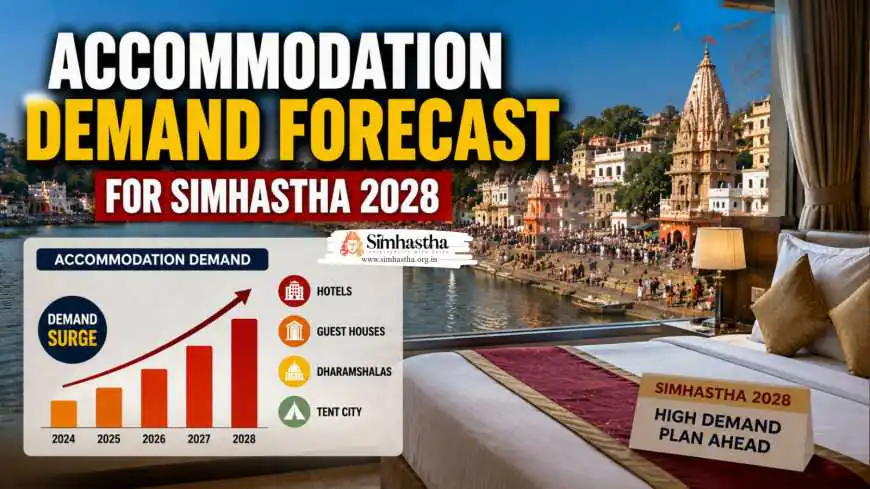
To understand the accommodation demand forecast for Simhastha 2028, one must first grasp the sheer magnitude of the human tide that will roll toward Ujjain. The 2016 Simhastha, by official estimates, drew approximately 7.5 crore (75 million) pilgrims over the course of the month-long festival. For 2028, the Madhya Pradesh Tourism Board and the Simhastha Central Committee are working with a conservative baseline projection of 10 crore (100 million) visitors, with the possibility of the figure climbing to 12 crore if infrastructure and connectivity improvements make the pilgrimage more accessible than ever before. The ongoing expansion of the Indore-Ujjain highway, the development of satellite railway terminals, and the proposed increase in special train services all point toward higher pilgrim throughput. The peak bathing days—the Shahi Snan dates—will see single-day arrivals that could touch 1.5 to 2 crore pilgrims in a 24-hour window. To put this in perspective, Ujjain's fixed hotel, guesthouse, dharamshala, and ashram capacity, even counting every registered bed in the city and its immediate periphery, struggles to accommodate more than 1.5 to 2 lakh visitors on a normal day. The gap between demand and supply is not a gap; it is a chasm.
Historical Patterns From Simhastha 2016 and Prayagraj 2025
Forecasting is not guesswork when you have data. The 2016 Simhastha offered a clear template of how accommodation demand behaves during a Ujjain Kumbh. In the months leading up to the Mela, hotel bookings within a 10-kilometer radius of the Mela area were completely sold out for the Shahi Snan dates nearly eight months in advance. Room tariffs that normally ranged between ₹800 and ₹2,500 per night surged to anywhere between ₹8,000 and ₹35,000 for the peak bathing days. Properties in Indore, 55 kilometers away, became overflow accommodation hubs, with daily shuttle services ferrying pilgrims back and forth. The recently concluded Maha Kumbh 2025 at Prayagraj provided an even more dramatic case study. There, the formal hotel sector in the city was overwhelmed within hours of bookings opening, and the vast majority of pilgrims relied on the sprawling tent city installations, dharamshalas, ashrams, and homestay networks mobilized by the Uttar Pradesh government. Prices for basic rooms touched five-star levels, and even dormitory beds became a precious commodity. Ujjain in 2028 will follow and likely exceed this pattern, given that the city's base infrastructure, while being significantly upgraded, is smaller than Prayagraj's.
The Accommodation Inventory of Ujjain and Its Limits
Let us take a realistic inventory of what Ujjain actually offers in terms of permanent accommodation. The city currently has approximately 150 to 200 registered hotels, ranging from budget lodges to a handful of three-star and equivalent properties. The total room inventory across these hotels is estimated at 5,000 to 7,000 rooms. The city's dharamshalas and ashrams, which form the backbone of budget pilgrimage accommodation, number around 80 to 100 registered establishments, with a combined capacity of perhaps 10,000 to 15,000 beds when operating at maximum density, including dormitory-style halls and shared rooms. The homestay sector, which the government is actively trying to expand through the Simhastha Tourism and Hospitality Policy 2028, currently accounts for a small fraction of the total inventory, perhaps 500 to 1,000 rooms. Even when stretched to its absolute operational limit, Ujjain's permanent accommodation sector can offer beds to perhaps 50,000 to 70,000 pilgrims on any given night. On a peak Shahi Snan day, when 1.5 crore people need a place to rest, even if only 20% require formal accommodation, the demand will be for 30 lakh beds. The deficit is staggering, and it is this deficit that will define the accommodation landscape of Simhastha 2028.
The Temporary City That Will Rise to Meet the Demand
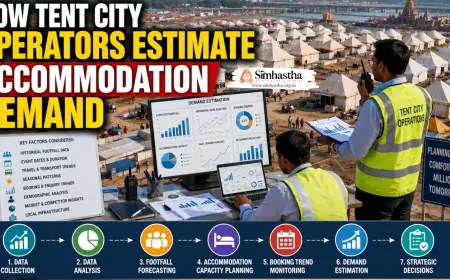
The primary mechanism for bridging the accommodation gap will be the construction of a vast temporary city across the expanded Mela area. The Simhastha Special Purpose Vehicle (SPV) has already begun the process of tendering for tent city installations that will collectively house 5 to 8 lakh pilgrims at peak capacity. These tent cities will be stratified into multiple tiers. The premium tent cities, modeled on the successful Prayagraj and Rann Utsav models, will offer luxury canvas accommodations with attached bathrooms, air conditioning, dining facilities, and dedicated transport to the bathing ghats. These will be priced at a significant premium and will cater to international pilgrims, affluent domestic travelers, and VIP visitors. The standard tent cities will provide comfortable but basic canvas or prefabricated accommodations with shared bathroom facilities. The budget tent cities, often referred to as "shivir" accommodations, will offer dormitory-style sleeping arrangements with basic bedding, communal toilets, and minimal amenities at subsidized rates. In addition to these organized tent cities, the Mela area will host Akhara camps, sadhu nagar settlements, and community-organized pilgrim shelters run by various religious and social organizations. This temporary city will, for the duration of the Simhastha, become one of the largest human settlements in the world. 🛕
Trending Guides Now

Ultimate Hotel Booking Guide for Ujjain Visitors
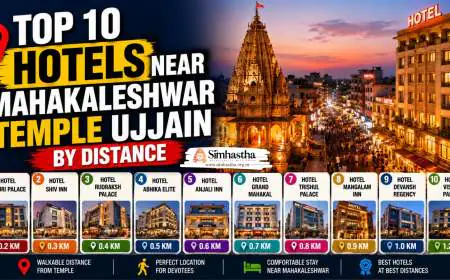
15 Budget Hotels Near Mahakal Temple Ujjain Under ₹1500

Luxury Hotels Near Mahakaleshwar Temple Ujjain: Big Hospitality Boom Underway

How to Choose the Right Hotel in Ujjain Near Mahakal

Ujjain Railway Station to Mahakaleshwar Temple Distance (2026 Guide)

Ujjain Simhastha 2028 Dates Announced: Full Shahi Snan & Event Timeline

How ISKCON Ujjain Engages Young Devotees Through Programs

Benefits of Becoming a Simhastha Volunteer
The Pricing Forecast Across Accommodation Categories
For pilgrims planning their budgets, a realistic understanding of the Simhastha 2028 price forecast is essential. These projections are based on 2016 Ujjain Simhastha data, 2025 Prayagraj Kumbh data, inflation adjustments, and the current supply-demand outlook.
Budget Dharamshalas and Ashram Dormitories: These will remain the most affordable option. Expect dormitory bed prices to range from ₹200 to ₹500 per night on non-peak days, surging to ₹800 to ₹2,000 on Shahi Snan dates. Advance booking through temple trusts and religious organizations will be essential, as walk-in availability will be virtually nonexistent.
Budget Hotels and Lodges: Basic rooms that normally cost ₹800 to ₹1,500 per night will see tariffs climb to ₹4,000 to ₹8,000 on non-peak Simhastha days and ₹10,000 to ₹20,000 on peak bathing dates. These properties will be booked solid for the entire Mela period months in advance.
Mid-Range Hotels: Properties offering air conditioning and reasonable amenities will see their normal ₹2,000 to ₹4,000 tariffs escalate to ₹15,000 to ₹30,000 on peak dates. Many of these hotels will be block-booked by tour operators and travel agencies.
Premium and Heritage Hotels: Ujjain's limited stock of higher-end accommodation will become the domain of advance-booked groups, VIPs, and international visitors. Tariffs of ₹50,000 to ₹1,00,000 per night on peak dates are not unrealistic, and availability will be extremely scarce.
Tent Cities: Premium tents are expected to range from ₹15,000 to ₹40,000 per night. Standard tents will likely fall in the ₹5,000 to ₹12,000 range. Budget tents and shivirs will offer the most economical organized option at ₹500 to ₹1,500 per night. ✅

The Indore Overflow Effect and Satellite Accommodation
The accommodation demand forecast for Simhastha 2028 cannot be confined to Ujjain city limits. Indore, with its significantly larger hotel inventory, airport connectivity, and 55-kilometer proximity, will function as the primary overflow accommodation hub. The Indore-Ujjain highway expansion to six lanes, scheduled for completion by late 2027, will reduce travel time between the two cities to approximately 45 to 60 minutes under normal conditions. However, on peak Simhastha days, even this expanded highway will experience heavy congestion, and travel times could stretch to two to three hours. Hotels in Indore, particularly those along the Ujjain corridor, are expected to see their own demand surge, with tariffs rising to three to five times normal rates during the Mela period. Beyond Indore, Dewas and Nagda will serve as secondary overflow locations. The Madhya Pradesh Tourism Board is working on a coordinated satellite accommodation strategy that includes organizing shuttle bus services, creating holding areas at key entry points to Ujjain, and developing real-time accommodation availability dashboards that pilgrims can access. For pilgrims, booking accommodation in Indore and planning for the daily commute is a viable, potentially cost-saving strategy, but it requires accepting the reality of significant travel time and pre-booking both accommodation and transport.
The Timeline of Booking Windows
When should you book? The answer is earlier than you think. Based on historical patterns and current indicators, the accommodation booking timeline for Simhastha 2028 will unfold in distinct phases. Phase One: Early Bird Window (mid-2026 to early 2027). During this period, the most organized and informed pilgrims, tour operators, and international visitors will secure the best available rooms at the most reasonable premiums. Hotels in prime locations near the Mahakal Temple and the Mela area will begin to sell out for the Shahi Snan dates. Phase Two: Main Booking Rush (mid-2027 to late 2027). As the official Shahi Snan dates are announced and the Mela infrastructure becomes more visible, the bulk of advance bookings will occur. During this phase, mid-range and budget hotel inventory will deplete rapidly, and tent city bookings will open to the public. Phase Three: Last-Minute Scramble (early 2028 to Mela start). By this point, organized accommodation within Ujjain will be almost entirely sold out for peak dates. Pilgrims booking during this phase will face the highest prices, the least choice, and will likely need to rely on Indore overflow options, last-minute homestay openings, or the budget shivir accommodations. The single most important piece of advice emerging from this forecast is this: if you plan to attend Simhastha 2028, particularly if you require a private room rather than a dormitory bed, you should aim to book your accommodation no later than mid-2027. ⚠️
The Government's Role in Regulating Prices and Supply
A crucial variable in the accommodation demand forecast for Simhastha 2028 is the extent to which government intervention moderates the natural market forces of extreme demand and limited supply. The Madhya Pradesh government, learning from the 2016 Simhastha and from the Prayagraj 2025 experience, has signaled its intention to implement a regulated accommodation framework. The Simhastha Tourism and Hospitality Policy 2028 includes provisions for mandatory registration of all accommodation providers—hotels, guesthouses, dharamshalas, homestays, and even private residences offering rooms—on a centralized government portal. This portal will display government-fixed rate cards that accommodation providers cannot legally exceed. A price ceiling mechanism is being designed, though its enforcement during the extreme demand of the Shahi Snan dates will be a significant challenge. The government is also incentivizing the rapid expansion of the homestay sector through subsidies, streamlined registration, and training programs for homeowners. The success of these measures will depend on enforcement capacity and the willingness of accommodation providers to comply. Pilgrims should view government rate cards as a reference point and a basis for negotiation, but they should also be prepared for the reality that market forces on peak dates may push actual prices beyond official ceilings.
The Homestay Revolution and Community Accommodation
One of the most promising developments in the Simhastha 2028 accommodation landscape is the planned expansion of the homestay sector. The government's target is to register 10,000 to 15,000 homestay rooms across Ujjain and its surrounding villages by the end of 2027. This would represent a massive increase from the negligible homestay inventory available during the 2016 Simhastha. For pilgrims, homestays offer several advantages: they are typically more affordable than hotels, they provide an authentic, immersive experience of local culture and hospitality, and they are often located in residential neighborhoods that offer a quieter, more relaxed atmosphere than the frenetic Mela zones. For homeowners, the Simhastha represents a significant income opportunity, and the government's training programs are designed to ensure basic standards of cleanliness, safety, and hospitality. Pilgrims considering homestays should look for government-registered properties that display their registration certificate and adhere to the official rate card. Booking homestays through the official government portal, once it is launched, will provide the greatest protection against fraud and price gouging.
The Dharamshala and Ashram Ecosystem
The traditional backbone of pilgrimage accommodation in Ujjain—the city's network of dharamshalas and ashrams—will play a critical role in absorbing the Simhastha demand. These establishments, many of them run by religious trusts, caste associations, and philanthropic organizations, offer basic, no-frills accommodation at highly subsidized rates. During Simhastha 2016, many dharamshalas operated at five to ten times their normal capacity, with pilgrims sleeping in halls, corridors, and courtyards. For 2028, the government is working with dharamshala management committees to upgrade facilities, improve sanitation infrastructure, and increase capacity where possible. Pilgrims planning to rely on dharamshala accommodation should understand that comfort levels will be basic, privacy will be minimal, and advance booking may be complicated by the fact that many dharamshalas operate on a first-come, first-served basis or prioritize their own community members. Contacting dharamshalas directly, establishing a relationship with the managing trust, and making a formal advance booking with a receipt is the most reliable approach. The Mahakaleshwar Temple Trust and other major temple trusts are expected to operate expanded pilgrim accommodation facilities, and these should be among the first options that pilgrims explore.
The Unorganized Sector and the Realities of Pilgrim Accommodation
No accommodation demand forecast for Simhastha 2028 would be complete without acknowledging the vast, unorganized sector that will inevitably emerge to absorb the overflow. During every Kumbh Mela, a parallel accommodation economy springs up: private residences renting out rooms, courtyards, and rooftops; temporary shelters erected by enterprising locals; community halls and schools converted into dormitories; and pilgrims simply sleeping in the open, in temple courtyards, or in the vast holding areas created by the administration. This unorganized sector is impossible to forecast with precision, but it will collectively accommodate a significant percentage of the pilgrim population. For pilgrims on the tightest budgets, or for those who arrive without any advance booking, this informal network will be the safety net. It comes with obvious risks—variable hygiene standards, security concerns, and the potential for exploitation—but it also reflects the enduring Indian reality of pilgrimage as a journey of faith in which material comforts are secondary to spiritual purpose. The administration is aware of this reality and is working to bring as much of the informal sector as possible into the regulated framework without destroying the spontaneous, community-driven hospitality that has always been a feature of the Kumbh.
The Spiritual Dimension of Simhastha Accommodation
Amid all this talk of demand curves, price surges, and booking timelines, it is worth pausing to reflect on what accommodation means in the context of a pilgrimage. For many who attend the Simhastha, particularly the sadhus, the rural poor, and the deeply devout, the question of where to sleep is not a source of anxiety but an accepted part of the spiritual discipline of the journey. Pilgrims sleep on the ground, wrapped in a single blanket. They sleep in temple courtyards, trusting in the protection of the deity. They sleep in the homes of strangers who open their doors in the spirit of atithi devo bhava—the guest is God. This dimension of the Simhastha cannot be captured in a demand forecast, but it is perhaps the most important thing to understand. The accommodation challenge of Simhastha 2028 is real and should be planned for practically. But it exists within a larger spiritual context in which simplicity, adaptability, and trust in divine providence are not just virtues but survival strategies that have served pilgrims for centuries. Plan your accommodation carefully, book early where possible, but also pack a spirit of flexibility and an openness to the unexpected. The Simhastha has a way of providing, often in ways that no forecast can predict.
Preparing Your Accommodation Strategy Now
If you are reading this and planning to attend Simhastha 2028, the time to begin your accommodation planning is not 2027. It is now. Identify your preferred travel dates. The Shahi Snan dates will be announced by mid-2027, but you can already plan around the expected peak windows. Set your accommodation budget based on the realistic price forecasts outlined here, and then add a 30% buffer for unforeseen surges. Research and shortlist your preferred accommodation type. If you want a hotel room, identify specific properties and monitor their booking announcements. If you are open to tent cities, research the operators who have managed successful installations at Prayagraj 2025 and other large events. If you have connections to dharamshalas, ashrams, or specific religious communities, begin those conversations now. Register on the official Simhastha tourism portal as soon as it is launched, and sign up for notifications. Consider forming a travel group. Group bookings are often easier to secure and can provide economies of scale. Most importantly, approach your planning with a blend of practical diligence and spiritual equanimity. The accommodation challenge is real, but it is not insurmountable. Millions of pilgrims have navigated it before you, and millions will navigate it alongside you. Mahakal's city has been hosting the largest gatherings in human history for centuries. It will host you too. 🔱
Frequently Asked Questions