









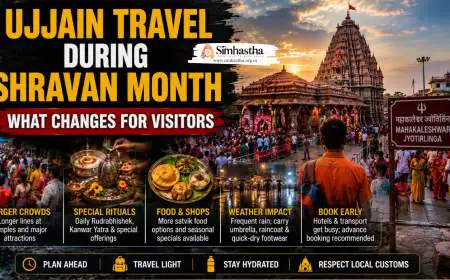

How Simhastha 2028 May Influence Madhya Pradesh Tourism
Discover how Simhastha 2028 may influence Madhya Pradesh tourism. From spiritual circuits and infrastructure legacies to global visibility and rural homestays, explore the lasting impact of the Ujjain Kumbh on the entire state.


The Kumbh as a State-Wide Catalyst Beyond the Temple Town
The 2016 Simhastha was, in many ways, a dress rehearsal. It proved, emphatically, that the pilgrim tide could be managed, and it exposed, just as clearly, the infrastructural and logistical bottlenecks that throttled the spillover benefits from reaching the rest of the state. The 2028 edition is being designed, from the very first planning committee meeting, with a fundamentally different philosophy: the Simhastha is not just an Ujjain event; it is a Madhya Pradesh event. The Madhya Pradesh Tourism Board (MPTB) has been integrated into the core planning process from the outset, working in close coordination with the Simhastha Special Purpose Vehicle (SPV) . The goal is not merely to accommodate the pilgrim in Ujjain for a month, but to capture the pilgrim's imagination and to extend their stay, to offer them a seamless, enticing, and well-signposted journey into the state's deeper treasures. The official Simhastha mobile app and the tourism board's digital platforms are being designed to function as a single, integrated ecosystem, offering curated, multi-day itineraries that begin with the sacred dip in the Shipra and then branch out, like a sacred tree, into the wildlife sanctuaries, the UNESCO World Heritage sites, and the serene, riverside towns that make Madhya Pradesh the untapped jewel of Incredible India. The Kumbh is the great, shining hook; the rest of the state is the magnificent, waiting catch. 🎣
Infrastructure for Pilgrims, Legacy for Tourists and the Connectivity Revolution
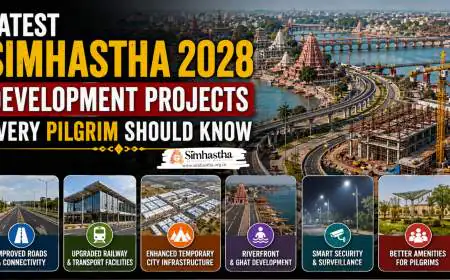
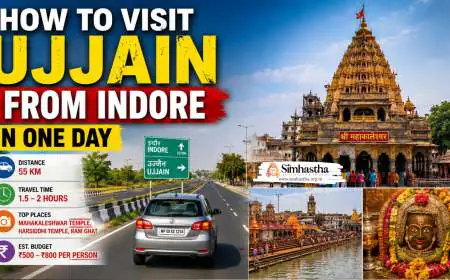
The single most transformative, tangible, and permanent influence of Simhastha 2028 on Madhya Pradesh tourism will be the colossal upgrade of the state's transport infrastructure. The 28-kilometer Ujjain Eastern Bypass, the new ring roads, and the widening of the Ujjain-Indore highway to six lanes are not being built for a single month of pilgrimage. They are the new, permanent arteries of central Indian travel, and they will slash journey times across the Malwa region for decades. The expansion of Devi Ahilya Bai Holkar Airport in Indore, with its increased capacity and new international connections being actively negotiated for the Mela period, is a permanent gift to the state's economic and tourism connectivity. An international pilgrim who can now fly directly into Indore, rather than transiting through Delhi or Mumbai, is a pilgrim who is exponentially more likely to explore the wider region. The massive upgradation of the Ujjain Junction and the development of the satellite railway terminals at Chintaman and Vikram Nagar will create a rail capacity that can handle not just the Mela surge, but the growing, year-round demand for pilgrimage and leisure travel to central India. The pilgrim who travels on a smooth, six-lane highway from Indore to Ujjain in forty-five minutes is a traveler who will happily consider a two-hour drive to the marble cliffs of Bhedaghat or the ancient stupas of Sanchi. The infrastructure built for the saint is the very same road that will carry the tourist, the wildlife enthusiast, and the history lover, deep into the heart of the state. 🛣️
The Ujjain-Indore Corridor and a New Tourism Axis
The relentless focus on the Ujjain-Indore corridor is creating a powerful, dual-city tourism axis that will rival some of India's most established travel circuits. Indore, with its superior airport connectivity, its vibrant culinary scene, and its rapidly expanding stock of business and luxury hotels, is being consciously positioned as the gateway and the leisure complement to Ujjain's intense spiritual gravity. The new, six-lane highway reduces the travel time between the two cities to under an hour, effectively merging them into a single, powerful destination zone. A family can now stay in a luxury hotel in Indore, enjoy the famed Sarafa Bazaar food street by night, and make a seamless, comfortable day trip for the Bhasma Aarti at Mahakaleshwar. The MPTB is actively developing and promoting combined Ujjain-Indore itineraries, bundling the spiritual experience with the culinary and shopping delights of the state's commercial capital. The temple priest who serves the pilgrim at dawn and the barista who crafts a perfect flat white for the same traveler at noon are now part of a single, integrated tourism economy. This corridor is not just a road; it is a new, powerful economic and cultural spine that will attract investment in hotels, resorts, and experiential travel services for the next two decades. 🏙️
Putting the Malwa Region on the Global Spiritual Map
The Simhastha is the global spotlight that the entire Malwa region has been quietly waiting for. For the international spiritual seeker, the "Kumbh Mela" is a known, magnetic, and bucket-list event. But the names of the surrounding sacred sites—Omkareshwar, the serene, island-bound Jyotirlinga on the Narmada; Maheshwar, the temple town of Ahilyabai Holkar with its majestic ghats and handloom sarees; the haunting, baobab-studded ruins of Mandu—are, for the vast majority of the world, a beautiful, undiscovered mystery. The 2028 Mela will change that, decisively and permanently. The official tourism collateral, the curated itineraries on the Simhastha app, and the pre- and post-event marketing campaigns will aggressively position these Malwa gems as the essential, complementary experiences to the Ujjain pilgrimage. An international yoga group that comes for the Kumbh might extend their stay for a week-long meditation retreat on the peaceful ghats of Maheshwar. A history-loving pilgrim from Europe, drawn by the Kumbh's ancient energy, will discover the magnificent Afghan-influenced architecture of Mandu and become an ambassador for the region on their travel blog. The Simhastha is the catalyst that will finally place the entire, culturally saturated Malwa heartland on the global spiritual and heritage tourism map, moving it from a "hidden gem" to a "must-visit" destination. 🌍
Trending Guides Now
Why Simhastha Happens Only When Jupiter Enters Leo ?

Simhastha Kumbh Mela Explained for First-Time Visitors
How Simhastha 2028 Traffic Control Relies on Ring Roads and Bypass Corridors
Why Simhastha 2028 Planning Focuses on Movement Flow Over Monument Building

Ujjain Railway Station to Mahakaleshwar Temple Distance (2026 Guide)

Ujjain Simhastha 2028 Dates Announced: Full Shahi Snan & Event Timeline
Ujjain Railway Station to Kal Bhairav Temple: Distance, Auto Fare and Best Route
Triveni Ghat Ujjain – Simhastha 2028 Complete Guide
Spiritual Circuits and Connecting the Dots of the Narmada and the Vindhyas
The post-Simhastha tourism strategy for Madhya Pradesh is built around the concept of interconnected spiritual circuits. The pilgrim who has traveled across India for the Ujjain Kumbh will be presented, through every digital and physical touchpoint, with a beautifully crafted, logical, and spiritually resonant map of the state's other sacred destinations. The most important of these is the Narmada Parikrama circuit, anchored by the Jyotirlinga at Omkareshwar, the sacred city of Maheshwar, and the source of the holy river at Amarkantak. The MPTB is investing in improved road connectivity, clean, affordable dharamshalas, and unified, multilingual signages along this entire route. The ancient Buddhist circuit, centered on the magnificent stupas of Sanchi and the archaeological remains of Satdhara and Sonari, is another natural extension for the culturally curious pilgrim. The dense forests of Bandhavgarh and Kanha, home to the Royal Bengal tiger, are being woven into a "wilderness and worship" narrative that appeals to the modern, multi-dimensional traveler. The Simhastha is the starting point of a sacred journey that, for the first time, will be presented to the pilgrim as a complete, seamless, and deeply inviting experience, turning a single-city pilgrimage into a state-wide, soul-stirring exploration. 🔱
The Rise of Experiential and Rural Tourism and the Homestay Revolution
One of the most heartening and socially transformative influences of the Simhastha will be the mainstreaming of experiential and rural tourism across Madhya Pradesh. The government's aggressive push to register 10,000 to 15,000 homestay rooms in Ujjain has ignited a quiet, entrepreneurial revolution. Families who have opened their homes to pilgrims, and who have undergone the state's training and certification programmes in hygiene, hospitality, and basic English, are experiencing, for the first time, the tangible, life-changing economic benefits of tourism. This model, once proven successful during the Mela, will be systematically replicated across the state's rural and tribal hinterland. The MPTB, in partnership with local NGOs and self-help groups, is already identifying villages near major tourist circuits—the weavers' hamlets near Maheshwar, the Gond tribal villages near Kanha, the potters' colonies near Datia—where the homestay model can provide a sustainable, dignified, and culturally authentic source of income. The global pilgrim of 2028, who has tasted the warm, home-cooked hospitality of an Ujjain family, will return to Madhya Pradesh seeking a similar, authentic experience in a rural setting. The Simhastha is the great, state-wide proving ground for a form of tourism that is not extractive but deeply human, a model that allows the economic benefits of the pilgrimage to percolate down to the village, the artisan, and the farmer, preserving and celebrating the state's rich, living cultural heritage in the process. 🌾
The International Gateway and the Kumbh's Magnetic Pull for Foreign Tourists
The Kumbh Mela is one of the few Indian events that commands genuine, unforced, and awe-struck global media attention. For a month, the world's cameras will be trained on the ghats of Ujjain, and the images of the Shahi Snan, the Naga sadhus, and the sea of humanity will be beamed into living rooms across every continent. This is a tourism marketing opportunity of incalculable value, and the MPTB is preparing to capitalize on it with a sophisticated, multi-platform, and long-tail strategy. The official Simhastha media centre will not just facilitate coverage of the Mela; it will actively curate and distribute content about the state's wider tourism offerings. International travel journalists and influential bloggers will be hosted on curated, pre- and post-Mela press trips that showcase the state's diverse attractions. The digital content created during the Mela—the breathtaking drone shots of the ghats, the intimate portraits of the pilgrims, the serene landscapes of the Narmada—will form a vast, high-quality, and evergreen content library that will fuel the state's global social media and digital marketing campaigns for the next five to ten years. The Simhastha is the most powerful, organic, and unforgettable advertisement for Madhya Pradesh that money simply cannot buy, and the state is preparing to leverage every single frame of it to attract the international traveler for a generation. 🎥
The Digital Kumbh's Impact on Tourism Marketing and the Modern Pilgrim
The Simhastha 2028 is being consciously designed as a "Smart Kumbh," and the digital infrastructure created for the event will permanently revolutionize the way Madhya Pradesh markets itself and serves its tourists. The unified Simhastha mobile app, with its real-time navigation, digital booking capabilities, and multi-lingual interface, is being built as a scalable, open platform. After the Mela, it will be repurposed and rebranded as the state's official, all-in-one tourism super-app, offering seamless bookings for hotels, homestays, temple darshans, safari permits, and local guides. The massive augmentation of telecom infrastructure—the portable cell towers, the satellite backhaul, and the public Wi-Fi zones installed for the Mela—will leave a permanent legacy of vastly improved digital connectivity across the Ujjain-Indore-Malwa corridor, a basic, essential requirement for the modern, connected traveler. The data analytics gathered during the Mela—the anonymized, aggregate data on pilgrim movement patterns, preferences, and demographics—will provide the MPTB with an unprecedented, data-rich understanding of the modern Indian and international pilgrim. This is the raw, invaluable material for designing future tourism products, for targeted, precision marketing campaigns, and for creating a visitor experience that is personalized, seamless, and deeply satisfying. The digital Kumbh is not just about managing a crowd; it is about creating the intelligent, responsive, and data-driven backbone of a 21st-century tourism economy. 📱
Skill Development and the Professionalization of the State's Tourism Workforce
The Simhastha is functioning as the largest, most intensive, and most practical skill development and training bootcamp in the history of Madhya Pradesh tourism. The tens of thousands of individuals who are being trained for the Mela—the auto-rickshaw drivers learning basic English and pilgrim etiquette, the homestay owners learning digital booking and food safety, the young men and women being trained as volunteer guides and digital kiosk operators—are not acquiring skills that will expire when the tents are folded. They are becoming the state's new, professionally trained, and service-oriented tourism workforce. A young man from a village near Ujjain, who has spent a month as a multilingual volunteer guide during the Kumbh, handling the complex, stressful, and deeply human demands of an international pilgrim, emerges with a skill set and a confidence that are immediately employable in any hotel, tour company, or resort across the state. The government's investment in this training, delivered through the Madhya Pradesh Skill Development Mission and various sector skill councils, is a direct, long-term investment in the professionalization and the quality of the state's entire tourism sector. The Simhastha is the crucible, the great, practical university, that is forging a new generation of skilled, empathetic, and proud tourism ambassadors for the heart of India. 🎓
The Legacy of a Year-Round Spiritual Destination
The ultimate, long-term influence of Simhastha 2028 on Madhya Pradesh tourism is the permanent and irreversible repositioning of Ujjain, and by extension the entire Malwa region, as a year-round, world-class spiritual tourism destination. The magnificent Mahakal Lok corridor, the vastly expanded and beautified ghats, the new, clean, and well-managed dharamshalas, and the improved, seamless connectivity have not been built for twelve days of Shahi Snan. They are permanent, solid, and deeply attractive assets that will draw pilgrims, seekers, and culturally curious travelers from across India and the world every single month of the year. The post-Simhastha strategy is to move the narrative from the "once-in-twelve-years" mega-event to the "accessible, any-time" profound spiritual experience. The daily Bhasma Aarti, the serene, uncrowded beauty of the quieter ghats, the profound astrological power of a Tuesday at Mangalnath, the meditative silence of a weekday morning at Siddhavat—these are the stories that will be told, relentlessly and beautifully, through the state's digital and traditional marketing channels. The Simhastha is the great, bursting supernova that will give birth to a new, steady, and brilliantly shining star in the Indian tourism firmament: the ancient, eternal, and now fully accessible city of Mahakal, and the magnificent, diverse, and welcoming state that cradles it. 🔱

The Eternal Ripple and a State Transformed by Faith
The true measure of the Simhastha's influence on Madhya Pradesh tourism will not be found in the statistics of the Mela month alone—the number of hotel rooms booked, the number of flights landed, the crores of rupees spent. It will be found, five years later, in the quiet, confident smile of a rural homestay owner near Maheshwar who is hosting her third group of international guests. It will be found in the seamless, stress-free journey of a family from Tamil Nadu, who have driven from Omkareshwar to Ujjain on smooth, new roads, guided by a state tourism app that speaks to them in Tamil. It will be found in the glowing blog post of a French traveler who came for the Kumbh, stayed for the tigers of Kanha, and is already planning her return journey with her grandchildren. The Simhastha is the great, sacred stone dropped into the still waters of central India, and the ripples it generates will touch every shore, every village, every forest, and every ancient, beautiful monument for generations to come. The faith of a hundred million pilgrims, the vision of a state government, and the quiet, determined labour of a million workers and entrepreneurs are converging on a single, sacred moment in time, not just to host the world's largest peaceful gathering, but to use that gathering as the catalyst for a permanent, profound, and deeply human transformation of the entire, magnificent heart of India. 🕊️
Frequently Asked Questions