














How Simhastha 2028 Could Change Ujjain's Global Recognition
Discover how Simhastha 2028 could change Ujjain's global recognition forever. Explore infrastructure, spiritual tourism, and the transformation of this ancient city.


The Countdown Has Begun: Why Simhastha 2028 Is Different
Let me paint you a picture. 🌟 Imagine a city that has witnessed the rise and fall of empires, where kings and saints have walked the same streets, and where the river Shipra has flowed for millennia, carrying prayers to the divine. Now imagine that city on the brink of a transformation so massive that it could change its place in the world forever.
That city is Ujjain, and the transformation is Simhastha 2028 – the grandest Kumbh Mela celebration that this ancient city has ever prepared for. But here's what makes it truly special: This isn't just another religious gathering. This could be Ujjain's coming-out party on the global stage. 🎯
The buzz around Simhastha 2028 isn't just about the millions of pilgrims expected to arrive. It's about how this event could fundamentally reshape Ujjain's identity, infrastructure, and its recognition as a global spiritual capital. From a new airport terminal to the breathtaking Mahakal Lok Corridor, everything is lining up to make 2028 the year the world finally turns its eyes to this sacred city.
So, what exactly is happening, and why should you care? Whether you're a pilgrim, a traveler, an investor, or just someone curious about how ancient traditions meet modern ambition, this is the story of how Simhastha 2028 could change Ujjain's global recognition forever. 🌍
Trending Guides Now
Why Simhastha Happens Only When Jupiter Enters Leo ?

Simhastha Kumbh Mela Explained for First-Time Visitors
How Simhastha 2028 Traffic Control Relies on Ring Roads and Bypass Corridors

Why Simhastha 2028 Planning Focuses on Movement Flow Over Monument Building

Ujjain Railway Station to Mahakaleshwar Temple Distance (2026 Guide)

Ujjain Simhastha 2028 Dates Announced: Full Shahi Snan & Event Timeline
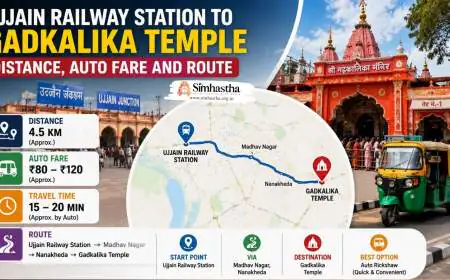
Ujjain Railway Station to Gadkalika Temple: Distance, Auto Fare and Route
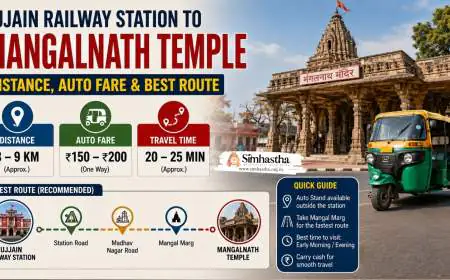
Ujjain Railway Station to Mangalnath Temple: Distance, Auto Fare and Best Route
What Is Simhastha and Why Does It Matter?
The Astrological Significance That Makes Simhastha Unique
Let's start with the basics. Simhastha (also known as Simhastha Kumbh Mela) is a Hindu festival held every 12 years in Ujjain when Jupiter enters the zodiac sign of Leo (Simha in Sanskrit). This astrological alignment is considered highly auspicious and is believed to open a cosmic doorway for spiritual cleansing and liberation.
What makes Simhastha different from other Kumbh Melas? Unlike the Prayagraj Kumbh, which celebrates the drops of nectar that fell there, Simhastha is special because of Ujjain's deep connection to the planet Jupiter. In Vedic astrology, Jupiter is the guru or teacher of the gods, and its entry into Leo (the king of the zodiac) creates an incredibly potent spiritual atmosphere.
Legend says that during this time, the waters of the Shipra River transform into Amrita (nectar), and a single dip can wash away lifetimes of karma. Astrologers believe that bathing during Simhastha at the right moment creates astrological alignment that can fundamentally alter your destiny. No wonder millions of devout pilgrims plan their lives around this 12-year cycle! 🙏
The Traditional Importance of Ujjain
Why Ujjain, though? This city isn't just any place – it's one of the seven Mokshadayini cities in Hinduism. It houses the legendary Mahakaleshwar Temple, one of the 12 Jyotirlingas, where Lord Shiva is worshipped as the lord of time. The very name "Ujjain" comes from "Ujjayini," meaning "one who conquers with pride," and it has been a center of learning, astrology, and spirituality for over 5,000 years.
When you combine this ancient heritage with the spiritual potency of Simhastha, you get something truly magical. The faithful believe that a pilgrimage to Ujjain during Simhastha is not just a journey – it's a ticket to liberation from the cycle of birth and death.
The Massive Infrastructure Overhaul Before Simhastha 2028
Mahakal Lok Corridor: A Game-Changer for Ujjain
If you haven't heard about the Mahakal Lok Corridor, you're in for a surprise. This INR 850 crore project is the crown jewel of Ujjain's development – a sprawling, beautifully designed pathway that connects the Mahakaleshwar Temple to the Shipra River. 🏛️

But calling it a "pathway" is an understatement. The Mahakal Lok Corridor spans 900 meters and features 108 intricately carved pillars, each depicting a different form of Lord Shiva. There are spiritual murals, interactive installations, and thousands of LED lights that transform the area into a mesmerizing spectacle at night. The project includes a 50-foot-tall idol of Lord Shiva, welcome gates, and beautifully landscaped gardens – all designed to give pilgrims a deeply moving spiritual journey from the temple to the river.
For those of you who visited Ujjain even 10 years ago, this new corridor will blow your mind. It's Ujjain's answer to global pilgrimage destinations like Varanasi's Kashi Vishwanath Corridor, and it's positioning the city to attract not just Indian pilgrims, but international visitors seeking world-class spiritual experiences.
Why this matters for global recognition: When a city invests in infrastructure that rivals the best in the world, the world takes notice. The Mahakal Lok Corridor is Ujjain's statement – "We are ready for the global stage." Travel bloggers, international media, and tourism influencers are already covering it, and this visibility is only going to explode during Simhastha 2028.
New Airport Terminal and Expanded Connectivity
Here's something that will make travel enthusiasts cheer – Ujjain's airport, Devi Ahilyabai Holkar Airport in Indore (located 55 km away), is undergoing a massive expansion. A new terminal is being built to handle the surge in air traffic expected for Simhastha 2028.
Why does this matter? Because global accessibility is the key to international recognition. When international flights land smoothly, when tourists can reach Ujjain without hassle, when the roads are wide and well-maintained, the city becomes a serious contender on the global tourism map.
The government has also upgraded the railway station with new platforms, better passenger amenities, and increased train capacity. The Indore-Ujjain railway section is being quadrupled, and several new express trains are being introduced. Road connectivity has been improved with widened highways connecting Ujjain to major cities like Indore, Bhopal, and Mumbai.
New Flyovers and Bridges Over Shipra
The Ujjain landscape is changing visibly. New flyovers, bridges over the Shipra River, and the widening of existing roads have transformed the traffic dynamics. The Ujjain Municipal Corporation has also invested in modern sewage treatment plants to keep the Shipra clean – a critical step for a city that will host millions of pilgrims who need to take a holy dip in its waters.
All of this might sound like standard infrastructure talk, but here's the human angle: When you, as a visitor, land in Ujjain in 2028, you won't be greeted by chaotic, overcrowded, or poorly maintained surroundings. You'll step into a city that has prepared for you – a city that values your experience and has built systems to ensure you feel welcomed, safe, and spiritually uplifted. That's what world-class pilgrimages are made of.
How Simhastha 2028 Will Transform Ujjain's Economy
Tourism Boom and Job Creation
Let's talk numbers. During the 2016 Simhastha, Ujjain saw approximately 75 million pilgrims. For 2028, the government is preparing for over 100 million visitors – a staggering number that rivals the population of many countries! 💰
Think about what 100 million visitors mean for the local economy:
-
Hotels and homestays are being built at an unprecedented rate.
-
Local businesses like food stalls, souvenir shops, and transport services are witnessing a boom.
-
New tour operators, guides, and cultural performers are getting trained.
-
The hospitality sector in Indore and nearby areas is seeing massive investment.
This isn't just about money coming in; it's about jobs being created. Simhastha 2028 could create tens of thousands of direct and indirect employment opportunities for the people of Ujjain and its surrounding regions. From construction workers to hospitality staff, from artisans to travel agents – everyone will benefit from this economic wave.
The Rise of Spiritual Tourism in Madhya Pradesh
Spiritual tourism is one of the fastest-growing travel segments globally, and Simhastha 2028 is positioning Ujjain as a leader in this space. The world has moved beyond just sightseeing; travelers today want experiences that are meaningful, transformative, and authentic.
Ujjain offers exactly that. Beyond the Simhastha, visitors can:
-
Witness the Bhasma Aarti at Mahakaleshwar Temple (the only temple where Lord Shiva is worshipped with sacred ash).
-
Explore the ancient observatory, Jantar Mantar, built by Maharaja Sawai Jai Singh.
-
Take a boat ride on the Shipra River at sunset.
-
Visit the Kal Bhairav Temple where liquor is offered to the deity – a unique ritual you won't find anywhere else.
All of these experiences, combined with the world-class infrastructure being built, make Ujjain a compelling destination for spiritual tourism. Madhya Pradesh is already marketing the state as "The Heart of Incredible India," and Simhastha 2028 is going to be the centerpiece of that campaign.
Global Media Attention and Brand Recognition
Here's where the "global recognition" part gets really interesting. In 2028, Ujjain will be the focus of massive global media coverage. International news networks like the BBC, CNN, and Al Jazeera will cover the event. Travel channels will produce documentaries. Social media influencers from around the world will share their experiences.
Imagine Ujjain trending on Twitter worldwide, or drone footage of the Mahakal Lok Corridor going viral on Instagram. This isn't speculation – this is what happens when an event of this magnitude occurs in a connected world.
The Ujjain brand is about to go global, and the best part is that the city has the assets to back it up. The rich history, the spiritual depth, the newly built infrastructure – Ujjain is ready to capture the world's attention and leave a lasting impression.
The Spiritual Transformation: What Simhastha 2028 Means for the Faithful
A Once-in-a-Lifetime Opportunity for Spiritual Cleansing
For millions of Hindus, Simhastha 2028 represents something far deeper than a tourist event. It's a sacred opportunity to cleanse your soul, balance your karma, and move closer to moksha. The 12-year wait creates an intense spiritual longing, and when the time finally arrives, the devotion is overwhelming.
The Kumbh Mela astrology says that when Jupiter is in Leo, the planets align in a way that amplifies the spiritual potency of the Shipra River. Devotees believe that a single dip during Simhastha can:
-
Wash away accumulated sins.
-
Neutralize negative planetary influences.
-
Help in Pitru Dosh remedies.
-
Bring peace to departed ancestors.
-
Accelerate the journey toward spiritual liberation.
This isn't just blind faith – it's a living tradition that has been passed down for thousands of years, and each Simhastha reaffirms the power of collective prayer. In 2028, millions of devotees will come together in a shared moment of profound faith, creating an energy that's truly transformative.
New Facilities for Pilgrims
The government and Ujjain Municipal Corporation are leaving no stone unturned to ensure pilgrim comfort:
-
Temporary Tent Cities: Over 50 tent cities are being planned along the Shipra River, offering comfortable accommodation for pilgrims.
-
Health Camps: Mobile medical units and health camps will be deployed to handle emergencies.
-
Cleanliness Drives: With a "Zero Waste" target, the city is investing in modern waste management systems.
-
Free Food Distribution: Annadanam (free food distribution) at massive scales will ensure no pilgrim goes hungry.
-
Digital Services: A dedicated mobile app will provide real-time guidance, river level updates, and crowd management information.
These facilities will ensure that the pilgrim experience in 2028 is significantly better than in 2016, further enhancing Ujjain's reputation as a well-organized pilgrimage destination.
The Divine Atmosphere: A City in Celebration
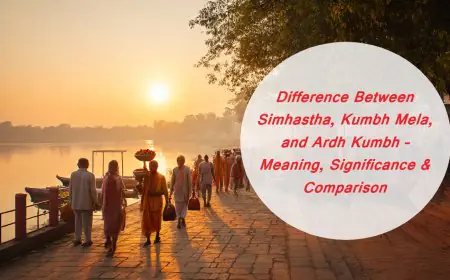
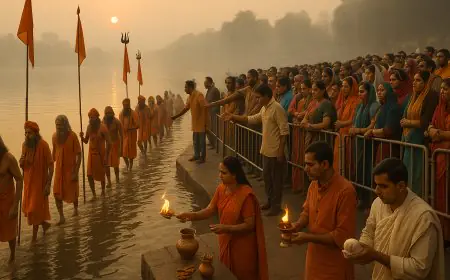
During Simhastha, the entire city of Ujjain turns into one massive celebration of devotion. The air is filled with Vedic chants. The temples are decorated with flowers and lights. The Shipra ghats echo with the sound of religious hymns. Saints, sadhus, and spiritual leaders from across India and beyond gather to share their wisdom.
What makes this special is the feeling of unity – millions of people, from all walks of life, coming together for a single purpose: to connect with the divine. It's an atmosphere that will leave you speechless, and for many, it changes their entire perspective on life.
How Ujjain Is Preparing for 100 Million Visitors
Crowd Management and Safety Planning
Managing 100 million visitors requires military-like precision. Ujjain is investing heavily in:
-
Intelligent Traffic Systems: AI-powered traffic management to avoid congestion.
-
Surveillance Infrastructure: Thousands of CCTV cameras for real-time crowd monitoring.
-
Emergency Response: Dedicated police force, disaster management teams, and medical response units.
-
River Safety: Boats and trained lifeguards along the Shipra River to prevent accidents.
Accommodation Options: From Luxury to Ashrams
Ujjain is dramatically expanding its hospitality capacity:
-
New Hotels: Over 50 new hotels are under construction.
-
Luxury Options: International chains are eyeing Ujjain as a new destination.
-
Ashrams and Dharamshalas: Traditional accommodation options are being renovated.
-
Private Homestays: Local residents are opening their homes to pilgrims, creating a warm, welcoming atmosphere.
Digital Ujjain: A Smart Pilgrimage Experience
Technology is transforming the pilgrimage experience. In 2028, pilgrims can expect:
-
Real-time Updates: Crowd densities, river water levels, and weather conditions available on apps.
-
Virtual Darshan: Live streaming of temple rituals for those who can't be physically present.
-
Digital Payments: Complete acceptance of UPI and digital wallets for all transactions.
-
AI-powered Navigation: Smart maps and guidance systems to navigate the crowded city.
Environmental Sustainability: A Greener Simhastha
The Shipra River Cleanup
The Shipra River is the heart of Simhastha, and its cleanliness is paramount. The government has initiated a massive cleanup drive, including:
-
Sewage Treatment Plants: New plants to prevent sewage from entering the river.
-
Solid Waste Management: Biodegradable materials and proper waste disposal systems.
-
Public Awareness Campaigns: Educating locals and pilgrims about keeping the river clean.
Sustainable Practices
For the first time, Simhastha 2028 is focusing on sustainability:
-
Plastic Ban: Complete ban on single-use plastics in the city.
-
Renewable Energy: Solar power for lighting and energy needs.
-
Eco-friendly Materials: Biodegradable offerings and decorations.
These green initiatives will position Ujjain as a responsible, forward-thinking spiritual destination, appealing to the growing global tribe of eco-conscious travelers.
Comparisons with Other Kumbh Melas: Where Ujjain Stands
Ujjain vs. Prayagraj: Unique Vibes
While Prayagraj's Kumbh Mela is the largest, Ujjain's Simhastha has a different energy. Prayagraj is about the confluence of three rivers; Ujjain is about the astrological power of Jupiter in Leo. Both are spectacular, but Ujjain offers a more intimate, authentic experience because it's less commercialized.
Additionally, Ujjain is more compact than Prayagraj. The temple, the river, and the main pilgrimage spots are all within walking distance, making it easier for pilgrims to navigate. This convenience will only increase the city's appeal in 2028.
What Makes Simhastha 2028 Special
The 2028 Simhastha will be the most technologically advanced, eco-friendly, and pilgrim-friendly Kumbh ever. With modern infrastructure, digital innovation, and global media coverage, it's poised to set new benchmarks for religious tourism worldwide.
The Media and Marketing Machine Behind Simhastha 2028
Global Campaigns
The Madhya Pradesh Tourism Board is planning a global marketing blitz:
-
Social Media Campaigns: Viral content on Instagram, YouTube, and Facebook.
-
International Roadshows: Events in key cities like New York, London, Dubai, and Singapore.
-
Partnering with Influencers: Travel bloggers and spiritual influencers to share their Ujjain stories.
Promoting Ujjain's Cultural Heritage
Beyond Simhastha, the campaigns will highlight:
-
Ujjain's ancient history as a center of astrology and learning.
-
The city's rich architectural heritage.
-
Ujjain's unique food, music, and arts.
By positioning Ujjain as a must-visit destination year-round, the tourism boards aim to make the city's recognition last beyond 2028.
What This All Means: The Lasting Legacy of Simhastha 2028
Ujjain's Place on the Global Spiritual Map
Simhastha 2028 is not just an event; it's a catalyst. After 2028, Ujjain will never be the same. It will be recognized as a premier global spiritual hub, alongside places like Varanasi, Bodh Gaya, and even international centers of spirituality like Mecca, Jerusalem, and Kyoto.
Global recognition doesn't just mean attention; it means respect, investment, and sustained interest. Businesses will invest in Ujjain. International tourists will make it a priority. Spiritual seekers will plan their journeys around Ujjain. The city will be mentioned in travel guides, spiritual books, and documentaries alongside the world's great sacred places.
An Invitation to Be Part of History
If you're reading this, consider yourself invited. 📅 Simhastha 2028 isn't just a pilgrimage – it's a once-in-a-lifetime opportunity to witness a city transform, to be part of an event that has happened for thousands of years, and to connect with something far greater than yourself.
Whether you come for the spirituality, the culture, the infrastructure, or the sheer spectacle of millions coming together in faith, Ujjain will welcome you with open arms. And when you leave, you'll carry a piece of this ancient, evolving city with you.
The Future After 2028: Sustaining the Momentum
How Ujjain Will Keep Its Global Spotlight
The transformation of Ujjain won't end with Simhastha 2028. The city plans to:
-
Continue developing its infrastructure.
-
Host regular cultural and spiritual events.
-
Maintain international partnerships for tourism and cultural exchange.
-
Promote year-round pilgrimage and spiritual tourism.
Long-Term Economic Benefits
The real impact of Simhastha 2028 will be felt for decades:
-
Increased property values
-
Sustained tourist inflow
-
Brand recognition
-
Business opportunities for locals
-
International diplomacy through cultural exchange
The Spiritual and Cultural Richness Beyond Simhastha
Why Ujjain Deserves Global Attention
Ujjain isn't just about Simhastha. The city is a treasure trove of culture and history:
-
Mahakaleshwar Temple: One of the most powerful Jyotirlingas.
-
Harsiddhi Temple: Dedicated to Goddess Durga, a Shakti Peeth.
-
Gadh Kalika: Where Lord Shiva manifested as a pillar of fire.
-
Observatory: Proof of Ujjain's ancient astronomical knowledge.
Ujjain's Unique Identity
What makes Ujjain truly special is its blend of power and grace, of ancient tradition and modern ambition, of deep spirituality and warm hospitality. Simhastha 2028 is simply the event that will bring this magical city to the world's attention.
Frequently Asked Questions