

















Will Accommodation Shortages Occur During Simhastha 2028?
Will accommodation shortages occur during Simhastha 2028? Understand the massive demand-supply gap, Shahi Snan peak pricing, and the multi-layered plan using tent cities, homestays, and Indore overflow to shelter 10 crore pilgrims.


The Brutal Mathematics of a Hundred Million Pilgrims and a City of Six Lakhs
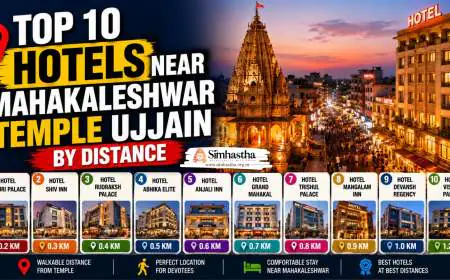
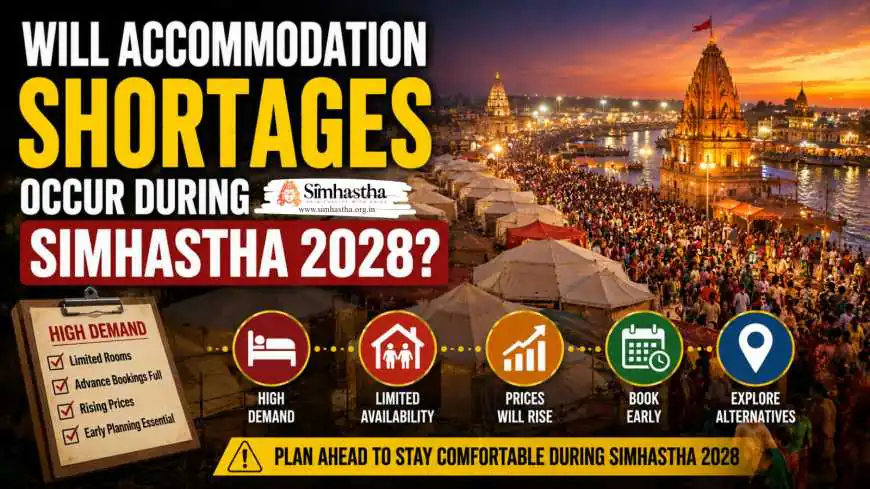
To understand the inevitability of the accommodation shortage During Simhastha 2028, one must first sit with the cold, unblinking numbers. Ujjain's resident population hovers around six lakh. The city's total, permanent, brick-and-mortar accommodation inventory—counting every hotel room, every guesthouse bed, every dharamshala cot, and every ashram dormitory—is estimated to be, at the very upper limit of its capacity, around 70,000 to 80,000 beds. On a normal, non-festival day, this is more than adequate for the steady, manageable stream of pilgrims. But the Simhastha is not a steady stream; it is a flash flood of biblical proportions. The projected total pilgrim footfall for the 2028 Mela is a conservative 10 crore (100 million), with the possibility of the figure climbing to 12 crore. On the peak Shahi Snan days, the single-day arrival of pilgrims is expected to touch 1.5 to 2 crore. Even if only a small fraction of these day-trippers require formal, organized accommodation—say, a modest 20%—the demand on those nights will be for 30 to 40 lakh beds. That is a demand that outstrips the permanent supply by a factor of nearly forty or fifty to one. This is the fundamental, unyielding mathematics of the Simhastha accommodation challenge. The city's physical, permanent infrastructure is not merely insufficient; it is, in the face of this demand, almost irrelevant. The solution, therefore, cannot be found within the existing city; it must be built, from scratch, on the vast, open agricultural lands that surround it, in the form of a temporary, meticulously planned, and spiritually charged megacity of canvas, faith, and communal devotion. ⚠️
The Shahi Snan Dates and the Tidal Wave of Peak Demand
The accommodation market of the Simhastha is not a flat, static field; it is a landscape of dramatic, violent peaks and deep, quiet valleys, and the towering, Himalayan peaks are the Shahi Snan dates. These are the days, determined by the precise, astrological calculations of the Kumbh's astronomers, when the celestial alignments are at their most potent, when the waters of the Shipra are believed to be most heavily infused with the immortal nectar, and when the great Akharas, the armies of the spirit, lead their massive, ecstatic processions to the river. On these days, the demand for a place to sleep—any place, at any price, within any reasonable distance of the sacred ghats—explodes to a level that defies all normal economic logic. A room in a humble, unremarkable budget hotel that would cost ₹1,000 on a quiet Tuesday in June can, and will, command ₹10,000 to ₹20,000 on a Shahi Snan day. A mid-range hotel room can surge to ₹30,000 to ₹50,000, and the few, rare premium or heritage rooms can touch ₹1,00,000 or more. This is not price-gouging in the simple, unethical sense; it is the raw, unmediated, and utterly merciless law of supply and demand operating on a scale that is almost impossible for the uninitiated mind to comprehend. For the pilgrim who has not planned for these specific dates, who arrives in Ujjain on the eve of a Shahi Snan with no pre-booked accommodation, the experience can be profoundly challenging. It is on these peak days that the shortage is most acute, the stress is most intense, and the reliance on the informal, unorganized, and often purely faith-based accommodation sector is most absolute. 📅
The Multi-Tier Strategy and How the Administration Is Building a Temporary City of Faith
The administration's response to this existential accommodation challenge is the most ambitious, comprehensive, and innovative temporary shelter programme ever devised for a religious gathering. The centrepiece of this strategy is the construction of vast, professionally managed tent cities, with a combined capacity of 5 to 8 lakh pilgrims at peak. These are not the flimsy, leaky camping tents of a casual weekend trek. They are fully serviced, multi-tiered temporary townships, ranging from the opulent, air-conditioned, five-star-equivalent premium luxury tents with attached bathrooms, wooden flooring, personal butlers, and gourmet dining, to the comfortable, clean, and community-focused standard tents with shared but impeccable bathroom blocks and wholesome, all-inclusive meals, to the simple, affordable, and deeply communal budget shivirs, the noble descendants of the Kumbh's most ancient and democratic pilgrim dormitories. Running in parallel is the homestay revolution, a government-driven scheme aiming to register 10,000 to 15,000 homestay rooms across Ujjain, turning thousands of ordinary family homes into sacred, welcoming micro-hotels, allowing the economic benefits of the Mela to flow directly into the community and providing the pilgrim with an authentic, warm, and deeply personal shelter. The third, and perhaps most critical, pillar of the strategy is the Indore overflow corridor. The city of Indore, just 55 kilometres away on the newly widened, six-lane highway, with its vastly larger inventory of hotels and its superior air connectivity, is being consciously, systematically positioned as the primary satellite accommodation hub. A continuous, high-frequency shuttle bus service, integrated with a unified digital ticketing and mobility app, will connect Indore's hotels to Ujjain's ghats, creating a seamless, if time-consuming, commuting pilgrimage experience. Together, these three pillars form a robust, multi-layered safety net, a temporary city of canvas, hospitality, and faith, designed to catch and shelter the vast majority of the pilgrim tide. 🏗️
The Dharamshala and Ashram Network and the Ancient, Sacred Safety Net
Beneath the modern, government-engineered layers of tent cities and homestays lies the ancient, unshakeable, and deeply reliable bedrock of pilgrimage accommodation: the vast, often informal, and profoundly faith-driven network of dharamshalas and ashrams. These institutions, run by temple trusts, caste associations, philanthropic families, and various religious organizations, have been the silent, humble, and utterly essential backbone of the Hindu pilgrimage economy for centuries. During the Simhastha, they will operate at many times their normal capacity, their large, open halls and their courtyards transformed into sprawling, communal dormitories where pilgrims sleep on simple mats, sharing the same roof, the same water, and the same, profound, democratic spirit of the sacred journey. The Mahakaleshwar Temple Trust, along with the trusts of the other major shrines, will play a critical, frontline role, expanding their existing pilgrim rest houses and opening temporary, basic, but safe and clean shelters. The great Akharas themselves will, as they have always done, feed and shelter lakhs of pilgrims within their own, massive, self-contained camps, their community kitchens operating around the clock, their vast pandals offering a simple, sacred floor to any weary traveler who arrives at their gates. The key for the pilgrim seeking dharamshala accommodation is to understand that these institutions often operate on a different, more personal, and less predictable logic than the commercial market. Many do not take formal, online bookings; they operate through community networks, personal connections, and the ancient, unspoken law of first-come, first-served, often prioritising their own community members and long-time devotees. Contacting the managing trust directly, well in advance, with patience, humility, and a personal connection, is often the only, and the most effective, way to secure this sacred, blessed, and deeply affordable shelter. 🛕
Trending Guides Now

Jain Dharamshala in Ujjain Near Mahakal Temple

Best Hotels Near Mahakal Mandir 2026 Guide

Where Pilgrims Stay During Ujjain Simhastha Event

Best Places to Stay in Ujjain Near Mahakal Temple

Ujjain Railway Station to Mahakaleshwar Temple Distance (2026 Guide)

Ujjain Simhastha 2028 Dates Announced: Full Shahi Snan & Event Timeline

Triveni Ghat Ujjain – Simhastha 2028 Complete Guide

Ujjain to Mahakaleshwar Temple Distance & Taxi Fare (2026)
The Unorganized Sector and the Pilgrim's Age-Old Resilience
No matter how meticulously the administration plans, no matter how many tent cities are erected or homestays registered, the Simhastha will inevitably generate a vast, spontaneous, and entirely unregulated parallel accommodation economy. This is the unorganized sector, the invisible, undocumented, and often deeply human safety net that has caught the overflow of pilgrims at every Kumbh for a thousand years. Private residences, in their thousands, will open their courtyards, their rooftops, and their spare rooms to strangers who become, for a night, guests of the Lord. Schools, community halls, and public buildings will be converted into temporary dormitories. Makeshift shelters, constructed from tarpaulin and bamboo, will spring up on the edges of the Mela grounds. And millions of pilgrims, driven by a faith that transcends physical comfort, will simply sleep under the vast, star-filled Ujjain sky, wrapped in a thin blanket, their only shelter the benevolent, watchful presence of the Lord of Time. This unorganized sector cannot be precisely forecast, regulated, or guaranteed, but it will, with absolute certainty, emerge. It represents the profound, unquenchable resilience of the pilgrim spirit, the deep-seated, ancient belief that the Kumbh is, above all, a journey of faith, and that the divine, who has called the devotee to this sacred ground, will also provide the shelter, in some form, for the night. The administration's task is not to suppress this organic, faith-driven sector, but to gently, respectfully, and practically bring it within a circle of basic safety, hygiene, and security, without destroying its spontaneous, generous, and deeply human spirit. 🌌
The Government's Hand and Regulation, Rate Cards, and the Official Portal
The spectre of exploitative, runaway pricing and fraudulent, non-existent bookings, which haunted the 2016 Simhastha and caused immense distress to thousands of pilgrims, is being directly confronted by the government for 2028. The Simhastha Tourism and Hospitality Policy 2028 introduces a powerful, unprecedented framework of regulation. Every single accommodation provider—from the grandest hotel to the most humble, spare room in a family home—is mandated to register on the centralized, official Simhastha booking portal. This portal is not merely a listing service; it is a regulatory tool. It will display the government-fixed rate card for each registered property, a legally enforced maximum price that varies only by the category of accommodation and the date (peak versus non-peak). The administration is deploying a dedicated task force to monitor compliance, and pilgrims are actively encouraged to report any overcharging through the official app. The portal will be the single, most reliable, and most secure gateway for booking all forms of accommodation—hotels, tent cities, homestays, and registered dharamshalas. The pilgrim who books exclusively through this official channel is protected, to the greatest extent possible, from the predations of touts, the heartbreak of phantom listings, and the financial shock of uncontrolled surge pricing. The message from the administration is clear and uncompromising: the days of the unregulated, wild-west accommodation market at the Kumbh are over. The pilgrim's right to a fair, transparent, and dignified shelter is now enshrined in policy and enforced by the full authority of the state. 🛡️
The Early Bird's Certainty Versus the Last-Minute Pilgrim's Gamble
The single most decisive factor that will determine whether a pilgrim experiences the Simhastha accommodation landscape as a manageable challenge or a desperate crisis is the timing of their booking. The economics of the Mela are brutally, mathematically simple: prices rise exponentially as the event approaches, and they explode on the festival dates themselves. The early bird booking window, which for Simhastha 2028 runs from approximately mid-2026 through early 2027, is the golden, irreplaceable opportunity. During this phase, tent city operators, hotel owners, and homestay hosts are eager to secure guaranteed occupancy and are offering their most attractive, deeply discounted rates. A premium tent that will cost a fortune if booked in a panic in February 2028 can be secured, by the disciplined and the far-sighted, for a price that is remarkably reasonable. The pilgrim who waits until late 2027 or early 2028 to begin their search is not entering a market; they are entering a wasteland of scarcity, astronomical prices, and immense, soul-draining stress. The choice is not merely financial; it is profoundly spiritual. The early booker purchases not just a bed, but the priceless, irreplaceable gift of peace of mind, the quiet, unshakeable certainty that a sanctuary is waiting, a refuge is secured, and that the months leading up to the pilgrimage can be spent in calm, joyful anticipation rather than in a frantic, anxious scramble. 📅
A Pilgrim's Practical Guide to Securing Shelter During the Kumbh
For the pilgrim who is determined to secure their place in the great, sacred gathering of 2028, a few simple, essential, and non-negotiable practical steps will serve as a shield against the inevitable chaos. First: The moment the official Shahi Snan dates are announced, which is expected by mid-2027, mark them in your calendar and immediately, without a moment's hesitation, begin your accommodation search, prioritizing the early bird window. Second: Register on the official Simhastha 2028 booking portal as soon as it launches, set up your profile, and sign up for instant notifications. Third: Book only through the official portal or the verified, direct websites of the temple trusts and the established, reputable hotel chains. Never, under any circumstances, pay an advance to a stranger, a tout, or a listing on an unverified, generic travel website. Fourth: If your budget and your physical needs allow, prioritize the official tent cities. Their bundled, all-inclusive pricing, their strategic proximity to the ghats, their dedicated shuttle services, and their high levels of security and medical support offer, by a considerable margin, the best overall value and the most seamless, stress-free pilgrimage experience. Fifth: If you are travelling on a very tight budget, begin your research into the dharamshala and ashram network well in advance. Contact the temple trusts directly, write letters, make phone calls, and, if possible, establish a personal connection. Sixth: If you are considering the Indore overflow option, book your hotel early, and understand and accept that you will be spending several hours each day commuting, planning your temple visits and your sacred baths around the shuttle bus schedule. Finally, and most importantly, book your train or flight tickets the very moment they become available, and ensure that your accommodation is secured before you commit to your travel. A confirmed train ticket without a confirmed bed is a ticket to a very stressful, uncertain, and potentially overwhelming pilgrimage. ✅
Beyond the Bed and the Spiritual Perspective on Simhastha Shelter
In the final, quiet, and deeply human analysis, the challenge of accommodation at the Simhastha is not merely a logistical problem to be solved; it is, in itself, a profound, albeit demanding, spiritual teacher. The Kumbh Mela has never, in its long, ancient, and sacred history, been a comfortable, predictable, or materially secure experience. Its very essence, its transformative, soul-shaking power, lies in its radical, temporary dissolution of the normal, comfortable, and ego-reinforcing structures of life. The dense, sweating queue, the shared, simple floor of a dharamshala, the cold, pre-dawn walk, the unpredictable chaos of the crowd—these are not obstacles to be resented; they are the very crucible in which the pilgrim's ego is slowly, gently, and irrevocably dissolved. The shortage of comfortable, private, and familiar accommodation is, in a profound sense, a necessary part of the pilgrimage's design. It strips the devotee of their attachment to personal space, to privacy, to the predictable comforts of their ordinary life, and it forces them, in the most direct and undeniable way, into a state of radical, childlike dependence on the divine. The pilgrim who arrives with a heart full of trust, a spirit of humble surrender, and an inner posture that is open to whatever the Lord of Time provides—whether it is a soft bed in a luxury tent or a simple, hard mat on a crowded temple floor—is the pilgrim who will leave the Simhastha not with complaints about the logistics, but with a soul that has been deeply, permanently, and beautifully transformed by the ancient, fierce, and all-providing grace of Mahakal. 🔱

Frequently Asked Questions