




















A Day Inside ISKCON Ujjain: Schedule and Activities
Step into the serene rhythm of a day inside ISKCON Ujjain. From the 4:30 AM Mangala Aarti and Bhagavatam class to noon rajbhog, evening Gaura Aarti, and the joyous Sunday Feast, discover the full schedule and soul-nourishing activities at Sri Sri Radha Madhav Mandir.
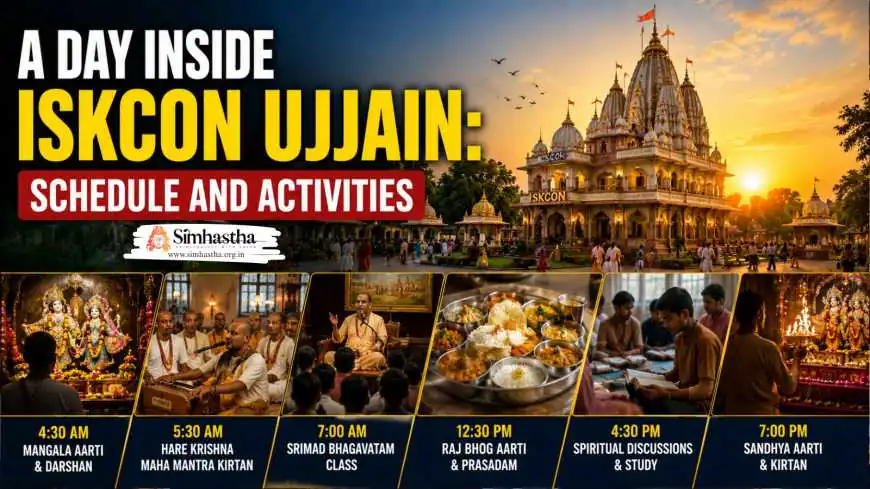


The Sacred Awakening and the Mangala Aarti at 4:30 AM
The spiritual day at ISKCON Ujjain begins in the deep, transformative darkness of the Brahma Muhurta, that sacred window of time roughly ninety minutes before sunrise which the Vedic scriptures extol as the most auspicious and spiritually potent period of the entire day. At precisely 4:30 AM, the temple bells ring, the heavy doors of the deity chamber are unlatched, and the first, soul-stirring notes of the Mangala Aarti fill the cool, silent air. This is the first and most important ritual of the day, the sacred act of waking the divine couple, Sri Sri Radha Madhav, from their celestial rest. The aarti is performed by a trained pujari, who offers a beautifully arranged tray of burning ghee lamps, fragrant incense, a fresh, blooming flower, a yak-tail fan, and a peacock-feather fan, all with precise, graceful, and deeply reverent hand gestures. The small, devout congregation—a mix of resident brahmacharis, visiting devotees, and the occasional, wide-eyed pilgrim—sits cross-legged on the cool marble floor, their voices joining in the singing of the Gurvani, the sacred prayers of the Gaudiya Vaishnava acharyas. The atmosphere is one of intense, focused, and deeply personal devotion. The darkness outside, the soft, flickering glow of the lamps on the radiant forms of the deities, and the sweet, melancholic, and deeply hopeful melody of the aarti song combine to create an experience that is, for many, the most profound and intimate moment of their entire day. The Mangala Aarti is a daily, lived affirmation that the spiritual life begins before the demands of the material world have a chance to awaken. It lasts for about forty-five minutes, and as the final prayers fade into the silence, the first, pale grey light of dawn begins to seep through the temple windows. 🌅
The Morning Vows and the Chanting of the Holy Name
Immediately following the Mangala Aarti, the temple's morning program flows seamlessly into a dedicated period of japa meditation, the private, meditative chanting of the Hare Krishna mahamantra on the sacred beads of the tulsi mala. The resident brahmacharis and the initiated devotees, who have taken a vow to chant a fixed number of rounds each day—typically sixteen, which takes about two hours—find a quiet, still corner of the temple hall, or walk slowly and meditatively along the temple's peaceful, covered verandah. The atmosphere during this period is one of deep, personal silence and intense, inward concentration. The only sound is the soft, rhythmic, and repetitive murmur of the sacred syllables—"Hare Krishna, Hare Krishna, Krishna Krishna, Hare Hare, Hare Rama, Hare Rama, Rama Rama, Hare Hare"—a sonic anchor that gently, persistently pulls the mind away from its habitual, wandering distractions and into the radiant, peaceful presence of the divine name. This is the heart of the ISKCON spiritual practice, the quiet, internal engine that powers the entire day. A visitor who wishes to participate can sit quietly in the temple hall, close their eyes, and simply listen to the gentle, rhythmic hum of the japa, allowing the sound vibration to wash over them. It is a profoundly calming and deeply centering experience, a beautiful, living demonstration of the power of mantra meditation. 📿
The Spiritual Classroom and the Srimad Bhagavatam Discourse
At 7:30 AM, the temple hall transforms from a sanctuary of silent, personal meditation into a vibrant, interactive, and deeply scholarly spiritual classroom. This is the time for the daily Srimad Bhagavatam class, a one-hour discourse delivered by a senior, learned devotee, often a sannyasi or an experienced brahmachari. The Srimad Bhagavatam, considered the ripened fruit of all Vedic literature, is a vast, profound, and deeply philosophical text that details the science of God, the nature of the soul, and the intimate, ecstatic pastimes of Lord Krishna and His pure devotees. The class is not a dry, academic lecture. The speaker, seated on a simple, elevated vyasasana, reads a single, carefully chosen verse from the scripture, and then slowly, systematically, and with a deep, personal realization, unpacks its multiple layers of meaning. The discourse is often interwoven with powerful, relevant, and often humorous stories from the Puranas, practical applications to the daily struggles of modern life, and a gentle, compassionate, and deeply logical dismantling of the material illusions that cause suffering. The congregation, which has now grown to include a steady stream of local families, students, and visiting pilgrims, listens with rapt attention, their questions, when invited, revealing a deep, genuine, and personal engagement with the profound topics being discussed. For the intellectually curious pilgrim, this morning class is a treasure trove, a daily, free, and deeply transformative education in the highest philosophy of the Sanatana Dharma. 📖
The Gentle Welcome and the Morning Darshan for All
As the day fully awakens, the temple doors are open wide, and a continuous, gentle stream of visitors from across the city and the world begins to flow into the serene, white marble hall. The morning hours, between 9:00 AM and 12:30 PM, offer the most peaceful and unhurried darshan of the day. The magnificent, richly adorned deities of Sri Sri Radha Madhav, standing in their full, resplendent glory on the central altar, and the golden, merciful forms of Sri Sri Gaura Nitai on the side altar, are bathed in the soft, filtered light of the morning sun. The priests have just completed the Shringar Aarti, the ceremony of dressing and adorning the deities in their exquisite, fresh, and often colour-coordinated silks and jewels, and the entire altar is a breathtaking vision of divine beauty. The atmosphere is quiet, serene, and deeply contemplative. A visitor can sit on the cool marble floor, close their eyes, and simply absorb the peaceful, spiritually charged atmosphere, or they can quietly chant the mahamantra on a set of japa beads, which are freely available at the temple's bookstore. There is no pressure, no rush, and no expectation. The deities, with their wide, compassionate, and all-seeing eyes, seem to welcome every soul, regardless of their background, their language, or their level of spiritual understanding, with a gentle, unconditional, and deeply personal love. This is the hour for the pilgrim who seeks not a fleeting, crowded darshan, but a quiet, transformative, and deeply personal encounter with the divine. 🌸
Trending Guides Now
How ISKCON Ujjain Engages Young Devotees Through Programs
Best Time to Attend Aarti at ISKCON Ujjain

A Complete Guide to Festivals Celebrated at ISKCON Ujjain

Ujjain Railway Station to Mahakaleshwar Temple Distance (2026 Guide)

Ujjain Simhastha 2028 Dates Announced: Full Shahi Snan & Event Timeline

Triveni Ghat Ujjain – Simhastha 2028 Complete Guide

Can You Walk From Ujjain Railway Station to Mahakaleshwar?

Mahakaleshwar Temple Entry Rules 2026: Dress Code, Mobile & Bag Policy
The Midday Offering and the Rajbhog Aarti
As the sun climbs to its zenith and the Malwa heat begins to beat down upon the city, the temple's rhythm shifts from the quiet, contemplative study of the morning to the grand, opulent, and deeply satisfying ritual of the midday meal. At 12:30 PM, the Rajbhog Aarti is performed, the final, grand aarti of the morning, after which the heavy, embroidered curtains of the altar are drawn closed. The deities, who have been awake and receiving their devotees since 4:30 AM, are now offered their sumptuous, midday feast, the Rajbhog, a magnificent, multi-course meal of the most exquisite sattvic preparations, prepared with immense love, devotion, and culinary skill by the temple's dedicated kitchen team. The pilgrims, having offered their final, silent prayers of the morning, are then invited to the temple's renowned, clean, and peaceful prasadam hall, where a delicious, sanctified, and deeply satisfying vegetarian lunch is served. The food, prepared without any onion, garlic, or tamasic ingredients, is offered first to the deities and thus becomes sanctified, blessed, and spiritually potent prasadam, a tangible, edible form of divine grace. The lunch, often a beautifully balanced thali of fragrant rice, light dal, seasonal vegetables, soft, whole-wheat chapatis, and a small, delectable sweet, is a meal that nourishes not just the body but the soul. The prasadam hall is a quiet, orderly, and deeply peaceful space, a beautiful, living demonstration of the ISKCON principle of spiritual equality, where the rich and the poor, the scholar and the simple laborer, sit side by side on the same clean floor and share the same sanctified, blessed food. 🍛
The Quiet Afternoon and the Darshan of the Closed Curtains
The afternoon hours, from approximately 1:00 PM to 4:00 PM, are a quiet, restful, and deeply contemplative period within the ISKCON temple. The main altar curtains remain closed while the deities rest after their midday meal. This is a beautiful, gentle reminder that even the divine, in its most merciful and accessible form, has its sacred, daily rhythms, and that rest and withdrawal are as much a part of the sacred cycle as activity and expression. The temple hall is not empty; a few devoted souls sit in the quiet, shaded corners, reading from the Bhagavad Gita or the Srimad Bhagavatam, or simply meditating in the profound, peaceful silence. The temple's well-stocked bookstore is a haven during these hours, offering a quiet, air-conditioned space to browse through the extensive collection of Srila Prabhupada's books, beautiful deity posters, devotional music, and sacred items. This is also the best time for a visitor to engage in a quiet, unhurried conversation with one of the resident brahmacharis, who are often available during this period and are always happy to answer questions, share their personal experiences of Krishna consciousness, and provide spiritual guidance with a gentle, non-judgmental, and deeply compassionate heart. The afternoon is a quiet, sacred interlude, a time for internal digestion, reflection, and the gentle, unhurried absorption of the morning's spiritual nourishment. 😴
The Evening Awakening and the Soulful Gaura Aarti
The spiritual day at ISKCON Ujjain reaches its second great, soul-stirring crescendo as the fierce Malwa sun begins its slow, gentle descent towards the horizon. The temple reopens at 4:00 PM, and the atmosphere begins to hum with a new, gentle, and deeply expectant energy. The evening program begins with a shorter, more intimate, and deeply melodic bhajan and kirtan session, often led by a talented devotee whose voice, accompanied by the harmonium and the soft, rhythmic beat of the mridanga drum, fills the temple hall with a sweet, haunting, and profoundly devotional atmosphere. The mood is noticeably different from the intense, concentrated focus of the pre-dawn aarti. It is softer, more reflective, and gently melancholic, a beautiful, musical expression of the soul's deep, inherent longing for its eternal home. At 6:30 PM, as dusk begins to settle over the city, the magnificent Gaura Aarti is performed. The altar curtains open to reveal the deities of Sri Sri Gaura Nitai, the golden, merciful incarnations of Chaitanya Mahaprabhu and Nityananda Prabhu, bathed in the warm, golden glow of the aarti lamps. The entire congregation stands and sings the Gaura Aarti song with a full, open, and deeply heartfelt voice, the melody carrying a powerful, uplifting, and profoundly hopeful energy. The aarti is a celebration of divine mercy, a beautiful, moving, and deeply participatory ritual that is open to everyone, and its warm, golden, and deeply inclusive energy is, for many, the most beautiful and memorable moment of the entire day. 🌇
The Sunday Feast and the Grand Communal Celebration
If the day of your visit happens to be a Sunday, the evening transforms into a completely different, grand, and joyous celebration. The Sunday Feast at ISKCON Ujjain is a legendary, much-loved institution in the city, drawing hundreds of devotees, families, students, and first-time visitors for an evening of intense, ecstatic spiritual nourishment. The program, which typically begins around 5:00 PM, is an extended, two-hour-plus immersion into the heart of Krishna consciousness. It features an hour of the most ecstatic, melodious, and energetically charged kirtan, where the entire temple hall becomes a swaying, clapping, and deeply joyful ocean of the mahamantra. The kirtan is followed by a thought-provoking and deeply relevant discourse on the Bhagavad Gita, delivered by a senior devotee, who speaks in a clear, accessible, and often humor-laced style that resonates deeply with the modern, educated, and questioning mind. The grand finale is the magnificent, multi-course prasadam feast, served in the sprawling ground-floor hall, where hundreds of guests sit in long, orderly rows and are served an unending stream of the most delicious, sattvic, and lovingly prepared sanctified dishes. The Sunday Feast is a complete, immersive, and deeply satisfying spiritual experience, a weekly, vibrant, and joyous celebration of faith, community, and the boundless, all-embracing love of God. It is the single busiest and most energetically charged time at the temple, and for anyone seeking the full, undiluted, and deeply joyful ISKCON experience, it is an absolute must. 🎉
The Final Lamp and the Sacred Close of the Day
As the clock approaches 8:30 PM, the final, soulful, and deeply moving Shayana Aarti is performed, the last ritual of the day. The aarti is short, simple, and profoundly beautiful, a gentle, loving offering of a single lamp, a flower, and a soft, melodious prayer, as the deities are prepared for their night's rest. The heavy, embroidered curtains of the altar are slowly drawn closed for the final time, and a profound, peaceful, and deeply restorative silence descends upon the temple hall. The small group of remaining devotees offers their final, silent, and deeply grateful obeisances, their bodies prostrating on the cool marble floor, their hearts full of the accumulated, sweet, and transformative grace of the day's continuous worship. The temple lights are dimmed, and the great, wooden doors are gently closed. The ISKCON temple, which has been a continuous, resonant chamber of sacred sound, philosophical inquiry, and sanctified food since the deep, pre-dawn darkness, finally exhales and rests, holding within its silent, marble walls the absorbed, blessed energy of a thousand prayers and the quiet, eternal promise that the same, beautiful, transformative journey will begin again, with absolute certainty and divine grace, at 4:30 AM tomorrow. 🔱

Frequently Asked Questions