The First Doorway and Why the Remover of Obstacles Must Be Adored First
Every Hindu ritual, every sacred text, and every grandmother's instinctual instruction agrees on a single, non-negotiable point: Lord Ganesh is the Prathama Pujya, the first deity to be worshipped in any ceremony, at the start of any pilgrimage, and at the threshold of any new beginning. The logic is not merely symbolic; it is profoundly practical and deeply embedded in the spiritual architecture of the Sanatana Dharma. The universe is understood to be a complex, interlocking web of forces, both seen and unseen, and every human undertaking, from the grandest wedding to the humblest day's labour, is a journey through a field of potential obstacles—some born of our own past karmas, some of the resentment of others, and some of the simple, impersonal friction of the material world. Ganesh, with his elephant head, his massive, gentle belly, and his broken tusk, is the divine embodiment of the intelligence, the wisdom, and the sheer, compassionate power that can navigate, dissolve, or simply lift these obstacles out of the pilgrim's path. His large, fan-like ears listen to every whispered prayer. His small, wise eyes see the true, unvarnished intention of the heart. His trunk, powerful enough to uproot a tree and delicate enough to pick up a single blade of grass, symbolizes the perfect, adaptable discrimination that can overcome any challenge. To begin a new chapter without first offering a humble prayer to this great, kind lord is, in the traditional understanding, to invite unnecessary struggle. To begin with his name on your lips and his image in your mind is to walk forward with an invisible, protective, and immensely powerful friend at your side. This is the profound, simple, and universally understood reason why, in Ujjain, the narrow, ancient lane leading to the Chintaman Ganesh Temple is always, at any hour of the day, filled with a steady, silent, and deeply focused stream of people who are all, in their own way, standing at the trembling, sacred threshold of something new. 🔱
The Jewel of Ujjain and the Ancient Legend of Chintaman Ganesh
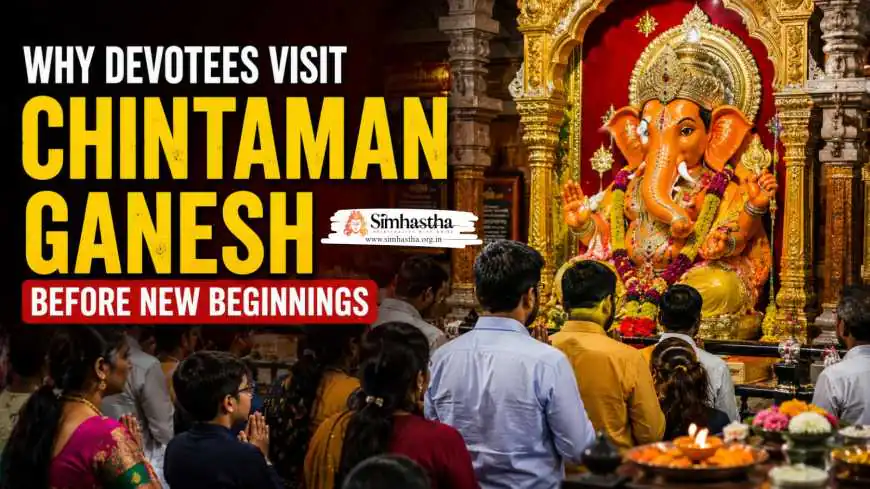
The Chintaman Ganesh Temple is not merely a shrine among many in the sacred geography of Ujjain. It is, in the living tradition of the city, the first temple, the essential, non-negotiable starting point of any complete Ujjain pilgrimage circuit. The name itself—Chintaman—is a beautiful, resonant promise. "Chinta" means worry, anxiety, the deep, gnawing mental stress that clouds the mind and paralyses the spirit. "Mani" is the precious jewel, the radiant, priceless gem. Chintaman Ganesh is thus the jewel that removes all worries, the divine antidote to the very mental and emotional obstacles that prevent a human being from moving forward with clarity, courage, and peace. The deity enshrined here is a swayambhu (self-manifested) idol, not carved by any human hand but believed to have emerged from the earth itself, imbued with an inherent, primordial power. The ancient, weathered stone image, thickly coated with layers of sacred vermillion, is a magnificent, awe-inspiring sight. The eyes, set deep within the elephantine face, are pools of a quiet, ancient, and endlessly compassionate wisdom. The trunk curves gracefully to the left, a form that is considered particularly auspicious and powerful, associated with the calming, lunar, and nurturing aspect of the deity.
The local tradition, passed down through generations of hereditary priests, connects the temple's founding to the great sage Rishi Chintaman, an ardent devotee of Lord Ganesh who performed intense penance at this very spot on the banks of the Shipra. Pleased with the sage's unwavering devotion, Lord Ganesh manifested himself from the earth as a swayambhu idol and granted the sage the boon that this place would forever bear his name and that the deity enshrined here would forever be known as the remover of all mental worries and anxieties. A simple, profound, and deeply moving ritual has grown around this legend. Pilgrims, particularly those whose minds are clouded by worry, stress, or the fear of an uncertain future, come to the temple and whisper their specific, personal anxieties into the large, curved right ear of the deity, believing that the wise, compassionate lord hears and absorbs them. The act is an intensely personal, cathartic, and deeply comforting moment of surrender, a laying down of a heavy, unseen burden at the feet of the one who is, by his very name and nature, the remover of mental anguish. 📜
The Coconut Offering and the Ritual of Surrender
The central, most visible, and most emotionally resonant ritual at the Chintaman Ganesh Temple is the offering of the coconut, the Shriphal. The coconut is not merely a convenient, traditional gift; it is a profound, multi-layered symbol that is perfectly aligned with the temple's core purpose. The hard, outer, fibrous shell represents the human ego, the stubborn, defensive, and often brittle outer layer of the personality that resists change and clings to its own limited understanding. The soft, white, nourishing inner kernel represents the pure, gentle, and receptive soul, the divine essence that resides within every being. The sweet, clear water inside is the life-giving grace of the divine. The act of offering the coconut at the feet of Lord Ganesh is, therefore, a profound, symbolic act of total surrender. The devotee places their entire ego, their entire being—the hard, protective shell, the soft, inner kernel, and the life-sustaining water—into the hands of the remover of obstacles, and says, silently and with their whole heart, "Lord, I surrender my small, limited self to your infinite, loving wisdom. I trust you to break through the hard shell of my ego, to nourish my soul, and to lead me on the right path."
The ritual is performed with a specific, simple, and deeply satisfying sequence. The pilgrim purchases a fresh, whole, and unbroken coconut from one of the small, traditional shops that line the narrow lane leading to the temple. They enter the temple, bow before the magnificent, vermillion-smeared idol, and either hand the coconut to the attending priest or, with the priest's guidance, place it directly at the feet of the deity. The priest then performs a brief, simple puja, chanting the Ganesh mantras, and may offer a small portion of the coconut back to the devotee as sanctified prasad. The pilgrim receives the sweet, white kernel and the cool water with cupped, reverent hands, a tangible, physical confirmation that their offering has been accepted, their prayer has been heard, and their path, as they step forward into their new beginning, has been blessed and cleared by the most powerful, loving, and dependable force in the universe. 🥥🙏
The First Stop on the Ujjain Pilgrimage and the Sacred Circuit
A pilgrim who understands the deep, subtle logic of the sacred geography of Ujjain will never, under any circumstances, proceed directly to the grand, towering, and magnificent Mahakaleshwar Temple, the supreme Jyotirlinga of the Lord of Time. They will, without fail, first make their way, often in the quiet, pre-dawn darkness, to the relatively modest, ancient, and profoundly powerful shrine of Chintaman Ganesh. This is not a casual suggestion; it is a foundational, non-negotiable principle of the complete Ujjain pilgrimage. The journey to the Lord of Time, the ultimate, liberating, and all-consuming reality, is a journey fraught with potential obstacles—outer obstacles of travel, queues, and logistics, and inner obstacles of doubt, fear, and the restless, unquiet mind. To approach Mahakal without first clearing the path with the blessings of his own son, the remover of obstacles, is an act of profound spiritual disregard. The entire, traditional Ujjain pilgrimage circuit is built around this sacred, sequential logic. A pilgrim begins their day at Chintaman Ganesh, offering the coconut and praying for a clear, unobstructed, and focused darshan. They then proceed, with a quiet, confident, and blessed heart, to the Mahakaleshwar Temple, to the Bade Ganeshji Ka Mandir, and to the other great shrines of the city. The temple's location, a short and pleasant walk or a quick auto-rickshaw ride from the Mahakal zone, near the serene southern bank of the Shipra, makes this sacred first stop a seamless, natural, and deeply satisfying part of the pilgrim's rhythm. The wise, seasoned pilgrim knows that the quality of the darshan at Mahakal is directly dependent on the quality of the surrender at Chintaman Ganesh, and they honour this ancient, sacred, and deeply practical sequence with a full, devoted, and unhurried heart. 🚶
Beyond the Pilgrimage and New Beginnings in the Secular and Sacred Life
The appeal of Chintaman Ganesh extends far beyond the formal boundaries of the pilgrimage circuit. This is the temple to which Ujjain's own residents—the shopkeepers, the auto-rickshaw drivers, the mothers, and the students—turn at every significant, and every small, new beginning of their lives. A couple, their marriage alliance newly fixed, will visit the temple together for the first time, their families in tow, to offer a coconut and to pray for a life of harmony, understanding, and the removal of all marital obstacles. A pregnant woman, in the final, heavy weeks of her pregnancy, will come to pray for a safe, uncomplicated delivery and for the health and well-being of the child who is about to begin the great, new journey of a human life. A student, on the morning of a critical, life-determining examination, will visit with their admit card and their favourite pen, and will touch them both to the ancient, sacred, and wise feet of the deity before walking into the examination hall. Businessmen, on the verge of opening a new shop or launching a new venture, will perform a simple, powerful puja here, consecrating their new account books and their new keys. The temple's quiet, unpretentious, and deeply accepting atmosphere welcomes every kind of new beginning, from the grand, life-altering event to the small, humble, and deeply personal resolve to begin a new, better habit, to let go of a long-held resentment, or to simply try, one more time, to be a kinder, more patient, and more loving human being. The deity does not judge the scale of the beginning; he simply, with his ancient, wise, and compassionate eyes, blesses the intention and clears the path. ✅
The Auspicious Days and the Surge of Devotion on Tuesdays and Chaturthi
The energy of the Chintaman Ganesh Temple, which is always steady, warm, and welcoming, surges to a powerful, vibrant, and deeply moving crescendo on the days that are specifically sacred to the elephant-headed lord. Tuesday, or Mangalvar, is the day of the week that is dedicated to Ganesh, and the temple on this day is a beautiful, churning, and intensely focused river of red-clad devotees. The narrow lane outside is transformed into a vibrant, temporary marketplace of fresh flowers, coconuts, and sacred offerings. The queue, which on other days is a gentle, meandering stream, becomes a long, patient, and deeply prayerful line of people waiting to offer their coconuts, their whispered worries, and their silent, hopeful prayers for new beginnings. The other great peak is Ganesh Chaturthi, the birth anniversary of the Lord, which is celebrated with immense, ecstatic, and elaborate devotion. The temple is decorated with thousands of fresh, fragrant flowers, special, extended pujas and abhisheks are performed throughout the day, and a massive, continuous stream of devotees flows through the ancient, sacred doors from the early hours of the morning until late into the night. For the pilgrim who has the flexibility to plan their visit, a Tuesday at the Chintaman Ganesh Temple offers a uniquely powerful, concentrated, and deeply atmospheric encounter with the living, breathing faith of the city. But even on the quietest, most unassuming weekday afternoon, the presence of the deity, the gentle, reassuring, and steady promise of the remover of all worries, is a palpable, comforting, and deeply personal reality. 🕉
Practical Grace and How to Approach the Remover of Worries
A visit to the Chintaman Ganesh Temple is remarkably simple, profoundly accessible, and deeply rewarding. The temple is located near the southern bank of the Shipra River, a short and inexpensive auto-rickshaw ride from the main temple zone and the Mahakaleshwar area. It is easily combined with visits to the nearby Bhartrihari Caves and the Gadkalika Temple, creating a beautiful, unhurried, and spiritually rich morning circuit on the quieter, more contemplative side of the sacred river. The dress code is the standard, modest Ujjain temple attire. Red, the colour of Lord Ganesh, is considered highly auspicious, and many devotees choose to wear at least a small touch of it as a gesture of love and devotion. The offerings are simple and easily purchased from the stalls outside: a fresh, whole coconut, a garland of red flowers, and some small packets of sacred vermillion and kumkum. The temple has no complex, multi-layered queue system, and the general darshan is usually a calm, quiet, and deeply personal experience. The priests are gentle, unhurried, and approachable, and a small, voluntary dakshina is a kind, traditional gesture for their service. The most important preparation, as with all of Ujjain's sacred spaces, is an inner one. Arrive not with a long, anxious shopping list of demands, but with a single, clear, sincere intention. Arrive with your personal coconut, the symbol of your own ego and your own hopes, held humbly in your hands, and with the quiet, trusting, and deeply personal conviction that the Lord of New Beginnings, the ancient, wise, and endlessly compassionate jewel of the Shipra, is waiting, with a patient, loving, and all-seeing smile, to clear your path. ✅
The Quiet, Eternal Promise of the Jewel of the Shipra
In the vast, complex, and often overwhelming spiritual universe of Ujjain, where the Lord of Time himself presides in a state of fierce, eternal, and ash-smeared majesty, the Chintaman Ganesh Temple stands as a gentle, warm, and profoundly reassuring doorway. It is the place where the pilgrim, before confronting the grand, cosmic mysteries of life and death, of time and eternity, first sits down, metaphorically, at the feet of a kind, wise, and loving elder and unburdens their heart of its small, personal, and deeply human worries. The worried student, the anxious bridegroom, the fearful entrepreneur, the hopeful mother—all are received here with the same quiet, unconditional, and deeply compassionate grace. The coconut is broken, the prayer is whispered, the vermillion is applied to the forehead, and the pilgrim steps back out into the narrow, sunlit lane with a heart that is inexplicably, beautifully, and undeniably lighter. The obstacle that seemed so huge, so insurmountable, and so terrifying just an hour ago has not magically disappeared, but the pilgrim now has a silent, powerful, and unshakeable ally. The path ahead, which was shrouded in a fearful, anxious fog, now seems clearer, the next step more visible, and the distant, beckoning light a little bit brighter. This is the quiet, eternal, and priceless gift of Chintaman Ganesh, the jewel who removes all worries. He does not promise a life without obstacles, but he promises, with a gentle, knowing, and infinitely compassionate smile, that no obstacle, however daunting, will ever be greater than the grace that flows, endlessly and generously, from his ancient, sacred, and deeply loving heart. 🔱🥥