













Digital Command Centers Planned for Simhastha 2028
Explore the digital command centers planned for Simhastha 2028. Learn how AI, real-time monitoring, and smart technology will manage 40 crore pilgrims in Ujjain.


When Faith Meets Future: The Digital Revolution at Simhastha 2028
Let me paint you a picture that would have seemed like science fiction just a decade ago. 🤖 Imagine a sprawling religious gathering spread across the ancient city of Ujjain, where nearly 40 crore devotees have assembled for the sacred Simhastha Kumbh Mela. Now imagine a state-of-the-art command center humming with activity, where massive screens display real-time crowd density maps, AI algorithms predict bottlenecks before they happen, and drones silently monitor every corner of the mela grounds from above.
This isn't a scene from a futuristic movie. This is the ambitious reality being built for Simhastha 2028. 🚀
The digital command centers planned for Simhastha 2028 represent a paradigm shift in how India manages its largest religious gatherings. After learning tough lessons from past Kumbh Melas, the Madhya Pradesh government is leaving nothing to chance. With an estimated 40 crore devotees expected to visit Ujjain during the festival, the authorities have realized that traditional management methods simply won't cut it anymore .
Integrated Command and Control Centres (ICCC) are being established as the nerve centers of this massive operation. These aren't just rooms with a few computers – they're sophisticated hubs that will integrate AI-powered systems, real-time surveillance, predictive analytics, and instant communication networks to ensure that faith meets safety at every step .
Trending Guides Now
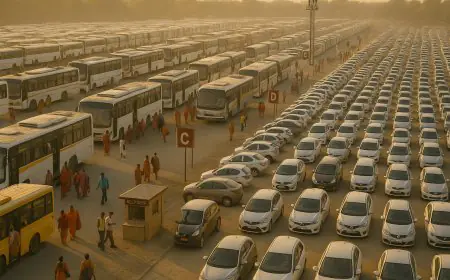
How Ujjain’s New Parking Hubs Will Handle Millions During Simhastha 2028

How Ujjain's Transport Network Is Changing Before 2028

New Public Toilets and Sanitation Projects for Simhastha

Ujjain's New Riverfront Plans Before Simhastha 2028

Ujjain Railway Station to Mahakaleshwar Temple Distance (2026 Guide)

Ujjain Simhastha 2028 Dates Announced: Full Shahi Snan & Event Timeline
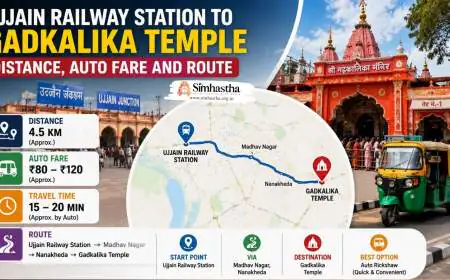
Ujjain Railway Station to Gadkalika Temple: Distance, Auto Fare and Route
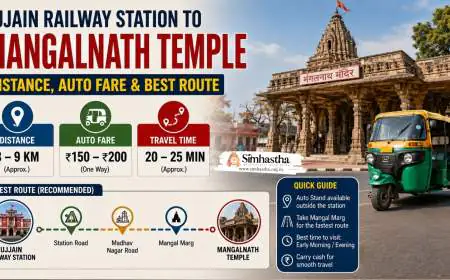
Ujjain Railway Station to Mangalnath Temple: Distance, Auto Fare and Best Route
The transformation is so significant that Telecommunications Consultants India Limited (TCIL) has floated a tender specifically for selecting a System Integrator to establish and operate the ICCC for Simhastha Kumbh Mela 2028 . This is serious, large-scale infrastructure – not just a temporary setup but a permanent asset for Ujjain's future.
In this article, we'll dive deep into how these digital command centers are being designed, what cutting-edge technologies they'll employ, and why this technological revolution could make Simhastha 2028 the safest, most organized, and most memorable Kumbh Mela in history. 🌟
The Heart of the Operation: Integrated Command and Control Centre
What Exactly Is the Integrated Command and Control Centre?
Picture the mission control center at NASA, but instead of monitoring rockets, it's monitoring millions of pilgrims. That's the vision for Ujjain's Integrated Command and Control Centre.
This isn't just a fancy name – it's a purpose-built facility designed to be the single source of truth for every aspect of the Simhastha 2028 management. The ICCC will be housed in a dedicated Mela Office building, a G+1 structure spanning approximately 63,000 square feet, being constructed at a cost of ₹29.84 crore .
Inside this facility, you'll find:
-
Massive Video Walls: Displaying real-time feeds from thousands of cameras across the mela grounds, ghats, and key approach roads.

-
AI-Powered Analytics Stations: Where sophisticated algorithms analyze crowd patterns, detect anomalies, and predict potential bottlenecks before they occur.
-
Communication Hubs: Connecting police, medical teams, sanitation workers, transport coordinators, and emergency response units in real-time.
-
Data Centers: Processing enormous amounts of information from sensors, drones, mobile apps, and other digital touchpoints.

The Integrated Command Centre system integration and operations tender alone demonstrates the scale of this ambition. TCIL is seeking a System Integrator to establish a world-class ICCC that can handle the complexity of managing tens of millions of pilgrims .
Why Ujjain Needs a Digital Command Center
Here's the reality check: During the 2016 Simhastha, Ujjain saw approximately 7.5 crore visitors over 30 days . For 2028, the estimate has ballooned to nearly 40 crore devotees expected over the festival period . That's more than the population of the United States!
Managing this many people in a relatively compact city requires a level of coordination that's impossible without technology. The ICCC solves this by:
-
Providing Real-Time Situational Awareness: Instead of relying on delayed reports from the ground, command center operators see exactly what's happening everywhere, all at once.
-
Enabling Split-Second Decision Making: When you're managing crowds at this scale, a moment of congestion can quickly escalate into a disaster. The ICCC gives decision-makers the data they need to act instantly.
-
Coordinating Multiple Agencies: Police, fire, medical, sanitation, transport – all these departments need to work in perfect harmony. The ICCC is their common operating picture.
-
Learning from Past Events: The 2013 Kumbh Mela in Prayagraj and other large gatherings have shown that real-time monitoring saves lives. Ujjain is applying these lessons proactively.
The project monitoring information system (PMIS) has already been implemented to track ongoing construction works for Simhastha, allowing senior officials to monitor progress from mobile phones or laptops . This remote monitoring capability will be expanded to cover the entire event in 2028.
AI and Google Cloud Partnership: The Intelligence Behind the Command Centers
The Google Cloud India Collaboration
In a landmark move, the Madhya Pradesh government has partnered with Google Cloud India to bring artificial intelligence and cutting-edge technology to Simhastha 2028 . This isn't just about adding some tech buzzwords – it's about fundamentally reimagining how a Kumbh Mela can be managed.
Chief Minister Mohan Yadav chaired a high-level round table discussion with Google Cloud officials in Bhopal, exploring AI applications across administration, citizen services, and specifically Simhastha preparations . The proposed collaboration includes:
-
AI-Powered Crowd Management: Using real-time density monitoring to prevent overcrowding at ghats and key locations.
-
Predictive Traffic Systems: Forecasting traffic patterns and suggesting alternative routes to reduce congestion.
-
Emergency Response Technologies: AI-based systems that can detect incidents and automatically alert the nearest response teams.
-
Digital Twin Monitoring: Creating virtual replicas of the mela grounds to simulate scenarios and test management strategies.
-
Smart Public Safety Tools: Advanced surveillance and alert systems to ensure pilgrim security.
The partnership also includes plans to establish an AI Center of Excellence in Indore, with a focus on training more than 10,000 developers in AI applications – a lasting legacy that extends far beyond Simhastha .
Sahayak: Your AI-Powered Pilgrim Assistant
One of the most exciting innovations coming from this partnership is "Sahayak," a multilingual voice-enabled AI assistant designed specifically for Simhastha pilgrims .
Imagine landing in Ujjain, pulling out your phone, and asking Sahayak in your native language:
-
"Where is the nearest ghat for a holy dip?"
-
"How crowded is the Mahakaleshwar Temple right now?"
-
"I've lost my family – what should I do?"
-
"Where can I find medical help?"
Sahayak will provide real-time answers, navigate you through the city, give crowd updates, and connect you with emergency services if needed. It's like having a personal guide who knows everything about Simhastha, available in your pocket 24/7.
Digital Twin Technology: Simulating Before Doing
Here's where things get really futuristic. Digital twin technology – essentially creating a virtual replica of the entire Simhastha environment – will allow planners to simulate different scenarios and test their strategies before implementing them in the real world .
Think of it like a flight simulator, but for managing millions of pilgrims. Planners can:
-
Model what happens if a sudden rainstorm hits the mela grounds.
-
Test different crowd flow patterns to find the most efficient routes.
-
Simulate emergency scenarios and practice response procedures.
-
Identify potential bottlenecks and design solutions proactively.
This capability, combined with real-time data during the actual event, makes the command centers incredibly powerful tools for keeping pilgrims safe.
Beyond AI: The Full Technology Arsenal
SCADA Systems and Smart Infrastructure
While AI gets the headlines, the digital command centers are powered by a suite of sophisticated technologies working together. One critical component is the SCADA system – Supervisory Control and Data Acquisition – which is already being deployed for infrastructure management .
In the context of Simhastha, SCADA systems will:
-
Track water pressure and supply levels across the city in real-time.
-
Monitor sewage treatment plants (STPs) to ensure environmental compliance.
-
Manage the city's water infrastructure to meet the needs of 40 crore pilgrims.
-
Provide early warnings for any infrastructure failures.
Three new sewage treatment plants are being built under a ₹416 crore project as part of the Namami Gange campaign, and a command center at Musakhedi already monitors progress using SCADA technology . This is the backbone of the smart city infrastructure that makes Simhastha possible.
Drone Surveillance and Aerial Monitoring
When you're managing an area as vast as the Simhastha mela grounds, ground-level monitoring isn't enough. That's where drone surveillance comes in.
The command centers will integrate feeds from UAV-based drones providing :
-
Real-Time Aerial Surveillance: A bird's-eye view of the entire mela area, showing crowd movements and potential trouble spots.
-
Thermal Imaging: Early detection of fires or medical emergencies, even in crowded or hard-to-reach areas.
-
Damage Assessment: Quick evaluation of any incidents or infrastructure issues.
-
Search and Rescue: Locating missing persons or those in distress from above.
The drones will be part of a comprehensive disaster management system that also includes All Terrain Vehicles (ATVs) and fire-fighting robots . These technologies work together to ensure that every corner of Simhastha is monitored and protected.
Facial Recognition and Cyber Security
With tens of millions of people in one place, security is a massive concern. The command centers will leverage:
-
Facial Recognition Systems: To identify missing persons, track potential threats, and assist in crowd management .
-
Cyber Warriors Portal: A dedicated cybersecurity team to protect against digital threats and ensure the integrity of command center systems .
-
High-Tech Surveillance: Over 100 major intersections equipped with advanced monitoring technology .
The Madhya Pradesh Police have already begun preparing a master plan for Simhastha security, with DGP Kailash Makwana directing the use of AI, drone surveillance, and the "Simhastha Cyber Warriors Portal" to create a high-tech security ecosystem .
Mobile Apps and Digital Services for Pilgrims
The command centers won't just be for officials – they'll connect directly to pilgrims through digital services:
-
Dedicated Mobile App: Providing real-time guidance, crowd density updates, river levels, and emergency information.
-
Virtual Darshan: Live streaming of temple rituals for devotees who cannot physically be present .
-
E-Passes: Digital passes for streamlined access and verification.
-
Emergency Alerts: Instant notifications to pilgrims in affected areas during any incident.
These services will make Simhastha 2028 one of the most accessible and inclusive Kumbh Melas ever, especially for elderly and differently-abled devotees .
The Control Room in Action: A Day in the Life
Morning: Planning and Preparation
At 6 AM, the Integrated Command Centre comes alive. Operators take their positions at massive screens displaying:
-
Current crowd density at each ghat.
-
Weather forecasts and river water levels.
-
Traffic status on all approach roads.
-
Temple queue lengths and wait times.
-
Status of all emergency response teams.
A team of analysts reviews data from the previous night, looking for patterns and preparing recommendations for the day ahead. The morning briefing coordinates all agencies – police, municipal, health, transport, and volunteers – ensuring everyone is aligned for the day.
Afternoon: Peak Activity Monitoring
By mid-afternoon, the mela grounds are at their busiest. This is when the command center's AI systems prove their worth:
-
Predictive Algorithms analyze crowd movements and flag potential bottlenecks.
-
Real-Time Alerts notify operators if any location exceeds safe density thresholds.
-
Traffic Management Systems adjust signals and suggest alternative routes to prevent gridlock.
-
Emergency Response Teams stand ready, their positions tracked on the digital map.
Operators at the command center can communicate directly with field officers through their mobile devices, ensuring instant coordination.
Evening: Crisis Management and Adaptation
Evening Aarti and the Ganga Aarti draw massive crowds to the ghats. The command center goes into high alert:
-
Drone Feeds show real-time crowd movements along the riverbanks.
-
Thermal Imaging monitors for any signs of distress or fire.
-
Emergency Systems are on standby, with fire-fighting robots and ATVs positioned strategically.
If an incident occurs – say, a sudden rainstorm or a medical emergency – the command center swings into action. All relevant teams are alerted instantly, the nearest resources are dispatched, and communication channels keep everyone informed.
Night: Review and Planning
As the crowds disperse, the command center shifts to analysis mode:
-
Data Review: What worked? What didn't? Where were the bottlenecks?
-
Report Generation: Comprehensive reports for the next morning's briefing.
-
System Maintenance: Ensuring all technology is ready for the next day.
The command center never sleeps. It's the beating heart of Simhastha 2028, working round the clock to ensure the safety and comfort of every pilgrim.
The Global Inspiration: Learning from the Best
German Expertise and AI Innovation
The Madhya Pradesh government hasn't just looked within India for inspiration – they've gone global. A delegation of German experts visited Ujjain to share their experiences with AI-based crowd and waste management .
The German delegation, part of the MP-Germany Startup Bridge Program, brought fascinating insights:
-
AI in Football Matches: How Germany uses AI for crowd management at major football events.
-
AI-Based Waste Collection: Smart waste management systems that could be adapted for Simhastha.
-
Global Startup Collaboration: Opportunities for Indian startups to work with German technology companies.
The Municipal Commissioner Abhilash Mishra even received an invitation to visit Germany and see the technology in action firsthand . This international collaboration ensures Ujjain is learning from the best practices worldwide.
Prayagraj Kumbh: Learning from the Past
The command centers are also benefiting from lessons learned at previous Kumbh Melas:
-
Prayagraj 2013: Showed the importance of real-time monitoring for crowd management.
-
Prayagraj 2019: Demonstrated the value of digital services and mobile apps.
-
Haridwar 2021: Proved that technology can help manage a Kumbh Mela during a global pandemic.
Each Kumbh has pushed the boundaries of what's possible, and Simhastha 2028 is building on all these learnings to create something truly extraordinary.
Beyond the Mela: Lasting Legacy for Ujjain
Infrastructure That Serves Long After the Pilgrims Leave
One of the most important aspects of the digital command centers planned for Simhastha 2028 is that they're not temporary. The Integrated Command and Control Centre is being built as a permanent asset for Ujjain . After the pilgrims leave, this infrastructure will serve the city in multiple ways:
-
Smart City Management: The ICCC can be used for day-to-day urban management.
-
Disaster Response: The monitoring and coordination capabilities remain available for any emergency.
-
Tourism Management: Real-time data can enhance the visitor experience year-round.
-
Urban Planning: Data collected during Simhastha can inform future city development.
The ₹3,600 crore investment in Simhastha infrastructure is an investment in Ujjain's future, not just a one-time event budget . The digital command centers are a key part of this forward-looking vision.
A Model for Future Mega-Events
Simhastha 2028 is setting a benchmark for how India can manage its large religious gatherings. The success of the digital command centers could influence:
-
Other Kumbh Melas: Applying these technologies at Prayagraj, Haridwar, and Nashik.
-
Hajj Pilgrimage: Sharing lessons with Saudi Arabia for managing the world's largest annual gathering.
-
Sports Events: Applying crowd management technologies to the Olympics, Commonwealth Games, and other major events.
-
Cultural Festivals: Using similar systems at large-scale festivals and fairs worldwide.
By pioneering these technologies, Ujjain is putting itself on the global map as a leader in smart event management.
The Bottom Line: A New Era of Smart Pilgrimage
The digital command centers planned for Simhastha 2028 represent more than just technology – they represent a commitment to pilgrim safety, dignity, and experience. When 40 crore devotees converge on Ujjain, they deserve to have their faith honored with the highest standards of management and care.
From the Integrated Command and Control Centre to AI-powered crowd analytics, from drone surveillance to the Sahayak voice assistant, every aspect of Simhastha is being reimagined through the lens of smart technology. And the best part? This isn't just about managing crowds – it's about creating a spiritual experience that's accessible, safe, and memorable for everyone who participates.
Whether you're a devout pilgrim, a curious traveler, or someone who appreciates the intersection of ancient tradition and modern innovation, Simhastha 2028 promises to be a spectacle like no other. And at the heart of it all are the digital command centers, quietly working behind the scenes to ensure that faith, safety, and order move together in perfect harmony. 🌟
Frequently Asked Questions