















A Complete Guide to Festivals Celebrated at ISKCON Ujjain
Discover the complete guide to festivals celebrated at ISKCON Ujjain. From Janmashtami and Radhashtami to Gaura Purnima and Diwali, experience the vibrant Vaishnava celebrations at Sri Sri Radha Madhav Mandir in Mahakal's city.
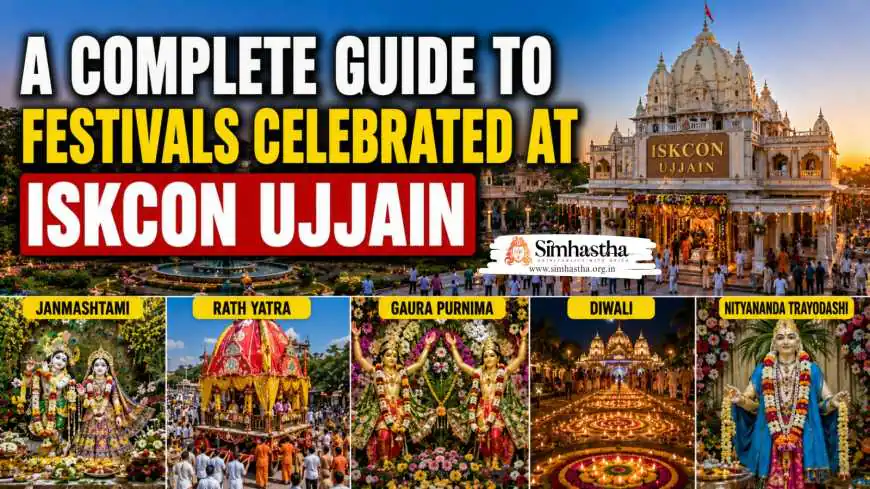


The Vaishnava Heartbeat in Lord Mahakal's Ancient City
Ujjain is, in the popular consciousness, the eternal city of Shiva. Every lane, every ghat, and every temple spire seems to echo with the name of Mahadev. The arrival and flourishing of a vibrant ISKCON temple in this Shaivite stronghold is, therefore, a beautiful theological paradox and a testament to the deep, underlying unity of the Sanatana Dharma. The Sri Sri Radha Madhav Mandir does not compete with the ancient silence of the Shipra's banks; it complements it with the thunderous, joyful noise of congregational chanting. Established in the late 20th century, the temple has grown into a major spiritual centre, drawing not just the local population but thousands of pilgrims who, after the intense, inward-drawing darshan of the Jyotirlinga, find themselves yearning for the sweet, personal, and emotionally expansive devotion of Radha and Krishna. The temple's philosophy, rooted in the teachings of A.C. Bhaktivedanta Swami Prabhupada, the founder-acharya of ISKCON, centres on the chanting of the Hare Krishna maha-mantra as the primary means of spiritual realization in the current age. The festivals are the annual high points where this philosophy is lived out loud, in colour, music, dance, and a lavish, sanctified feast. 🎶
Sri Sri Radha Madhav Mandir and the Spiritual Oasis of ISKCON Ujjain
The temple itself, a structure of serene white marble located in the Nanakheda area of Ujjain, is an oasis of calm and cleanliness. The main altar is a breathtaking vision: in the centre stand the exquisitely beautiful, richly adorned deities of Sri Sri Radha Madhav, the presiding divine couple, flanked by the golden forms of Sri Sri Gaura Nitai, the merciful incarnations of Chaitanya Mahaprabhu and Nityananda Prabhu. The temple complex includes a spacious, airy prayer hall where devotees gather for kirtan, a clean, efficient prasadam hall where sanctified meals are served daily, a well-stocked bookstore, and a peaceful garden. The daily rhythm of the temple—the Mangala Aarti at 4:30 AM, the morning Srimad Bhagavatam class, the afternoon darshan, and the evening Gaura Aarti—provides a stable, spiritually nurturing framework. But it is during the major festivals that the temple truly transforms, becoming a luminous, pulsating beacon of devotion that attracts visitors from across the country. The schedule is planned months in advance, the deities are adorned with breathtaking, thematic floral outfits, and an army of dedicated volunteers works tirelessly to ensure that every guest is welcomed, fed, and spiritually nourished. 🙏
Janmashtami: The Grandest Midnight Celebration of the Divine Birth
If one were to attend only a single festival at ISKCON Ujjain, Janmashtami, the appearance day of Lord Krishna, would be the undisputed choice. This is the temple's spiritual and emotional peak, a day of fasting, singing, and breathless anticipation that culminates in a thunderous midnight explosion of joy. The celebration begins in the early morning with a special abhishek of the small, beautiful Janmashtami deity of Sri Sri Laddu Gopal. Throughout the day, the temple hall is packed with pilgrims who sit absorbed in continuous kirtan, led by senior devotees who weave the mahamantra into increasingly ecstatic, complex melodies. The altar is decorated with an elaborate, multi-tiered floral arrangement, often depicting a scene from Krishna's Vrindavan pastimes—perhaps the lifting of Govardhan Hill or a lush forest setting.
As midnight, the sacred hour of Krishna's birth, approaches, the energy in the temple becomes almost palpable. The lights are dimmed, and the entire congregation rises to its feet. The head priest, accompanied by the sound of conch shells and the deafening roar of "Hare Krishna," opens the curtain of the inner sanctum to reveal the freshly adorned Janmashtami deity. The moment of the Maha-Abhishek is breathtakingly beautiful, as the sacred Panchamrit and fragrant water cascade over the dark, smiling form of the newborn Krishna, his image reflected in hundreds of tear-filled, ecstatic eyes. The midnight aarti is a crescendo of pure devotion, followed by a feast of hundreds of sanctified dishes offered to the Lord. The energy of an ISKCON Janmashtami is not a passive, observational experience; it is a participatory, dancing, singing, and deeply moving spiritual drama that leaves an indelible mark on the soul. 🌙
Trending Guides Now
How ISKCON Ujjain Engages Young Devotees Through Programs
A Day Inside ISKCON Ujjain: Schedule and Activities
Best Time to Attend Aarti at ISKCON Ujjain
Ujjain Railway Station to Mahakaleshwar Temple Distance (2026 Guide)

Ujjain Simhastha 2028 Dates Announced: Full Shahi Snan & Event Timeline

Mahakaleshwar Sandhya Aarti Online Booking 2026: Fee, Timings, Entry Gate and Step-by-Step Process
Kal Bhairav Temple Darshan Guide: Entry, Timings and Tips
Mahakaleshwar Temple Entry Rules 2026: Dress Code, Mobile & Bag Policy
Radhashtami: Honoring the Queen of Vrindavan
Exactly fifteen days after Janmashtami, the temple celebrates Radhashtami, the appearance day of Srimati Radharani, the supreme goddess of devotion and the eternal consort of Krishna. If Janmashtami is a divine king's birth, Radhashtami is the coronation of the heart's queen. The central altar, usually dominated by the forms of Radha and Madhav, becomes a special focus of elaborate, feminine adornment. The deities are dressed in the most exquisite, often pink or red, silks and jewels, surrounded by a sea of delicate, fragrant flowers. The temple's mood shifts from the cosmic drama of Krishna's birth to the intimate, sweet, and deeply emotional realm of the inner heart. The special highlight of Radhashtami is the Srimad Bhagavatam discourse, which focuses on the unique and exalted position of Radharani as the personification of the highest love for God. Senior devotees lead a melodious, contemplative kirtan, and the community gathers for a magnificent feast. The festival is particularly beloved by the women of the congregation, and it serves as a beautiful, theological counterbalance, reminding the world that in the bhakti tradition, the feminine, compassionate, and merciful aspect of the divine is the only doorway to the Lord's intimate pastimes. 🌸
Gaura Purnima: The Golden Avatar's Appearance Day
Gaura Purnima, the appearance anniversary of Sri Chaitanya Mahaprabhu, is the single most important festival for all Gaudiya Vaishnavas, and at ISKCON Ujjain, it is celebrated with immense devotion and grandeur. Chaitanya, revered as the combined form of Radha and Krishna, appeared in 1486 in Mayapur, Bengal, and inaugurated the public, congregational chanting of the Hare Krishna maha-mantra. The festival falls on the full moon day of the Phalguna month, typically in March. At the temple, the celebration begins with a full-day fast until moonrise. The altar, especially the forms of Sri Sri Gaura Nitai, is decorated in a spectacular display of golden flowers, matching the divine golden complexion of Mahaprabhu. The day is filled with ecstatic, hours-long kirtans, where the chanting often builds to a fever pitch, and senior devotees give discourses on the life and teachings of Chaitanya. The evening Gaura Purnima Abhishek is the climax, where the deities of Gaura Nitai are bathed in a grand ceremony. After moonrise, the fast is broken with a massive Ekadashi feast, which, despite the fasting grains restrictions, is one of the most elaborate and delicious meals of the year. For the devotees, Gaura Purnima is not just a birthday; it is the celebration of the very mercy that made the holy name accessible to the world. 🌕
Rama Navami: The Birth of the Perfect King
A few weeks after Gaura Purnima, the temple celebrates Rama Navami, the appearance day of Lord Ramachandra, the perfect king and the embodiment of dharma. ISKCON Ujjain, while predominantly focused on the worship of Krishna in his original, sweet Vrindavan form, holds a deep reverence for Lord Rama. The festival, which falls on the ninth day of the bright half of the Chaitra month (March-April), is marked by a special, serene beauty. The altar is decorated with images of Lord Rama, Sita, Lakshmana, and Hanuman. The mood is one of regal dignity rather than the ecstatic madness of Janmashtami. The central ritual is the Sundara Kanda Parayanam, the full recitation of the Sundara Kanda of the Ramcharitmanas, which describes Hanuman's heroic journey to Lanka. The entire temple hall sits in rapt silence as the verses, filled with devotion, courage, and pathos, are melodiously sung. The abhishek of the Rama deity is performed with royal precision, and the feast is a grand, sattvic spread, often featuring items from the South Indian culinary tradition that are particularly dear to the deity. For the pilgrim who has spent the morning in the Shaivite intensity of Mahakaleshwar-tatkal-bhasma-aarti-booking-guide" class="contextual-link" data-post-id="760">Mahakaleshwar, the serene, ordered, and devotionally profound Rama Navami at ISKCON offers a beautiful, soothing spiritual complement. 🏹
Diwali and Govardhan Puja: A Feast of Lights and Lifting the Mountain
The five-day festival of Diwali is celebrated at ISKCON Ujjain with a unique theological emphasis. While the rest of the city and nation may focus on the return of Rama to Ayodhya, the temple places its primary spiritual focus on Govardhan Puja, which commemorates Lord Krishna's lifting of the Govardhan Hill to protect the residents of Vrindavan from the wrath of Indra. The temple is illuminated with thousands of ghee lamps, creating an atmosphere of warm, golden serenity. The deities are dressed in breathtaking silver and gold outfits, often studded with diamonds and other precious gems, a tradition known as the Annakuta festival. A literal mountain of sanctified vegetarian food, consisting of hundreds of different preparations, is artistically arranged in front of the altar and offered to the Lord. The sheer visual spectacle of the Annakuta, a towering hill of sweets, savouries, and grains, is a sight that remains etched in memory. The Govardhan aarti is a powerful, devotional event, and the following feast is legendary. The festival celebrates the personal, protective relationship between the devotee and the Lord, the idea that Krishna himself, like a loving father, will lift an entire mountain to shield his children from any storm. 🪔
Holi and the Festival of Colors in the Temple Courtyard
ISKCON Ujjain's celebration of Holi, particularly Gaura Purnima-adjacent Dola Yatra, is a sublimely spiritual and joyful affair. In the Gaudiya tradition, Holi is deeply connected to the pastimes of Chaitanya Mahaprabhu, who celebrated the festival with his associates with great abandon in the 16th century. The temple does not engage in the raucous, synthetic-colour street Holi. Instead, the courtyard becomes a sacred theatre of gentle, ecstatic joy. The deities of Radha Madhav and Gaura Nitai are brought out and seated on a beautifully decorated swing. Devotees sing traditional Bengali and Braj Holi songs, composed by the Six Goswamis and Narottama Dasa Thakura, which describe Radha and Krishna's playful throwing of natural, fragrant colours. The abhishek of the deities with flower petals and coloured water is a breathtaking sight. After the puja, the devotees, filled with spiritual joy, gently smear a little gulal on each other's foreheads. The entire event is accompanied by a non-stop, exuberant kirtan. The Holi at ISKCON Ujjain is a lesson in how a festival of the body can be transformed into a festival of the soul, where the only intoxication is the holy name. 🎨
Jhulan Yatra and the Gentle Swing of Radha-Krishna
During the monsoon month of Shravan, when the air is heavy with moisture and the scent of wet earth, the temple observes the deeply romantic and meditative festival of Jhulan Yatra. For five days, the small, beautifully adorned deities of Radha and Krishna are placed on a specially crafted, heavily decorated silver or floral swing in the main temple hall. Every evening, the atmosphere transforms. The lights are dimmed, and the hall is filled with the soft, melodious singing of traditional Jhulan kirtans. Devotees take turns, with immense reverence, to gently pull the swing, serving the divine couple in their most intimate, loving pastimes. The swinging motion is a metaphor for the gentle, rocking love of the devotee for the Lord, a love that is neither frantic nor demanding, but steady, rhythmic, and deeply peaceful. The festival is a quiet, cooling balm after the intense spiritual heat of the summer festivals, and it draws those with a contemplative, artistic, and deeply emotional heart. The Jhulan Yatra at ISKCON Ujjain is a hidden gem, a festival of quiet, unadvertised beauty that is deeply cherished by the local congregation. 🌿

Other Important Vaishnava Festivals and Daily Temple Rhythms
The ISKCON calendar is filled with sacred observances, and the Ujjain temple celebrates them all with dedicated energy. Nityananda Trayodashi (the appearance of Lord Nityananda), Balarama Purnima, Sita Navami, Vamana Dvadashi, Narasimha Chaturdashi, and the disappearance days of the great acharyas are all observed with special pujas, discourses, and feasts. Every Ekadashi is a significant event, with a full-day fast and a special, all-grain-free feast at the breaking time. The weekly Sunday Feast, while not a traditional festival, has become a massive, institution-level event, drawing hundreds of young families, students, and working professionals for an evening of vibrant kirtan, a philosophical talk on the Bhagavad Gita, and a sumptuous, multi-course sanctified dinner. These regular observances weave a tapestry of devotion throughout the year, ensuring that the temple's spiritual energy never wanes, regardless of the calendar. The daily rhythm of aartis and darshan times provides a stable anchor, but these festivals and special days are the great spiritual milestones that the community and the visitors orient their lives around. 📅
The Prasadam Feast and the Sanctified Culinary Tradition
A guide to the festivals of ISKCON Ujjain would be incomplete without a dedicated homage to the prasadam. In ISKCON, food is not just nourishment; it is a central, non-negotiable part of the spiritual practice. The temple kitchen, operated by dedicated brahmacharis and volunteer householders, is a powerhouse of culinary devotion. During major festivals, the kitchen staff works around the clock, preparing hundreds of different dishes. The food is strictly sattvic, prepared with the purest ingredients, without onion, garlic, or any stimulants, and is offered with elaborate rituals to the deities before being distributed. The feast after a festival like Janmashtami or Gaura Purnima is a legendary event. Long rows of pilgrims sit in the prasadam hall, while volunteers serve a seemingly endless stream of dishes: fragrant rice, rich dal, multiple vegetable preparations, puris, samosas, sweet rice, halwa, and the temple's famous, buttery kadhi. For many pilgrims, this sanctified meal is as much a part of the spiritual experience as the darshan itself. The taste, infused with the vibrations of the kirtan and the blessings of the Lord, is something that no ordinary restaurant can replicate. The prasadam is a tangible, delicious reminder that in the bhakti tradition, the divine is experienced with all the senses. 🍛
Practical Guide for Pilgrims Visiting ISKCON Ujjain During Festivals
Planning a visit to ISKCON Ujjain during a major festival requires a little foresight. The temple is located in the Nanakheda area, a short and inexpensive auto-rickshaw ride from the main temple zone and the Railway Station. Festival schedules are published on the temple's official website and social media handles well in advance. For Janmashtami and Gaura Purnima, it is advisable to arrive in the late afternoon to secure a good seat in the main hall, as the crowds build steadily toward the midnight or moonrise climax. Dress modestly and traditionally; a salwar kameez for women and a kurta-pajama for men is ideal. The temple provides a secure shoe-storage facility. During a festival, the mood is incredibly welcoming, and you will see families, students, and international devotees all mingling freely. Do not hesitate to ask a volunteer for guidance. The prasadam feast is free and open to all, but it is a good practice to wait patiently in an orderly queue. If you are fasting, you can accept a small drink of water or fruit juice without formally breaking the fast, but the grand feast is often kept for the official breaking time. A small donation, given with a sincere heart, is always appreciated but never demanded. The experience of a festival at ISKCON Ujjain is one of profound, structured joy, a stark and beautiful contrast to the unstructured, raw, and wild intensity of the city's Shaivite temple queues. It is a different kind of darshan, one that fills the heart with a warm, golden, and singing light. ✅
The Universal Embrace of Bhakti in the City of Mahakal
In the city of the Lord of Time, where every moment is a step closer to the great dissolution, the festivals of ISKCON Ujjain sing a different, complementary song. They are a celebration of the eternal moment, the timeless play between the soul and the Supreme Soul. The sacred ash of Mahakal and the sacred food of Krishna, the silent meditation of the ghats and the ecstatic dance of the kirtan hall, the piercing, south-facing gaze of the Jyotirlinga and the melting, merciful eyes of Radha Madhav—these are not contradictions but the two complementary halves of a complete spiritual universe. For the pilgrim who wanders into this beautiful, white marble temple, drawn by the sound of the kartals and the fragrance of the incense, the festivals offer a direct, accessible, and deeply emotional path to the divine. They are an invitation to put down the burdens of the mind, to sing, to dance, to feast, and to simply, unconditionally love. As the maha-mantra rises into the Ujjain sky, it mingles with the ancient chants of the Avanti Khanda, a testament to the great, all-embracing heart of Sanatana Dharma, where Shiva and Krishna, Mahakal and Madhav, are known to be the closest of eternal friends. 🔱
Frequently Asked Questions