



























What Facilities Will Tent Cities Offer During Simhastha 2028?
Discover what facilities tent cities will offer during Simhastha 2028. From luxury air-conditioned tents with attached baths to budget dorms, medical camps, free WiFi, and shuttle services, explore the temporary pilgrim townships of Ujjain Kumbh.



The Three-Tier Universe of Accommodation and the Promise of Dignity for All
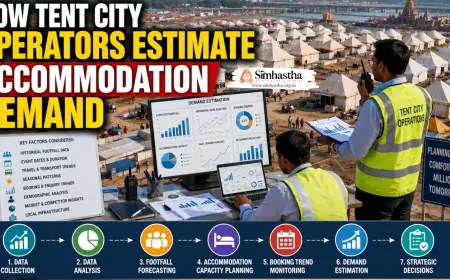
The tent cities of Simhastha 2028 are being designed on a stratified, three-tier model that ensures a bed for every budget and every expectation, without ever compromising on the fundamental dignity of the pilgrim. At the apex are the premium luxury tents, which will be fully air-conditioned canvas suites with proper beds, soft mattresses, crisp linens, and elegant, attached bathrooms featuring running hot water, modern sanitary fittings, and toiletries. These tents will have wooden flooring to keep out the dust, a small writing desk, a private sitting area outside, and a dedicated concierge or butler service. They are designed for the international visitor, the affluent domestic pilgrim, and the elderly devotee who requires a seamless, hotel-like experience without sacrificing the immersive spirit of the Kumbh.
The middle tier, the standard tents, will form the backbone of the tent city. These are comfortable twin or triple-share canvas units with sturdy cots, clean mattresses, and adequate bedding. The bathroom facilities are shared but are professionally maintained, with separate, well-lit blocks for men and women, featuring bio-digester toilets, running water, and regular cleaning schedules. These tents come with fans or air coolers, a common dining hall serving simple, sattvic vegetarian meals, and access to all the camp's communal amenities. The budget shivirs, which will house the vast majority of pilgrims, offer dormitory-style accommodation in large, airy tents or prefabricated halls, with rows of clean cots, basic bedding, and access to communal toilet blocks. The atmosphere here is one of spirited, collective simplicity, a modern iteration of the ancient pilgrim rest houses that have served the Kumbh for centuries. Across all tiers, the bedding is sanitized, the linen is fresh, and the promise is the same: a safe, clean, and respectful place to rest the body before the next encounter with the divine. ✅
Dining Halls, Sattvic Meals, and the Communal Langar Experience
No pilgrim in the official Simhastha tent cities will ever need to worry about where their next meal is coming from. A hallmark of these temporary townships is the provision of wholesome, hygienic, sattvic vegetarian meals, often included in the per-person tariff. The premium and standard camps will operate large, clean dining halls or mess tents, where meals are served in a buffet style at designated hours. The food is simple, nutritious, and prepared in accordance with the strict dietary purity required for a pilgrimage—no onion, no garlic, and certainly no meat, fish, or eggs. The menu typically includes dal, rice, seasonal vegetables, rotis, a light curry, and a simple sweet. For international visitors or those with specific health needs, the premium camps may offer customised, less-spiced options or fresh fruit platters.
The budget shivirs often operate on a langar model, the great Sikh and Hindu tradition of the community kitchen, where volunteers serve a simple, blessed meal to long rows of seated pilgrims. Eating here is not just about nutrition; it is a profound spiritual practice in itself, a ritual of humility and equality, where the rich and the poor, the scholar and the labourer, sit side by side on the ground and receive the same food, sanctified by the spirit of the Kumbh. Clean, filtered drinking water is freely available in all dining areas, and strict hygiene protocols, including hand-washing stations and sanitizer dispensers, are enforced. The communal dining experience is often where the deepest bonds of the pilgrimage are forged, over a shared meal and stories of the day's darshan. 🍛
Trending Guides Now
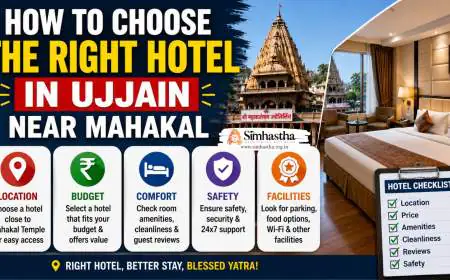
How to Choose the Right Hotel in Ujjain Near Mahakal

Where Pilgrims Stay During Ujjain Simhastha Event

Family Friendly Hotels Near Mahakal Corridor

Best Hotels in Freeganj Ujjain Near City Center

Ujjain Railway Station to Mahakaleshwar Temple Distance (2026 Guide)

Ujjain Simhastha 2028 Dates Announced: Full Shahi Snan & Event Timeline

Mahakaleshwar Sandhya Aarti Online Booking 2026: Fee, Timings, Entry Gate and Step-by-Step Process

Kal Bhairav Temple Darshan Guide: Entry, Timings and Tips
Health and Medical Facilities: The On-Site Camp Hospital and Emergency Care
The administration of the Simhastha is acutely aware that a temporary city of millions is a fragile ecosystem, and the health of each pilgrim is a collective responsibility. Every organized tent city will have a designated, 24/7 medical post or a larger camp hospital, depending on its size. These are not token first-aid boxes; they are fully functional mini-clinics, staffed by a qualified doctor, nurses, and paramedics, with separate observation beds for patients needing short-term rest. The medical post will be equipped to handle common monsoon and summer ailments—dehydration, heatstroke, fever, diarrhea, and minor injuries from slips on wet ghats. Oral rehydration salts (ORS) and basic emergency medicines will be provided free of charge. For any serious or critical condition, an ambulance will be stationed at the camp entrance, ready to transport the patient to the nearest full-scale Simhastha sector hospital within minutes. The camps will also have a tie-up with the larger telemedicine network that links the entire Mela, allowing a doctor in a small tent city to consult a specialist at AIIMS Bhopal or Delhi in real time. For the elderly pilgrim and the anxious family, this visible, accessible medical infrastructure is a silent, powerful reassurance. 🩺
Safety, Security, and the Gated Sanctuary of the Pilgrim Camp
A tent city during the Simhastha is a high-security zone. The perimeter of each camp is fenced and monitored 24/7 by a combination of CCTV cameras, private security guards, and a dedicated police presence. Entry and exit are strictly controlled, with a check-in process that requires valid government-issued identification for every guest. This ensures that the camp is a sanctuary, a protected bubble where the pilgrim can leave their worldly anxieties at the gate. The security is not oppressive; it is designed to be a silent, protective presence, allowing families, solo women, and the elderly to move freely within the camp at any hour without fear. A dedicated security desk operates round the clock to handle any concerns. Fire safety is also a major priority, with clearly marked fire lanes, extinguishers at every block, and regular drills. Many camps will also have a safe deposit facility or lockers where pilgrims can securely store their valuables, cash, and documents, freeing them to visit the ghats and temples without carrying anything but their devotion. This comprehensive security net means that a pilgrim can sleep deeply, knowing that the world outside the canvas walls is being watched over by a vigilant, professional guard. 🛡️
Sanitation, Bio-Digesters, and the Quiet Revolution of Cleanliness
The sanitation of the 2016 Simhastha was a source of significant public criticism, and the administration has responded to that memory with a revolutionary, multi-crore sanitation plan. The tent cities of 2028 will be its most visible beneficiaries. Every camp, from the premium to the budget tier, will feature bio-digester toilets, a technology developed by the Defence Research and Development Organisation (DRDO) that uses a bacterial culture to break down human waste into harmless water and methane, eliminating the need for manual scavenging and drastically reducing pathogens. The toilet blocks, particularly in the standard and premium tiers, will be modern, well-lit, ventilated, and staffed by professional housekeeping teams on continuous rotation. The cleanliness of these facilities will be monitored in real time, with cleaning schedules tracked digitally and performance-linked contracts ensuring that the private operators have a powerful financial incentive to maintain perfect hygiene. The camps will also have designated bathing areas with running water and, in the premium tiers, proper showers with hot water. The commitment is absolute: the pilgrim who enters a Simhastha tent city in 2028 will experience a level of sanitation that is a paradigm shift from the open defecation and pit latrines of past Melas. This is the quiet, unseen, and utterly essential revolution of dignity. 🧼
Connectivity, Power Backup, and the Digital Lifeline
In 2028, a pilgrim's spiritual journey is also, to some degree, a digital one. The smartphone is their map, their camera, their communication device, and their connection to the family back home. The Simhastha tent cities are being designed with this reality in mind. All camps will have a reliable power supply, drawn from the dedicated Mela power grid with generator backup, ensuring that lights, fans, air coolers, and the all-important charging points remain functional even during a grid failure. The camps will have designated, secure charging stations where pilgrims can plug in their phones. WiFi connectivity, while likely to be best in the premium and standard tiers, will be a standard offering in the common areas of all official camps, allowing pilgrims to make video calls, share their experiences, and stay connected. The quality of the connectivity, while subject to the immense pressure of the Mela's network load, is being planned with significant augmentation of the telecom infrastructure. This digital lifeline is not a distraction from the pilgrimage; it is a modern amenity that allows the pilgrim to share their peace of mind with worried family members, to look up a mantra, or to navigate the vast Mela grounds. A power bank and a charged phone are modern spiritual tools, and the tent cities will ensure they are always ready. 📱
Spiritual and Cultural Amenities: The Satsang, the Yoga Shala, and the Evening Bhajan
The tent cities of Simhastha 2028 are not just places to sleep; they are designed to be active centres of spiritual life, extending the pilgrimage experience beyond the ghats and temples. Most camps, especially the larger ones, will feature a dedicated community hall or a satsang pandal. Every evening, these spaces will come alive with bhajans, kirtans, and discourses by invited sadhus, scholars, and spiritual teachers. For the pilgrim who returns from the evening aarti and does not want the sacred mood to end, these sessions are a profound blessing. Many camps will also have a designated yoga and meditation area, a quiet, shaded space where morning yoga sessions, guided meditations, and pranayama classes are conducted, often by trained volunteers. This focus on the inner journey complements the outer rituals of the Kumbh, offering a holistic experience of body, mind, and spirit. The premium camps may also host classical music performances, storytelling sessions of the Puranas, and workshops on the deeper meaning of the Kumbh. These cultural amenities transform the tent city from a mere accommodation block into a vibrant, living ashram, a temporary spiritual university where every moment can be an opportunity for learning and inner growth. 🧘
The Shuttle Service and the Proximity to the Sacred Dip
The single most valuable luxury during the Simhastha is time, and the location and transport links of a tent city are its most critical facilities. The official tent cities are being strategically sited within or immediately adjacent to the designated Mela zone, with some premium camps offering a direct, barricaded walking path to the bathing ghats. A free, high-frequency shuttle bus service will operate continuously from each tent city to the major ghats and Mahakaleshwar-temple-entry-rules" class="contextual-link" data-post-id="470">The Mahakaleshwar Temple zone. These shuttles, often open-air electric vehicles or low-floor buses, run on dedicated, traffic-free corridors, depositing pilgrims at the edge of the sacred zone within minutes. This eliminates the single greatest stress of the Kumbh: the hours-long, exhausting, and often futile battle with gridlocked traffic. The tent city pilgrim wakes up, has a simple breakfast, boards a waiting shuttle, and is at the Shipra's edge while the hotel guest is still negotiating with an auto-rickshaw driver in a traffic jam. This strategic proximity, and the seamless, organized transport link, is a facility that no star rating can adequately capture. It is the gift of time, and in the compressed, intense schedule of the Kumbh, it is the ultimate amenity. 🚌

Operational Efficiency: Check-In, Information Desks, and the Pilgrim Helpdesk
The vast scale of the tent cities is matched by an operational plan designed to make the pilgrim's experience frictionless. A smooth, efficient 24-hour check-in and reception desk will be the first point of contact for every arriving guest. Here, identification is verified, the tent is allocated, and a welcome kit, often containing a camp map, a shuttle timetable, and a list of emergency numbers, is handed over. A dedicated pilgrim helpdesk will operate continuously, staffed by multilingual volunteers who can answer questions, resolve issues, and provide guidance on temple timings, bathing dates, and local transport. A clear, well-lit signage system in Hindi, English, and other major Indian languages will guide pilgrims to their tents, the dining hall, the toilets, and the shuttle point. A robust baggage storage facility allows pilgrims to leave their luggage securely after check-out, freeing them for a final darshan before they depart. The staff, from the managers to the housekeeping crew, are being trained not just in hospitality but in the specific ethos of the Kumbh—patience, seva, and a deep respect for the pilgrim's spiritual purpose. The operations are the invisible architecture of comfort, and when they run smoothly, the pilgrim barely notices them, which is the highest testament to their effectiveness. ✅
The Emotional Architecture: Community, Silence, and the Canvas Sky
Beyond the list of material amenities, the tent cities of the Simhastha offer a facility that no concrete hotel can replicate: an emotional and spiritual architecture that is intrinsic to the camp itself. The canvas walls do not shut out the world with a dead, soundproofed finality; they filter it. You fall asleep to the distant, rhythmic chant of a Ram dhun from a neighbouring akhara. You wake to the smell of woodsmoke from the dhuni fires and the gentle clang of a temple bell. The camp is a community, a transient village of the faithful. In the common areas, strangers become friends over a shared cup of chai. The spontaneous, unplanned conversations at the water ATM or the phone charging station are often the moments where the deepest spiritual insights are shared.
There is also a profound lesson in the canvas itself. The tent is a gentle, constant teacher of impermanence. It shelters you, but it does not pretend to be a fortress. It reminds you, with every gentle rustle of the fabric in the wind, that this experience, this grand Kumbh, and life itself, is a beautiful, temporary gift. This is not a flaw; it is a feature. It is the very essence of the pilgrim's path. The hotel, with its solid walls and its unchanging, climate-controlled air, belongs to the world of the permanent. The tent, with its quiet vulnerability, belongs to the world you have entered—the fleeting, sacred, and utterly transformative world of the Simhastha. The facilities are the body of the camp, but this palpable sense of impermanence, community, and spiritual immediacy is its soul. 🏕️🙏
Frequently Asked Questions