






















Which Travelers Should Choose Tent City Over Hotels?
Wondering if you should book a tent city instead of a hotel for Simhastha 2028? Discover which pilgrims, families, and budget travelers benefit most from the Kumbh's unique temporary accommodations.



The Anatomy of a Simhastha Tent City and What It Actually Offers
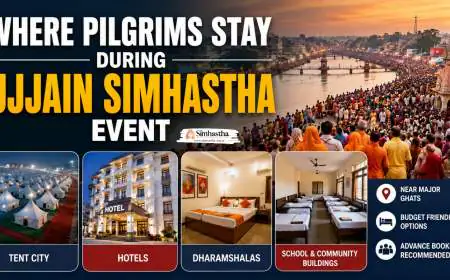
Before deciding, a traveler must understand what "tent city" means in the context of Simhastha 2028. These are not the flimsy, leaky camping tents of a casual weekend trek. The government and private operators are constructing entire temporary townships, stratified into distinct tiers. At the premium end, tents are large, fully air-conditioned canvas structures with proper beds, attached bathrooms with running hot water, wooden flooring, and a private sitting area. Some will offer dedicated dining facilities and butler service, catering to VIPs, international guests, and affluent domestic pilgrims who want the rustic romance of a camp with the amenities of a high-end hotel. At the mid-range standard level, tents are comfortable twin or triple-share units with shared but clean bathroom blocks, cots with decent mattresses, fans or air coolers, and a common mess serving simple, wholesome meals. At the budget shivir level, which will house the vast majority, the accommodation is dormitory-style, with rows of basic cots, communal toilets, and a powerful, unpretentious atmosphere of collective devotion. What unifies all tiers is their fundamental purpose: to provide a safe, organized, and sanctioned place to rest within the official Mela zone, with security, food, and medical support. 🛕
The Pilgrim Seeking Immersion, Not Isolation
The single most decisive profile for the tent city is the pilgrim who craves total immersion. A hotel, no matter how close to The Mahakaleshwar Temple it might be, is ultimately a bubble. You enter a lobby, take an elevator, and the Mela—its sounds, its chants, its endless river of humanity—fades away. For some, this retreat is a necessity. But for the pilgrim who has travelled across the country to touch the very pulse of the Kumbh, that silence can feel like a void. The tent city is the opposite of isolation. You sleep to the distant, rolling thunder of "Har Har Mahadev." You wake to the smell of woodsmoke from the akhara dhunis and the clang of temple bells carried on the dawn breeze. You share your morning chai with a stranger who, within ten minutes, becomes a fellow traveller on the path. This constant, gentle hum of the sacred is not a disturbance; it is the very product the pilgrim has come to receive. For the solo seeker, the youth on a spiritual gap year, or the sadhu-following devotee, the tent city is not just a bed; it is a continuous, low-intensity darshan that never switches off. 🔱
Families and Groups on a Mid-Range Budget
For a family of four or five travelling together, the economics of a hotel during the Simhastha can be brutal. Multiple rooms at surge prices that can touch ten to twenty times the normal rate quickly escalate beyond the reach of a middle-class household. The tent city, particularly its standard and mid-range tiers, resolves this with a bundled pricing model. You pay a per-person rate that often includes not just the bed but also three simple meals a day, access to clean drinking water, and shuttle transport to the bathing ghats. This all-inclusive nature is a massive financial relief and a logistical simplification. Instead of managing restless children in a hotel room and then navigating the chaos of finding a safe, affordable restaurant during peak hours, the family stays in a contained, secure environment where the basics are taken care of. The tent city's communal nature also solves the age-old problem of children on a pilgrimage: boredom. The controlled, open environment of a tent city campus, with other families nearby, a central gathering area, and the constant, colourful pageant of the Mela flowing past its perimeter, is an endless source of visual and social stimulation. For the parent who wants their children to experience the Kumbh not as a sterile, air-conditioned trip but as a lived, breathing tradition, the tent city is the classroom. 👨👩👧👦
The Adventurous International Pilgrim and the Cultural Authentic
For the pilgrim arriving from outside India—the seeker from a quiet European town or the bustling cities of the diaspora—a hotel in Ujjain, even a good one, can become a confusing, isolating bubble. The cultural gap between the orderly lobby and the chaotic, glorious street is a shock that many struggle to bridge. The tent city, particularly its premium tier, solves this by serving as a curated cultural bridge. It provides the secure, hygienic, and comfortable base that an international traveler expects, but it places that base directly inside the cultural matrix. The international guest can step out of their air-conditioned tent and be immediately immersed in the sights and sounds of the Mela, yet retreat to a space where English-speaking coordinators, reliable food, and clean facilities are guaranteed. They can visit the akhara camps with a guide from the tent city, return for a hot meal, and sit in the common lounge to process their experiences with fellow travelers from around the world. This managed, soft-landing approach to the Kumbh's intensity is the single Best Accommodation strategy for a first-time international visitor. It offers the essential comforts that prevent a culture-shock spiral while providing an authentic, unfiltered encounter with the world's most profound spiritual gathering. 🌏
Trending Guides Now

Jain Dharamshala in Ujjain Near Mahakal Temple

Best Hotels Near Mahakal Mandir 2026 Guide
Where Pilgrims Stay During Ujjain Simhastha Event

Family Friendly Hotels Near Mahakal Corridor

Ujjain Railway Station to Mahakaleshwar Temple Distance (2026 Guide)

Ujjain Simhastha 2028 Dates Announced: Full Shahi Snan & Event Timeline

Mahakaleshwar Sandhya Aarti Online Booking 2026: Fee, Timings, Entry Gate and Step-by-Step Process

Kal Bhairav Temple Darshan Guide: Entry, Timings and Tips
The Budget Yogi, the Student, and the Solo Ascetic
For the traveler whose budget is measured in hundreds, not thousands, of rupees, the question of hotel versus tent city is decisively answered. The budget shivir is the noble descendant of the Kumbh's most ancient accommodation tradition: the simple, communal pilgrim rest. Here, a bed in a clean, supervised dormitory, with access to a basic bathroom, costs a fraction of even the cheapest dharamshala or lodge during the peak Mela days. For the student, the wandering yogi, or the solo pilgrim whose only requirement is a safe, dry place to sleep before the next pre-dawn Bhasma Aarti, the budget tent city is not a compromise—it is a badge of honour. It connects you directly to the ascetic spirit of the Kumbh. You sleep like a pilgrim, not a tourist. The shared spaces of these shivirs create a spontaneous, democratic community of the spiritually-minded, where the retired government servant, the young IT professional on a sabbatical, and the saffron-clad sadhu may find themselves sharing a mat and a conversation about the Upanishads. These are the connections that last a lifetime, and they are forged far more easily in the open, unpretentious atmosphere of a tent than in the anonymized corridors of a hotel. ✅
The Elderly Pilgrim and the Advantage of Ground-Level Access
Paradoxically, for a specific category of elderly or mobility-challenged pilgrim, the tent city can offer a significant advantage over a traditional hotel, provided they book the premium tier. A standard hotel during the Mela can be a nightmare of stairs, broken elevators, and narrow, crowded corridors. The premium tent city, in contrast, is designed to be horizontal. There are no stairs to climb. Everything is on the ground floor, laid out in easily navigable grids. The attached bathroom in a premium tent is on the same level, with no step-down showers or slippery bathtubs to manage. Furthermore, the organized tent cities for Simhastha 2028 are mandated to have on-site medical camps, 24/7 ambulance access at the camp entrance, and a dedicated staff trained to assist elderly guests. The controlled, gated environment provides a sense of security that an independent hotel cannot match. The elderly pilgrim can sit in a shaded courtyard, attend a small bhajan gathering organized within the camp, and know that help is immediately available at the call of a coordinator. For a family accompanying an elderly grandparent, the tent city offers a less anxious, more supportive environment than a hotel room in a congested city centre. 🧓
The Commuter and the Logic of Strategic Proximity
During the Simhastha, the distance between your bed and the bathing ghat is the single most valuable currency. The entire city becomes a traffic gridlock, and the pilgrim who spends five hours in an auto-rickshaw just to travel five kilometres has already lost the most precious resource of the pilgrimage: time. Tent cities are strategically located within or immediately adjacent to the Mela zone, often with dedicated, secure pedestrian corridors leading directly to the bathing ghats. The pilgrim who stays in a tent city wakes up, walks out of their camp, and is on the ghat steps within minutes, not hours. For the traveler whose primary goal is to take the holy dip on multiple days, to attend the pre-dawn rituals, and to visit the akhara camps at leisure, this proximity is the ultimate luxury. No hotel, no matter how opulent, can offer a more valuable amenity than the ability to walk to the sacred river. The tent city, by virtue of its physical placement, hands this advantage to the pilgrim. This makes it the ideal choice for the action-oriented pilgrim, the one who has not come to relax but to immerse, to bathe, to photograph, and to worship with maximum efficiency. 🚶
Common Misconceptions About Tent Cities That Hurt Good Decisions
Many first-time pilgrims dismiss tent cities based on a set of stubborn misconceptions. The first is the belief that they are unsafe or lawless. The reality is the opposite. The official Simhastha tent cities are high-security zones with CCTV coverage, fenced perimeters, and 24/7 police presence. They are far more secure than a random guesthouse in a dark lane. The second misconception is that they are dirty and unhygienic. The 2028 tent cities are being designed with a massive emphasis on sanitation, including bio-digester toilets, professional housekeeping staff on performance-linked contracts, and central waste management systems. A premium tent bathroom in 2028 may well be cleaner than the bathroom of a budget hotel that has not been renovated in a decade. The third myth is that they are only for the poor. The tent cities in Prayagraj 2025 proved that luxury camps attract the wealthiest pilgrims precisely because they offer a seamless, hassle-free, and immersive experience that a five-star hotel, located miles away in the traffic grid, simply cannot match. The final myth is that a hotel guarantees peace and quiet. During the Mela, a hotel in a busy lane will be filled with the sounds of traffic, chanting, and late-night arrivals. The tent city, with its managed perimeter and quiet hours, often provides a more controlled and restful acoustic environment. Letting go of these myths is the first step toward making a choice that is right for you, not for a hypothetical, outdated idea of a hotel's prestige. ⚠️
The Emotional and Spiritual Logic of the Tent
Beyond the practical checklist of budget, proximity, and sanitation, there is a deeper, more intangible reason for choosing the tent city. The Simhastha is not a conference; it is a pilgrimage. It is a temporary, sacred city that exists for a fleeting, cosmic moment. To stay in a tent is to honour this temporariness, to mirror the inner state of a pilgrim who has left the permanent structures of home and ego behind. The hotel, with its sturdy concrete and its promise of unchanging service, belongs to the world you left behind. The tent, with its canvas walls and its vulnerability to the elements, belongs to the world you have entered. It is a gentle, constant reminder that this experience, like life itself, is impermanent, precious, and to be fully lived. Many pilgrims who have stayed in both settings report that the tent city experience, despite—or perhaps because of—its simplicity, had a far deeper spiritual impact. It kept them grounded, kept them connected, and kept them in a state of heightened, grateful awareness. The tent is not just a place to sleep; it is a spiritual discipline, an exercise in non-attachment, and a quiet, profound teacher of the truths that the Kumbh exists to reveal. 🙏

Frequently Asked Questions