
















Common Mistakes People Make When Booking Simhastha Stays
Avoid the common mistakes people make when booking Simhastha stays. Learn why booking late, trusting fake listings, ignoring official tent cities, or forgetting Shahi Snan dates can leave you stranded and overpaying for your Kumbh pilgrimage.


The Late Booking Trap and the Vanishing Mirage of the Last-Minute Deal
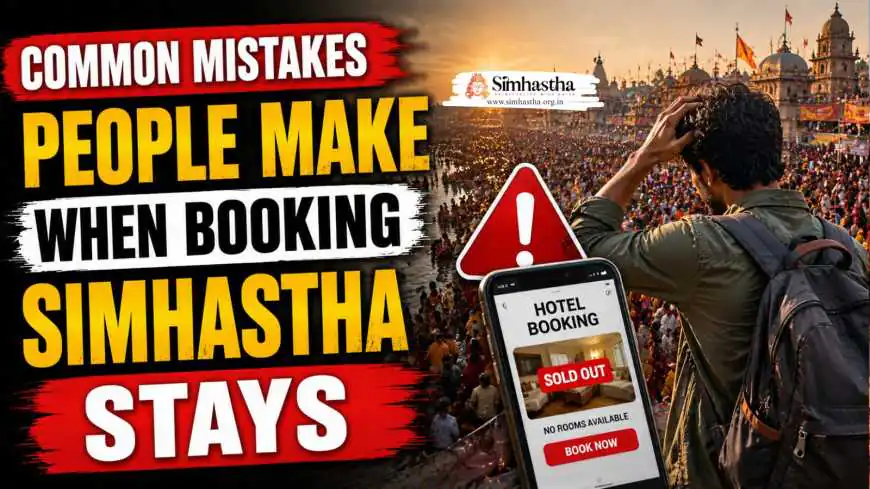
The single most devastating, expensive, and heart-breaking mistake a Simhastha pilgrim can make is to believe, against all historical evidence and economic logic, that waiting until the last minute will yield a bargain. In the ordinary world of hotels, a last-minute cancellation can sometimes result in a discounted room. At the Simhastha, the opposite is true with a brutal, mathematical certainty. The city's permanent accommodation inventory—perhaps 150 to 200 registered hotels, with a total of 5,000 to 7,000 rooms—is a drop in the ocean of demand. The entire inventory for the peak Shahi Snan dates is completely sold out, not weeks, but months in advance. A pilgrim who begins their search in January 2028 for an April 2028 Shahi Snan date is not entering a market; they are entering a wasteland. Whatever few rooms remain are either astronomically priced—₹30,000 to ₹1,00,000 a night for a room that on an ordinary day costs ₹1,500—or are located so far from the Mela zone that the daily commute will consume the very hours the pilgrim came to spend in prayer.
The psychology of this mistake is understandable. We are conditioned to believe that patience is rewarded and that a better deal is always around the corner. The Simhastha accommodation market, however, operates on a different, more ancient, and more unforgiving logic. The price of a room is not a function of its intrinsic quality; it is a function of its proximity to the sacred river and the date on which you wish to sleep there. That price rises, inexorably and exponentially, as the Mela draws closer. The early bird who books in mid-2026 or early 2027, during the window when tent city operators and hotel owners are eager to secure guaranteed occupancy, locks in a rate that is often 50% to 70% lower than the peak. The late booker pays a massive financial penalty and endures the soul-crushing stress of scrambling for a bed while the city fills to bursting. The iron rule is this: the moment you know your travel dates, book your stay. Hesitation is the most expensive emotion at the Simhastha. ⏰
The Mirage of Fake Listings and the Unverified Online Phantom
In the desperate, high-demand months leading up to the Simhastha, a parallel, shadow economy of accommodation fraud flourishes. Fake listings appear on popular hotel booking websites, complete with stolen photographs of beautiful, serene rooms, glowing, articulate reviews that are entirely fabricated, and prices that are temptingly, catastrophically low. The pilgrim, anxious and running out of options, sees a clean, well-located guesthouse for ₹2,000 a night when everything else is ₹15,000, and their heart leaps. They book, pay a substantial advance, and arrive in Ujjain, often after a long and exhausting journey, only to find that the address does not exist. Or the building is a private residence. Or the room they are shown bears absolutely no resemblance to the photographs, a dingy, windowless cell with a broken fan and a shared, filthy bathroom. The scam artist who took their money is unreachable, the phone number is switched off, and the pilgrim is left stranded, devastated, and significantly poorer.
This is the fake listing trap, and it is one of the most vicious and widespread accommodation scams. The only effective defense is a ruthless, uncompromising commitment to booking through official, verified channels. The Simhastha 2028 official portal, operated by the Madhya Pradesh government and the Simhastha Special Purpose Vehicle (SPV), will be the single most reliable source for all registered accommodation—hotels, guesthouses, tent cities, and homestays. Properties listed on this portal have been physically verified and are bound by the government's rate card and regulatory framework. If you are using a commercial travel website, choose only those listings that are marked as "verified" and that have a substantial, detailed, and plausible history of reviews from genuine travelers. Before paying any advance, call the property directly using a phone number you have found independently, not the one on the potentially fraudulent listing. Ask them a specific question about the local area that a genuine owner would know. If the deal seems too good to be true, in the context of the Simhastha, it is not true. It is a trap. 🖥️
Trending Guides Now
Affordable Hotels Near Ujjain Railway Station

Ultimate Hotel Booking Guide for Ujjain Visitors

15 Budget Hotels Near Mahakal Temple Ujjain Under ₹1500

Luxury Hotels Near Mahakaleshwar Temple Ujjain: Big Hospitality Boom Underway

Ujjain Railway Station to Mahakaleshwar Temple Distance (2026 Guide)

Ujjain Simhastha 2028 Dates Announced: Full Shahi Snan & Event Timeline
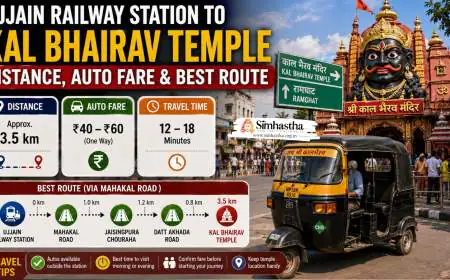
Ujjain Railway Station to Kal Bhairav Temple: Distance, Auto Fare and Best Route

Ujjain Simhastha Update: CM Mohan Yadav Reviews 2028 Works
The Commuting Nightmare and Booking Too Far From the Mela Zone
A map can lie with a quiet, deceptive innocence. A hotel that appears to be just a few kilometers from the Mahakaleshwar Temple, a short, pleasant drive, can, during the chaos of the Simhastha, translate into a daily, soul-destroying commute of two, three, or even four hours. The entire city of Ujjain is transformed into a vast, regulated traffic grid, with road closures, one-way systems, and designated pedestrian-only zones. The pilgrim who books a budget hotel in a distant, seemingly peaceful suburb, believing they have found a clever, quiet bargain, has in fact condemned themselves to spending the majority of their pilgrimage in the back of a hot, honking, and motionless auto-rickshaw. The money they saved on the room is spent many times over on inflated transport fares, and the time they lose is utterly irreplaceable.
The single most important factor in choosing a Simhastha stay, beyond price, beyond star rating, is proximity to the Mela zone and the main bathing ghats. The official tent cities are, for this reason, a profoundly superior choice, as they are strategically located within or immediately adjacent to the sacred zone, often with dedicated, traffic-free pedestrian corridors leading directly to the river. If you are booking a hotel or a homestay, study the official Mela map, understand the location of the pedestrian-only cordons, and verify that your accommodation is within a comfortable, walkable distance of the ghats, or is directly served by the official shuttle bus network. A room that is a twenty-minute walk from the Shipra is worth its weight in gold. A room that is a thirty-minute drive, which will become a two-hour crawl, is a costly, exhausting mistake. The location is not just a convenience; it is the very architecture of your daily spiritual rhythm. 🚶
The Overlooked All-Inclusive Value of the Official Tent City
A persistent and costly mistake, particularly among pilgrims who are new to the Kumbh, is the automatic dismissal of the official tent cities as a primitive, uncomfortable, and inferior option. They picture a dusty, leaky camping tent and reject it in favor of what they imagine to be the solid, reliable comfort of a hotel. This is a profound and financially painful misunderstanding. The official Simhastha tent cities are not the makeshift camps of a casual trekker. They are fully serviced, professionally managed, and highly secure temporary townships, stratified into premium, standard, and budget tiers. The standard tent offers a clean, comfortable bed, a shared but professionally maintained bathroom block, and, most importantly, an all-inclusive package that covers three simple, sattvic meals a day, unlimited filtered drinking water, and the priceless amenity of a free, dedicated shuttle bus service to the bathing ghats.
When a pilgrim books a seemingly cheap hotel room, they often fail to account for the hidden, ancillary costs that will quickly erase any initial saving. The hotel room price does not include food, and eating every meal at a restaurant during the peak Mela surge is a significant and continuous expense. It does not include the daily auto-rickshaw fares, which, during the Mela, are subject to massive, unregulated surge pricing. It does not include the bottled water you will constantly need to buy. The tent city's bundled model, particularly the standard tier, is often far more economical on a total-cost basis than a seemingly cheaper hotel. The pilgrim who automatically dismisses the tent city is making a decision based on a false image and is missing out on the most authentic, community-driven, and logistically intelligent accommodation option the Kumbh has to offer. 🏕️
The Shahi Snan Date Blindness and the Price Explosion
The Simhastha is not a single, continuous event with flat pricing. It is a series of intense, pulsating peaks and valleys of demand, and the towering, Himalayan peaks are the Shahi Snan dates, the great royal bathing days. The accommodation market is exquisitely, brutally sensitive to these dates. A hotel room that costs ₹5,000 on a non-bathing day during the Mela period can, and will, cost ₹25,000 or more on a Shahi Snan day. A common and devastating mistake is to book a stay without first checking the official Simhastha bathing schedule, or to assume that the price quoted for a non-peak day will apply to the entire duration of the stay. The official Shahi Snan dates are announced by the Simhastha Central Committee, based on astrological calculations, well in advance, typically by mid-2027. The pilgrim who books without referencing these dates is navigating blind.
The strategy is clear: if your pilgrimage is flexible, you can achieve significant savings by planning your visit around the non-peak days, when the crowds are thinner and the prices are dramatically lower. If, however, your heart is set on being present for the great, ecstatic, and cosmically charged moment of the Shahi Snan, you must accept the peak pricing as a non-negotiable reality and you must book your accommodation as early as possible, ideally during the early bird window of mid-2026 to early 2027. Arriving on a Shahi Snan date with no pre-booked accommodation is not a romantic, spontaneous pilgrimage; it is a logistical catastrophe waiting to unfold. You will be one of millions scrambling for a place to sleep, and whatever you find will be at the absolute, merciless peak of the pricing curve. 📅

The Temptation of the Tout and the Abandonment of the Official Portal
In the chaotic, overwhelming environment of a Kumbh Mela, the well-dressed, smooth-talking, and reassuringly helpful stranger who approaches you at the railway station or in the temple queue is not a guide sent by divine providence. He is a tout, and his singular goal is to extract a large commission from whatever accommodation he steers you towards. A classic mistake is to arrive in Ujjain without a confirmed, pre-booked stay, believing that one can simply "find something" upon arrival. This throws the pilgrim directly into the waiting arms of the tout ecosystem. The tout will have a pre-rehearsed story: your booked hotel has burned down, the area is flooded, or it is in a very dangerous neighborhood. He will then lead you to a "partner property," a poor-quality, overpriced lodge where he receives a hefty kickback, and you will be too exhausted, too disoriented, and too relieved to argue.
The absolute, non-negotiable defense against this is the official Simhastha 2028 portal. This single, government-verified digital gateway is your sanctuary. It will list every registered and rate-card-compliant accommodation option—tent cities, hotels, guesthouses, dharamshalas, and homestays. Book only through this portal, or through the verified, direct websites of the specific temple trusts and established hotel chains. Never book through a link sent by a stranger, never pay an advance to an individual who approaches you in the street, and never allow a tout to redirect you to an alternative property. The official portal is your shield, and the pilgrim who wields it wisely is invisible to the predators who circle the Kumbh's economy of desperation. 🛡️
The Lost Opportunity of Group Booking and the Solo Premium
The Simhastha is, at its heart, a communal event, and the economics of accommodation reflect this profound spiritual truth. A pilgrim traveling alone will almost always pay a premium per head compared to a pilgrim traveling in a group. A common mistake is for a family, or a loose circle of friends from the same spiritual community, to book their accommodation separately, each person or each couple fending for themselves, competing for a shrinking pool of individual rooms. The per-person cost of a shared, multi-occupancy tent, a family suite, or a block-booked set of rooms in a dharamshala is significantly lower. Group booking unlocks explicit discounts from tent city operators and hotels, and it opens the door to options, such as renting an entire homestay floor with a shared kitchen, that are simply not available or affordable to the solo traveler. The group that appoints a single, organized coordinator, who collects the deposits and makes a single, consolidated, early-bird booking, saves money, secures better, contiguous accommodation, and ensures that the entire community stays together, sharing meals, transport, and the collective, multiplied energy of their shared pilgrimage. The failure to plan and book as a collective is a quiet, unnecessary tax on the solitary soul. 👨👩👧👦
The Non-Refundable Trap and the Rigid Cancellation Policy
The extreme demand dynamics of the Simhastha have created a seller's market, and many accommodation providers, particularly in the private hotel sector, impose draconian, non-refundable booking policies. A pilgrim, excited and in a hurry to secure a room, clicks "confirm" on a booking that carries a 100% cancellation penalty, without reading the fine print. Then, a family emergency arises, a train ticket is not confirmed, or the pilgrimage dates shift, and the pilgrim is faced with the catastrophic loss of a large, pre-paid sum. A common mistake is to prioritize the speed of the booking over a careful, slow reading of the terms and conditions. Before you commit any money, you must find, read, and fully understand the cancellation policy. Look for a booking that offers a reasonable, partial refund or at least a free date change. Some of the better tent city operators and the government-registered homestays offer more flexible terms. If a booking is completely non-refundable, you should only commit if your dates are absolutely, irrevocably fixed, and you have already secured your travel tickets. The non-refundable trap is a silent, financial predator, and the pilgrim who reads the fine print is the one who keeps their sacred pilgrimage fund intact. 📄
The Illusion of Hotel Amenities and the Failure to Verify
A photograph of a gleaming, modern bathroom on a booking website can be a work of pure, seductive fiction. During the Simhastha, the immense pressure on the city's infrastructure means that many hotels, especially the budget and mid-range ones, struggle to maintain their promised amenities. A common, bitter disappointment is for a pilgrim to book a room based on the advertised availability of "24/7 hot water," "air-conditioning," and "WiFi," only to discover upon arrival that the hot water is a tepid, erratic trickle, the air-conditioner is a noisy, ineffective relic, and the WiFi is a myth. This is not always malicious fraud; it is often the simple, physical collapse of an overburdened system. The pilgrim who fails to check the most recent reviews, specifically filtering for comments about the functioning of these essential amenities, is walking into a preventable discomfort. Read the reviews from the past three to six months, not the glowing ones from two years ago. Look for specific, detailed complaints. If possible, call the hotel directly and politely, but firmly, inquire about the current status of the amenities that are critical to your comfort and health. For the elderly pilgrim or the family with a young infant, a reliable supply of hot water and a functioning air-conditioner are not luxuries; they are essential for physical safety and well-being. Do not assume; verify. 🚿
The Inner Mistake of Prioritizing Price Over Sacred Peace
All the external mistakes—the late booking, the fake listing, the distant location, the non-refundable trap—are, in the end, symptoms of a single, deeper error. It is the error of approaching the Simhastha accommodation search with the mindset of a bargain-hunting consumer rather than the mindset of a pilgrim who is preparing the sacred vessel for a profound, transformative encounter with the divine. The consumer asks, "What is the absolute cheapest bed I can find?" The pilgrim asks, "What is the most peaceful, restful, and well-located sanctuary that will allow my body to rest deeply, so my soul can soar freely?" There is a vast spiritual difference between a frugal, simple, and consciously chosen austerity and a miserable, anxiety-inducing, and physically draining hovel. The darshan of the Lord of Time is a moment of supreme, fleeting grace. The pilgrim who arrives at the temple gates exhausted from a sleepless night on a lumpy mattress, after a three-hour commute in a sweltering auto-rickshaw, has had their spiritual capacity drained before they have even entered the sanctum. The wise pilgrim invests in their peace. They book early, they book through the official portal, they prioritize proximity and basic, dignified comfort, and they understand that the extra rupees spent on a quiet, clean, and well-located room are not an expense; they are a direct, powerful investment in the quality, depth, and transformative power of their darshan. The peace of your sanctuary is the foundation of your prayer. Do not build it on sand. 🔱
Frequently Asked Questions