

















Indradyumneshwar Mahadev: 15/84 Ujjain's Royal Shiva
Worship Indradyumneshwar Mahadev, the 15th of 84 Ujjain temples. Lord Shiva established by King Indradyumna – for righteous leadership & ethical power.



When a King Surrendered His Crown to Shiva
There is a beautiful and humbling story hidden in the heart of Ujjain's Mahakal forest. It is the story of a king – not a mythical figure from some distant dream, but a real ruler who understood something that most people in power never do. He understood that authority without humility is just tyranny. And leadership without devotion is just loneliness.
His name was King Indradyumna. And the Shiva Linga he established through years of intense austerity still stands today as the 15th shrine in the sacred 84 Mahadev Yatra. The temple is called Indradyumneshwar Mahadev – the Lord of Shiva who was won not by birthright or conquest, but by the sweat, tears, and tapasya of a king who refused to rule without divine permission.
If you are someone who carries responsibility – whether as a manager, a parent, a teacher, a team leader, or even the head of your own household – this Mahadev is speaking directly to you. Because Indradyumneshwar is not a temple for monks who have renounced the world. It is a temple for those who have accepted the world's burdens and want to carry them without ego, without corruption, and without fear.
Let me walk you through this extraordinary shrine. You will learn about a king who became a disciple, a Shiva who tests power before blessing it, and a pilgrimage stop that can transform how you lead, decide, and serve.
Trending Guides Now
Shri Trivishtapeshwar Mahadev Ujjain – The Heavenly Gateway Among 84 Mahadev Temples
Ishaneshwar Mahadev: 16/84 Ujjain's Wisdom Lord

Planning the Ultimate 84 Mahadev Pilgrimage Route

Which 84 Mahadev Temples Are Most Visited by Families?

Ujjain Railway Station to Mahakaleshwar Temple Distance (2026 Guide)

Ujjain Simhastha 2028 Dates Announced: Full Shahi Snan & Event Timeline
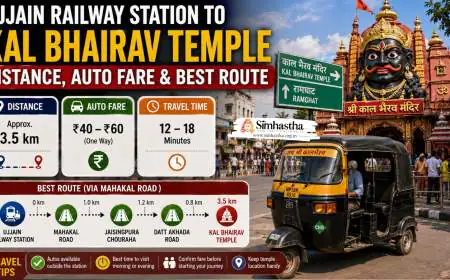
Ujjain Railway Station to Kal Bhairav Temple: Distance, Auto Fare and Best Route

Ujjain Simhastha Update: CM Mohan Yadav Reviews 2028 Works
The 15th Mahadev: Where Authority Meets Austerity
By the time a pilgrim reaches the 15th temple in the Chaurasi Mahadev circuit of Ujjain, something subtle has changed. You have already prayed to Lokpaleshwar (protection from all directions), Kameshwar (purified desires), and Kutumbeshwar (family harmony). Now you encounter Indradyumneshwar – the Mahadev of righteous leadership.
The number 15 in Hindu cosmology carries deep meaning. There are 15 tithis (lunar days) in each fortnight. There are 15 nakshatras (constellations) in the southern arc of the sky. But more relevant here: 15 represents the balance point between the material and the spiritual. A king lives in the material world of wealth, armies, palaces, and politics. Yet King Indradyumna chose to spend years in the Mahakal forest – a wild, untamed place – performing austerities that would humble even the most dedicated sannyasi. That contrast is the soul of this shrine.
I once asked a pujari at Indradyumneshwar Temple: "Why is this temple important for ordinary people? Most of us are not kings." He looked at me with gentle eyes and said, "Beta, every person is a king of their own small kingdom. Your family is your kingdom. Your job is your kingdom. Your decisions affect others. Indradyumneshwar teaches you how to rule your little kingdom without becoming a tyrant."
That stayed with me. Because it is true. Whether you are signing paychecks, making parenting decisions, leading a team meeting, or even just deciding how to spend your Sunday – you are exercising power. And power, without a spiritual anchor, always corrupts. Indradyumneshwar Mahadev is that anchor.
Who Was King Indradyumna? The Devotee Who Refused to Rule Alone
Let me tell you the legend of King Indradyumna – and please, do not dismiss this as mythology. The essence of the story is timeless.
King Indradyumna was a just ruler in ancient India. He was wealthy, powerful, and respected. But unlike many kings, he was deeply troubled by a question: "Am I ruling for myself, or for something greater?" He had seen previous kings – how they started with good intentions but ended as tyrants or victims of their own ego. He did not want that for himself or for his subjects.

So he left his palace. He walked into the Mahakal forest – the same forest that surrounds Mahakaleshwar Jyotirlinga today. There, he performed tapasya (intense spiritual austerity) for years. He fasted. He meditated. He stood in scorching heat and pouring rain. He did not ask for wealth or long life. He asked for one thing: "Lord Shiva, come and reside in a Linga that I will establish. Let me not rule without your presence. Let every decision I make be inspired by you. Let every law I pass be dharma. Let my kingship be your service."
Pleased by his sincerity and humility, Lord Shiva manifested as a Jyotirlinga at that spot. King Indradyumna built a temple around it. And that Linga became known as Indradyumneshwar – the Shiva of Indradyumna.
What makes this story extraordinary is not the miracle. It is the king's choice. He could have prayed for victory in battles, for more land, for an heir. Instead, he prayed for Shiva's company in his duty. He understood that power is not something to be hoarded – it is something to be held on behalf of God. That is the deep teaching of this temple.
The Sacred Verse: A King's Humility in Sanskrit
Here is the devotional verse that has been chanted at Indradyumneshwar Mahadev for centuries. Read it slowly. Feel the weight of a king kneeling before Shiva.
इन्द्रद्युम्नेन राज्ञा च महाकालवने स्थितम्।
तपसा स्थापिता लिङ्गं इन्द्रद्युम्नेश्वरं भजे॥
Now let me break this down in plain, human language.
Indradyumnena rajna cha – "By King Indradyumna." The verse names the devotee before naming the deity. That is rare. Most Sanskrit verses start with the god's name. But here, the king is given the first place. Why? Because his devotion is the door through which we approach Shiva at this shrine.
Mahakalavane sthitam – "established in the Mahakal forest." The same forest that holds Mahakaleshwar. The same energy of timelessness.
Tapasa sthapita lingam – "the Linga established through austerity." Not by money. Not by force. Not by inheritance. By tapasya – the sweat of discipline.
Indradyumneshwaram bhaje – "I worship Indradyumneshwar."
When you chant this verse, you are not just praising Shiva. You are invoking the energy of King Indradyumna – the courage to surrender power, the wisdom to seek guidance, and the humility to know that leadership is service. Chant it 11 times before any important decision – a job offer, a business deal, a family dispute where you have to mediate. You will feel a strange clarity. That is Indradyumneshwar clearing the fog of ego from your mind.
Leadership, Governance, and Responsibility – What This Mahadev Blesses
Let me get practical. You are not a king in the ancient sense. But you are a leader in your own life. Here is how Indradyumneshwar Mahadev blesses different kinds of responsibility.
For Leaders and Managers
If you are a team lead, a department head, a CEO, a politician, or even a small business owner – you carry the weight of other people's livelihoods and well-being. Indradyumneshwar is your patron deity. Pray here for ethical decision-making, freedom from bribery or corruption, and the strength to make unpopular but right choices.
The specific ritual: Offer white flowers (purity) and golden thread (symbolizing responsibility). Tie the thread around your right wrist before a major decision. Keep it until the decision is implemented. Many corporate leaders from Indore and Ujjain secretly visit this temple before board meetings or project launches. They do not talk about it openly. But the temple priests know.
For Parents (The Leaders of the Home)
Parents are the kings and queens of their households. The power you hold over your children is enormous. Indradyumneshwar teaches you to wield that power with gentleness and dharma. Parents who are struggling with teenage rebellion, discipline issues, or education pressure visit this temple to pray: "Lord, help me lead my child, not crush my child."
Offer coconut (broken as a symbol of ego sacrifice) and red flowers (for the energy needed to lead). Then sit for five minutes and mentally ask: "Am I leading with love or with control?" The answer will come from inside. That is Indradyumneshwar speaking through your own conscience.
For Teachers and Mentors
Teachers shape future generations. That is kingship of a different kind. Indradyumneshwar Mahadev is particularly worshipped by gurus, professors, coaches, and instructors who want to inspire rather than intimidate. The prayer here is: "Let my knowledge serve, not dominate. Let my students grow, not depend."
Write your students' names on a betel leaf and place it before the linga. Offer sandalwood paste (cooling, soothing). The priests say that teachers who do this once a month find their students becoming more respectful and receptive – not out of fear, but out of genuine admiration.
For Anyone Facing a Major Life Decision
Even if you hold no official title, you face decisions that affect others. Choosing a career path affects your family's finances. Choosing a life partner affects your future children. Choosing where to invest affects your parents' security. Indradyumneshwar is the Mahadev for conscious decision-making.
The simple practice: Before any major choice, visit this temple (or close your eyes and visualize the linga at home). Light a ghee lamp. Chant the verse 3 times. Then ask aloud: "Indradyumneshwar, what would King Indradyumna do?" Then listen. The answer may come as a gut feeling, a dream, or a sudden memory of something you read. Trust it.
The Spiritual Lesson: Power Purified by Devotion
Now let me take you deeper. Indradyumneshwar Mahadev is not really about becoming a better boss or a better parent – though that is part of it. The core teaching is about the nature of power itself.
In Hindu philosophy, power (shakti) is neutral. It is like electricity. The same current that lights your home can electrocute you. What matters is the conductor through which the power flows. Ego is a poor conductor – it burns everything, including itself. Devotion (bhakti) is a pure conductor – it allows power to flow without destruction.
King Indradyumna understood this. He did not renounce his kingship. He insulated it with devotion. He created a circuit where royal authority flowed through Shiva before reaching his subjects. That is why his kingdom prospered. That is why his name is still remembered – not as a conqueror, but as a humble king.
This applies directly to your life. The power you hold – over your employees, your children, your students, even your younger siblings – is sacred. It is Shiva's energy loaned to you temporarily. If you grasp it as your own, it will corrode your heart. If you offer it back to Shiva while still using it for good, it will purify you.
Indradyumneshwar is the temple where you learn this alchemy. Every time you pray here, you are reminding yourself: "I am not the source of this power. I am only a trustee. Shiva is the true king."
Rituals for Righteous Decision-Making – Traditional and Powerful
Here are the traditional rituals at Indradyumneshwar Mahadev for those seeking leadership blessings and ethical clarity.
At the Temple (Ujjain)
-
Morning Visit – The best time for decision-making prayers is early morning (6-8 AM), when the mind is fresh and less cluttered by daily worries.
-
Jal Abhishek – Pour water over the linga while mentally listing the responsibilities you carry. Do not rush. One responsibility per pour.
-
Bilva Leaves – Offer three leaves – for purity of intention, clarity of thought, and courage of action.
-
Sandalwood Paste – Apply chandan to the linga (or have the priest do it). Sandalwood cools the heat of ego and ambition.
-
White Flowers – Offer white jasmine or white lotus – symbols of transparent governance and selfless service.
-
Chant the Verse – Recite the Indradyumneshwar verse 11 times. After each chant, pause and breathe deeply.
-
Vow of Dharma – Finally, raise your right hand (as in a courtroom oath) and say aloud: "In all my decisions, I will prioritize dharma over convenience. This I vow before Indradyumneshwar." This vow is the most powerful part of the ritual.
At Home (For Daily Leadership Practice)
If you cannot visit Ujjain, keep a small Shivalinga or a photo of Indradyumneshwar on your work desk or home altar. Every morning before starting your work, spend 2 minutes:
-
Light a small diya.
-
Chant the verse once.
-
Look at the linga and ask: "What decision today requires my highest integrity?"
-
Then wait in silence for 10 seconds. The answer will arise.
Do this for 40 days. You will notice that your decision fatigue reduces. Your choices become cleaner. And people around you start trusting you more – because your energy has shifted from controlling to serving.
Best Days and Special Observances
-
Mondays – General Shiva worship. Good for weekly leadership check-ins.
-
Thursdays (Guruvar) – Ruled by Jupiter, the planet of wisdom and righteous authority. Excellent for legal decisions, court cases, or policy making.
-
Dashami (10th day of lunar fortnight) – Associated with victory of dharma over adharma. Powerful for conflict resolution in leadership roles.
-
Vijayadashami (Dussehra) – The day of good's triumph over evil. Many business owners and managers visit Indradyumneshwar before starting new fiscal years or projects.
What NOT to Offer
Do not offer broken items – they symbolize broken trust. Avoid red meat or alcohol (obviously). Also, never pray for power over others – pray for power to serve. The linga will reject prayers that ask to harm rivals or manipulate subordinates. Indradyumneshwar is a dharmic king's god, not a politician's weapon.
A Walk to Indradyumneshwar Mahadev – Location and Darshan Experience
Exact Address:
Indradyumneshwar Mahadev (15/84), Mahakal Forest Area, Ujjain, Madhya Pradesh – 456001
How to Reach
-
From Mahakaleshwar Temple – About a 20-25 minute walk through scenic forest paths. An auto-rickshaw takes 5-7 minutes (₹35-45). Tell the driver "Indradyumneshwar, pandrahwan number" (15th).
-
From Ujjain Railway Station – Auto to Mahakal Van (₹50-60). Then follow the saffron signboards. The temple is well-marked because of the king's story – many tourists ask for it.
-
By Bus – City buses to Nana Kheda stop near the forest entrance. From there, a 10-minute walk. Ask locals for "Raja wala Mahadev" (the king's Mahadev) – that is how they affectionately call Indradyumneshwar.
What You Will See
Indradyumneshwar Temple is modest in size but royal in feel. The Shivalinga is slightly larger than average, and it is made of black stone that shines when milk is poured over it. The yoni (base) has small carvings of crowns and scepters – reminders of the king's devotion.
The temple has a small mandapa (hall) with stone pillars. On one pillar, there is an inscription (in Sanskrit and Hindi) telling the story of King Indradyumna. Even if you cannot read it, stand there and feel the centuries of prayers from leaders who came before you – ministers, generals, village heads, princely state rulers.
Behind the main sanctum, there is a small meditation cave – not a natural cave, but a cell built into the temple wall. This is where King Indradyumna is believed to have meditated. You can sit inside for a few minutes (if there is no queue). The energy is still and grounding. Many visitors report clear answers to their leadership dilemmas after sitting here.
The temple priests are knowledgeable about dharmic governance. If you have a specific ethical question (e.g., "Should I report a corrupt colleague?" or "How to discipline my teenager without anger?"), they can offer scriptural guidance. Do not expect psychoanalysis – but expect solid, time-tested principles.
How King Indradyumna's Story Heals Modern Leadership Burnout
Let me speak about something we rarely discuss: leadership burnout. The loneliness of making hard decisions. The anxiety of being responsible for others. The guilt when you make a mistake and people suffer. The arrogance that creeps in when you succeed.
Indradyumneshwar Mahadev is the antidote to all of that. Because King Indradyumna experienced it all – and he solved it not by working harder, but by surrendering smarter.
He did not give up his kingdom. He gave up his ego about the kingdom. He recognized that real power is not about control – it is about alignment. When you align your will with Shiva's will, something magical happens. You stop forcing outcomes. You start allowing them. You stop fearing failure because you know that Shiva is the true doer. You are just a channel.
This is not escapism. This is strategic surrender. The same way a surgeon surrenders to the body's own healing power while still wielding the scalpel. The same way a teacher surrenders to the student's own curiosity while still guiding the lesson.
Visit Indradyumneshwar when you feel heavy with responsibility. Do not ask for lighter loads. Ask for stronger shoulders – and a heart that remembers that the ultimate king is not you.
The Eternal Crown: What Indradyumneshwar Whispers to Every Leader
When you leave Indradyumneshwar Mahadev Temple, you will carry something more than blessings. You will carry a question in your heart: "Am I ruling my little kingdom like Indradyumna ruled his – with Shiva on the throne and myself as the servant?"
If the answer is yes, you will walk lighter. If the answer is no, you will have work to do. But do not be discouraged. Indradyumneshwar is not a judge. He is a teacher and a companion. He does not demand perfection. He asks for effort. He does not require renunciation. He asks for dedication.
And one day – maybe after many visits, many prayers, many small choices made with integrity – you will realize that you have become the leader you always wanted to be. Not because you conquered others. But because you surrendered your ego to the only true king in this universe – Lord Shiva, in the form of Indradyumneshwar Mahadev.
That is the real kingship. That is the real power. And it is available to everyone – no palace, no crown, no army required. Just a willing heart and a humble walk into the Mahakal forest.
Frequently Asked Questions