
























How Ujjain Influenced Religious Thought Across Centuries
Discover how Ujjain influenced religious thought across centuries—from the Mahakaleshwar Jyotirlinga to Shaivism, Vaishnavism, Buddhism, and Jainism. Explore India's spiritual crossroads.


How Ujjain Influenced Religious Thought Across Centuries
Have you ever stood at a place where time itself was first measured? Where the first meridian of the ancient world passed through, millennia before Greenwich? Where Lord Krishna himself came to study? And where the god of time chose to make his earthly abode? ⏳🕉️
Welcome to Ujjain—known in ancient times as Avantika and Ujjayini—one of the most sacred and intellectually potent cities in human history.
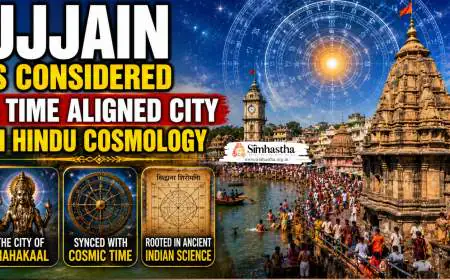
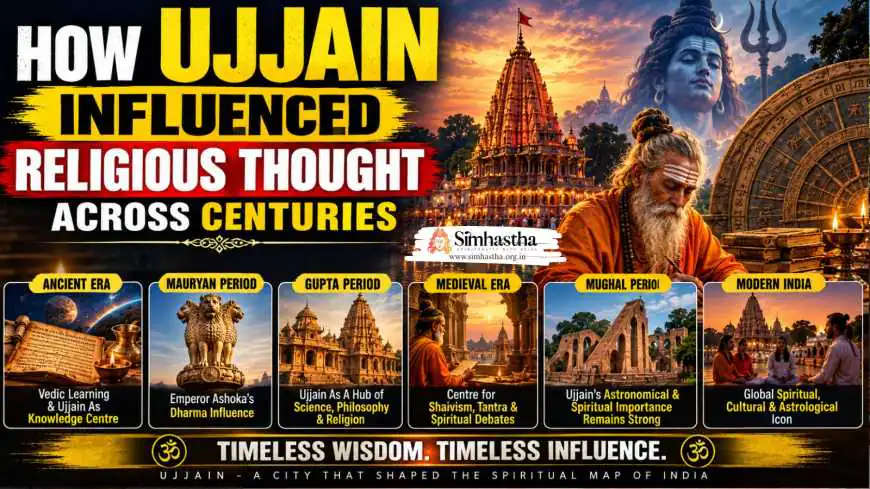
How Ujjain influenced religious thought across centuries is not just a story of temples and rituals. It is the story of how a single city became the crucible where Hinduism, Buddhism, and Jainism converged, competed, and coexisted for over 2,500 years. It is the story of how Shaivism, Vaishnavism, and Shaktism found expression in ways that would shape the spiritual destiny of millions. It is the story of how philosophers, poets, and saints—from Kalidasa to Bhartrihari, from Adi Shankaracharya to Vallabhacharya—drew inspiration from this sacred soil.
Let me take you on a journey through the spiritual and intellectual history of Ujjain—a city that has been described as "the first conscious witness to life's endless cycles of time" . 🌌✨
Trending Guides Now
Why Travel to Ujjain Before the First Snan Is Sacred

What Makes Ujjain Simhastha a Living Spiritual Tradition

Spiritual Importance of Ujjain Simhastha in Sanatan Dharma
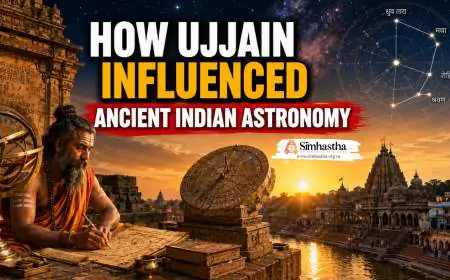
How Ujjain Influenced Ancient Indian Astronomy

Ujjain Railway Station to Mahakaleshwar Temple Distance (2026 Guide)

Ujjain Simhastha 2028 Dates Announced: Full Shahi Snan & Event Timeline
How ISKCON Ujjain Engages Young Devotees Through Programs

Benefits of Becoming a Simhastha Volunteer
🏛️ Avantika: The City of Healing Herbs and Eternal Wisdom
The Name That Holds the Secret
Ujjain was first called Avantika—a name that reveals its ancient purpose. According to tradition, Avantika contained the "vana" or forests of healing herbs gifted to earth . This was not just a poetic description—it was a recognition of the city's role as a place of physical and spiritual healing.
The City That Never Fell
According to the Garuda Purana, Ujjain is one of the seven cities that can provide salvation—the Sapta Moksha Puris. These are the most sacred cities in Hinduism, where dying is believed to release one from the cycle of life and death .
The seven cities are:
-
Ayodhya
-
Mathura
-
Maya (Haridwar)

-
Kashi (Varanasi)
-
Kanchi (Kanchipuram)
-
Avantika (Ujjain)
-
Dwaravati (Dwarka)

"Ayodhya Mathura, Maya, Kashi Kanchi Avantika | Puri, dwaravatiChev Saptetaha: Mokshadayika:"
But here's what makes Ujjain special: as per religious books, this city has never seen destruction, for the god of destruction Mahakal himself resides here .
The Fallen Part of Heaven
The great poet Kalidasa, who lived in Ujjain, described it as "a fallen part of heaven" . This wasn't mere poetic exaggeration—it reflected the belief that Ujjain was a place where the divine and the earthly intersected .
🔱 The Mahakaleshwar Jyotirlinga: Where Time Began
The Lord of Time
At the heart of Ujjain's religious influence is the Mahakaleshwar Jyotirlinga—one of the twelve most sacred shrines of Lord Shiva in India.
Mahakal means "the death of death" and also "time" . It is a richly layered word that also signifies "immortality" and "infinity" .
According to the Skanda Purana and Shiva Purana, the Mahakaleshwar Jyotirlinga is a swayambhu—a self-manifested lingam that derives currents of power from within itself .
The Legend of Mahakal
The story of how Mahakal came to Ujjain is one of the most powerful legends in Hindu mythology.
According to tradition, a demon called Dushan advanced on Ujjain, threatening to destroy the city and its devotees. When Lord Shiva saw Dushan advancing as Kaal (death) on his devotees, he became "Maha Kaal" —the great death—and destroyed Dushan with just one fiery breath .
Lord Shiva graciously agreed to abide forever in Ujjain in his form as Mahakaleshwar, the Lord of Eternity .
The South-Facing Jyotirlinga
Among the twelve Jyotirlingas, Mahakaleshwar is the only one that faces south (Dakshinamukhi) .
This is a unique feature upheld by tantric tradition—it symbolizes Shiva's power over time and death . The south is the direction of Yama, the god of death. By facing south, Mahakal conquers death itself .
The Navel of the Earth
According to Hindu belief, Mahakaleshwar is located at the navel of the earth .
The lingam in heaven and the lingam in the netherworld are believed to be in alignment with earth at Mahakaleshwar. The Mahakaleshwar Jyotirling is thus considered the centre-point of earth .
The Tropic of Cancer Connection
Ujjain is situated exactly on the Tropic of Cancer, which makes Mahakaleshwar the only Jyotirlinga temple in India situated along this latitude .
The sun appears directly overhead during the summers. Back in ancient times, Ujjain was known as a prime meridian for astronomical calculations .
🕉️ The Crossroads of Religions
A Convergence of Faiths
Ujjayinî emerged as a crossroads of convergence of many religions and became India's one of the seven sacred cities .
For centuries, Ujjain has been a center of religion for Hindu, Jain, and Buddhist faiths .
The religious communities of Brahmanism (Shaivism, Vaishnavism, Kapalika, Pasupata, Bhagavata, and other sects), Buddhism, and Jainism interacted through convergence, competition, and contestation within Ujjayinî .
The Avantiksetra Mahatmya
The Avantiksetra Mahatmya of the Skanda Purana highlights Ujjain as a tirtha region .
This text narrates how Lord Shiva happened to visit Ujjain and fell in love with the forest there. He decided to stay, an event that was celebrated by the gods, yakshas, and other divine entities .
The lingas installed by these divine entities collectively make Ujjain a tirtha to be visited by devotees .
🕯️ Shaivism: The Heartbeat of Ujjain
A Dynamic Center of Shaiva Activity
Ujjain was a dynamic center of religious activity, with a particular importance as an early Shaiva center .
The city's Shaiva heritage is reflected in its 84 Mahadevs, 64 Yoginis, 8 Bhairavs, and 6 Vinayakas mentioned in the Skanda Purana .
The Kapalika and Aghora Traditions
Ujjain played a leading role in Bhairava Shaivism .
The city's cremation ground is identified as the site of the first teachings of certain Shaiva traditions .
The Kapalika and Aghora sects—among the most esoteric and misunderstood traditions in Hinduism—found fertile ground in Ujjain. These traditions, known for their transgressive practices aimed at overcoming all dualities, left an indelible mark on the city's spiritual landscape.
The Bhasma Aarti: A Living Tradition
The Bhasma Aarti at Mahakaleshwar Temple is one of the most unique religious practices in India—attracting devotees and spiritual seekers from all over the world .
Worshipping Mahakal grants protection from fear and the cycle of death .
🌸 Vaishnavism and Shaktism: The Complete Divine Picture
The Krishna Connection
No less than Sri Krishna was sent to study here with his brother Balarama at Rishi Sandipani's gurukul .
The Sandipani Ashram remains one of the most sacred sites in Ujjain—a testament to the city's role as a center of intellectual and spiritual attainment .
The Vallabhacharya Tradition
The bhakti sect of Vallabhacharya, founded in the last decade of the fifteenth century AD, has a significant presence in Ujjain .
The Pushtimargiya Vaishnavas have established a detailed account of routine temple life and worship in the city .
The Shakti Peethas
Ujjain is home to two Shakti Peethas—Gadhkalika and Harsiddhi .
According to tradition, Sati's upper lip fell at Ujjain, adding another layer of religious significance .
The Harsiddhi Temple commemorates the site where Sati's elbow is believed to have fallen .
These Shakti Peethas make Ujjain one of the most important centers of Goddess worship in India.
🧘 Buddhism and Jainism: The Ancient Presence
The Buddha's Time
The earliest references to Ujjain, as Ujjaini, are from the time of the Buddha, when it was the capital of the Avanti Kingdom .
Ujjayinî emerged as a crossroads of convergence of many religions—including Buddhism and Jainism—alongside Brahmanical sects .
The Ashoka Connection
In the 2nd century BCE, Ujjain was the seat of the emperor Ashoka, the last of the Mauryan rulers and one of the most influential early Buddhists .
Ashoka's patronage of Buddhism would have had a significant impact on Ujjain's religious landscape, making it a center of Buddhist activity alongside its Hindu traditions.
Jainism's Roots
Jainism was also rooted in Ujjain, and Buddhist monks visited the city .
The primary literary sources discussing Ujjayini include both religious and non-religious literature from Hindu, Buddhist, and Jain traditions .
A Center of Religious Convergence
Throughout history, Ujjayinî emerged as a great centre of religious convergence. Numismatic and epigraphic records corroborate literary evidence, showing the city's role as a melting pot of faiths .
Both Brahmanical religion and Buddhism flourished under the patronage of the state and people .
📜 The Thinkers and Philosophers of Ujjain
Kalidasa: The Poet of Heaven
The great Sanskrit poet Kalidasa is perhaps the most famous figure associated with Ujjain. He was one of the nine jewels in the court of Emperor Vikramaditya .
Kalidasa's works—including Shakuntalam and Meghdut—reflect the spiritual and intellectual ferment of Ujjain .
He praised the beauty of Ujjain and according to him, Ujjain is a fallen part of heaven .
Bhartrihari: The Philosopher King
Bhartrihari—a Hindu philosopher and poet-grammarian—was born in Ujjain around 570 CE and died there in 651 CE .
He authored the Vakyapadiya on the philosophy of language according to the shabdadvaita ("word nondualism") school of Indian philosophy .
After a long struggle with worldly desires, Bhartrihari became a yogi and lived a life of dispassion in a cave in the vicinity of Ujjain until his death .
King Vikramaditya: The Patron of Wisdom
King Vikramaditya made Ujjain his capital. He founded the Vikrama Era of 57 BC .
His court was home to the nine jewels—including Kalidasa—making Ujjain a center of intellectual and spiritual attainment .
Other Great Scholars
Great Scholars of varied fields like Varahmihir, Banabhatta, Rajashekera, Pushpadanta, Shankaracharya, Vallabhacharya, Bhartahari, Diwakar, Kattayayan and Bhas had their association with Ujjain .
Adi Shankaracharya's 24,000-kilometer journey spreading Indian wisdom across the subcontinent included Ujjain .
🔭 The Astronomical and Scientific Legacy
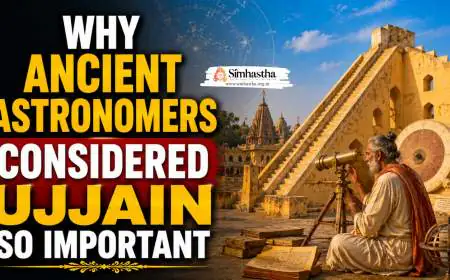
The Prime Meridian of the Ancient World
Time is held to have begun at Ujjain, for it was the prime meridian of the ancient world, millennia before Greenwich .
Ujjain used to be the central point for calculation of Indian time .
The Ujjain panchangam or lunar calendar is still calculated here and followed by millions .
The Intersection of Science and Spirituality
Astrology began and developed in this centrally located city of Mahakaal. Ujjain has provided the system of calculation of time to India and foreign countries .
This natural geographical and astrological importance made Ujjain a unique place where science and spirituality converged .
The Tropic of Cancer
Ujjain's location on the Tropic of Cancer means the sun appears directly overhead during summers .
This geographical positioning, combined with its role as the prime meridian, makes Ujjain a place where the cosmos and the earth align .
🌊 The Kumbh Mela and Simhastha
The Drop of Immortality
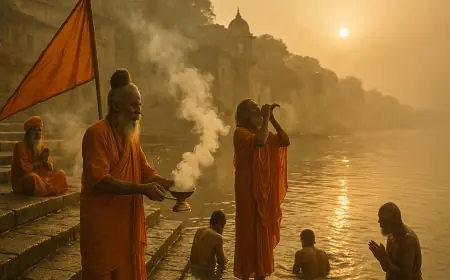
Ujjain is one of the four cities blessed by drops from the chalice holding the nectar of immortality, one of the sites of the Kumbh Mela held here every twelve years .
The Simhastha Kumbh Mela—known as "Simhast" or "Leo in the Ascendant" —takes place when the stars are in alignment .
The Temple Geography
When the stars are in alignment every 12 years for the Kumbh Mela, it is believed the constellations are represented on earth by the city's temple geography .
The Panch Kos or pilgrim circuit of Ujjain takes pilgrims through an energy field of 84 temples .
The Shahi Snan
The 'Shahi Bath' of Simhastha takes place on RamGhat, where Lord Rama himself performed his father's last rites .
🏛️ The Living Tradition: Ujjain Today
The Cultural Renaissance
Today, Ujjain is experiencing a cultural renaissance. Tourist inflow to Ujjain has surged so dramatically that the numbers once seen in a year now arrive in just a week .
Ujjain alone attracted 70 million tourists in recent years .
A Global Spiritual Destination
Union Minister Gajendra Singh Shekhawat hailed Ujjain's spiritual heritage as a beacon for global tourism .
Chief Minister Mohan Yadav noted that Baba Mahakal's divine presence has made Ujjain a global destination symbolising India's living traditions .
The Mahakal Lok Corridor
Projects like the Mahakal Lok Corridor are transforming Ujjain into a model where devotion and development walk together .
A City Built for Spirituality
As ISKCON leader Dhira Gaura Das remarked: "Cities around the world are built with purpose—Las Vegas for entertainment, Mumbai for business and Ujjain for spirituality" .
💫 Final Thoughts: The Eternal City
How Ujjain influenced religious thought across centuries is a story that continues to unfold.
From the self-manifested Jyotirlinga to the Shakti Peethas, from the Buddhist monasteries to the Jain temples, from the Shaiva ascetics to the Vaishnava bhaktas, from the philosophers to the poets—Ujjain has been a crucible of religious thought for over 2,500 years.
It is a place where:
-
Time was first measured
-
The god of time chose to abide
-
Religions converged and coexisted
-
Philosophers found wisdom
-
Poets found inspiration
-
Devotees found liberation
As the Skanda Purana declares, Ujjain is a fallen part of heaven. And for those who visit with an open heart, it still feels that way.
Whether you come as a pilgrim, a scholar, a seeker, or a curious traveler—Ujjain offers something profound: the experience of standing at the center of time, at the crossroads of faiths, at the heart of eternity.
That is the true influence of Ujjain. And it continues to this day. 🕉️🌌🙏
Frequently Asked Questions