


















How Simhastha 2028 Planning Uses Temporary Infrastructure Over Permanent Construction
Discover how Simhastha 2028 uses temporary infrastructure for flexible, cost-efficient, and scalable planning to manage millions of pilgrims safely.

How Simhastha 2028 Planning Uses Temporary Infrastructure Over Permanent Construction
Simhastha 2028 is not being planned as a traditional expansion of Ujjain but as a highly adaptive, time-bound urban system that can rise, function, and dissolve without leaving a permanent burden on the city. The core strategy behind this approach is the extensive use of temporary infrastructure, which allows planners to manage massive pilgrim inflow while preserving long-term urban balance. Unlike conventional infrastructure projects that aim for permanence, Simhastha focuses on efficiency, flexibility, and reversibility.
This shift is not accidental. It reflects a deeper understanding of how large-scale religious gatherings function. The demand during Simhastha is extremely high but also highly temporary. Building permanent infrastructure for such short-lived peaks leads to underutilized assets, wasted resources, and long-term maintenance challenges. By prioritizing temporary infrastructure in Simhastha 2028, planners are ensuring that every investment is aligned with actual usage patterns.
Another key advantage of this model is its ability to adapt in real time. Unlike fixed structures, temporary systems can be modified, expanded, or relocated based on crowd movement, weather conditions, and administrative needs. This flexibility is crucial in an event where unpredictability is a constant factor.
The Strategic Shift from Permanent to Temporary Planning
Traditional urban planning relies heavily on permanent construction. Roads, bridges, buildings, and utilities are designed to last for decades. However, this model does not work efficiently for events like Simhastha, where the scale of demand is temporary and highly concentrated.
Trending Guides Now

Why Simhastha Happens Only When Jupiter Enters Leo ?

Simhastha Kumbh Mela Explained for First-Time Visitors

When Is the Next Simhastha in Ujjain?

How Simhastha 2028 Transport Planning Integrates Rail, Road and Air in One Grid

Ujjain Railway Station to Mahakaleshwar Temple Distance (2026 Guide)

Ujjain Simhastha 2028 Dates Announced: Full Shahi Snan & Event Timeline

Mahakaleshwar to Kal Bhairav Temple: Distance, Auto Fare, Travel Time and Route Options

Ujjain Simhastha 2028 Road Widening Brings Action Against Religious Structures Houses and Shops
The planning approach for Simhastha 2028 infrastructure recognizes this mismatch. Instead of investing heavily in permanent construction, authorities are focusing on systems that can be deployed quickly and removed just as efficiently. This ensures that the city does not carry the burden of unused infrastructure after the event.
This strategy also allows for better allocation of funds. Instead of locking resources into permanent assets that may not be needed later, investment is directed toward high-quality temporary systems that deliver maximum value during the event. This creates a more balanced and sustainable financial model.
Building a Temporary Mega City from Scratch
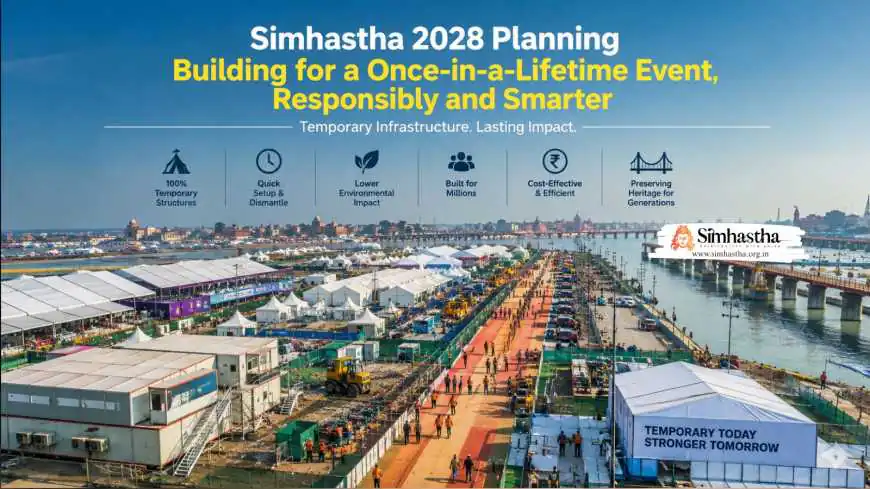
Simhastha is often described as one of the largest temporary cities in the world. Within a short span, an entire urban ecosystem is created to accommodate millions of pilgrims. This includes housing, transportation, water supply, sanitation, electricity, and communication systems.
The concept of a temporary city planning model is central to this process. Every component is designed to function independently yet integrate seamlessly with the overall system. This ensures that the city operates smoothly despite its temporary nature.
What makes this even more remarkable is the speed of execution. Unlike permanent cities that take years to develop, this temporary city is built within months. This requires precise coordination, efficient logistics, and a deep understanding of crowd behavior.
Modular Infrastructure: The Core Design Principle
Modularity is the backbone of temporary infrastructure in Ujjain Simhastha. Instead of building large, fixed structures, planners use standardized units that can be easily assembled, expanded, or dismantled.
These modules include tents, portable toilets, prefabricated bridges, temporary roads, and utility systems. Each unit is designed for quick deployment and flexibility. This allows planners to respond to changing conditions without major disruptions.
The modular approach also improves efficiency. Since components are standardized, they can be reused across different locations and events. This reduces costs and ensures consistency in quality.
Temporary Roads and Dynamic Transport Systems
Transportation during Simhastha is one of the most complex challenges. The sudden surge in population requires a flexible and scalable transport network. Permanent roads alone cannot handle this demand.
This is where temporary road infrastructure Simhastha plays a crucial role. Temporary roads are constructed using materials that allow quick installation and removal. These roads can be adjusted based on traffic patterns and crowd density.
In addition to roads, temporary transport systems include shuttle routes, pedestrian pathways, and dedicated emergency corridors. These systems ensure smooth movement and reduce congestion during peak periods.
Tent Cities: A Scalable Housing Solution
Accommodation for millions of pilgrims is made possible through large-scale tent cities. These are not random clusters of tents but carefully planned urban spaces with organized layouts and essential services.
The concept of tent city planning Ujjain ensures that each zone has access to water, electricity, sanitation, and security. These temporary settlements function like real neighborhoods, providing comfort and safety to pilgrims.
One of the biggest advantages of tent cities is their scalability. As the number of visitors increases, additional units can be added without disrupting the existing setup. Once the event ends, these structures are dismantled, leaving the land free for its original use.
Water Management and Sanitation Systems
Water supply and sanitation are critical components of Simhastha logistics planning. Managing these services for millions requires a system that is both efficient and adaptable.

Temporary pipelines, water storage units, and mobile treatment systems are used to ensure a continuous supply of clean water. At the same time, portable sanitation units are deployed across the city to maintain hygiene standards.
These systems are designed to handle high usage while minimizing environmental impact. After the event, they can be removed without leaving permanent alterations to the landscape.
Power Supply Through Temporary Energy Networks
Providing electricity to a temporary city of this scale is a significant challenge. Instead of expanding permanent power infrastructure, planners use temporary energy networks.
These include mobile substations, temporary transformers, and flexible distribution lines. This approach ensures that power supply is reliable and sufficient for all areas, including ghats, tent cities, and public spaces.
The use of temporary power infrastructure Simhastha also reduces long-term costs and environmental impact, as these systems are removed after the event.
Crowd Management Through Flexible Infrastructure
Crowd management is one of the most critical aspects of Simhastha planning. The use of temporary infrastructure allows authorities to design and redesign spaces based on real-time needs.
Barricades, pathways, entry and exit points, and holding areas can be adjusted to control movement and prevent congestion. This flexibility is essential for ensuring safety during peak bathing days.
The integration of crowd management Simhastha systems with temporary infrastructure creates a responsive and efficient control mechanism.
Environmental Sustainability and Minimal Impact
One of the key reasons for choosing temporary infrastructure is its low environmental impact. Permanent construction often leads to deforestation, land alteration, and long-term ecological damage.
Temporary systems are designed to be reversible. They allow the land to return to its original state after the event. This aligns with sustainable development principles and ensures that Simhastha remains environmentally responsible.
The focus on sustainable infrastructure Kumbh Mela reflects a broader shift toward eco-friendly planning practices.

Cost Efficiency and Resource Optimization
Temporary infrastructure offers significant cost advantages. Since it is used only for the duration of the event, there is no need for long-term maintenance.
Materials used in temporary systems can often be reused, reducing overall costs. This makes Simhastha 2028 infrastructure planning more efficient and financially sustainable.
By avoiding unnecessary permanent construction, authorities can allocate resources more effectively and ensure better returns on investment.
Speed and Scalability in Execution
One of the biggest strengths of temporary infrastructure is its speed. Structures can be installed quickly, allowing the city to be ready within a short timeframe.
Scalability is equally important. If the number of pilgrims increases unexpectedly, additional units can be deployed without major delays. This ensures that the system remains efficient under varying conditions.
The ability to scale quickly makes temporary city infrastructure India an ideal solution for large-scale events.
Integration with Existing Urban Systems
Temporary infrastructure does not operate in isolation. It is designed to integrate seamlessly with Ujjain’s existing systems.
Temporary roads connect with highways, and temporary utilities link with permanent networks. This hybrid approach ensures smooth functioning without overloading the city’s core infrastructure.
The balance between temporary and permanent systems is a key factor in the success of Ujjain Simhastha planning.
Technological Support in Temporary Infrastructure
Technology plays a crucial role in enhancing the efficiency of temporary infrastructure. Tools like GIS mapping, real-time monitoring, and predictive analytics help planners make informed decisions.
These technologies enable better placement of facilities, efficient crowd management, and quick response to emergencies. The integration of technology makes temporary systems smarter and more reliable.
The use of smart infrastructure Simhastha 2028 ensures that planning is data-driven and future-ready.
Challenges and Solutions in Temporary Infrastructure
Despite its advantages, temporary infrastructure comes with challenges. Durability, maintenance, and coordination are key concerns.
Structures must withstand heavy usage and varying weather conditions. Continuous monitoring and maintenance are required to ensure safety and performance.
However, with proper planning and execution, these challenges can be effectively managed, making temporary infrastructure a reliable solution.
A New Model for Future Mega Events
Simhastha 2028 is setting a new benchmark in event planning. By prioritizing temporary infrastructure over permanent construction, it is redefining how large-scale gatherings are managed.
This model offers flexibility, efficiency, and sustainability. It ensures that cities can host massive events without long-term strain on their resources.
The success of this approach is likely to influence future events, making temporary infrastructure planning India a global reference point.
Frequently Asked Questions