Why Simhastha 2028 Requires a City-Scale Transport Command System
Simhastha 2028 is not just a religious gathering. It is a temporary megacity where millions of people move within a limited time across a compact geography. Managing such movement requires far more than roads and vehicles. It demands a system that can think, predict, and respond in real time. A city scale transport command system becomes essential because it transforms scattered traffic into coordinated mobility. Instead of reacting to congestion after it happens, authorities can control flow before pressure builds. This ensures that every route, vehicle, and pedestrian pathway operates as part of one unified system, allowing safe, smooth, and uninterrupted movement across Ujjain.
For Every pilgrims, understanding Simhastha 2028 dates and the official Shahi Snan timeline is essential before booking flights or accommodation, as these sacred dates are completely non-negotiable
Understanding the Scale of Movement in Simhastha
The Simhastha 2028 transport system must handle one of the largest human movements on Earth. On peak days, millions of pilgrims move toward specific locations like ghats and temples within a few hours. Unlike regular cities where traffic is distributed across the day, Simhastha experiences intense time-based surges. This creates pressure points that can quickly lead to congestion if not managed properly. The challenge is not just the number of people but the synchronization of their movement.
Why Traditional Traffic Systems Fail at This Scale
Traditional traffic systems are designed for predictable urban flow. They rely on fixed signals, manual control, and reactive decision-making. In an event like Simhastha, these methods are insufficient. The city scale traffic control Simhastha approach replaces static systems with dynamic control. Instead of waiting for congestion to happen, the system predicts where it will occur and takes preventive action. This shift from reaction to anticipation is critical for managing such a large-scale gathering.
What Is a City-Scale Transport Command System
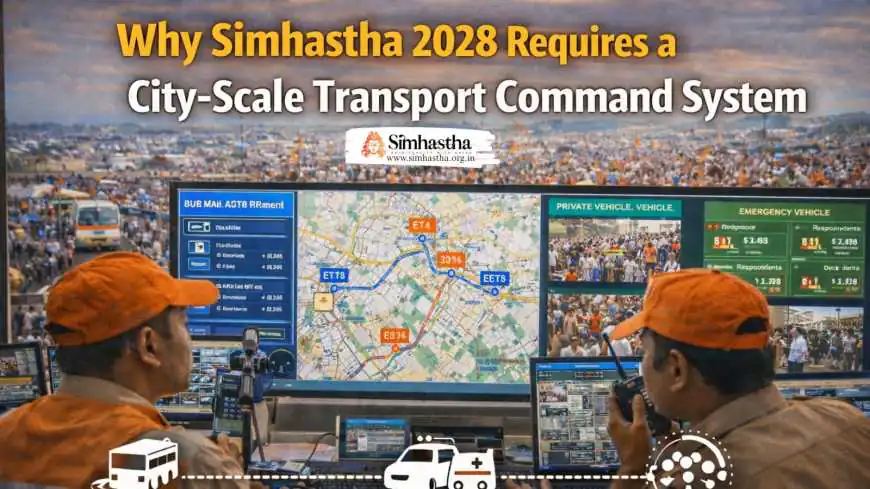
A Ujjain transport command system is a centralized control hub that monitors and manages all transport activities in real time. It connects traffic signals, surveillance systems, GPS-enabled vehicles, and public transport networks into one integrated platform. From a single command center, authorities can observe the entire city’s movement and make immediate decisions. This creates a unified system where every component works together instead of functioning independently.
Real-Time Monitoring as the Core of the System
The strength of a transport command system lies in real-time monitoring. The Ujjain smart traffic management system continuously tracks vehicle movement, pedestrian density, and congestion levels. This live data allows instant decision-making. If a route begins to get crowded, traffic can be diverted immediately. If a zone approaches capacity, entry can be controlled. Real-time visibility ensures that problems are addressed before they escalate.
Integration of Multiple Transport Modes
Simhastha involves a mix of transport modes including buses, private vehicles, emergency services, and pedestrian movement. The integrated transport system Kumbh ensures that all these elements work in coordination. Without integration, different transport modes can interfere with each other, creating bottlenecks. The command system synchronizes these layers so that movement remains smooth and conflict-free.
A first time Simhastha guide is essential because without contextual understanding, pilgrims arrive prepared for devotion but unprepared for logistics, stamina, patience, and adaptability.
Dynamic Route Planning and Traffic Diversion
Routes during Simhastha cannot remain fixed. The Ujjain route management system dynamically adjusts traffic flow based on real-time conditions. This includes changing entry and exit points, creating one-way routes, and diverting vehicles away from congested areas. Dynamic routing ensures that traffic continues to move even during peak pressure, preventing complete standstills.
Managing Peak Day Traffic Surges
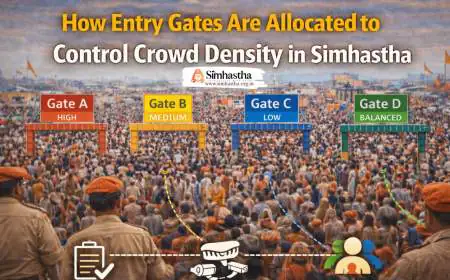
Peak days such as Shahi Snan present the highest challenge. The Simhastha logistics planning system prepares for these days by increasing transport capacity and implementing strict route controls. Entry points are regulated, and movement is staggered to prevent overcrowding. The transport command system ensures that even during the busiest moments, flow remains controlled and manageable.
Also Read | Step-by-Step Guide to Shipra Snan at Ujjain Kumbh Mela
Role of Public Transport in Reducing Congestion
Public transport is the backbone of movement during Simhastha. The public transport Simhastha system includes shuttle buses, dedicated routes, and high-frequency services. By moving large numbers of people efficiently, public transport reduces the number of private vehicles on the road. This significantly lowers congestion and improves overall traffic flow.
Predictive Analytics and Traffic Forecasting
The system uses predictive analytics to anticipate movement patterns. The mass mobility planning India approach analyzes historical data and real-time inputs to forecast where congestion is likely to occur. This allows authorities to take preventive measures such as rerouting traffic or adjusting schedules. Prediction turns uncertainty into planning.
Couples arriving during Ujjain Simhastha should spend their first few hours adjusting to the rhythm of the pilgrimage. Walking slowly through the city allows visitors to absorb the powerful spiritual atmosphere created by the gathering of saints and devotees attending the Ujjain Kumbh Mela.To deepen your understanding of the spiritual customs and sacred rituals practiced during Ujjain Simhastha, read our complete Simhastha rituals and sacred practices guide that explains their meaning, timing, and significance.
Emergency Response and Rapid Coordination
In a gathering of this scale, emergency response must be immediate. The transport command center India ensures that ambulances, police vehicles, and emergency teams have clear and prioritized routes. This coordination allows quick response times and enhances overall safety. Without a centralized system, emergency movement could be delayed by congestion.
Technology Behind the Transport Command System
Technology powers the entire system. The smart mobility Simhastha framework uses IoT sensors, GPS tracking, AI analytics, and centralized dashboards. These technologies provide real-time insights and enable automated decision-making. The result is a system that is not only responsive but also intelligent.
Benefits of a City-Scale Transport Command System
The benefits of this system are significant. The Simhastha 2028 transport system ensures reduced congestion, faster travel times, improved safety, and better coordination. It allows millions of people to move efficiently without overwhelming the city’s infrastructure. This transforms the overall experience for pilgrims.
Challenges in Implementation
Implementing such a system is complex. It requires infrastructure setup, data integration, coordination across departments, and continuous monitoring. Despite these challenges, the advantages make it essential for managing an event of this scale.
Also Read | Best Time to Visit Ujjain Simhastha 2028
Human Coordination Behind the System
Technology alone cannot manage everything. Engineers, traffic personnel, and field teams play a crucial role. They interpret data, manage on-ground situations, and ensure that the system functions smoothly. The human element adds flexibility and responsiveness.
Impact on Future Urban Planning
Simhastha 2028 serves as a model for future urban transport systems. The success of the city scale traffic control Simhastha approach can influence how large cities manage traffic during peak events. It demonstrates the importance of integrated and intelligent transport systems.
When Movement Becomes Coordination
During Simhastha 2028, movement will not feel chaotic. It will feel guided. Every road will seem to know its purpose, every route will carry a balanced flow, and every traveler will move as part of a larger rhythm. The city will not just handle traffic. It will manage it with precision.
A city scale transport command system does not just move people. It organizes millions of journeys into one continuous flow. What appears effortless on the surface is the result of deep planning and real-time intelligence working silently underneath. In that invisible coordination lies the true strength of Simhastha 2028.