
































How Ujjain Is Preparing Public Facilities for 2028
Discover how Ujjain is preparing public facilities for 2028 and the Simhastha Mela. From sanitation and roads to digital infrastructure, see the massive transformation underway for pilgrims.



The Sanitation Revolution That Is Redefining Pilgrimage Comfort
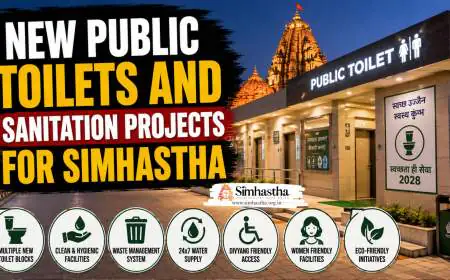
If there is one area where the 2016 Simhastha revealed acute vulnerability, it was sanitation. The images of overwhelmed toilets, blocked drains, and unhygienic conditions in certain Mela sectors became, fairly or not, part of the event's public memory. The administration has responded to that memory with what can only be described as a sanitation revolution. The Simhastha Sanitation Task Force, working with technical consultants who managed the Prayagraj Maha Kumbh sanitation systems, has committed to a zero-open-defecation and zero-visible-waste Mela—not as a slogan but as a contracted, independently audited obligation. The centerpiece of this commitment is the planned installation of 2.5 lakh temporary toilets across the Mela area and the city. These are not the rudimentary pit latrines of past Kumbhs. The new toilets, a significant percentage of which will be bio-digester units developed by the Defence Research and Development Organisation (DRDO) , use bacterial cultures to break down human waste into water and methane, eliminating the need for manual scavenging and dramatically reducing the pathogen load in the environment. Each toilet unit will be geotagged, and a centralized monitoring system will track cleaning frequency, consumable levels, and maintenance requests in real time. An army of 10,000 sanitation workers, trained and equipped by private agencies on performance-linked contracts, will maintain these facilities on rotating shifts, ensuring that no toilet remains uncleaned for more than a short, strictly enforced interval. ✅
The Sewerage and Drainage Backbone Upgrade
Temporary toilets, however effective, cannot compensate for a failing permanent sewerage system. Recognizing this, the Ujjain Municipal Corporation has undertaken a ₹1,200 crore sewerage master plan that is being executed on a war footing. The city's existing sewerage network, designed for a population of six lakhs, is being completely re-laid and expanded to handle the equivalent load of a city five times its size. New sewage treatment plants (STPs) with a combined capacity of 300 MLD (million liters per day) are being constructed at strategic locations along the Shipra's flow. Crucially, these STPs are being designed to tertiary treatment standards, meaning the treated water released back into the Shipra will be clean enough to significantly improve the river's baseline water quality. The drainage network along all major Mela approach roads is being upgraded with wider culverts, automated sluice gates, and backup pumping stations to ensure that even an unseasonal heavy downpour does not result in the waterlogging that plagued certain sectors in 2016. This is unglamorous, underground work, invisible to the pilgrim who walks on a dry, clean road. But it is precisely this invisible work that will determine whether the Simhastha 2028 experience is remembered for its comfort or its chaos.
The Road Network That Will Carry a Hundred Million Pilgrims
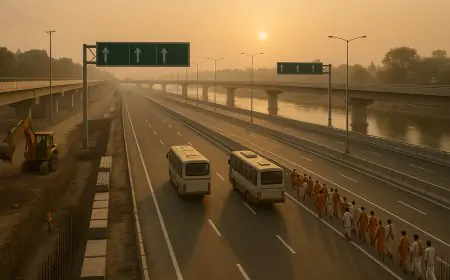
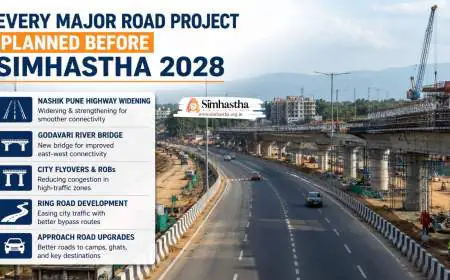
The vehicular and pedestrian load of the Simhastha is, in engineering terms, a nightmare of fluid dynamics that would challenge any city on earth. Ujjain's existing road network, largely organic and narrow in the old city core, was never designed for mass pilgrimage events. The Simhastha Road Network Grid, a ₹3,000 crore-plus project, is the administration's answer to this challenge. Four new ring roads—outer, middle, and two inner connector loops—are being constructed to create concentric circles of traffic management around the Mela area. The Ujjain Eastern Bypass, a 28-kilometer stretch, is the crown jewel of this grid. It will channel all non-pilgrim freight and through traffic completely around the city, eliminating the chaotic intermingling of trucks, pilgrim buses, and local vehicles that paralyzed Ujjain's arteries in 2016. The Ujjain-Indore highway, the primary pilgrim artery from the airport and the major railhead, is being widened to six lanes with dedicated bus corridors. Within the city, the Mahakal Corridor area and the roads leading to the major ghats are being pedestrianized or converted to one-way loops during peak Mela days. The Public Works Department has committed to completing all major road projects by October 2027, giving six months of buffer before the Mela's expected start. 🚆
The Railway and Public Transport Integration
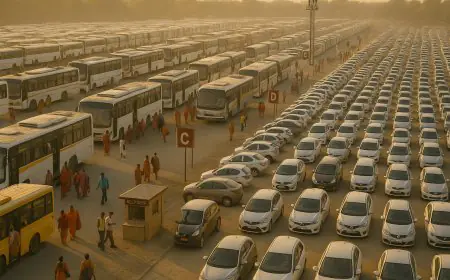
Roads alone cannot move a hundred million people. The Indian Railways, in joint planning sessions with the state government, has committed to transforming Ujjain into a multi-terminal railway hub for the Simhastha period. Ujjain Junction itself is receiving a dramatic capacity upgrade, including eight new platforms, expanded waiting halls with a total holding capacity of 50,000 pilgrims, and dedicated entry and exit gates that separate arriving and departing passenger flows. Two satellite terminals, Chintaman and Vikram Nagar, are being developed to handle the overflow, each with its own parking, bus interchange, and pilgrim holding areas. The railways plan to operate over 500 special trains during the Mela period, with real-time crowd monitoring at originating stations to prevent oversaturation at Ujjain. Within the city, a fleet of 2,000 low-floor electric buses, supplemented by an equal number of temporary shuttle services, will operate on dedicated Mela routes connecting the railway stations, the outer parking lots, and the bathing ghats. The administration is also developing a unified mobility app that will provide real-time information on bus locations, crowd density at various ghats, and suggested routes to minimize congestion. This integration of physical and digital mobility infrastructure is a first for an Indian Kumbh Mela.
Trending Guides Now
How Ujjain’s New Parking Hubs Will Handle Millions During Simhastha 2028

How Ujjain's Transport Network Is Changing Before 2028
New Public Toilets and Sanitation Projects for Simhastha

Ujjain's New Riverfront Plans Before Simhastha 2028

Ujjain Railway Station to Mahakaleshwar Temple Distance (2026 Guide)

Ujjain Simhastha 2028 Dates Announced: Full Shahi Snan & Event Timeline

Benefits of Becoming a Simhastha Volunteer

Local Traditions and Rituals Associated With Bhukhi Mata Ghat
The Shipra Riverfront and the Sacred Water Infrastructure
The Shipra is the spiritual heart of the Simhastha, and ensuring its flow, purity, and accessibility is arguably the single most critical public facility challenge. The Shipra River Trust, working with the National Institute of Hydrology and funded by a special ₹800 crore allocation under the National Mission for Clean Ganga, is executing the Shipra Action Plan 2028. Three new upstream barrages are being constructed to maintain a minimum flow of 500 cusecs during the peak bathing days, ensuring continuous water circulation rather than the stagnant pools that caused concern in 2016. The major bathing ghats, particularly Ram Ghat and the Triveni Sangam area, are being transformed into stepped, amphitheater-like complexes with a combined bathing capacity of over 2 lakh pilgrims at a time. These ghats are being equipped with integrated water treatment systems that will continuously draw in river water, filter and purify it through a rapid sand filtration and UV treatment process, and recirculate it, creating a constantly refreshed bathing environment. The administration has also committed to installing real-time water quality monitoring sensors at every major bathing ghat, with the data displayed on large LED screens, giving pilgrims transparent, scientifically validated assurance of the water's safety. 🛕
The Solid Waste Management Colossus
Ten crore pilgrims generate waste on a scale that is difficult to visualize. The Simhastha Solid Waste Management Plan is a meticulously detailed document that has been reviewed by experts from the IITs and the National Environmental Engineering Research Institute (NEERI) . The plan operates on a fully segregated collection model—wet waste, dry waste, and hazardous waste separated at the source. The Mela area will be dotted with RFID-tagged waste bins that signal collection vehicles when they are approaching capacity. A fleet of 500 compact electric waste collection vehicles will continuously patrol the Mela sectors, transporting waste to 20 temporary material recovery facilities where further segregation and processing will occur. The wet waste will be processed in mobile bio-methanation plants that will generate biogas to fuel some of the Mela's cooking facilities. The dry recyclable waste will be baled and transported to authorized recycling facilities. A unique feature of the plan is the deployment of "plogging squads" —teams of trained volunteers who will walk designated routes, collecting litter while simultaneously serving as pilgrim guides and information points. The entire waste management operation will be monitored through a central control dashboard, and the private concessionaires managing the system will receive full payment only upon meeting independently audited cleanliness benchmarks. This performance-linked payment structure, successfully piloted at the Prayagraj Kumbh, has proven to be a powerful incentive for operational excellence. 🚶
The Drinking Water Grid and Hydration Infrastructure
Dehydration is one of the most common medical complaints during the Kumbh Mela, and ensuring that every pilgrim has access to safe drinking water is a public health priority of the highest order. The Ujjain Municipal Corporation, in partnership with the Public Health Engineering Department, is constructing a dedicated Simhastha drinking water grid that will operate independently of the city's normal supply. The grid will draw water from the Narmada River, transported via the existing Narmada Pipeline Project, and treated at a new 200 MLD water treatment plant on the city's outskirts. From there, a network of 2,000 stand-alone water ATMs, 5,000 tap points, and mobile water tankers will distribute the treated water across the Mela area. Each water ATM will be equipped with a real-time quality sensor and a digital display showing TDS, pH, and chlorine levels. The administration is also encouraging pilgrims to carry their own reusable water bottles, and free refill stations will be placed at regular intervals along all major pilgrim routes. During the peak summer-adjacent periods of the Mela, ORS (Oral Rehydration Salts) distribution kiosks will be set up at every medical post and at high-density congregation points, providing free, life-saving rehydration to pilgrims who may be unaware of the early signs of heat stress. ✅
The Health Infrastructure and Emergency Response System
The medical needs of a temporary city of millions are staggering in their diversity and intensity. The Simhastha Health Services Plan, developed in consultation with AIIMS Bhopal and the WHO India office, envisions a four-tier health infrastructure. At the base level, 120 first-aid posts will be distributed across the Mela area, each staffed by a trained paramedic and equipped with essential medicines, ORS, and basic diagnostic tools. At the second tier, 48 mini-hospitals will be established, each with 30 to 50 beds, a small operating theater for minor emergencies, a labor room for childbirth, and a pharmacy. At the third tier, six sector hospitals with 100 to 200 beds, full diagnostic facilities, and specialist doctors in fields including cardiology, orthopedics, and infectious diseases will serve as referral centers. At the apex, the existing Ujjain District Hospital and the Maharaja Yeshwantrao Hospital in Indore will be upgraded and designated as tertiary referral centers with air ambulance connectivity. The entire health system will be networked through a telemedicine platform that connects the first-aid posts directly to specialists in Bhopal, Indore, and Delhi, allowing for expert consultation at the point of first contact. The 108 emergency ambulance service will deploy 500 additional ambulances for the Mela period, including river ambulances stationed at the major bathing ghats to respond to drowning incidents within seconds. ⚠️
The Digital Infrastructure and the Smart Kumbh
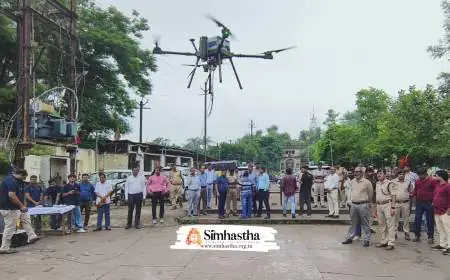
The Simhastha 2028 is being conceived as India's first truly digital Kumbh, with a technological infrastructure that rivals any global mega-event. The nerve center of this digital operation will be the Integrated Command and Control Centre (ICCC) , a facility being custom-built by IIT Indore in collaboration with the state's IT department. The ICCC will process data from over 5,000 CCTV cameras, drone feeds, mobile tower triangulation data, and social media sentiment analysis to generate a real-time, dynamic map of crowd density, movement patterns, and potential risk zones. An AI-powered predictive analytics engine will forecast crowd surges up to six hours in advance, allowing the administration to proactively divert foot traffic, deploy additional resources, and issue alerts through the unified mobility app and the public address system. The ICCC will also integrate the geotagged sanitation database, the water quality monitoring network, the ambulance fleet tracking system, and the RFID-based waste management dashboard into a single, unified operational picture. For the pilgrim, the digital Kumbh will manifest as a unified mobile application that provides real-time navigation, darshan queue lengths, accommodation availability, emergency alerts, lost-and-found registration, and voice-activated assistance in multiple Indian languages. The administration is also working with telecom providers to ensure temporary network capacity augmentation across the Mela area, including deployable cell towers and satellite backhaul, to prevent the network collapses that have plagued previous large gatherings.
The Electricity and Sustainable Energy Infrastructure
A city of tents, lights, medical equipment, water pumps, and communication networks demands an immense and uninterrupted power supply. The Madhya Pradesh Power Management Company, in coordination with the central government, is executing a dedicated Simhastha power infrastructure plan. Two new 220 KV substations are being constructed on the city's periphery, and the existing distribution network within the Mela zone is being completely undergrounded to eliminate the hazard of overhead cables in crowded areas. The Mela area will be illuminated by energy-efficient LED lighting throughout, significantly reducing the power load compared to conventional lighting. In a significant sustainability initiative, the administration is deploying solar power arrays across the Mela area, with a combined generation capacity of 50 MW. These solar installations will power a significant portion of the Mela's lighting and the water pumping stations, reducing the carbon footprint of the event. Backup power will be provided by strategically placed diesel generator sets with automatic failover, ensuring that critical facilities like hospitals, the ICCC, and water treatment plants experience zero downtime. The power infrastructure is being designed with permanent upgrades that will benefit the city long after the Simhastha concludes, improving the reliability and quality of electricity supply for Ujjain's permanent residents.

The Permanent Legacy Beyond the Simhastha
Perhaps the most intelligent aspect of how Ujjain is preparing public facilities for 2028 is the deliberate design philosophy that ensures the Simhastha infrastructure leaves a permanent, positive legacy for the city. The ring roads and bypass will serve Ujjain's growing traffic needs for decades. The expanded sewerage network and the new STPs will permanently improve the Shipra's water quality. The drinking water grid, designed for the Mela's peak load, will eliminate water scarcity in Ujjain's rapidly growing peripheral neighborhoods. The underground electricity cabling in the core Mela zone will enhance safety and reliability year-round. The digital infrastructure, including the fiber optic backbone and the ICCC, will be repurposed as Ujjain's permanent Smart City command center. The ghat improvements, the riverfront development, and the public spaces created for the Mela will become permanent amenities for the city's residents and for the steady stream of pilgrims who visit Ujjain throughout the year, not just during the Simhastha. This is not merely a temporary event overlay; it is a strategic, long-term urban transformation, and Ujjain's residents, along with the millions of pilgrims who will visit in the decades to come, will be its lasting beneficiaries. ✅
The Final Stretch and the Countdown to Readiness
The public facility preparation timeline is aggressive but, by all accounts, on track. The sewerage and drainage upgrades are in their final phases, with completion targeted for mid-2027. The ring road network, with the Eastern Bypass as the critical path, is scheduled for completion by October 2027. The railway upgrades at Ujjain Junction and the satellite terminals are being executed in parallel, with phased commissioning planned through 2027. The temporary infrastructure—the tent cities, the toilet units, the medical posts, the waste collection systems—will begin deployment in early 2028, with full operational readiness expected by February 2028, well before the traditional April-May Simhastha window. The administration has built in a three-month buffer period for testing, simulation, and course correction. Dry runs, mock drills, and crowd simulation exercises are planned for late 2027 and early 2028. The message from the administration is consistent: Ujjain will be ready, not just to accommodate the Simhastha, but to set a new global benchmark for how an ancient pilgrimage city can transform itself to serve the spiritual needs of the modern world without losing its soul. 🔱
Frequently Asked Questions