



















Astrology and Ujjain: Explore Vedh Shala, the Ancient Observatory Where Time and Stars Align
Discover the cosmic heritage of Ujjain through the historic Vedh Shala observatory — India’s ancient center of astrology and timekeeping. Learn how Mahakal’s city still connects faith, science, and the movement of the stars.


Astrology and Ujjain: The City Where Time and Stars Align
Introduction
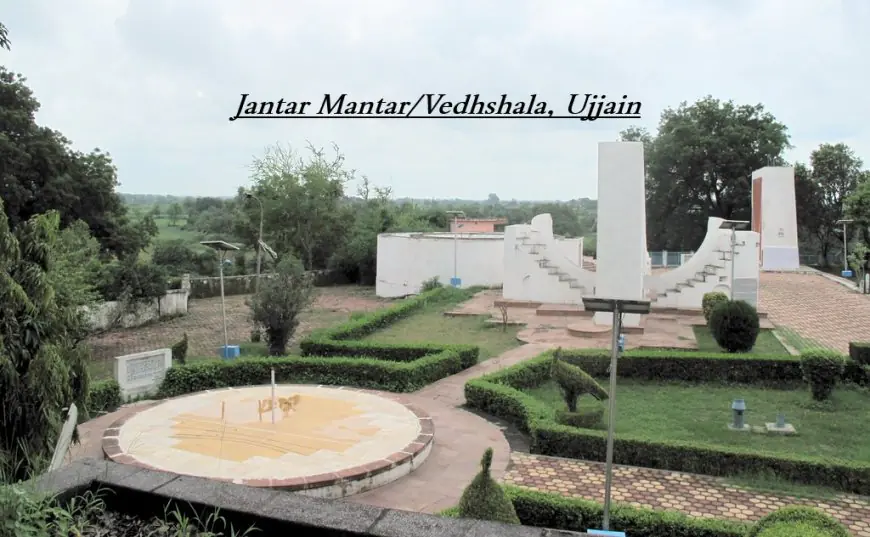
Ujjain — the city that beats to the rhythm of cosmic time — has always been more than a spiritual destination. It’s the epicenter of India’s ancient astronomical wisdom, where faith and science intertwine beautifully. Among its many sacred symbols, one monument silently measures the heavens — the Vedh Shala, also known as the Jantar Mantar of Ujjain.
Built by Maharaja Jai Singh II in the 18th century, this observatory reflects the genius of Indian astronomy and the deep spiritual belief that the universe and human life are connected through time, stars, and destiny. In Ujjain, the sky itself is sacred — and Vedh Shala is its temple.
For Every pilgrims, understanding Simhastha 2028 dates and the official Shahi Snan timeline is essential before booking flights or accommodation, as these sacred dates are completely non-negotiable.
The Cosmic Legacy of Ujjain
Since ancient times, Ujjain has been considered India’s prime meridian — the city where the measurement of time began. It lies on the Tropic of Cancer, making it a perfect spot for celestial observation. Every sunrise, shadow, and star movement recorded here once guided kings, astrologers, and temple rituals.
Trending Guides Now

Senior Citizen Darshan Guide for Mahakaleshwar and Ujjain Temples

Why Every Devotee Should Visit Kal Bhairav Temple in Ujjain – Real Experience

Best Time to Visit Ujjain: For Peaceful Darshan and Comfortable Travel

Women Safety Guide for Ujjain: Travel Smart, Safe and Confident

Ujjain Railway Station to Mahakaleshwar Temple Distance (2026 Guide)

Ujjain Simhastha 2028 Dates Announced: Full Shahi Snan & Event Timeline

Ujjain Simhastha Update: CM Mohan Yadav Reviews 2028 Works

Karkateshwar Mahadev: 22/84 Mahadev of Ujjain
The city’s connection to astrology is so profound that even today, Indian Panchang (Hindu calendar) calculations and astrological charts often use Ujjain’s coordinates as a reference.
The Vedh Shala – A Temple of Time
Standing gracefully on the banks of the Shipra River, Vedh Shala is Ujjain’s window to the stars. It houses massive stone instruments — the Samrat Yantra (sundial), Nadi Valaya Yantra, Digansh Yantra, and Shanku Yantra — each meticulously carved to track the movement of celestial bodies.
When sunlight touches the instruments, shadows shift precisely along engraved scales — revealing the time, planetary angles, and even solstice positions. Watching these shadows move in silence feels like witnessing time itself breathing.
Every instrument here speaks a language of geometry, devotion, and cosmic order — a perfect blend of science and spirituality.
Ujjain: Where Time Becomes Divine
In Hindu philosophy, time (Kaal) is not merely a number — it is sacred energy governed by Lord Mahakal, the eternal destroyer of illusion. Ujjain’s Mahakaleshwar Temple and Vedh Shala together form the spiritual and scientific pillars of this idea.
While Mahakal rules time as a divine force, Vedh Shala measures it as a cosmic pattern. Together, they make Ujjain a living embodiment of Kaal and Karma, where every moment is both a spiritual and astronomical truth.

The City of Astronomers and Astrologers
The echoes of ancient scholars like Varahamihira, one of the Navaratnas in King Vikramaditya’s court, still resonate in Ujjain’s air. His texts like Brihat Samhita and Panchasiddhantika were written right here — centuries before modern observatories existed.
Today, astrologers in Ujjain continue this legacy. Near Mahakal Temple and the city’s old ghats, you’ll find small stalls where priests and scholars interpret planetary movements using age-old manuscripts, not machines. Their calculations often begin with the same principles once measured in Vedh Shala’s courtyard.
The Vedh Shala Experience – Where Science Feels Spiritual
Visiting Vedh Shala isn’t like visiting a typical monument. The place feels alive. As you walk among its towering instruments, you sense a quiet intelligence in the stones. Each arc and shadow reminds you that our ancestors didn’t just worship the stars — they understood them.
Standing there during sunset, with the Shipra River shimmering nearby and the faint bells of Mahakaleshwar Temple ringing in the distance, you realize why Ujjain is called The City Where Time and Stars Align.
The Eternal Harmony
Few places in the world merge astronomy and devotion so seamlessly. Ujjain’s Vedh Shala stands as proof that faith and science were never enemies — they were two lenses to understand the same divine mystery.
Whether you come here as a pilgrim or a learner, you’ll leave with one truth glowing in your heart:
Time is not passing you by — it’s guiding you toward your purpose.
Conclusion
Astrology in Ujjain isn’t just about predicting the future — it’s about connecting to the rhythm of the cosmos. From the Mahakaleshwar Temple’s eternal flame to the ancient shadow lines of Vedh Shala, Ujjain continues to remind humanity that we are all part of the same celestial design.
When you stand under Ujjain’s sky, you don’t just look at the stars —
you look into the timeless wisdom of India itself.
Frequently Asked Questions