




























New Bridges Planned for Simhastha 2028 Explained
Discover the new bridges planned for Simhastha 2028 in Ujjain. Learn how these critical river crossings will decongest the city, manage massive pilgrim flows, and permanently transform the sacred Shipra landscape.



The Shipra's Chokepoint and the Geometry of a Nightmare
To grasp the urgency of the Simhastha 2028 bridge plan, one must first understand the geometry of the existing bottleneck. Ujjain's core pilgrimage zone—The Mahakaleshwar Temple, Ram Ghat, Harsiddhi, and the central bazaars—sits largely on the right bank of the Shipra. The left bank, however, is home to critical infrastructure: the railway station, the expanding bus terminals, and vast tracts of land designated for the Mela's temporary tent cities and parking plazas. During the 2016 Simhastha, the city had effectively two functional road bridges serving this central zone: the old, narrow bridge near Ram Ghat and the slightly wider one at Triveni. On the Shahi Snan days, these bridges became human logjams. Pilgrims, vehicles, sadhu processions, and emergency services all attempted to funnel through these same constricted points, leading to hours-long deadlocks, immense physical strain on the elderly, and a genuine, palpable risk of crowd crush. The administration's post-2016 analysis was unequivocal: the city's bridge capacity had to be multiplied by a factor of at least three before 2028. The result is the most ambitious river-crossing construction programme in Ujjain's modern history. 🚶
The Eastern Bypass Bridge and the Great Traffic Divorce
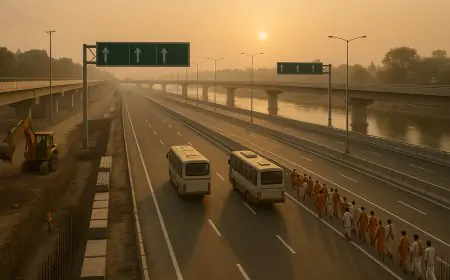
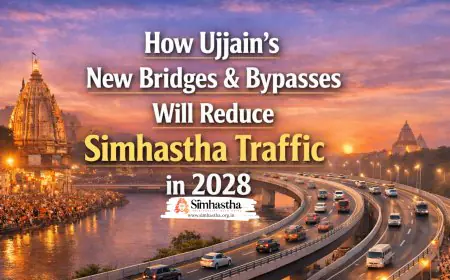
The flagship of the new bridge projects is the Eastern Bypass Bridge, a 1.2-kilometer, six-lane mega-structure that forms the critical river-crossing component of the 28-kilometer Ujjain Eastern Bypass. This bridge is not primarily for pilgrims on foot; it is the great traffic divorce decree. Its function is to intercept all non-pilgrim, long-haul freight, and through-traffic on the highways and whisk it around the city, completely bypassing the congested urban core and, crucially, crossing the Shipra far downstream of the sacred ghats.
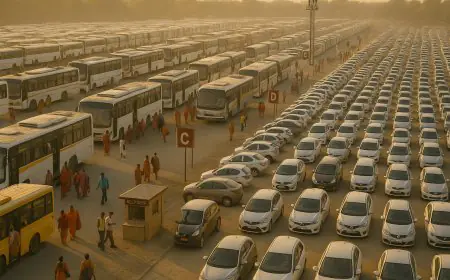
This single bridge solves multiple problems at once. It removes thousands of trucks and inter-city buses from the city's internal roads, freeing up capacity for Mela shuttle buses and emergency vehicles. It provides an alternative river crossing for vehicles traveling between Indore and the northern districts, completely eliminating their need to enter the Mela zone. The bridge itself is being designed with high load-bearing capacity to accommodate the heavy freight traffic it will carry long after the Mela is over. Its construction is being executed on a war footing, with a target completion date in mid-2027, a full year before the Simhastha. For the pilgrim arriving by road from Indore, the Eastern Bypass Bridge means that their bus will glide around the periphery of the city, smoothly cross the river, and deposit them at the new satellite parking lots, from where they will take shuttle buses or walk across dedicated pedestrian bridges into the Mela zone. The experience will be immeasurably calmer, safer, and faster. 🚆
The Triveni Pedestrian Bridge and a Moving River of Faith
If the Eastern Bypass Bridge is the utilitarian workhorse, the Triveni Pedestrian Bridge is the poetic centerpiece of the new Shipra crossings. Planned for a location near the sacred Triveni Ghat, this will be a wide, architecturally significant footbridge designed exclusively for the tidal flow of pilgrims between the main bathing ghats and the tent cities on the opposite bank. The bridge is being envisioned not just as a transport link but as a linear public space, a "moving river of faith" that flows above the actual river.
Trending Guides Now
Every Major Road Project Planned Before Simhastha 2028
How Ujjain’s New Bridges & Bypasses Will Reduce Simhastha Traffic in 2028
How Smart City Projects Are Reshaping Ujjain
Farmers Win, Township Plan Falls: How Simhastha 2028’s Mega-City Scheme Was Scrapped in Ujjain

Ujjain Railway Station to Mahakaleshwar Temple Distance (2026 Guide)

Ujjain Simhastha 2028 Dates Announced: Full Shahi Snan & Event Timeline

Ujjain Travel During Shravan Month: What Changes for Visitors
Latest Simhastha 2028 Development Projects Every Pilgrim Should Know
The design incorporates several critical features. It will be wide enough—at least 15 to 20 meters—to accommodate a dense but orderly flow of pedestrians, with separate lanes for inbound and outbound pilgrim traffic to prevent the chaotic bidirectional crushes that characterize narrow bridges. It will be a zero-vehicle zone, completely free of the honking, the exhaust, and the danger of mixing pilgrims with motorbikes and autos. The bridge will have a series of small, shaded viewing platforms that extend slightly over the water, allowing pilgrims to pause, pray, and gaze at the river without obstructing the main flow. The structural design is being integrated with the stepped ghats on either side, so pilgrims will step directly from the riverbank onto the bridge and vice versa. During the Shahi Snan, the Triveni Pedestrian Bridge will be the primary conduit for millions of pilgrims, and its success will be measured not in traffic statistics but in the absence of the terrified screams that have haunted past Kumbh bottlenecks. It is a bridge designed, above all, for dignity and safety. 🛕
The Four-Lane Shipra Bridge at Narsingh Ghat and the Western Relief Valve
The Narsingh Ghat Four-Lane Bridge is the third major component of the new river-crossing network. Located in the relatively quieter western stretch of the city, near the secluded Narsingh Ghat, this bridge is designed to serve as the primary vehicular and pedestrian relief valve for the central zone. It will connect the newly developed residential and commercial areas on the western periphery directly to the Mela zone, spreading the pilgrim load across multiple crossing points rather than concentrating it at Ram Ghat and Triveni.
This bridge is a four-lane, mixed-use structure that will carry both shuttle buses and a designated, barricaded pedestrian walkway. Its strategic importance lies in its ability to serve pilgrims arriving from the western districts and those who are accommodated in the vast new homestay zones being developed in Ujjain's western neighbourhoods. For the local population, the Narsingh Ghat Bridge is a permanent gift; it will slash commute times and open up new economic corridors that were previously isolated by the river. Construction of this bridge is being closely coordinated with the Narsingh Ghat area development plan, which includes the beautification of the ghat, the construction of amenities for pilgrims, and the integration of the bridge with the city's expanding road network. The bridge is scheduled for completion by late 2027, and it represents a deliberate strategy to decongest the historic city centre by creating new, attractive crossing points that pull pilgrims and traffic toward the west. ✅
Railway Overbridges and the Separation of Steel Wheels and Holy Feet
A significant, though often overlooked, component of the new bridges planned for Simhastha 2028 are the railway overbridges being constructed at critical rail-road intersections. The expansion of Ujjain Junction and the development of satellite railway terminals at Chintaman and Vikram Nagar mean that the rail network will be pumping pilgrims into the city at an unprecedented rate. Each train will disgorge thousands of passengers, many of whom will need to cross railway tracks or major roads immediately upon arrival.
To prevent the deadly intermingling of pilgrims with moving trains and highway traffic, the plan includes at least two major new road overbridges (ROBs) and several foot overbridges (FOBs) at key points. A large ROB is planned near the Vikram Nagar terminal, designed to carry shuttle buses and pedestrians over a complex intersection of railway lines and approach roads. The existing foot overbridge at Ujjain Junction is being replaced and expanded with multiple, wider spans equipped with escalators and ramps for the elderly. These bridges, while lacking the visual glamour of a river crossing, are arguably the most critical safety infrastructure of the entire Simhastha. A stampede at a railway crossing is a historically recurrent nightmare, and these overbridges are the physical, engineered barriers standing between a massive crowd and a massive tragedy. Their completion is non-negotiable, and the railway and state authorities are under immense pressure to finish them well before the first special train arrives. 🚂
The Eco-Sensitive Design and the Sacred Riverfront
The construction of new bridges across a sacred river like the Shipra is not a purely engineering exercise; it is an act of environmental and spiritual negotiation. The Shipra Action Plan 2028, which governs all river-related infrastructure, imposes strict conditions on how these bridges are built. The bridge piers are being designed to minimize obstruction to the river's flow, a critical consideration given the new upstream barrages that will maintain a steady 500-cusec flow during the Mela. The construction schedules are being managed around the monsoon and the winter migratory bird season. The lighting of the bridges, particularly the Triveni Pedestrian Bridge, is being designed to be warm, low-intensity, and non-intrusive, so as not to disturb the river's ecology or the spiritual ambiance of the ghats. The bridge designs are being reviewed to ensure they are visually harmonious with the sacred landscape, avoiding the brutalist concrete aesthetic in favour of stone cladding and architectural motifs that echo the Maratha and Malwa styles of Ujjain's temples. The eco-sensitive design is not a bureaucratic afterthought; it is a fundamental requirement driven by the understanding that the Shipra is not merely a body of water to be crossed but a living goddess to be honoured. These bridges must, in their own way, become offerings to the river, not scars upon her body. 🌿

Project Timelines and the Countdown to Completion
The bridge construction programme for Simhastha 2028 is governed by a merciless, immovable deadline. The administration has built a three-month buffer into the schedule, with all major bridge projects slated for completion by October 2027. This will allow for testing, load trials, and the inevitable last-minute snag-fixing before the city transitions into full Mela mode in early 2028. The Eastern Bypass Bridge, being the largest and most complex, is on a parallel fast-track with dedicated funding and a streamlined clearance process through the Simhastha Special Purpose Vehicle (SPV) . The Triveni Pedestrian Bridge, being less complex structurally but more delicate in its design and ghat integration, is slightly ahead of schedule, with completion expected by mid-2027. The Narsingh Ghat Bridge and the railway overbridges are being executed in phases, with the road bridges slated for completion by late 2027 and the foot overbridges at the railway stations by early 2027. Regular public updates on the Simhastha Project Dashboard will allow pilgrims and citizens to track the progress of each bridge in real time. The transparency is deliberate; the administration knows that the public's confidence in the Mela's safety depends, in large measure, on their seeing these bridges rise, on time, out of the Shipra's waters. ⏰
Impact on Pilgrim Movement and the New Geography of Darshan
The combined effect of these new Shipra bridges will be to fundamentally redraw the pilgrim's experience of the Simhastha. The current linear, constricted funnel that forces every human being through one of two central chokepoints will be replaced by a distributed network of crossings. A pilgrim arriving from the Indore side will cross the river almost without noticing it, their vehicle already on the correct bank thanks to the Eastern Bypass Bridge. A pilgrim staying in a western homestay will walk to the Narsingh Ghat Bridge and cross the river in a calm, twenty-minute stroll, joining the Mela from a new, less congested entry point. The millions who arrive by train at the satellite terminals will cross the tracks and roads on dedicated, safe overbridges, their first steps on Ujjain soil not a panicked dash through honking traffic but a structured, signposted walk. The Triveni Pedestrian Bridge will become an attraction in itself, a place where pilgrims pause to look down at the sacred waters below, to sing a bhajan, to feel the collective heartbeat of the Mela without the terror of being trampled. The new bridges are not just about getting from Point A to Point B; they are about restoring a sense of peace and control to a journey that, in the past, could feel like a descent into chaos. They will allow the pilgrim to focus on the divine rather than on survival. 🙏
The Permanent Legacy and a City No Longer Divided
Long after the last tent is struck and the last pilgrim has boarded a train home, the Simhastha 2028 bridges will remain, silently transforming Ujjain from a city divided by its sacred river into a city united by its crossings. The Eastern Bypass Bridge will become a permanent part of the national highway grid, a daily lifeline for commerce and travel that will shave hours off journey times. The Narsingh Ghat Bridge will open up the western bank for residential and commercial development, creating new neighbourhoods and economic opportunities that will employ Ujjain's growing population for generations. The railway overbridges will save lives every single day, separating schoolchildren walking to school from the trains that thunder through the city. The Triveni Pedestrian Bridge will become a beloved public space, a place for evening walks, for quiet contemplation, and for the smaller, year-round pilgrimages that sustain Ujjain's spiritual identity between the great twelve-yearly gatherings. These bridges are the most tangible, lasting evidence that the Simhastha is not a temporary burden on the city but a permanent catalyst for its elevation. The money spent, the concrete poured, and the steel erected will serve the citizens of Ujjain for a hundred years, a silent, sturdy tribute to the foresight of a government and the faith of a people who understood that the path to the divine must be as safe and as dignified as the divine itself. 🔱
Frequently Asked Questions