

















How Crowd Density Is Calculated During Simhastha 2028 ?
Crowd safety at Simhastha depends on precise planning. This simple guide explains how crowd density is calculated during Simhastha 2028, what factors authorities monitor, and how these calculations help keep millions of pilgrims safe.


How Crowd Density Is Calculated During Simhastha
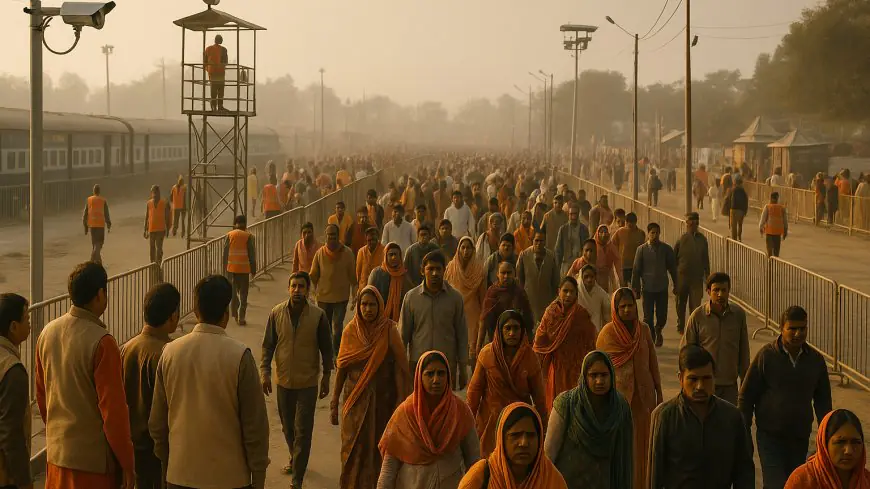
Crowd density during Simhastha 2028 is calculated using people-per-square-meter analysis, combined with real-time surveillance data, AI-based monitoring systems, and zonal capacity limits. Authorities measure how many individuals occupy a defined area and compare it with safe thresholds to manage crowd flow, prevent overcrowding, and ensure pilgrim safety. This data-driven approach allows dynamic control of entry routes, walking corridors, and ghat access during peak days.
At Simhastha 2028 in Ujjain, what looks like a flowing ocean of humanity is actually guided by an invisible grid of numbers. Every step a pilgrim takes is quietly supported by mathematical models, spatial mapping, and real-time decision systems working in the background.
The goal is simple but critical, keep movement safe without interrupting the spiritual experience. To achieve this, authorities rely heavily on crowd density calculation, a method that transforms human movement into measurable, manageable data.
For Every pilgrims, understanding Simhastha 2028 dates and the official Shahi Snan timeline is essential before booking flights or accommodation, as these sacred dates are completely non-negotiable.
Trending Guides Now

How Sector-Based Movement Will Control Crore-Level Crowds in Simhastha 2028
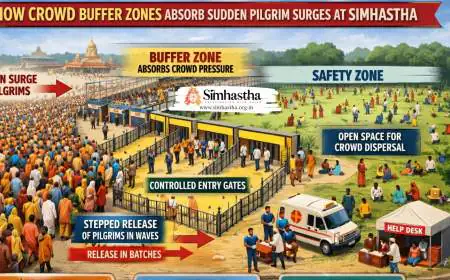
How Crowd Buffer Zones Absorb Sudden Pilgrim Surges at Simhastha
Kshipra Riverfront Zones: What Pilgrims Must Know for Simhastha 2028

Why Residential Zones and Ritual Zones Are Kept Separate in Simhastha 2028

Ujjain Railway Station to Mahakaleshwar Temple Distance (2026 Guide)

Ujjain Simhastha 2028 Dates Announced: Full Shahi Snan & Event Timeline

Ujjain Simhastha Update: CM Mohan Yadav Reviews 2028 Works

Karkateshwar Mahadev: 22/84 Mahadev of Ujjain
The Core Formula: People Per Square Meter
At the heart of crowd density management is a simple calculation:
- Low density: 1–2 persons per square meter (comfortable movement)
- Moderate density: 3–4 persons per square meter (slow but manageable)
- High density: 5–6+ persons per square meter (restricted movement, risk zone)
Every zone and sector in Simhastha 2028 is assigned a maximum safe capacity based on this metric. Once the threshold is approached, entry is slowed or temporarily stopped.
How Data Is Collected
Authorities use multiple layers of monitoring:
1. CCTV & Drone Surveillance
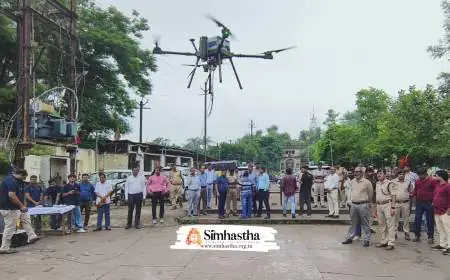
- Continuous visual tracking of crowd clusters
- Identification of high-density pockets in real time
2. AI-Based Crowd Analytics
- Software analyzes movement speed, direction, and accumulation
- Predicts congestion points before they become dangerous
3. Ground Sensors & Manual Reporting
- On-ground teams report crowd pressure levels
- Integrated into central command systems
Zonal Capacity Planning
Each Simhastha zone is pre-calculated based on:
- Available area size
- Number of entry and exit points
- Walking corridor width
- Emergency evacuation capacity
This ensures that even during Shahi Snan days, movement remains controlled and directional.
Real-Time Control Measures
When crowd density increases:

- Entry routes are temporarily diverted
- Pilgrims are redirected to alternate ghats
- Holding areas are activated
- Announcements guide movement through safe corridors
These actions may feel restrictive, but they are based on precise density calculations.
What Is Crowd Density and Why It Matters
Crowd density refers to the number of people present within a defined physical area. It is usually measured as people per square meter.
At Simhastha, crowd density matters because:
-
High density restricts movement
-
Sudden stops increase pressure
-
Panic spreads faster in packed spaces
Keeping density within safe limits is the foundation of stampede prevention.
The Safe Crowd Density Threshold
Globally accepted safety standards identify:
-
1–2 persons per square meter: Comfortable movement
-
3–4 persons per square meter: Controlled but slow movement
-
5+ persons per square meter: High risk zone
Simhastha planners aim to keep most public areas below 3 persons per square meter, even on Shahi Snan days.
How Authorities Estimate Expected Footfall
Before Simhastha begins, planners study:
-
Previous Simhastha attendance data
-
Population growth trends
-
Train and bus reservation patterns
-
Accommodation capacity
-
Festival calendar overlaps
These inputs help estimate daily and hourly footfall, not just total visitors.
To deepen your understanding of the spiritual customs and sacred rituals practiced during Ujjain Simhastha, read our complete Simhastha rituals and sacred practices guide that explains their meaning, timing, and significance.
Dividing the Mela Area Into Measurable Units
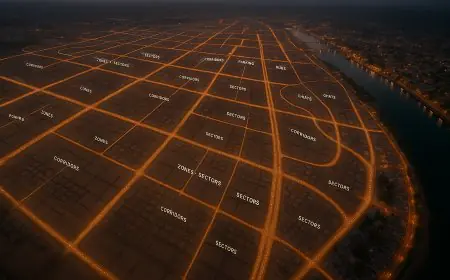
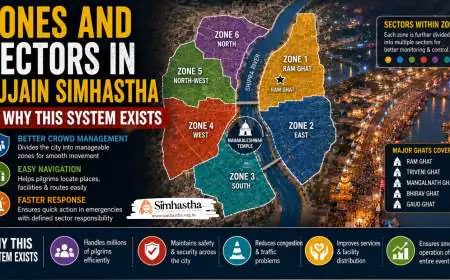
Instead of treating Simhastha as one massive ground, authorities divide it into:
-
Sectors
-
Sub-sectors
-
Corridors
-
Holding zones
Each unit has a known surface area, allowing precise calculation of how many people it can safely hold at one time.
People Per Square Meter Formula
At its simplest level, crowd density is calculated as:
Number of people ÷ Available area
For example:
-
A 1,000 square meter ghat section
-
Safe capacity at 3 persons per square meter
-
Maximum safe occupancy: 3,000 people
Once this limit is reached, entry is paused automatically.
Real-Time Crowd Counting Methods
During Simhastha, density is not guessed. It is measured continuously using multiple systems:
-
CCTV camera feeds
-
Drone-based aerial observation
-
Entry and exit counters
-
Footfall sensors in corridors
These systems feed data into centralized monitoring rooms.
first time Simhastha guide is essential because without contextual understanding, pilgrims arrive prepared for devotion but unprepared for logistics, stamina, patience, and adaptability.
Role of the Control Room
A central control room monitors:
-
Live crowd density heat zones
-
Speed of movement
-
Entry–exit imbalance
-
Sudden congregation points
When density approaches unsafe levels, sector officers receive immediate instructions to:
-
Halt entry
-
Divert flow
-
Open holding areas
Why Holding Areas Are Used
Holding areas act as pressure valves.
Instead of allowing crowd buildup near ghats:
-
Pilgrims are temporarily paused
-
Density is reduced downstream
-
Movement resumes in controlled batches
This method prevents sudden surges.
Density Calculation on Shahi Snan Days
On Shahi Snan days:
-
Acceptable density thresholds are lowered
-
More space is reserved per pilgrim
-
Movement windows are shortened
This conservative approach prioritizes safety over speed.
Also Read | Best Time to Visit Ujjain Simhastha 2028
Why Walking Speed Matters
Density calculations also consider walking speed:
-
Faster movement reduces pressure
-
Sudden stops increase risk
That is why:
-
Sitting in corridors is restricted
-
Standing near entry points is discouraged
-
Continuous slow walking is encouraged
How Volunteers Support Density Control
Volunteers are trained to:
-
Prevent stopping in corridors
-
Redirect pilgrims calmly
-
Identify congestion early
-
Communicate instructions clearly
Human observation complements technology.
Why Visitors Should Respect Density Rules
Ignoring instructions can:
-
Raise density suddenly
-
Trigger flow imbalance
-
Affect thousands beyond one location
Crowd safety at Simhastha depends as much on individual discipline as on administration.
Also Read | Step-by-Step Guide to Shipra Snan at Ujjain Kumbh Mela
Lessons Learned From Past Simhasthas
Over decades, planners have refined density models by studying:
-
Near-miss incidents
-
Weather effects
-
River level changes
-
Peak arrival timings
Each Simhastha improves the next.
Why Simhastha Appears Slow but Is Actually Safe
Many first-time visitors feel movement is slow. This is intentional.
Slow movement:
-
Keeps density predictable
-
Prevents panic
-
Protects vulnerable pilgrims
Speed is sacrificed to ensure safety.
What Crowd Density Planning Teaches Us
Beyond logistics, density planning reflects a deeper principle:
-
Space is shared responsibility
-
Safety is collective discipline
-
Patience protects life
Simhastha’s success depends on millions cooperating with an unseen system.
Also Read | Common Simhastha Mistakes Visitors Must Avoid
You May Also Like:
- How Crowd Density Is Calculated During Simhastha 2028 ?
- Why is Ujjain Kumbh Called Simhastha?
- Who Are the Naga Sadhus of Simhastha 2028? Discipline, Rituals & Mystical Identity Revealed
- The Untold Reason Naga Sadhus Lead the First Shahi Snan at Simhastha 2028
- Why is Kumbh Mela Celebrated? Origin Story, History & Spiritual Significance
- Top 10 Routes to Enter Ujjain During Simhastha 2028 Without Traffic Hassles
- How Ujjain’s New Parking Hubs Will Handle Millions During Simhastha 2028
- Expected Zones & Sectors of Simhastha 2028: A First Look at Ujjain’s Massive Layout
- inside Ujjain’s Mega Tent City: What Pilgrims Can Expect at Simhastha 2028
Frequently Asked Questions