

















Zones And Sectors In Ujjain Simhastha & Why This System Exists
Understand how zones and sectors shape crowd safety, rituals, and planning at Simhastha, and why this system is essential for managing the Ujjain Kumbh Mela.



Zones and Sectors in Simhastha & Why This System Exists
When pilgrims first hear about zones and sectors at Simhastha, it often sounds administrative, technical, or even restrictive. Many assume these divisions exist only to control movement or enforce rules. In reality, the zoning system is the invisible framework that allows Simhastha Kumbh Mela to exist at all.
Without zones and sectors, Ujjain Simhastha would not be a spiritual gathering. It would collapse into chaos.
Every twelve years, the Ujjain Kumbh Mela transforms an ancient city into a temporary settlement larger than many modern metros. During Simhastha 2028, the expected footfall runs into several crores of pilgrims, saints, Akharas, volunteers, and officials. This scale is not symbolic; it is logistical reality. Managing such density requires a structure that is spiritual in intention and scientific in execution.
That structure is the zone and sector system of Simhastha.
Trending Guides Now

How Sector-Based Crowd Flow Works in Simhastha: A Simple Guide for First-Time Visitors
Why Simhastha Zones Are Reconfigured Between Major Snan Days
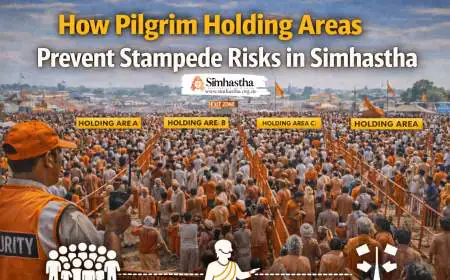
How Pilgrim Holding Areas Prevent Stampede Risks in Simhastha

How Crowd Density Is Calculated During Simhastha 2028 ?

Ujjain Railway Station to Mahakaleshwar Temple Distance (2026 Guide)

Ujjain Simhastha 2028 Dates Announced: Full Shahi Snan & Event Timeline

Ujjain Simhastha Update: CM Mohan Yadav Reviews 2028 Works

Karkateshwar Mahadev: 22/84 Mahadev of Ujjain
This article explains not just how the system works, but why it exists, why it cannot be removed, and why pilgrims benefit from understanding it. This is the foundational logic behind crowd safety, ritual discipline, emergency response, and spiritual order at Simhastha Kumbh Mela.
Why Simhastha Needs a City-Scale Planning System
Unlike permanent cities, Simhastha creates a fully functional urban ecosystem from scratch. Roads, bridges, hospitals, sanitation, water supply, electricity, food systems, and security networks are all temporary, yet they must perform under extreme pressure.
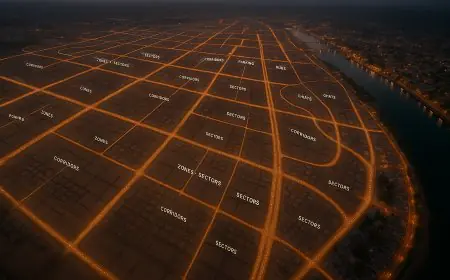
The Simhastha city is not built randomly around the Kshipra River. It is designed as a controlled spiritual landscape, where movement, rituals, and residence must coexist without conflict. This is why Ujjain Simhastha follows a hierarchical planning model rather than organic sprawl.
At the highest level, the land is divided into zones.
Within each zone, the area is further divided into sectors.
This layered division ensures that no single space becomes overloaded, no ritual interferes with another, and no emergency response is delayed due to confusion.
For first-time visitors, knowing the confirmed schedule is essential before planning travel and accommodation. The official dates announced for Ujjain Simhastha 2028 clearly define the start, peak bathing period, and closing timeline of the event, helping pilgrims align their visit with important ritual days.

What Is a Zone in Simhastha?
A zone in Simhastha Kumbh Mela is a large, purpose-driven area designed for a specific function. Zones are not arbitrary boundaries; they are operational ecosystems.
Each zone typically serves one dominant role, such as:
-
Bathing and river access
-
Akhara settlements
-
Pilgrim residential camps
-
Administrative and security operations
-
Mobility and parking control
In Ujjain Simhastha, zones are planned months, sometimes years, in advance. Authorities study river flow, land elevation, historical crowd data, ritual calendars, and emergency access routes before finalizing zone boundaries.
Once established, a zone becomes a semi-independent unit with its own:
-
Command structure
-
Crowd capacity limit
-
Medical and sanitation coverage
-
Entry and exit corridors
This ensures that pressure in one zone does not destabilize the entire Simhastha city.
Also Read | Expected Zones & Sectors of Simhastha 2028
Why Zones Are Essential at Simhastha Kumbh Mela
The primary reason zones exist is risk isolation.
At Simhastha 2028, millions may arrive on the same day for Shahi Snan. If all pilgrims moved freely without spatial containment, even a small disruption could ripple into a city-wide emergency.
Zones prevent this by:
-
Limiting crowd density per area
-
Allowing staggered access to sensitive locations
-
Enabling targeted restrictions during peak rituals
-
Making evacuation and medical response faster
From a spiritual perspective, zones also preserve ritual sanctity. Akhara processions, royal baths, and ceremonial timings require controlled environments. Zones ensure that sacred moments are not disrupted by unmanaged movement.
Also Read | Why Residential Zones and Ritual Zones Are Kept Separate
What Is a Sector in Simhastha?
If zones are the skeleton of Simhastha, sectors are its muscles.
A sector is a smaller, manageable subdivision within a zone. Pilgrims interact with sectors far more than zones, often without realizing it. Your tent location, food access point, medical help desk, and entry route all operate at the sector level.
In Ujjain Kumbh Mela, sectors are typically:
-
Numbered or color-coded
-
Assigned fixed crowd capacities
-
Equipped with essential facilities
-
Connected to specific movement corridors
Each sector functions like a neighborhood inside the larger spiritual city.
Also Read | How Sector-Based Movement Will Control Crore-Level Crowds Of Simhastha 2028
Why Sectors Are Critical for Crowd Control
The Simhastha sector system exists to maintain human-scale order within a massive gathering.
Instead of managing millions at once, authorities manage thousands per sector. This allows:
-
Accurate crowd density calculation
-
Real-time monitoring
-
Controlled inflow and outflow
-
Immediate intervention during congestion
During Simhastha Kumbh Mela, most safety decisions are taken at the sector level, not the city level. This decentralized control is what prevents stampedes and bottlenecks.
The Spiritual Discipline Behind Zones and Sectors
It is important to understand that Simhastha is not just administratively divided; it is spiritually ordered.
Hindu pilgrimage traditions emphasize discipline, sequence, and hierarchy. Zones and sectors reflect this philosophy. Shahi Snan follows strict procession orders. Akharas move along predetermined routes. Pilgrims bathe in allocated windows.
This is not restriction.
This is collective spiritual coordination.
Without zones and sectors, rituals would lose meaning, safety would collapse, and the sacred rhythm of Ujjain Simhastha would be impossible to maintain.
Ujjain Simhastha is the time-governed Kumbh gathering held only in the sacred city of Ujjain, defined by Jupiter’s entry into Leo and centuries of uninterrupted spiritual tradition. To understand why Simhastha happens only in Ujjain, how its timing is decided, and what gives it a distinct place within the Kumbh tradition, read this complete and authoritative guide to Ujjain Simhastha.
Why This System Cannot Be Removed or Simplified
Some pilgrims wonder why modern technology cannot replace zoning. The answer is scale.
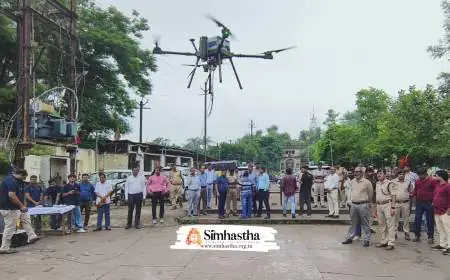
At Simhastha 2028, even advanced surveillance or AI systems cannot manage crowds without physical spatial control. Technology supports the system, but zones and sectors are the system.
They provide:
-
Predictability
-
Containment
-
Accountability
-
Safety
-
Ritual integrity
Every past Simhastha Kumbh Mela that succeeded did so because this structure was respected. Every failure in crowd management history is linked to the breakdown of spatial discipline.
How This Affects First-Time Pilgrims
For first-time visitors to Ujjain Kumbh Mela, understanding zones and sectors transforms the experience.
Pilgrims who respect the system:
-
Move faster
-
Face fewer restrictions
-
Access services easily
-
Stay safer
-
Experience rituals more peacefully
Those who resist it often feel confused, delayed, or overwhelmed.
Knowledge of the Simhastha zone and sector system is not administrative trivia. It is pilgrimage wisdom.
Also Read | How Sector-Based Crowd Flow Works in Simhastha: A Simple Guide for First-Time Visitors
How Many Zones Exist in Simhastha and How They Are Classified
In Simhastha Kumbh Mela, zones are not created arbitrarily. Each zone is designed around a single dominant function, ensuring that activities do not clash and pressure is evenly distributed across the Ujjain Simhastha landscape.
While the exact number of zones can change slightly depending on river flow, land availability, and projected crowd volume for Simhastha 2028, the classification logic remains consistent across every Ujjain Kumbh Mela.
Broadly, zones fall into five functional categories.
Bathing Ghat Zones and Their Role in Ritual Safety
Bathing ghat zones are the most sensitive areas of Simhastha. These zones are built around access to the Kshipra River and are active primarily during holy bathing periods.
At Simhastha Kumbh Mela, these zones operate under the strictest controls because:
-
Crowd density spikes suddenly
-
Ritual timing is non-negotiable
-
Emotional intensity is highest
Each bathing ghat zone has:
-
Fixed entry windows
-
One-directional movement corridors
-
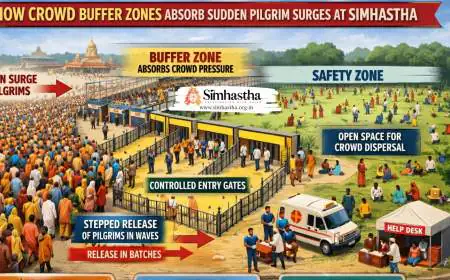
Buffer holding areas
-
Emergency exit routes
During Simhastha 2028, these zones will often be partially sealed hours before Shahi Snan begins. This is not to restrict pilgrims, but to protect the sanctity and safety of the ritual.
Without zoning, bathing ghats would become uncontrollable choke points within minutes.
Akhara Zones: Preserving Spiritual Hierarchy
Akhara zones are unique to Simhastha Kumbh Mela and form the spiritual backbone of Ujjain Simhastha.
Each recognized Akhara is allocated space within designated zones that:
-
Respect historical precedence
-
Maintain procession order
-
Enable disciplined movement during Peshwai and Shahi Snan
These zones are insulated from general pilgrim traffic during key ritual windows. This separation is essential because Akhara movements follow centuries-old protocols that cannot be disrupted without spiritual consequences.
In Ujjain Kumbh Mela, Akhara zones also include:
-
Training spaces
-
Ritual preparation areas
-
Internal security perimeters
The zoning system ensures that Akharas function independently while remaining integrated into the larger Simhastha framework.
Also Read | How Akhara Camps Are Allocated in Simhastha 2028
Tent City Zones: Where Pilgrims Actually Live
For most visitors, Simhastha is experienced not at the ghats, but inside the tent cities. These residential zones house millions of pilgrims for days or weeks at a time.
Tent city zones are designed with:
-
Walking-distance access to facilities
-
Distributed food and water points
-
Sector-level sanitation systems
-
Night-time lighting and surveillance
In Simhastha 2028, tent city zones will be larger and more segmented than in previous editions, reflecting lessons learned from crowd behavior and health management.
Each tent city zone is further divided into sectors, ensuring that daily life remains manageable even at extreme scale.
Administrative and Service Zones: The Invisible Backbone
While pilgrims rarely enter them, administrative zones are critical to the survival of Ujjain Simhastha.
These zones house:
-
Command and control centers
-
Police coordination units
-
Medical triage facilities
-
Disaster response teams
-
Data and monitoring systems
Every decision made during Simhastha Kumbh Mela flows through these zones. Sector supervisors report upward, and zone commanders coordinate laterally to prevent cascading failures.
This layered control system allows authorities to respond to incidents within minutes, not hours.
Parking and Mobility Zones: Stopping Chaos Before It Starts
One of the most underestimated elements of Simhastha planning is vehicular control. Parking and mobility zones are deliberately placed far from ritual centers.
These zones ensure that:
-
Private vehicles never enter core areas
-
Pilgrims transition to walking or shuttle systems early
-
Emergency lanes remain clear
In Ujjain Kumbh Mela, mobility zones are the first line of crowd regulation. Once pilgrims enter on foot, their movement becomes predictable and safer.
Also Read | How Ujjain's New Parking Hubs Will Handle Millions
How Sectors Are Created Within Each Zone
If zones define purpose, sectors define execution.
Every zone in Simhastha Kumbh Mela is divided into multiple sectors based on:
-
Land size
-
Expected daily footfall
-
Proximity to high-risk areas
-
Facility load capacity
A sector is intentionally small enough that:
-
Crowd behavior can be visually assessed
-
Facilities can be replenished quickly
-
Evacuation can happen within minutes
In Ujjain Simhastha, sectors are typically numbered and mapped well before the event begins. These numbers are not cosmetic; they correspond to operational data used by authorities.
Sector Capacity and Crowd Density Logic
One of the most important reasons the Simhastha sector system exists is crowd density management.
Each sector has a calculated safe capacity. Once that limit is approached:
-
Entry is temporarily restricted
-
Inflow is redirected to adjacent sectors
-
Holding areas are activated
This system prevents the dangerous compression that causes panic and stampedes.
At Simhastha 2028, real-time monitoring tools will assist sector officers, but the physical boundaries of sectors remain the primary safety mechanism.
Also Read | How Crowd Density Is Calculated During Simhastha?
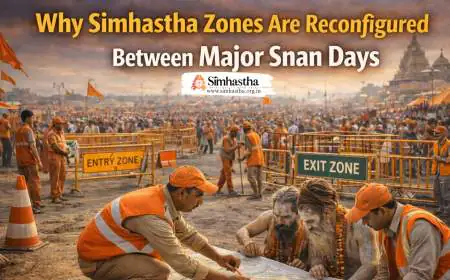
How Zones and Sectors Change on Shahi Snan Days
On Shahi Snan days, Simhastha transforms.
Zones that are normally open may become restricted. Sectors that house pilgrims may temporarily convert into transit corridors. Entire movement patterns shift based on ritual timing.
This dynamic reconfiguration is only possible because the zone–sector framework already exists.
Without predefined zones:
-
Restrictions would be arbitrary
-
Communication would fail
-
Pilgrims would panic
Instead, the system allows predictable, rehearsed transitions that protect both ritual dignity and human life.
Emergency Response and the Zone–Sector Advantage
Emergencies at Simhastha Kumbh Mela are not hypothetical. They are expected, planned for, and rehearsed.
The zone–sector system enables:
-
Precise location identification
-
Nearest-response deployment
-
Isolation of affected areas
-
Continued functioning elsewhere
A medical emergency in one sector does not halt the entire Ujjain Kumbh Mela because containment is built into the design.
This is why authorities insist that pilgrims follow zone instructions, even when they seem inconvenient.
Also Read | How Emergency Corridors Are Built Inside Simhastha Zones
Why Pilgrim Freedom Depends on This System
Ironically, the reason pilgrims enjoy relative freedom at Simhastha is because movement is structured.
Zones and sectors remove uncertainty. When pilgrims know:
-
Where they are
-
Where they can go
-
When they can move
They experience less stress and more spiritual focus.
Unstructured freedom at this scale would result in constant restrictions, not liberation.
How Pilgrims Should Navigate Zones and Sectors at Simhastha
For pilgrims arriving at Simhastha Kumbh Mela, zones and sectors are not obstacles. They are guidance systems. Understanding this distinction changes how smoothly one experiences Ujjain Simhastha.
Every pilgrim journey at Ujjain Kumbh Mela follows a predictable flow:
-
Entry through a mobility or parking zone
-
Transition into a residential or holding zone
-
Movement through assigned sectors
-
Access to bathing or ritual zones at allocated times
Pilgrims who align themselves with this flow experience fewer delays, less fatigue, and far greater spiritual focus during Simhastha 2028.
Sector signage, color codes, volunteer guidance, and barricade layouts are all designed to support this movement logic. Ignoring them creates friction not only for the individual but for thousands around them.
Why Following Sector Instructions Is a Spiritual Responsibility
At Simhastha, discipline is not administrative. It is spiritual.
In Hindu pilgrimage tradition, collective discipline enables collective grace. The zone–sector system ensures that:
-
Rituals occur in correct sequence
-
Saints and Akharas maintain spiritual order
-
Pilgrims do not interfere with sacred timings
When pilgrims respect sector boundaries at Simhastha Kumbh Mela, they are participating in the same discipline that governs Shahi Snan, Akhara Peshwai, and sacred processions.
This is why Ujjain Simhastha authorities emphasize compliance without confrontation. The system exists to protect the sanctity of the pilgrimage itself.
Common Mistakes Pilgrims Make About Zones and Sectors
Despite extensive planning, problems arise when pilgrims misunderstand the system.
The most common mistakes include:
Assuming Free Movement Is Always Allowed
At Simhastha, movement is time-bound. Zones open and close based on ritual priority, not convenience.
Ignoring Sector Capacity Limits
When a sector reaches safe density, entry restrictions are enforced. Attempting to bypass them increases risk for everyone.
Underestimating Walking Distances
Zones are large by design. Pilgrims who ignore sector layouts often exhaust themselves unnecessarily.
Treating Restrictions as Arbitrary
Every restriction at Simhastha Kumbh Mela is data-backed, rehearsed, and purpose-driven.
Pilgrims who understand this experience far less frustration and far more clarity.
How the Zone–Sector System Has Evolved Over Time
The zoning concept at Ujjain Kumbh Mela is not static. It has evolved through centuries of experience, tragedy, learning, and reform.
Earlier Simhastha editions relied on informal segregation. Modern Simhastha incorporates:
-
Historical crowd behavior analysis
-
Medical response modeling
-
River flow simulations
-
Infrastructure stress testing
By Simhastha 2028, zoning will reflect lessons from past Kumbh Melas across India, making Ujjain Simhastha one of the most structured pilgrim cities ever created.
The Future of Zones and Sectors Beyond Simhastha 2028
Future editions of Simhastha Kumbh Mela will see refinement, not replacement, of this system.
Expected developments include:
-
Smarter sector-level crowd prediction
-
Faster emergency isolation
-
Improved pilgrim communication
-
More intuitive navigation aids
However, the core principle will remain unchanged.
As long as millions gather for Simhastha, zones and sectors will remain essential. They are not a temporary solution. They are the foundation of mass pilgrimage safety.
Why This System Defines the Success of Simhastha
Every successful Ujjain Simhastha in history has shared one common trait: disciplined spatial organization.
Zones and sectors are the reason:
-
Stampedes are prevented
-
Rituals retain dignity
-
Saints retain autonomy
-
Pilgrims remain safe
Without this system, Simhastha Kumbh Mela would be reduced to unmanaged congestion. With it, the gathering becomes a living spiritual city.
Understanding this transforms how pilgrims perceive instructions, restrictions, and movement at Simhastha.
Final Perspective for Pilgrims
Zones and sectors are not barriers between you and the divine.
They are the pathways that allow millions to reach it together.
At Ujjain Kumbh Mela, discipline creates freedom, and structure creates spiritual space. The zone–sector system exists because it must exist.
That is why this system is not optional.
It is essential.
Related Simhastha 2028 Guides:
- What Are the Official Dates and Major Events of Simhastha 2028?
- Why Simhastha Happens Only When Jupiter Enters Leo ?
- Why Ujjain Was Chosen for Simhastha: Ancient Scriptures & Astral Logic
- Does Taking a Holy Bath in the Shipra River During Simhastha Remove Karmic Sins?
- Why is Ujjain Kumbh Called Simhastha?
- Simhastha 2028 Ujjain: Next Dates, Shahi Snan Schedule & Complete Spiritual Guide
- Was Ujjain the First Scindia Headquarters? Did Ranoji Start Simhastha? Full Spiritual Truth Revealed
- Top 10 Routes to Enter Ujjain During Simhastha 2028 Without Traffic Hassles
- The Cosmic Importance of Jupiter in Leo: Why It Creates Simhastha in Ujjain
- How Akhara Sector Allocation Works in Simhastha 2028: Complete Breakdown for Pilgrims
Frequently Asked Questions