
































Best Time to Visit Ujjain Simhastha 2028 Crowd Levels & Pilgrim Guide
Plan your Simhastha 2028 visit wisely. Understand crowd levels, Shahi Snan intensity, travel comfort, and how to choose the right time for a peaceful pilgrimage.


Best Time to Visit Ujjain Simhastha 2028 Crowd Levels & Pilgrim Guide



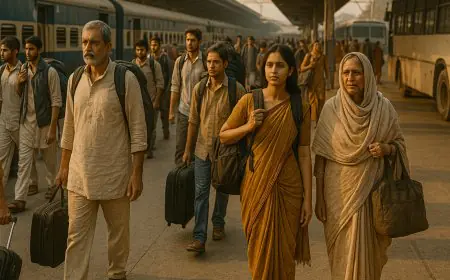




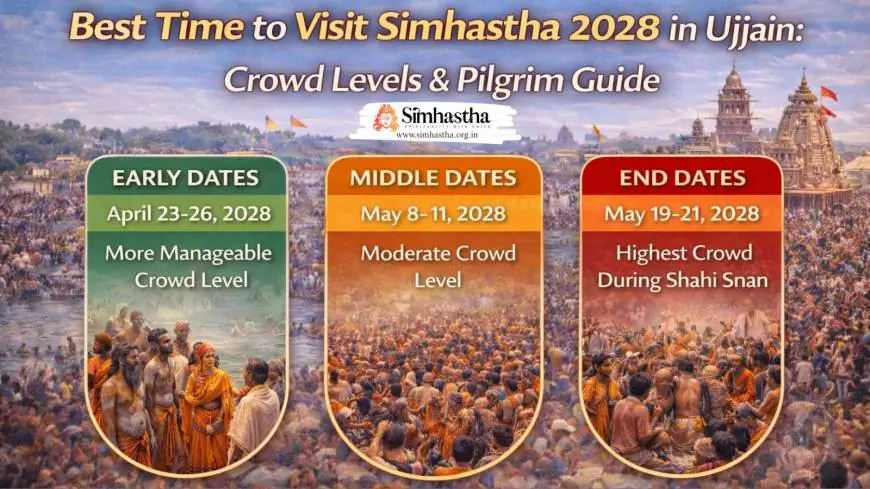
Pilgrims who need certainty for travel and accommodation planning should always refer to the officially confirmed Simhastha 2028 dates and Shahi Snan schedule published separately.
Understanding the Nature of Ujjain Simhastha Crowds
To understand the best time to visit Simhastha, one must first understand the nature of its crowds. Unlike conventional festivals where attendance peaks and drops predictably, Simhastha operates on multiple overlapping cycles.
Crowds at Simhastha are shaped by three forces:

-
Ritual Gravity
Certain days carry immense ritual importance. These days pull devotees from across the country and beyond, regardless of physical hardship. -
Pilgrim Demographics
Different groups arrive at different times. Ascetics, Akharas, and renunciates follow one rhythm. Families, tourists, and first-time visitors follow another. -
Administrative Flow Management
Authorities deliberately distribute movement through zoning, ghats, and transport corridors, influencing how crowded a day feels on the ground.
Understanding these forces allows pilgrims to plan not just their arrival, but their experience quality.
To understand the deeper spiritual foundation behind this pilgrimage, readers may explore the complete explanation of Simhastha and its spiritual meaning in Ujjain.
Types of Pilgrims and How Timing Affects Them
Not every pilgrim comes to Simhastha seeking the same outcome. Timing affects each group differently.
First-Time Pilgrims
First-time visitors often underestimate the scale of Simhastha. Arriving on peak days without preparation can feel spiritually powerful but physically exhausting. For them, medium-crowd windows offer clarity, orientation, and deeper absorption.
Families with Children
Families require predictability, safety, and manageable movement. Extreme crowd density can cause anxiety, fatigue, and logistical strain. Choosing calmer phases allows children to experience the sanctity of the river and temples without distress.
Senior Citizens
Elder pilgrims benefit most from low-crowd periods. These days allow easier darshan, safer movement, medical accessibility, and restful engagement with rituals.
Spiritual Seekers and Sadhaks
Those seeking intense spiritual immersion often intentionally choose high-energy days, accepting discomfort as part of sadhana. For them, the crowd itself becomes a crucible of surrender.
Understanding which pilgrim category you belong to is the first step in choosing the right time.
For ongoing announcements, planning resources, and verified information, pilgrims can always refer to the official Simhastha 2028 guide and updates portal.
Crowd Intensity Phases During Ujjain Simhastha
While exact schedules are detailed elsewhere, Simhastha broadly moves through four experiential crowd phases. These phases repeat in different intensities across the festival duration.
Phase 1: Opening Phase – Orientation and Calm Energy
This phase sees the arrival of early pilgrims, administrative systems settling into rhythm, and the city awakening into Simhastha mode. Crowds are present but breathable. Temples are accessible. The riverfront feels open.
Best suited for:
-
Senior citizens
-
Families
-
First-time pilgrims
-
Photographers and cultural observers
Phase 2: Rising Energy Phase – Balanced Spiritual Flow
Pilgrim numbers increase steadily. Ritual frequency rises. Discourses, satsangs, and akhara movements become visible. The atmosphere is vibrant without being overwhelming.
Best suited for:
-
Devotees seeking both ritual and reflection
-
Youth groups
-
Cultural and spiritual learners
Phase 3: Peak Intensity Phase – Shahi Snan Windows
This phase carries maximum spiritual charge and maximum crowd density. Movement is tightly regulated. Access requires patience and discipline. Emotional and spiritual highs are intense.
Best suited for:
-
Prepared devotees
-
Ascetics and serious seekers
-
Pilgrims intentionally seeking Shahi Snan experience
Phase 4: Closing Phase – Reflection and Integration
Crowds begin to thin. The city exhales. Many pilgrims experience the deepest internal shifts during this quieter period, when the outer intensity subsides.
Best suited for:
-
Meditative seekers
-
Families returning for closure
-
Devotees seeking calm darshan
Shahi Snan and Crowd Psychology (Conceptual Understanding)
Shahi Snan days are not merely ritual highlights. They are psychological and spiritual pressure points. On these days, the collective intention of millions converges at once. The crowd is not accidental; it is part of the phenomenon.
Pilgrims choosing to attend during Shahi Snan must prepare for:
-
Long waiting periods
-
Strict movement corridors
-
Limited personal space
-
Heightened emotional energy
For some, this becomes overwhelming. For others, it becomes transcendent. The difference lies in expectation and preparation, not physical strength alone.
Those who plan Shahi Snan visits with acceptance rather than resistance often describe the experience as life-altering.
Why “Avoiding Crowds” Is Not Always the Right Goal
A common misconception is that the best time to visit Simhastha is when crowds are lowest. This is not universally true.
Simhastha is, by nature, a collective spiritual act. Certain realizations only emerge when individuality dissolves into shared presence. Avoiding all crowds may lead to comfort, but it may also dilute the very essence some pilgrims seek.
The key is choosing the right intensity, not eliminating intensity altogether.
Best Time to Visit Simhastha Based on Pilgrim Category
One of the most misunderstood aspects of Simhastha planning is the assumption that there is a single “best” time for everyone. In reality, the ideal visit window depends entirely on who the pilgrim is, what they seek, and how they engage with spiritual environments.
This section breaks Simhastha planning down by pilgrim category, allowing each reader to identify the phase that aligns best with their physical comfort, emotional readiness, and spiritual intention.
Best Time for First-Time Pilgrims
First-time pilgrims often arrive at Simhastha carrying a mix of devotion, curiosity, and uncertainty. The sheer scale of Ujjain during Simhastha can be overwhelming without prior exposure to large spiritual gatherings.
What First-Time Pilgrims Need Most
-
Orientation and clarity
-
Time to understand ghat layouts and temple routes
-
Space to absorb rituals without pressure
-
Emotional grounding before entering peak zones
Ideal Crowd Phase for First-Time Pilgrims
Opening Phase and Early Balanced Phase
During these periods:
-
Crowd movement is steady but not aggressive
-
Volunteers and officials are more accessible
-
Darshan queues are manageable
-
The Kshipra riverfront feels navigable
First-time pilgrims who begin their journey during calmer days often build confidence gradually. Many choose to stay longer and later experience higher-energy days once they feel oriented.
What to Avoid
Arriving directly on peak Shahi Snan days without prior acclimatization can cause stress, confusion, and physical exhaustion, diminishing the spiritual experience.
Best Time for Families with Children
Families travel to Simhastha with a shared intention, but also shared responsibility. Children experience crowds differently. Noise, heat, and prolonged waiting can quickly become overwhelming.
Family-Friendly Priorities
-
Predictable movement
-
Access to rest, food, and sanitation
-
Lower noise levels
-
Medical accessibility
Ideal Crowd Phase for Families
Opening Phase and Closing Phase
These phases offer:
-
Safer ghat access
-
Shorter temple queues
-
Easier transport availability
-
Better crowd visibility for guardians
Families who choose these periods often report more meaningful engagement with rituals, as children remain calm and receptive rather than fatigued.
Practical Insight
Families that prioritize spiritual exposure over ritual intensity benefit most from quieter windows. Children remember the calm river, temple bells, and collective prayers far more than crowd density.
Best Time for Senior Citizens
Senior pilgrims often come with deep devotion and life-long spiritual yearning. However, physical endurance and safety are paramount.
Senior Pilgrim Considerations
-
Walking distance
-
Heat exposure
-
Crowd pressure
-
Access to seating and medical care
Ideal Crowd Phase for Seniors
Low to Moderate Crowd Periods
These periods allow:
-
Slower movement without pressure
-
Safer darshan experiences
-
Reduced risk of dehydration or fatigue
-
Clear access to assistance
Many senior pilgrims choose to avoid peak Shahi Snan days entirely, focusing instead on temple darshan, evening aartis, and riverside meditation.
Important Note
Spiritual merit is not diminished by avoiding extreme crowds. In Sanatan tradition, intention and awareness carry equal weight.
Best Time for Spiritual Seekers and Sadhaks
Spiritual seekers often approach Simhastha differently. For them, discomfort is not a deterrent but part of sadhana.
What Seekers Look For
-
High collective energy
-
Akhara presence
-
Renunciate interactions
-
Ritual intensity
Ideal Crowd Phase for Seekers
Peak Intensity Phase (Shahi Snan Windows)
These days offer:
-
Maximum spiritual charge
-
Rare darshan of Akharas and Naga Sadhus
-
Heightened ritual frequency
-
A sense of ego dissolution through collective surrender
Seekers entering these phases with preparation, humility, and discipline often describe the experience as transformative rather than chaotic.
Preparation Is Essential
Without mental and physical readiness, peak phases can feel overwhelming rather than enlightening.
Pilgrims who wish to witness or participate in ceremonial bathing should always verify the official Shahi Snan dates and ceremonial bathing schedule before planning their visit.
Best Time for Photographers, Researchers, and Cultural Observers
Not all pilgrims come solely for ritual immersion. Many arrive to observe, document, or study the cultural and spiritual fabric of Simhastha.
Ideal Crowd Phase
Balanced Phase
This phase offers:
-
Rich visual diversity
-
Visible Akhara movements without peak congestion
-
Better access to processions, ghats, and public rituals
Researchers and photographers benefit from this phase as it provides depth without obstruction.
How Simhastha Feels on Different Days in Ujjain
Every pilgrim who has attended Ujjain Simhastha remembers one truth clearly: no two days feel the same. Even when rituals remain constant, the emotional and physical texture of the city changes. Understanding this lived reality is the most reliable way to decide the best time to visit Simhastha 2028.
On quieter days, Ujjain during Simhastha feels expansive. The ghats invite sitting rather than rushing. The soundscape softens. Temple queues move with patience instead of pressure. Pilgrims walk with awareness, not urgency. These days are ideal for those seeking peaceful pilgrimage experiences, slow darshan, and personal spiritual reflection.
As intensity builds, the city shifts. Streets narrow emotionally before they do physically. The flow of people becomes directional and disciplined. On such days, Simhastha Kumbh Mela transforms into a living organism. Movement requires cooperation. Waiting becomes an act of devotion. For prepared pilgrims, this atmosphere generates a powerful sense of unity and surrender.
During peak moments of Ujjain Kumbh Mela 2028, the city operates under collective momentum. Ritual importance pulls devotees inward from across the country. These are not days for exploration or comfort. They are days for commitment. The spiritual reward here is not convenience, but participation in something vast and timeless.
Between these extremes lie balanced days, often overlooked. These days combine accessibility with vibrancy. Rituals remain visible. Akhara presence is felt. Yet the body is not constantly tested. Many experienced pilgrims quietly prefer these windows, even if they rarely speak about them publicly.
Why Many Pilgrims Choose the Wrong Time Without Realizing It
A large number of visitors arrive at Simhastha guided by headlines, social media noise, or hearsay. They aim for what appears important without understanding whether it suits their physical and emotional readiness. This mismatch is the most common reason pilgrims leave Ujjain Simhastha feeling exhausted rather than fulfilled.
Some arrive expecting silence and meditation, only to encounter dense crowds and regulated movement. Others arrive hoping to witness intense rituals but choose periods of relative calm. Neither choice is wrong. The issue is expectation.
The best time to visit Ujjain during Simhastha is not universal. It depends on what you are willing to give and what you hope to receive. Pilgrims who reflect on this before arrival experience fewer frustrations and deeper connection.
Choosing Your Simhastha Visit Based on Inner Intention
Every pilgrimage begins internally before it begins on the road. At Simhastha Kumbh Mela, intention determines perception.
Pilgrims seeking inner peace, mental clarity, and spiritual grounding often benefit from days when the city allows pauses. These are days when one can sit by the Kshipra River, attend aarti without rushing, and visit temples without crowd pressure. The sacred reveals itself quietly here.
Pilgrims seeking spiritual intensity, ego dissolution, and collective energy often gravitate toward high-density days. For them, the discomfort becomes the doorway. Standing for hours, surrendering personal space, and yielding control mirror the inner discipline they seek.
Pilgrims seeking cultural understanding, Akhara traditions, and Sanatan practices often find balance in days when processions are visible but not compressed. These windows allow observation, learning, and respectful distance.
Understanding your intention transforms Simhastha 2028 travel planning from logistics into conscious preparation.
How Physical Readiness Shapes the Simhastha Experience
Spiritual aspiration alone does not determine experience at Ujjain Kumbh Mela 2028. Physical readiness plays an equally important role.
Long walking distances, exposure to sun, waiting periods, and regulated entry points demand stamina. Pilgrims who overestimate their physical capacity often struggle to remain present. Fatigue narrows perception. Discomfort overshadows devotion.
Those who choose timings aligned with their endurance report a different experience. They remember chants rather than queues, rituals rather than strain. This is especially true for senior pilgrims, families with children, and first-time visitors to Simhastha.
Choosing the right time is not avoidance. It is respect for the body as a vehicle of spiritual experience.
The Relationship Between Crowd Density and Spiritual Absorption
Crowd density affects not just movement, but awareness. At Simhastha, high density compresses attention outward. Low density allows attention to turn inward.
Neither state is superior. They serve different purposes.
High-density moments at Simhastha Kumbh Mela dissolve individuality. The pilgrim becomes part of a larger rhythm. Personal identity fades temporarily. This can be transformative for those prepared for surrender.
Lower-density moments at Ujjain Simhastha allow contemplation. The pilgrim engages consciously with rituals, architecture, and inner responses. This often leads to long-lasting integration.
The best time to attend Simhastha depends on which of these experiences you are ready for.
How Experienced Pilgrims Quietly Plan Their Visits
Veteran pilgrims rarely announce their strategies, but patterns emerge. Many arrive during calmer days, settle into the city, understand the terrain, and then choose whether to remain for more intense periods. Others arrive specifically for high-energy days and leave soon after, preserving strength and focus.
Very few experienced pilgrims arrive blindly.
Their planning revolves around:
-
Crowd flow awareness
-
Daily rhythm of ghats and temples
-
Personal physical limits
-
Clarity of spiritual intention
This wisdom is not written on calendars. It is learned through presence and reflection.
Daily Timing at Simhastha: Morning vs Evening Experiences
At Ujjain Simhastha, the experience of a single day can feel like two different pilgrimages depending on when you step out. Morning and evening are not merely time slots. They carry distinct energies, crowd behaviors, and emotional textures. Pilgrims who understand this rhythm often experience Simhastha 2028 with far greater clarity and calm.
Many visitors focus on what to attend but overlook when to move. This oversight quietly shapes whether the day feels grounded or exhausting.
The Morning Experience: Silence Before Momentum
Early morning at Ujjain Simhastha carries a quality that disappears once the city fully wakes. The air feels lighter. The ghats are present without pressure. Movement is purposeful but not hurried. For many pilgrims, this is when Simhastha Kumbh Mela feels closest to its ancient spirit.
During morning hours, the mind is less distracted. Temple bells sound clearer. The river reflects more than it resists. Pilgrims who walk toward the Kshipra River early often experience a natural slowing of thought. Prayer arises easily. The body cooperates.
Crowd behavior in the morning tends to be disciplined rather than compressed. Even on busy days, people move with shared awareness. Volunteers are more attentive. Routes feel navigable. This is why experienced pilgrims quietly prioritize mornings during Ujjain Kumbh Mela 2028.
Morning is especially supportive for:
-
Pilgrims seeking peaceful darshan
-
Senior devotees and families
-
First-time visitors adjusting to Simhastha scale
-
Those seeking mental clarity and grounding
The morning experience does not demand endurance. It invites presence.
The Emotional Tone of Morning at Ujjain Simhastha
Emotionally, mornings at Simhastha feel inward-facing. Conversations are softer. Faces appear focused rather than restless. Even the city seems to move with restraint.
Many pilgrims report that decisions made in the morning feel easier. Paths feel clearer. Waiting feels shorter, even when it is not. This is not coincidence. The nervous system is rested. Expectation has not yet built.
For those who wish to experience Ujjain Simhastha without overwhelm, morning hours often become the anchor of the entire visit.
The Evening Experience: Expansion and Collective Energy
As the day moves toward evening, Simhastha Kumbh Mela shifts character. The city fills outwardly. Pilgrims return from rest. Sound increases. Lights appear. The river reflects flames rather than sky.
Evening at Ujjain Simhastha is not quieter. It is broader. The experience becomes social, collective, and emotionally expressive. Aartis gather large audiences. Ghats glow. The sacred feels celebratory.
For many pilgrims, evening becomes the emotional high point of the day. The shared presence of thousands creates a sense of belonging. Devotion feels outward, sung, and visible.
Evenings are especially meaningful for:
-
Pilgrims seeking collective devotional energy
-
Cultural observers and photographers
-
Families engaging in aarti together
-
Those who find strength in shared ritual
However, evenings also bring heavier movement. Pathways tighten. Waiting increases. Patience is tested more often than in the morning.
Crowd Psychology: Why Evenings Feel Heavier
Crowd density during evening hours at Ujjain Kumbh Mela 2028 increases not only because more people are present, but because fatigue accumulates. Pilgrims carry the weight of the day. Tempers shorten. Instructions repeat more often.
This does not diminish the spiritual value of evenings. It changes the demand placed on the pilgrim. Evenings require emotional resilience rather than physical freshness.
Pilgrims who expect evenings to feel like mornings often struggle. Those who expect expansion rather than ease adapt more comfortably.
Choosing Morning or Evening Based on Inner State
The best time to visit Simhastha on a given day depends on what you need, not what is popular.
If you seek stillness, clarity, and personal connection, mornings support you.
If you seek devotion through collective presence, sound, and light, evenings offer that field.
Many experienced pilgrims design their day consciously:
-
Morning for temples and river presence
-
Midday for rest and reflection
-
Evening for aarti and observation
This rhythm prevents exhaustion and preserves meaning throughout Simhastha 2028.
Why Doing Everything in One Time Window Fails
Pilgrims who attempt to compress their entire Simhastha experience into one part of the day often feel rushed. Morning-only pilgrims may miss the emotional resonance of evening devotion. Evening-only pilgrims may miss the grounding calm that mornings provide.
Understanding daily timing allows pilgrims to experience Simhastha Kumbh Mela as a cycle rather than a race.
The Subtle Teaching of Daily Rhythm at Simhastha
Beyond logistics, morning and evening at Ujjain Simhastha teach something deeper. Morning teaches restraint. Evening teaches surrender. One sharpens awareness. The other dissolves separation.
Pilgrims who allow both experiences, without forcing either, often leave Ujjain Kumbh Mela 2028 with a sense of balance rather than fatigue.
How to Plan a Peaceful Simhastha Visit Without Peak Days
A quiet visit during Ujjain Simhastha is not about avoiding devotion. It is about choosing a form of devotion that allows attention, dignity, and inner absorption. Many pilgrims believe that skipping peak days means missing the essence of Simhastha 2028, but experienced visitors know the opposite can be true.
A peaceful visit does not happen by chance. It happens by design.
Understanding What “Peaceful” Really Means at Simhastha
Peaceful does not mean empty. At Simhastha, even non-peak days carry movement, sound, and ritual presence. What changes is pressure.
During calmer phases of Simhastha Kumbh Mela, pilgrims are not pushed by collective urgency. Paths feel open. Temples feel accessible. The river allows sitting rather than passing through. This creates conditions where prayer slows down instead of being compressed.
A peaceful visit is one where the body is not constantly negotiating space, and the mind is free to observe rather than react.
Choosing the Right Arrival Mindset
Pilgrims who arrive at Ujjain Simhastha seeking “fewer people” often feel disappointed, because Simhastha is never empty. Pilgrims who arrive seeking less intensity feel satisfied.
This mindset shift is essential. Peace at Ujjain Kumbh Mela 2028 comes from accepting presence without urgency. When expectation changes, experience follows.
Staying Slightly Away From the Most Active Zones
One of the simplest ways to experience Simhastha peacefully is by choosing accommodation that is not directly adjacent to the most active ghats.
Staying slightly away allows:
-
Better rest
-
Predictable movement
-
Easier morning access
-
Quieter evenings
Pilgrims who sleep well engage more deeply. This is especially important for families, senior pilgrims, and first-time visitors to Ujjain Simhastha.
Peace begins where rest is protected.
Designing Your Day Around Low-Pressure Hours
A peaceful Simhastha 2028 visit is shaped less by where you go and more by when you move.
Early mornings offer the calmest access to the Kshipra River, temples, and ghats. Even on busier days, these hours feel spacious. Midday is best reserved for rest, reflection, and meals. Evening can be approached selectively, focusing on observation rather than participation.
Pilgrims who avoid moving during peak evening congestion often preserve both energy and patience.
Choosing Presence Over Proximity at the River
Many pilgrims equate spiritual fulfillment with physical closeness to the river. At Simhastha Kumbh Mela, this belief often leads to unnecessary strain.
The Kshipra does not require immersion for connection. Sitting nearby, offering prayer, listening to water, or attending aarti allows deep engagement without crowd pressure. For many, these moments feel more intimate than peak rituals.
A peaceful visit values presence over proximity.
Limiting Daily Objectives Intentionally
Trying to “cover everything” is the fastest way to lose peace at Ujjain Simhastha. The city offers more than can be absorbed in one visit.
Experienced pilgrims choose one or two meaningful engagements per day:
-
One temple visit
-
One river experience
-
One reflective period
This approach keeps the nervous system settled and the experience coherent. Simhastha rewards depth, not accumulation.
Why Peaceful Visits Often Leave Deeper Impact
Pilgrims who plan peaceful visits to Simhastha Kumbh Mela often describe lasting changes rather than dramatic moments. Their memories are quieter but more integrated. They remember stillness, not struggle.
At Ujjain Kumbh Mela 2028, peace allows the sacred to be noticed rather than endured.
Letting Go of Comparison With Other Pilgrims
One hidden source of stress during Simhastha is comparison. Seeing others move toward peak rituals can create doubt or fear of missing out.
A peaceful visit requires trust in one’s own path. The value of Ujjain Simhastha does not diminish because one chooses calm over intensity. In Sanatan understanding, sincerity carries equal weight.
When comparison drops, peace becomes natural.
The Quiet Truth About Simhastha
The deepest offering of Simhastha 2028 is not spectacle. It is perspective. Pilgrims who move slowly often see more. Those who listen carefully often receive more.
A peaceful visit does not stand apart from Simhastha. It stands at its heart.
Designing a 3-Day, 5-Day, or 7-Day Simhastha Itinerary
At Ujjain Simhastha, time does not move linearly. A single rushed day can feel exhausting, while a slow, well-planned week can feel effortless and deeply fulfilling. The length of your stay determines not how much you see, but how deeply you experience Simhastha.
Many pilgrims make the mistake of planning itineraries like sightseeing trips. Simhastha 2028 does not reward speed. It rewards rhythm. A well-designed itinerary balances river presence, temple darshan, rest, and inner processing.
Pilgrims arriving by road should plan their entry carefully using the top 10 approved routes to enter Ujjain during Simhastha to avoid congestion and delays.
The 3-Day Simhastha Itinerary: Focused and Grounded
A 3-day visit to Ujjain Simhastha is ideal for pilgrims with limited time who still want a meaningful experience without physical strain. The key is restraint.
Day 1: Arrival and Orientation
Use the first day to acclimatize. Avoid major movement immediately after arrival. Walk familiar routes near your stay. Visit one nearby temple. Spend quiet time near the Kshipra River without pressure to perform rituals.
This day sets the nervous system. Pilgrims who rush on Day 1 often carry fatigue through the rest of Simhastha Kumbh Mela.
Day 2: Core Spiritual Engagement
Dedicate this day to your primary intention. Early morning river presence, followed by one major temple darshan, works best. Keep the afternoon free for rest. In the evening, observe aarti rather than forcing participation.
This day delivers the heart of Ujjain Kumbh Mela 2028 without overload.
Day 3: Integration and Closure
Return to the river calmly. Sit rather than move. Revisit one space that felt meaningful. Leave Ujjain slowly.
A 3-day itinerary succeeds when pilgrims leave settled, not depleted.
The 5-Day Simhastha Itinerary: Balanced and Absorptive
Five days allow Simhastha to unfold naturally. This duration suits families, first-time visitors, and those seeking both ritual and reflection.
Days 1–2: Settling Into Ujjain
Use the first two days for orientation and gentle engagement. Morning river visits, light temple darshan, and afternoon rest establish rhythm. Evenings can be spent observing devotional activity without pressure.
These days soften resistance and build familiarity with Ujjain Simhastha.
Day 3: Deep Engagement Day
Choose one day for deeper immersion. This may include extended time at the ghats, witnessing Akhara movement from a distance, or attending discourses. Avoid stacking multiple objectives.
Depth emerges when attention is not divided.
Day 4: Rest and Reflection
This is the most underestimated day at Simhastha Kumbh Mela. Reduce movement. Sit near the river. Journal. Reflect. Many pilgrims report that insights surface on this day, not during intense rituals.
Day 5: Closing With Clarity
Revisit one sacred space intentionally. Offer gratitude rather than seeking new experiences. Depart gently.
A 5-day itinerary allows Simhastha 2028 to be felt, not chased.
The 7-Day Simhastha Itinerary: Immersive and Transformational
Seven days create space for Ujjain Simhastha to work internally. This itinerary suits seekers, repeat visitors, and pilgrims intentionally avoiding peak strain.
Days 1–2: Orientation and Grounding
Begin slowly. Walk the city. Learn ghat geography. Let the body adapt. Avoid decision fatigue.
Days 3–4: Core Spiritual Cycle
These days are for immersion. Early mornings at the Kshipra, longer temple visits, witnessing rituals without rushing. Keep afternoons free. Let the city guide movement rather than forcing plans.
At Simhastha Kumbh Mela, surrender often brings more than effort.
Day 5: Silence and Integration
Reduce interaction. Limit external input. This is often when emotional shifts occur. Many pilgrims underestimate how much Simhastha works beneath the surface.
Day 6: Selective Re-Engagement
Return to one or two spaces with renewed awareness. The same ghat or temple feels different now. This is where understanding deepens.
Day 7: Departure Without Hurry
Do not pack experiences into the final day. Leave with steadiness. The impact of Ujjain Kumbh Mela 2028 often reveals itself after departure.
Why Longer Stays Feel Easier Than Short Ones
Counterintuitively, longer visits to Simhastha often feel less tiring. The body adapts. The mind stops resisting. Pilgrims move with the flow rather than against it.
Short stays require precision. Longer stays allow trust.
Designing Your Itinerary Around Energy, Not Events
The most successful Simhastha itinerary is one that:
-
Limits daily objectives
-
Respects physical capacity
-
Allows rest without guilt
-
Leaves space for the unexpected
Ujjain Simhastha does not reward checklist devotion. It responds to presence.
The Quiet Measure of a Good Simhastha Visit
A well-designed itinerary does not leave pilgrims with stories of struggle. It leaves them with clarity, softness, and a sense that something essential was touched.
At Simhastha 2028, how long you stay matters less than how gently you move within that time.
Shahi Snan as an Experience, Not a Calendar Event
At Ujjain Simhastha, Shahi Snan is often spoken about as if it were a date to be marked and rushed toward. In reality, Shahi Snan at Simhastha is not a moment on the calendar. It is a lived spiritual experience that begins long before the river is reached and continues long after the water is left behind.
Those who approach Shahi Snan during Simhastha 2028 only as a ritual task often miss its deeper meaning. The experience is not defined by immersion alone. It is defined by preparation, patience, surrender, and the willingness to move with the collective rhythm of the Simhastha Kumbh Mela.
From the moment a pilgrim enters the regulated zones near the river, ordinary rules dissolve. Personal pace disappears. Individual comfort becomes secondary. One learns quickly that Shahi Snan is not about reaching the water first, but about arriving inwardly prepared.
What a Shahi Snan Day Actually Feels Like on the Ground
On days associated with Shahi Snan at Ujjain Simhastha, the city feels denser even before sunrise. Movement begins early. Sound carries farther. Instructions repeat constantly. Pilgrims sense that they are stepping into something larger than personal devotion.
Walking toward the ghats, the body slows whether one wants it to or not. Progress is measured in patience rather than steps. For many, this is the first lesson of Shahi Snan. Control is surrendered not symbolically, but practically.
As the crowd advances, emotional responses surface. Restlessness, irritation, humility, devotion, fear, and gratitude appear in waves. Simhastha Kumbh Mela uses the crowd itself as a teacher. Every pause tests the ego. Every delay asks for trust.
Those who resist the process feel drained. Those who accept it often report a strange calm emerging beneath the noise. This is where Shahi Snan begins to transform from an external ritual into an internal passage.
The Role of Akharas in the Shahi Snan Experience
One cannot understand Shahi Snan at Ujjain Simhastha without understanding the presence of Akharas. Their movement toward the river is not ceremonial display. It is the visible expression of centuries-old discipline, renunciation, and spiritual hierarchy within Simhastha.
When Akharas pass, the atmosphere shifts. The crowd instinctively stills. Energy concentrates. Many pilgrims describe this moment as more powerful than the dip itself. It is a reminder that Shahi Snan is not individual achievement, but collective alignment with a living tradition.
Watching the Akharas move toward the river teaches restraint. The river is not claimed. It is approached with reverence. This attitude shapes the entire Ujjain Simhastha experience for those paying attention.
The movement and stay of ascetic orders follow a strict system, which is explained in detail through how Akhara sector allocation works during Simhastha.
Entering the Water: What the Dip Represents
The physical act of entering the Kshipra during Shahi Snan is brief. Often only seconds. Yet those seconds carry weight because of what precedes them.
By the time a pilgrim reaches the water at Simhastha Kumbh Mela, fatigue has softened resistance. The mind is quieter. Expectations have loosened. In this state, the river is not cold or warm. It is present.
Many pilgrims expect a dramatic emotional surge. Some experience it. Others experience something subtler. A stillness. A release. A sense of having arrived without effort. Shahi Snan does not guarantee a particular response. It creates conditions where something internal can shift if one allows it.
The river does not perform the cleansing alone. The journey toward it does most of the work.
Why Some Pilgrims Feel Disappointed After Shahi Snan
Disappointment after Shahi Snan usually comes from expectation, not from failure of the ritual. Pilgrims who expect comfort, speed, or personal space often struggle. Those who expect instant transformation sometimes overlook quieter inner changes.
At Ujjain Kumbh Mela 2028, Shahi Snan magnifies whatever the pilgrim brings. Restlessness becomes exhaustion. Patience becomes peace. Resistance becomes frustration. Surrender becomes lightness.
Understanding this beforehand changes everything. Shahi Snan is not a performance by the river. It is a mirror held up by the entire Simhastha environment.
Who Should Choose Shahi Snan and Who Should Not
Not every pilgrim needs to experience Shahi Snan directly to receive the grace of Simhastha. This truth is rarely spoken but deeply understood by experienced visitors.
Pilgrims seeking intense collective energy, willing to endure physical strain, and prepared for long periods of regulated movement often find Shahi Snan at Ujjain Simhastha deeply meaningful.
Pilgrims seeking quiet devotion, reflective prayer, or physical ease may find greater fulfillment in river visits during calmer periods of Simhastha Kumbh Mela, when the ghats allow sitting, chanting, and silent offering.
Spiritual value is not measured by proximity to crowds. It is measured by awareness.
What Shahi Snan Leaves Behind After the River Is Left
The true impact of Shahi Snan often emerges later. Not at the ghat, but in the hours and days that follow.
Many pilgrims notice a slowing of thought. A softness in reaction. A patience that was not practiced consciously. These changes are not dramatic. They are durable.
This is how Simhastha works. It does not overwhelm the soul. It reshapes attention quietly. Shahi Snan is simply the most intense doorway into that process.
Understanding Shahi Snan Within the Larger Simhastha Journey
Seen correctly, Shahi Snan is not the destination of Ujjain Simhastha. It is one movement within a much larger pilgrimage arc. The walk to the river, the waiting, the restraint, the dip, and the departure all carry equal weight.
Pilgrims who understand this leave Simhastha 2028 with gratitude rather than fatigue. They do not chase moments. They allow moments to arrive.
How to Experience the Kshipra Without Shahi Snan
At Ujjain Simhastha, the Kshipra River is often reduced in conversation to a single act: the dip. Yet for many pilgrims, the most meaningful encounters with the river happen without ever entering it during Shahi Snan. The Kshipra is not limited to peak ritual moments. It is a living presence that offers access, intimacy, and spiritual depth throughout Simhastha in quieter, often overlooked ways.
To experience the Kshipra without Shahi Snan is not to miss something. It is to approach the river differently, with attention rather than urgency.
Understanding ghat access and movement corridors is essential, which is clearly explained in the guide to Shipra Riverfront zones and pilgrim movement planning during Simhastha.
Sitting With the River Instead of Moving Through It
One of the simplest and most powerful ways to connect with the Kshipra during Simhastha Kumbh Mela is by sitting beside it. Away from regulated movement corridors, the river reveals a softer rhythm. The sound of flowing water replaces announcements. The body relaxes. The mind follows.
Pilgrims who sit quietly near the Kshipra often notice that prayer becomes less performative and more natural. There is no pressure to hurry. No sense of competition. The river becomes a companion rather than a destination.
This form of presence is especially valuable for those who feel overwhelmed by the scale of Ujjain Kumbh Mela 2028. In stillness, the river offers grounding.
Visiting the Ghats During Low-Intensity Hours
The ghats of the Kshipra change character throughout Simhastha 2028. When crowds thin, these spaces regain their original purpose. Steps become places to pause. Railings become supports for contemplation rather than control.
Pilgrims who visit the ghats during low-intensity hours often experience a deeper sense of connection. The river feels accessible. Offering flowers or lighting a diya becomes unhurried. The ritual regains its symbolic meaning.
This approach allows pilgrims to experience the sanctity of the Kshipra without the physical demands associated with Shahi Snan at Ujjain Simhastha.
Experiencing the Kshipra Through Aarti and Sound
For many, the most profound encounter with the river comes not through immersion, but through sound. Evening aartis along the Kshipra create an atmosphere where collective devotion replaces physical movement.
The rhythm of bells, chants, and lamps reflected on water carries a different intensity than crowds. The river becomes luminous rather than turbulent. Pilgrims often describe these moments as emotionally stabilizing and spiritually nourishing.
During Simhastha, attending aarti by the Kshipra offers an experience that is accessible, inclusive, and deeply resonant, especially for families and senior pilgrims.
Walking Along the River as a Spiritual Practice
Movement along the Kshipra does not always need a destination. Walking slowly beside the river during Ujjain Simhastha allows the body and breath to synchronize with the flow of water.
Such walks often become meditative. Thoughts loosen. Observation deepens. The river mirrors the inner state. This practice is particularly meaningful for pilgrims seeking reflection rather than ritual intensity during Simhastha Kumbh Mela.
Unlike Shahi Snan days, these moments do not demand endurance. They invite awareness.
Offering Without Immersion: A Valid Spiritual Act
In Sanatan tradition, immersion is one expression of devotion, not the only one. Many pilgrims offer flowers, water, or silent prayer to the Kshipra without entering it. These acts carry equal sincerity when performed with presence.
At Ujjain Simhastha, such offerings allow pilgrims to connect without physical strain. The river receives intention, not just the body.
This understanding frees pilgrims from the belief that spiritual merit depends on crowd participation. It restores choice.
Why Many Pilgrims Prefer This Experience
Pilgrims who choose to experience the Kshipra outside Shahi Snan often speak of clarity rather than intensity. Their memories are quieter but lasting. They remember light on water, the sound of prayer, and moments of stillness amid a vast gathering.
For them, Simhastha becomes an inward pilgrimage rather than a physical challenge.
This approach does not replace Shahi Snan. It complements it. It reminds pilgrims that the river is always present, not only when crowds converge.
The Kshipra as a Teacher Beyond Ritual
Ultimately, the Kshipra teaches through continuity. It flows before, during, and after Simhastha 2028. It does not demand performance. It invites presence.
Pilgrims who listen to this teaching often leave Ujjain Simhastha with something quieter but more enduring than spectacle: a sense of steadiness.
Mistakes Pilgrims Realize Only After Reaching Ujjain
Many pilgrims arrive at Ujjain Simhastha carrying devotion, preparation, and good intention, yet still find themselves unsettled in the first few days. This discomfort rarely comes from lack of faith. It comes from small misunderstandings about how Simhastha actually unfolds on the ground. These mistakes are not obvious before arrival. They become clear only after one begins moving through the city, the ghats, and the collective rhythm of the Simhastha Kumbh Mela.
Recognizing these patterns early can quietly transform the entire experience.
Trying to Do Too Much Too Quickly
The most common mistake pilgrims make at Ujjain Simhastha is attempting to compress the pilgrimage into a checklist. Multiple temples, river visits, rituals, and observations are stacked into a single day, driven by fear of missing out.
Within hours, fatigue replaces focus. Waiting feels heavier. Small inconveniences feel personal. The sacred begins to feel logistical.
Simhastha 2028 does not reward speed. It responds to pacing. Pilgrims who slow down often find that fewer experiences carry more depth than many rushed ones.
Underestimating Walking and Standing Time
Before arriving at Ujjain Kumbh Mela 2028, distances look manageable on maps. On the ground, movement is shaped by routing, regulation, and crowd flow. A short distance may take an hour. Standing may replace walking entirely.
Pilgrims who underestimate this reality become physically exhausted early. When the body tires, the mind narrows. Devotion becomes effort.
Those who accept movement as part of the pilgrimage, rather than an obstacle to it, adapt more gracefully to Simhastha.
Expecting Silence During Peak Energy
Many pilgrims imagine Simhastha Kumbh Mela as a serene spiritual environment at all times. When they encounter sound, announcements, chanting, and constant motion, disappointment follows.
This expectation gap creates inner resistance. Instead of receiving the experience, the pilgrim judges it.
Ujjain Simhastha contains silence, but not everywhere and not always. Silence appears in pauses, not in control. Pilgrims who stop demanding quiet often discover stillness beneath the noise.
Measuring Spiritual Value by Crowd Proximity
Another mistake pilgrims realize late is equating closeness to crowds with spiritual success. Pushing forward, standing longer, or enduring discomfort becomes a measure of devotion.
In reality, Simhastha does not assign value based on proximity. Many pilgrims experience deeper moments while sitting quietly near the Kshipra River, away from dense movement.
At Ujjain Kumbh Mela, sincerity matters more than position.
Ignoring the Need for Rest and Integration
Pilgrims often feel guilty resting during Simhastha. They believe every moment must be used actively. This belief leads to cumulative exhaustion.
Rest is not absence. It is integration. Without rest, experiences blur together. With rest, they settle.
Pilgrims who allow themselves pauses during Simhastha 2028 often report clearer memories and deeper emotional shifts.
Overplanning Without Allowing Flexibility
Detailed plans often collapse on arrival at Ujjain Simhastha. Routes change. Access shifts. Crowd flow redirects movement.
Pilgrims who cling tightly to plans feel frustrated. Those who treat plans as guidelines remain calm.
Flexibility is not lack of discipline. It is alignment with how Simhastha Kumbh Mela actually functions.
Comparing One’s Experience With Others
Comparison quietly drains joy at Ujjain Kumbh Mela 2028. Seeing others attend certain rituals or visit certain places can create doubt or urgency.
Every pilgrim arrives with a different body, intention, and threshold. Simhastha meets each one differently.
The moment comparison drops, peace returns.
Expecting Immediate Transformation
Some pilgrims arrive expecting instant emotional release or dramatic spiritual experiences. When these do not occur immediately, they feel something is missing.
Transformation at Ujjain Simhastha is often subtle. It appears in patience, softened reactions, or a quieter mind days later.
Those who stop searching for results often receive them naturally.
Forgetting That Simhastha Is Also About Afterward
A final realization comes late: Simhastha does not end at departure. Its effects unfold afterward, in daily life.
Pilgrims who treat the visit as a moment often miss this continuation. Those who allow the experience to integrate slowly carry it forward.
The Quiet Correction Most Pilgrims Make
Almost every pilgrim adjusts midway through Simhastha 2028. They slow down. They choose less. They listen more.
This correction is not failure. It is learning.
Ujjain Simhastha teaches not through instruction, but through experience. Those who accept its pace leave lighter than they arrived.
How Simhastha Changes Perception After Returning Home
The most important phase of Ujjain Simhastha begins after the pilgrim leaves the city. The return journey carries something unseen. Bags are lighter, but perception is altered. What was encountered during Simhastha 2028 does not end at the ghats or temples. It begins to surface slowly in ordinary life.
This is often unexpected. Many pilgrims believe the impact of Simhastha will be immediate and dramatic. In reality, the deeper changes appear quietly, revealing themselves not in memory, but in behavior.
A Subtle Shift in Relationship With Time
One of the first changes pilgrims notice after Simhastha Kumbh Mela is a different relationship with time. Urgency softens. Small delays no longer feel threatening. Waiting, once frustrating, feels familiar.
This shift comes from days spent moving slowly at Ujjain Simhastha, where progress could not be forced and patience became necessary rather than virtuous. After returning home, this learned patience continues to operate beneath awareness.
Time no longer feels like an enemy to outrun. It feels like a rhythm to enter.
Reduced Reactivity in Everyday Situations
Pilgrims often report that situations which once triggered irritation now pass without escalation. This is not because life becomes easier after Ujjain Kumbh Mela 2028, but because the nervous system has been trained differently.
Crowd pressure, noise, and uncertainty during Simhastha recalibrate emotional thresholds. After returning home, traffic, queues, and interruptions feel manageable. The body remembers that it has already endured more without breaking.
This reduced reactivity is one of the most enduring outcomes of Simhastha Kumbh Mela.
A New Understanding of Personal Limits
Another quiet realization emerges after Simhastha 2028: limits are no longer viewed as weaknesses. Pilgrims who respected their physical and emotional boundaries during Ujjain Simhastha learn that choosing rest over struggle does not reduce sincerity.
This understanding transfers into daily life. Saying no feels cleaner. Overcommitment loses appeal. Energy is conserved for what truly matters.
Simhastha teaches discernment not through instruction, but through lived necessity.
Memory Becomes Feeling, Not Images
When pilgrims recall Ujjain Simhastha, memories rarely appear as clear sequences of events. Instead, they return as sensations. A certain stillness. A softness in the chest. A quiet strength.
The mind does not replay scenes. The body remembers states.
This is how Simhastha integrates. It does not remain as a story told. It becomes a reference point for inner balance.
Less Attachment to External Validation
Many pilgrims notice a reduction in the need to explain or justify their experience after Simhastha Kumbh Mela. The impulse to narrate every detail fades. What remains feels personal and complete.
This internalization reflects a deeper shift. The experience no longer seeks approval. It stands on its own.
Ujjain Simhastha does not produce identity. It dissolves unnecessary ones.
A Changed Relationship With Silence
After returning from Simhastha, silence feels different. It no longer needs to be filled. Moments without stimulation become restful rather than uncomfortable.
This change comes from exposure to both noise and stillness during Ujjain Kumbh Mela 2028. Pilgrims learn that silence is not the absence of sound, but the absence of inner resistance.
This understanding often reshapes daily habits. Reduced screen time. More listening. Less compulsion to react.
Carrying Simhastha Forward Without Recreating It
A common mistake after returning home is attempting to recreate Simhastha externally. Pilgrims try to repeat rituals, chase intensity, or hold on tightly to memory.
The deeper lesson of Simhastha is different. It asks not to be recreated, but to be lived.
Pilgrims who carry forward patience, restraint, and attentiveness remain connected. Those who chase repetition often feel disconnected.
The Quiet Way Simhastha Continues
Weeks after returning from Ujjain Simhastha, pilgrims often notice small but persistent changes. Decisions feel less reactive. Listening deepens. Life feels slightly more spacious.
These shifts are not dramatic enough to announce. They are stable enough to last.
This is the true continuation of Simhastha Kumbh Mela. Not as memory, not as longing, but as a recalibration of attention.
When the Pilgrimage Truly Completes
The pilgrimage of Simhastha 2028 completes not when one leaves Ujjain, but when daily life begins to reflect what was learned there.
When patience replaces urgency.
When awareness replaces reaction.
When simplicity replaces excess.
This is how Ujjain Simhastha stays alive, long after the riverbanks grow quiet again.
Simhastha Is Not Attended. It Is Absorbed.
By the time a pilgrim finishes reading about Ujjain Simhastha, one truth becomes clear. This pilgrimage cannot be reduced to dates, routes, or rituals alone. Simhastha is an environment that reshapes perception through exposure, patience, and presence. It works not by instruction, but by experience.
Those who approach Simhastha 2028 as an event often feel overwhelmed. Those who approach it as a process feel guided. The difference is not preparation alone, but understanding how the city, the river, the crowd, and the inner state move together.
At Simhastha Kumbh Mela, the sacred is not confined to peak moments. It exists in the early morning stillness, the regulated movement of the crowd, the waiting before the river, the sound of aarti at dusk, and the quiet return to one’s place of rest. Each layer teaches something different. None is superior. All are necessary.
What this guide ultimately reveals is that the best time to visit is not universal. It is personal. A peaceful visit is not lesser than an intense one. Avoiding peak days does not dilute devotion. Choosing calm over congestion does not reduce spiritual value. At Ujjain Kumbh Mela 2028, sincerity outweighs spectacle.
Pilgrims who move slowly often receive more. Those who listen deeply remember longer. Those who respect their limits return lighter. This is why Ujjain Simhastha continues to transform people long after departure. The city does not give answers. It trains awareness.
When pilgrims leave Simhastha, they do not carry souvenirs of the sacred. They carry a recalibrated way of meeting life. Waiting feels different. Silence feels fuller. Reaction softens. Attention steadies. These changes are subtle, but durable.
This is the quiet promise of Simhastha Kumbh Mela. It does not seek to impress. It seeks to realign.
The river flows on. The ghats empty. The city returns to rhythm. But for those who moved with awareness, something essential has already shifted. The pilgrimage continues, not in memory, but in how one lives afterward.
This is how Simhastha fulfills its purpose. Not as a destination reached, but as a way of seeing carried forward.
Related Simhastha 2028 Guides :
Frequently Asked Questions