
























Harsiddhi Temple Darshan Guide for First-Time Visitors
Complete Harsiddhi Temple darshan guide for first-time visitors—from timings and rituals to Deep Stambh lighting, Shakti Peeth history, and essential tips for a blessed visit.
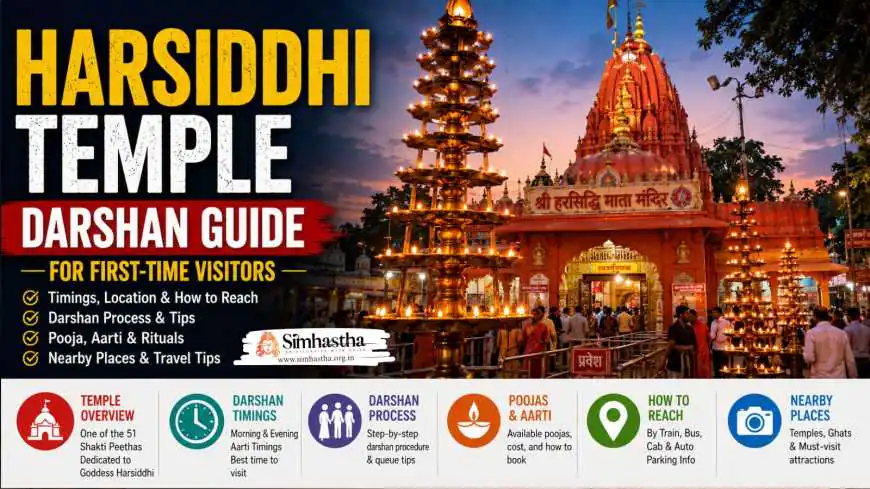


Harsiddhi Temple Darshan Guide for First-Time Visitors
You've just had darshan at the Mahakaleshwar Jyotirlinga, and your heart is still reverberating with the energy of Lord Shiva. But your Ujjain pilgrimage isn't complete yet. Just a five-minute walk away lies something equally powerful—the Harsiddhi Temple, one of the most sacred Shakti Peethas in India. 🌺🕉
If you're a first-time visitor, you might be wondering: What makes this temple so special? Why do pilgrims rush here immediately after Mahakal Darshan? And what should I know before I go?
This guide answers all your questions. Let me walk you through everything—from timings and rituals to legends and practical tips—so your first Harsiddhi Darshan is as smooth and spiritually enriching as possible. 🙏
🕉️ Harsiddhi Temple Darshan Timings
Before you plan your visit, here are the exact timings you need to know:
Trending Guides Now
Best Time to Visit Harsiddhi Temple for a Peaceful Darshan
Why Evening Visits to Harsiddhi Temple Are So Popular
Hidden Symbols and Architecture of Harsiddhi Temple
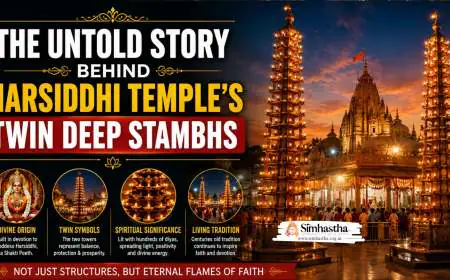
The Untold Story Behind Harsiddhi Temple's Twin Deep Stambhs

Ujjain Railway Station to Mahakaleshwar Temple Distance (2026 Guide)

Ujjain Simhastha 2028 Dates Announced: Full Shahi Snan & Event Timeline

Benefits of Becoming a Simhastha Volunteer
Ujjain Travel During Shravan Month: What Changes for Visitors
| Darshan Session | Timing |
|---|---|
| Morning Opening | 5:00 AM |
| Morning Darshan | 5:00 AM – 12:00 PM |
| Afternoon Break | 12:00 PM – 4:00 PM |
| Evening Darshan | 4:00 PM – 9:00 PM |
| Evening Closing | 9:00 PM |
The temple is open every day of the week.
Aarti Timings
| Aarti | Timing |
|---|---|
| Morning Aarti | 6:00 AM – 8:00 AM |
| Evening Aarti | 6:30 PM – 7:00 PM |
| Evening Lamp Lighting | Begins around dusk (6:00 PM – 7:00 PM) |
💡 Pro Tip: The evening aarti is when the Deep Stambhs come alive. If you can only visit once, make it around 6:30 PM.
🏛️ The Sacred History: Why This Temple Matters
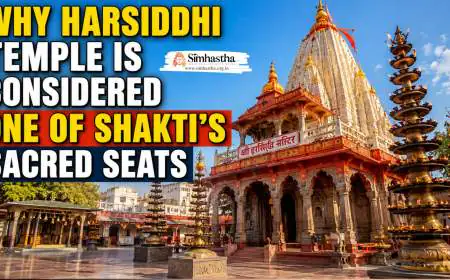
One of the 51 Shakti Peethas
According to Hindu mythology, when Lord Shiva performed the cosmic Tandava carrying the charred body of his beloved Sati, Lord Vishnu used his Sudarshan Chakra to dismember her body into 51 pieces. Each piece fell to earth, creating a Shakti Peetha—a site of immense divine feminine energy.
At Harsiddhi Temple, it was Sati's elbow that fell. This makes the temple one of the most powerful Shakti Peethas in India.
The Goddess Who Vanquishes Demons
According to the Skanda Purana, there is a fascinating legend about how the Goddess acquired the epithet Harsiddhi. When two demons, Chand and Prachand, tried to force their way into Lord Shiva's abode, Goddess Parvati took the form of Harsiddhi (meaning "one who grants wishes with joy and swiftness") and destroyed them, restoring cosmic order.
Over 2,000 Years of Continuous Worship
The temple's history stretches back over 2,000 years. It was originally established by King Vikramaditya, who considered Harsiddhi Mata as his Kuldevi (family deity). The king is said to have performed 11 self-sacrifices at this temple, offering his head to the Goddess and being miraculously revived each time.

The temple also has a connection to the great poet Kalidasa, who is believed to have meditated here.
🌟 The Deity and the Divine Family
The Main Idol
The main deity of the temple is Goddess Harsiddhi, depicted in the form of Mahishasura Mardini (the slayer of the demon Mahishasura). The idol is 4 feet tall, made of marble, and faces the sanctum of Mahakal. It has four arms, holding:
-
Right hands: Sword and trident
-
Left hands: Bell and skull
The idol is vermillion-painted and has small eyes. Meenakar (fish-shaped) eyes are affixed externally—sourced from Nathdwara and made with silver. Remarkably, no chemical is used for attaching the eyes; they're stuck with a fluid derived from the hive of honey bees.
The Divine Family
The temple houses three main deities:
| Deity | Significance |
|---|---|
| Goddess Harsiddhi | Main deity, Mahishasura Mardini form |
| Mahalakshmi | Goddess of wealth and prosperity |
| Mahasaraswati | Goddess of knowledge and wisdom |
The temple also features a rare stone-carved Sri Yantra—a powerful geometrical form of cosmic energy worshipped by tantriks and yogis.
🔥 The Deep Stambh: A Spectacle of Light
This is the most photographed feature of the Harsiddhi Temple—and for good reason.
Two Towering Pillars of Light
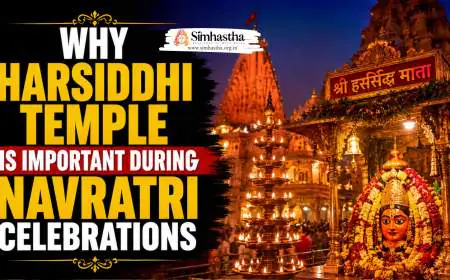
The temple features two giant lamp towers (Deep Stambhs), each standing 51 feet tall with 1,011 lamp holders.
The Evening Ritual
Every evening, six workers climb these towering pillars to light the lamps. The task is extremely risky because oil spills make the towers slippery. The team receives ₹2,500 daily for this dangerous work, shared among the six workers.
During Navratri and special festivals, the lighting is even more spectacular, with over 10,000 devotees gathering for the evening aarti and Deep Malika lighting.
💡 Pro Tip: The best time to witness the Deep Stambh lighting is dusk (around 6:30 PM) . Arrive at least 20 minutes early to secure a good viewing spot.
Why It's Special
Devotees believe that lighting lamps on these pillars is a way to fulfill their wishes. The Deep Stambhas were established by Emperor Vikramaditya and are special features of Maratha art.
📜 Unique Rituals and Traditions
No Shayan Aarti During Navratri
Unlike most temples where the deity is put to sleep with a nighttime ritual, Harsiddhi Mata never sleeps during Navratri. The Goddess remains awake, alert, and ready to receive devotees' prayers throughout the nine nights.
No Entry Inside the Sanctum During Navratri
During Navratri, entry inside the sanctum sanctorum is not allowed. Instead, devotees get to see the Goddess in a special form—a silver mask of the deity placed outside for darshan.
Singhvasini Form
On the Dashmi (tenth day) of both Chaitra and Ashwin Navratris, the Goddess is adorned with a special Shringar and devotees are blessed with her portrayal in the Singhvasini (lion-riding) form.
Guru Puja
A special ritual at the temple involves offering prayers to Lord Shiva, who is regarded as the Guru (teacher) of all gods. Devotees seek his blessings for wisdom, knowledge, and spiritual growth.
No Animal Sacrifice
Despite its tantric connections, there is no animal sacrifice in the temple because the Goddess here is considered Vaishnav and is the family deity of the Parmar dynasty.
🛕 How to Reach Harsiddhi Temple
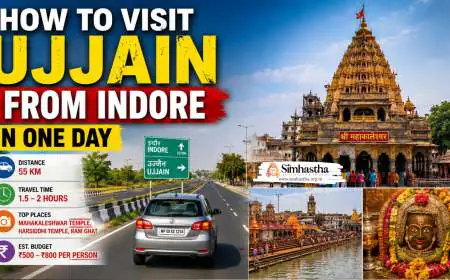
The temple is located on the western side of the Mahakaleshwar Temple, just a 5-minute walk away.
| From | Distance | Time | Cost |
|---|---|---|---|
| Mahakaleshwar Temple | 500 meters | 5 min walk | Free |
| Ujjain Junction (Railway) | 2 km | 10 min auto | ₹80–120 |
| Ram Ghat | 1 km | 5 min auto | ₹50–80 |
| Kal Bhairav Temple | 2.5 km | 15 min auto | ₹100–150 |
Address: Jaisinghpura, Ujjain, Madhya Pradesh 456003
💡 Pro Tip: It's easiest to visit Harsiddhi Temple immediately before or after your Mahakal Darshan, as they are very close to each other.
🏛️ Nearby Temples and Attractions
Harsiddhi Temple is surrounded by several important spiritual sites:
| Temple/Attraction | Distance | Significance |
|---|---|---|
| Mahakaleshwar Temple | 500 m (5 min walk) | One of 12 Jyotirlingas |
| Ram Ghat | 1 km | Evening Shipra Aarti |
| Kal Bhairav Temple | 2.5 km | Unique liquor offering ritual |
| Ganga Ghat (Mounteerth) | 1.5 km | 108-year Mahamrityunjaya Yagya |
| Mangalnath Temple | 4 km | Birthplace of Mars |
| Sandipani Ashram | 3 km | Ancient Gurukul of Krishna |
Many pilgrims combine their Harsiddhi visit with these nearby sites for a complete spiritual experience.
📋 Essential Tips for First-Time Visitors
Dress Code
| Gender | Acceptable Attire |
|---|---|
| Men | Dhoti, kurta, or traditional wear (no shorts) |
| Women | Saree or traditional salwar kameez (no revealing clothing) |
What to Carry
-
ID proof – For entry (sometimes checked during festivals)
-
Cash – For offerings and donations
-
Camera/Phone – For Deep Stambh photos (ask before taking)
-
Water bottle – To stay hydrated
Temple Etiquette
-
Remove footwear before entering the temple premises
-
No photography inside the sanctum
-
Maintain silence inside the temple
-
No smoking or alcohol near the temple
-
Be respectful during the aarti
Safety Tips
-
Keep valuables secure – Crowded areas can attract pickpockets
-
Stay hydrated – The temple area can get hot
-
Avoid peak festival days – Navratri crowds are enormous
-
Visit early morning or evening – Best darshan experience
💡 What to See Inside the Temple
Here's what you should focus on during your visit:
| What to See | Why It Matters |
|---|---|
| Main Deity | Idol of Goddess Harsiddhi in Mahishasura Mardini form |
| Deep Stambhs | Two towering lamp pillars with 1,011 lamps each |
| Sri Yantra | Rare stone-carved cosmic energy symbol |
| Annapurna Idol | Vermillion-painted idol of Goddess Annapurna |
| Mahalakshmi | Goddess of wealth |
| Mahasaraswati | Goddess of knowledge |
| Evening Aarti | Spectacular ritual with lamps and chants |
| Ritual Offerings | Simple and sacred prasad distribution |
🕒 Best Time to Visit
| Time of Day | Experience |
|---|---|
| 5:00 AM – 7:00 AM | Peaceful, morning aarti, calm |
| 9:00 AM – 11:00 AM | Moderate crowd |
| 4:00 PM – 6:00 PM | Preparations for evening aarti begin |
| 6:30 PM – 7:00 PM | Evening aarti + Deep Stambh lighting (best time!) |
| 7:30 PM – 9:00 PM | Quieter after the aarti |
Seasonal Considerations
| Season | Months | What to Expect |
|---|---|---|
| Winter | October – March | Pleasant weather, ideal visit |
| Summer | April – June | Very hot, avoid midday |
| Monsoon | July – September | Humid, carry umbrella |
| Navratri | March-April & Sept-Oct | Massive crowds, vibrant celebrations |
🌟 What Makes Harsiddhi Temple Special?
The Power of the Elbow
Being one of the 51 Shakti Peethas, the temple holds immense energy. The elbow represents the dynamic power of execution—the hinge upon which the universe's actions turn.
The Tantric Connection
The temple is revered in the Tantrik tradition as a powerful seat of Divine Energy. It's considered one of the most potent generators of energy among the 51 Shakti Peethas. Tantriks from across India come here to complete their sadhana.
Unique, Rare Traditions
-
No Shayan Aarti during Navratri – The Goddess stays awake
-
No entry inside sanctum during Navratri – Silver mask instead
-
1,011 lamps on 51-foot towers – Lit every evening
-
Sri Yantra enshrined in stone – Rare geometrical form of cosmic energy
-
No animal sacrifice – Despite tantric connections
The Divine Protection
Devotees believe that worship at Harsiddhi Temple protects against black magic, fear, and bad dreams. It's a place of fierce protection as much as divine blessing.
💬 Final Thoughts: More Than Just a Temple
Harsiddhi Temple is not just a stop on your Ujjain itinerary—it's a destination in its own right. It offers a unique blend of history, mythology, art, spirituality, and community life. The divine feminine energy is palpable, the rituals are powerful, and the atmosphere is unforgettable.
A few things to remember:
-
Harsiddhi is a Shakti Peetha—show respect for the sacred feminine energy.
-
The evening Deep Stambh lighting is not to be missed—it's one of the most beautiful sights in Ujjain.
-
The temple is within walking distance of Mahakal, so plan your visit accordingly.
-
Navratri is extraordinary but crowded—decide if you want that experience or prefer a quieter visit.
Whether you come seeking the blessings of the Divine Mother, curious about the Deep Stambhs, or simply wanting to experience one of India's oldest Shakti Peethas—Harsiddhi Temple will leave you feeling protected, blessed, and connected to the divine feminine.
Jai Maa Harsiddhi! 🙏🔱🌺
Frequently Asked Questions