
















How Sector-Based Movement Will Control Crore-Level Crowds in Simhastha 2028
Simhastha 2028 will manage crore-level pilgrim footfall using sector-based movement planning, zoning, timed access, and controlled circulation across Ujjain.
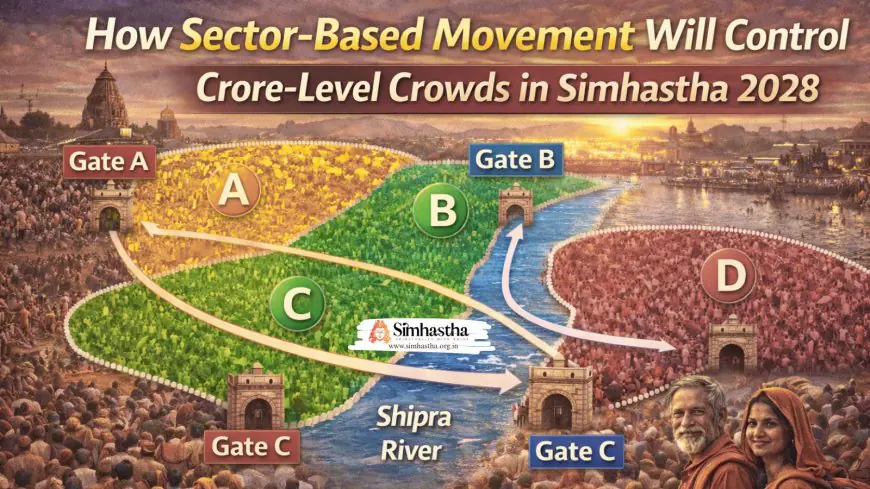


Why Simhastha 2028 Needs a Sector-Based Movement System
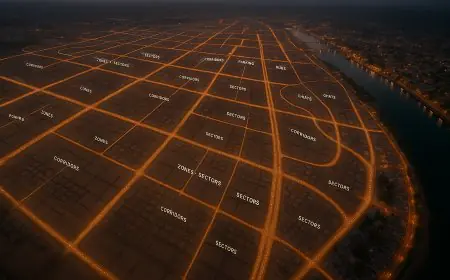
Simhastha 2028 is not a conventional religious gathering. It is a once-in-twelve-years convergence where crore-level pilgrim footfall enters a historic city within a short ritual window. Traditional crowd control methods are insufficient at this scale. This is why sector-based movement planning has become the backbone of Simhastha 2028 operations.
Unlike earlier melas where crowd flow evolved organically, Simhastha 2028 is being designed as a pre-mapped, zone-regulated spiritual city, capable of absorbing millions of pilgrims per day without chaos, congestion, or safety compromise.
For Every pilgrims, understanding Simhastha 2028 dates and the official Shahi Snan timeline is essential before booking flights or accommodation, as these sacred dates are completely non-negotiable.
What Is Sector-Based Movement in Simhastha 2028
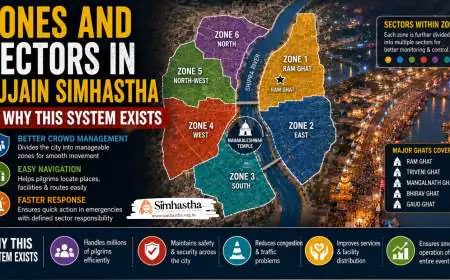
Sector-based movement divides the entire Simhastha landscape into clearly defined administrative and movement sectors, each functioning like a self-contained unit. Every sector has:
Trending Guides Now

How Crowd Density Is Calculated During Simhastha 2028 ?
How Crowd Buffer Zones Absorb Sudden Pilgrim Surges at Simhastha

Kshipra Riverfront Zones: What Pilgrims Must Know for Simhastha 2028

Why Residential Zones and Ritual Zones Are Kept Separate in Simhastha 2028

Ujjain Railway Station to Mahakaleshwar Temple Distance (2026 Guide)

Ujjain Simhastha 2028 Dates Announced: Full Shahi Snan & Event Timeline

Ujjain Simhastha Update: CM Mohan Yadav Reviews 2028 Works
Ujjain Railway Station to Kal Bhairav Temple: Distance, Auto Fare and Best Route
-
Fixed entry and exit corridors
-
Assigned ghats and ritual access points
-
Dedicated pedestrian routes
-
Medical, sanitation, and emergency infrastructure
-
Crowd capacity thresholds
Pilgrims are guided, not herded. Movement is directional, predictable, and staggered, reducing cross-flow pressure.

How Sector Zoning Prevents Crore-Level Bottlenecks
The biggest risk in large religious gatherings is uncontrolled convergence. Sector zoning prevents this by ensuring that no two massive flows collide at a single point.
Each sector operates on timed access principles:
-
Arrival windows are staggered
-
Ghat access is rotational
-
Holding areas absorb surplus footfall
-
Exit routes never overlap with entry routes
This ensures that even on peak Shahi Snan days, the crowd behaves like multiple medium-sized gatherings, not one overwhelming mass.
To deepen your understanding of the spiritual customs and sacred rituals practiced during Ujjain Simhastha, read our complete Simhastha rituals and sacred practices guide that explains their meaning, timing, and significance.
Role of Entry Corridors and Holding Zones
Before pilgrims reach the core bathing ghats, they pass through outer holding zones. These zones are critical pressure valves.
Holding zones allow authorities to:
-
Pause movement temporarily
-
Release crowds in controlled batches
-
Respond to weather or ritual timing changes
-
Prevent sudden surges toward the river
This system converts unpredictable human movement into manageable, data-driven flow.
Pedestrian-Only Circulation Inside Sectors
Inside Simhastha sectors, pedestrian-only circulation is enforced. Vehicle movement is restricted to peripheral logistics corridors.
This separation:
-
Eliminates vehicle-pedestrian conflict
-
Reduces panic risk
-
Improves response time for medical teams
-
Maintains spiritual calm within ritual zones
Wide corridors, unidirectional lanes, and visual signage ensure intuitive navigation even for first-time pilgrims.
first time Simhastha guide is essential because without contextual understanding, pilgrims arrive prepared for devotion but unprepared for logistics, stamina, patience, and adaptability.
Crowd Density Monitoring and Real-Time Adjustments
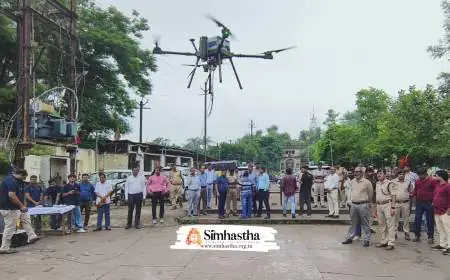
Sector-based movement is not static. Crowd density is continuously monitored using:
-
Ground-level reporting teams
-
CCTV and drone feeds
-
Entry-exit counting systems
If density rises beyond safe limits, sector gates are temporarily sealed, and flow is diverted to alternative zones. This prevents stampede-like conditions before they form.
Also Read | Best Time to Visit Ujjain Simhastha 2028
Emergency Response Within Sector Architecture
Each sector is designed with independent emergency response capability. This means incidents can be resolved locally without triggering city-wide disruption.
Every sector includes:
-
First-response medical units
-
Evacuation corridors
-
Command control points
-
Communication links to central authorities
This decentralized design is key to handling crore-level crowds safely.
Also Read | Step-by-Step Guide to Shipra Snan at Ujjain Kumbh Mela
Why Sector-Based Planning Is the Only Scalable Model
At Simhastha scale, human behavior cannot be controlled through force. It must be guided through design.
Sector-based movement transforms:
-
Chaos into circulation
-
Crowd into flow
-
Risk into regulation
This model allows Simhastha 2028 to remain spiritually immersive while being administratively precise.
Simhastha 2028 and the Future of Mega Pilgrimage Management
What is being implemented at Simhastha 2028 will set a national benchmark. Sector-based crowd regulation is not just about safety. It is about respecting faith by protecting life.
As millions walk toward the Shipra, the invisible architecture of sectors will quietly ensure that devotion moves forward, not dangerously inward.
Also Read | Common Simhastha Mistakes Visitors Must Avoid
Related Simhastha Guides:
- How Sector-Based Movement Will Control Crore-Level Crowds in Simhastha 2028
- How Akhara Camps Are Allocated in Ujjain for Simhastha 2028
- How Crowd Density Is Calculated During Simhastha 2028 ?
- How Sector-Based Crowd Flow Works in Simhastha: A Simple Guide for First-Time Visitors
- Kshipra Riverfront Zones: What Pilgrims Must Know for Simhastha 2028
- Expected Zones & Sectors of Simhastha 2028: A First Look at Ujjain’s Massive Layout
- How Simhastha 2028 Will Transform Ujjain Forever: Dates, Mega Projects & City-Wide Development Plan
- Simhastha 2028 Dates Officially Announced: Full Event & Shahi Snan Timeline
- Simhastha 2028 Ujjain Visiting Guide: Best Dates, Shahi Snan Meaning & Pilgrim Planning
- Big Update: Who Will Handle the Ujjain–Maksi Four-Lane Road and When Does It Start?”
- Indore–Ujjain Six-Lane Highway nearing completion — big step for regional growth!
Frequently Asked Questions