

















Why Residential Zones and Ritual Zones Are Kept Separate in Simhastha 2028
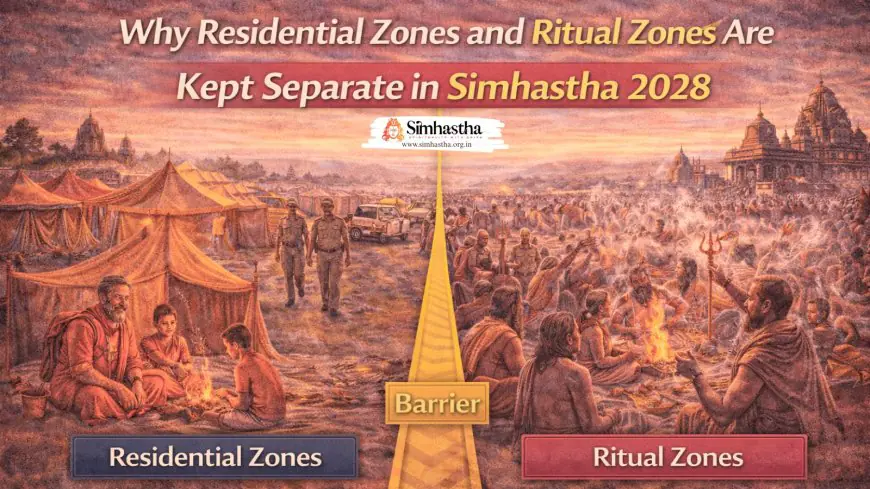
Simhastha 2028 separates residential and ritual zones to manage crore-level crowds, ensure safety, protect rituals, and maintain uninterrupted pilgrim movement.


The Fundamental Question Behind Simhastha 2028 Zoning
One of the most misunderstood aspects of Simhastha 2028 planning is the deliberate separation of residential zones and ritual zones. To an untrained eye, this separation may appear inconvenient. To planners, administrators, and safety experts, it is non-negotiable.
At the scale of Simhastha 2028 crowd management, where crore-level pilgrim footfall converges within narrow ritual windows, spatial separation is not a preference. It is the foundation of safety, order, and spiritual continuity.
For Every pilgrims, understanding Simhastha 2028 dates and the official Shahi Snan timeline is essential before booking flights or accommodation, as these sacred dates are completely non-negotiable.
Understanding Residential Zones in Simhastha 2028
Residential zones in Simhastha are not merely sleeping areas. They are human recovery spaces designed to support pilgrims physically, medically, and psychologically.
Trending Guides Now
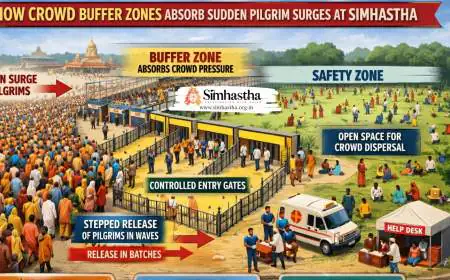
How Crowd Buffer Zones Absorb Sudden Pilgrim Surges at Simhastha
Why Simhastha Zones Are Reconfigured Between Major Snan Days

How Pilgrim Entry Windows Are Time-Segmented During Simhastha
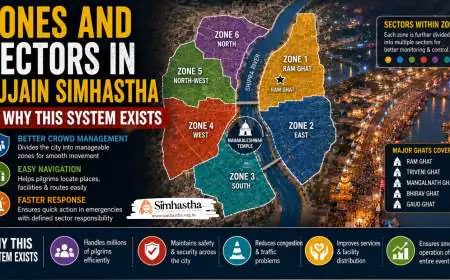
Expected Zones & Sectors of Simhastha 2028: A First Look at Ujjain’s Massive Layout

Ujjain Railway Station to Mahakaleshwar Temple Distance (2026 Guide)

Ujjain Simhastha 2028 Dates Announced: Full Shahi Snan & Event Timeline

Ujjain Simhastha Update: CM Mohan Yadav Reviews 2028 Works

Karkateshwar Mahadev: 22/84 Mahadev of Ujjain
These zones include:
-
Simhastha tent city accommodation
-
Medical facilities and pharmacies
-
Sanitation blocks and water stations
-
Lighting, rest areas, and food distribution points
The primary purpose of residential zoning in Simhastha 2028 is to stabilize pilgrims before and after ritual participation, not to facilitate ritual movement itself.

To deepen your understanding of the spiritual customs and sacred rituals practiced during Ujjain Simhastha, read our complete Simhastha rituals and sacred practices guide that explains their meaning, timing, and significance.
Understanding Ritual Zones in Simhastha 2028
In contrast, ritual zones in Simhastha are high-intensity, time-sensitive spiritual corridors. These zones include:
-
Shipra river ghats
-
Shahi Snan procession routes
-
Akhara access pathways
-
Sacred congregation points
During peak hours, ritual zones experience extreme crowd density, rapid movement, and strict ritual sequencing. Mixing residential functions into these areas would instantly destabilize the system.
first time Simhastha guide is essential because without contextual understanding, pilgrims arrive prepared for devotion but unprepared for logistics, stamina, patience, and adaptability.
Why Separation Is the First Rule of Simhastha Crowd Control
The most important reason residential zones and ritual zones are kept separate in Simhastha 2028 is crowd predictability.
Residential zones generate:
-
Slow movement
-
Random timing
-
Resting and stationary behavior
Ritual zones require:
-
Continuous flow
-
Time-bound movement
-
Directional discipline
Combining these two behaviors in the same space would create uncontrollable cross-pressure, especially during Shahi Snan hours.
Also Read | Best Time to Visit Ujjain Simhastha 2028
Preventing Night-to-Dawn Crowd Surges
One of the biggest risks in Simhastha crowd management occurs between midnight and early morning. Pilgrims waking from residential zones and moving toward ghats create powerful surges.
By locating residential zones away from ritual cores, authorities can:
-
Stage movement gradually
-
Activate holding zones
-
Release pilgrims in controlled batches
This separation is critical for Simhastha dawn safety planning, particularly on Shahi Snan days.
Emergency Access and Medical Response Logic
Another non-negotiable reason for separation is emergency response efficiency.
Residential zones are designed with:
-
Ambulance-friendly layouts
-
Medical triage access
-
Low crowd pressure
Ritual zones, by design, cannot support stationary emergency operations during peak hours. Keeping medical and residential infrastructure outside ritual corridors ensures emergencies can be managed without disrupting sacred flow.
Protecting Ritual Sanctity from Logistical Chaos
Ritual zones in Simhastha 2028 are not just crowd spaces. They are sacred theaters where timing, sequence, and purity matter.
If residential activities such as cooking, resting, baggage storage, or sanitation overlap with ritual pathways, it would:
-
Break ritual discipline
-
Increase sanitation risk
-
Create visual and spiritual disorder
Separation preserves ritual dignity, not just logistics.
Sanitation Load Management
Sanitation demand behaves very differently in residential and ritual zones.
Residential zones require:
-
Continuous sanitation
-
Waste management over long durations
Ritual zones require:
-
Rapid cleaning cycles
-
High-intensity peak sanitation
By separating zones, Simhastha sanitation planning can be tailored precisely, preventing overflow, contamination, and health risks.
Akhara Procession Integrity
Akhara movements during Simhastha are highly choreographed. Their routes must remain clear, predictable, and symbolically pure.
Placing residential clusters near these routes would introduce:
-
Unregulated pedestrian crossings
-
Stationary obstructions
-
Timing disruptions
This is why ritual zoning in Simhastha 2028 strictly isolates Akhara corridors from accommodation areas.
Also Read | Step-by-Step Guide to Shipra Snan at Ujjain Kumbh Mela
Psychological Safety and Crowd Calm
Crowd psychology changes based on environment. Residential zones promote calm, rest, and recovery. Ritual zones generate intensity, urgency, and devotion.
By separating the two, Simhastha planners prevent emotional overload, reducing panic, aggression, and fatigue-related incidents.
This separation quietly stabilizes millions without visible enforcement.
Sector-Based Integration Without Mixing
Importantly, separation does not mean isolation. Residential and ritual zones are integrated at the sector level, connected by:
-
Timed movement corridors
-
Holding areas
-
Volunteer-guided routes
This allows controlled interaction without physical overlap.
Why This Model Is Essential for Simhastha 2028 Scale
Simhastha 2028 will host significantly higher footfall than previous editions. At this scale, even minor spatial miscalculations multiply into systemic risk.
Separating residential zones and ritual zones ensures:
-
Predictable movement
-
Faster emergency response
-
Cleaner sanitation cycles
-
Undisturbed ritual flow
This is not about restriction. It is about protecting devotion through design.
Also Read | Common Simhastha Mistakes Visitors Must Avoid
The Hidden Architecture of Faith Management
Most pilgrims never consciously notice zoning. That invisibility is intentional.
When zoning works, faith feels effortless.
Simhastha 2028 is not controlled by barricades alone. It is governed by spatial intelligence, where separation creates harmony.
Related Simhastha Guides:
- Why Residential Zones and Ritual Zones Are Kept Separate in Simhastha 2028
- What Happens Inside a Simhastha Tent City After Midnight
- How Tent City Kitchens Serve Millions at Simhastha 2028 ?
- Luxury vs Budget Tent Options for Simhastha 2028: What’s Worth Your Money?
- Inside Ujjain’s Mega Tent City: What Pilgrims Can Expect at Simhastha 2028
- How Sector-Based Movement Will Control Crore-Level Crowds in Simhastha 2028
- How Akhara Camps Are Allocated in Ujjain for Simhastha 2028
- How Crowd Density Is Calculated During Simhastha 2028 ?
- How Sector-Based Crowd Flow Works in Simhastha: A Simple Guide for First-Time Visitors
- Kshipra Riverfront Zones: What Pilgrims Must Know for Simhastha 2028
- Expected Zones & Sectors of Simhastha 2028: A First Look at Ujjain’s Massive Layout
- How Simhastha 2028 Will Transform Ujjain Forever: Dates, Mega Projects & City-Wide Development Plan
- Simhastha 2028 Dates Officially Announced: Full Event & Shahi Snan Timeline
- Simhastha 2028 Ujjain Visiting Guide: Best Dates, Shahi Snan Meaning & Pilgrim Planning
- Big Update: Who Will Handle the Ujjain–Maksi Four-Lane Road and When Does It Start?”
- Indore–Ujjain Six-Lane Highway nearing completion — big step for regional growth!
Frequently Asked Questions