



















Luxury vs Budget Tent Options for Simhastha 2028: What’s Worth Your Money?
Compare luxury and budget tent-city stay options for Simhastha 2028 — amenities, comfort, cost, suitability and which option gives best value for your pilgrimage.
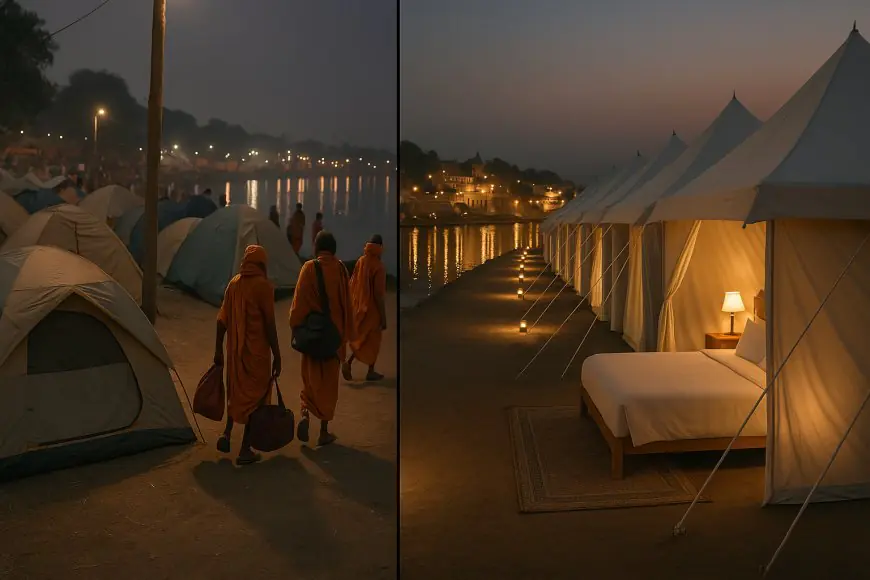


Luxury vs Budget Tent Options for Simhastha 2028: What’s Worth Your Money?
The upcoming Simhastha 2028 promises to bring millions of pilgrims to Ujjain. With such massive footfall, accommodation becomes a crucial aspect — and offers range dramatically: from basic budget-tent-city dorms to curated luxury tents with enhanced amenities. Choosing the right kind of tent stay can greatly shape your pilgrimage experience. In this guide, we compare luxury and budget tent options, breaking down pros, cons, cost, convenience, and who should pick which option.
For Every pilgrims, understanding Simhastha 2028 dates and the official Shahi Snan timeline is essential before booking flights or accommodation, as these sacred dates are completely non-negotiable.
Why Tent-City Remains Popular for Pilgrims
Despite availability of hotels and guesthouses, many pilgrims continue to choose tent stays — and for good reasons. Tent cities offer proximity to ghats, flexibility, community vibe, and often lower cost than hotels. For a large festival like Simhastha 2028, tents also scale easier: they can be set up quickly in large numbers, accommodating even late-arriving pilgrims. This flexibility helps manage spikes in demand without overloading hotel infrastructure.
Given these benefits, whether you pick a luxury or budget tent, the very fact of being in a tent city keeps you in the thick of the pilgrimage energy — the sounds of bells, chants, communal meals, and shared faith.
Trending Guides Now

Affordable Hotels Near Ujjain Railway Station

Ultimate Hotel Booking Guide for Ujjain Visitors

15 Budget Hotels Near Mahakal Temple Ujjain Under ₹1500

Luxury Hotels Near Mahakaleshwar Temple Ujjain: Big Hospitality Boom Underway

Ujjain Railway Station to Mahakaleshwar Temple Distance (2026 Guide)

Ujjain Simhastha 2028 Dates Announced: Full Shahi Snan & Event Timeline

Ujjain Simhastha Update: CM Mohan Yadav Reviews 2028 Works
Ujjain Railway Station to Kal Bhairav Temple: Distance, Auto Fare and Best Route
What Defines a “Budget Tent” for Simhastha
Budget tents (or dorm-style tents) are basic accommodations provided for pilgrims who want to minimize costs. Typical characteristics include:
- Shared dormitories or large tents with multiple beds/mattresses
- Minimal furniture — often just a mattress or thin cot, shared washrooms
- Basic sanitation; water supply may be limited or community-managed
- Shared community meals or reliance on nearby local eateries
- Proximity to ghats or shuttle pickup points for convenience
- Simple lighting and limited privacy — mixing of many pilgrims in one space
These tents suit pilgrims who prioritize spiritual goals and budget over comfort. For many, tent life becomes part of the pilgrimage’s austerity and devotion — communal living, shared hardship, and equality among pilgrims.
To deepen your understanding of the spiritual customs and sacred rituals practiced during Ujjain Simhastha, read our complete Simhastha rituals and sacred practices guide that explains their meaning, timing, and significance.
Advantages of Budget Tents
- Lowest cost — ideal for pilgrims coming on tight budgets or groups/families travelling together.
- Flexibility: Easy to book even at short notice or for short duration stays (1–3 nights).
- Close to ghats or shuttle zones: Reduces commute time for snan or aarti.
- Communal atmosphere: Shared living encourages fellowship, chanting, collective meals — many find this spiritually enriching.
Trade-offs with Budget Tents
- Privacy is minimal — shared rooms and washrooms may be uncomfortable for women or families.
- Amenities are basic — bedding, sanitation, water, light might be rudimentary or inconsistent.
- Hygiene and comfort issues — with heavy use and large crowd, cleanliness may suffer.
- Noise and crowd pressure — constant movement of pilgrims, early morning wake-ups for snan, limited rest space.
Thus budget tents suit pilgrims willing to surrender comfort for devotion and practicality.
What Defines a “Luxury Tent” Option for Simhastha 2028
Luxury tents (also sometimes called “premium tent stays”) offer enhanced amenities while retaining the tent-city spirit. These may be organized by trusted agencies, pilgrim welfare boards, or private hospitality providers. Key features usually include:
- Private or semi-private tent cabins with proper beds, bedding, and mosquito nets
- Attached or shared but well-maintained washrooms, changing rooms with sanitation
- Clean drinking water supply, pressing/fan or AC arrangements depending on weather
- Meals provided (breakfast/lunch/dinner) or access to hygienic food stalls
- Security, guarded entrance/exit, light after sunset, sometimes storage lockers for valuables
- Proximity to shuttle routes, medical and sanitary facilities — overall safer and secure environment
- Comfortable stay for families, elderly, women travelling alone or group travellers seeking convenience
Essentially, luxury tents aim to provide a “hotel-like” feel in the tent-city area, combining convenience with pilgrimage proximity.

first time Simhastha guide is essential because without contextual understanding, pilgrims arrive prepared for devotion but unprepared for logistics, stamina, patience, and adaptability.
Advantages of Luxury Tents
- Better hygiene & comfort — easier rest after long rituals; better sanitation reduces health risk.
- Privacy & security — private cabins and safe storage make it family-friendly and comfortable for women.
- Convenience: Meals, water, clean bedding — less stress on pilgrims during dense Kumbh days.
- Ease of coordination: For families, elderly or long stays, a stable base with comfort matters more than austerity.
Potential Drawbacks of Luxury Tents
- Higher cost compared to basic tents — may stretch budget for long stays or large groups.
- Availability risk: Premium tents may get booked quickly after Kumbh dates are announced, leading to price surges or last-minute unavailability.
- Less communal vibe: You may miss the collective energy and simple pilgrim lifestyle that budget tents offer.
- Dependency on services: If amenities (water, meals) are disrupted due to crowd pressure, comfort may go down rapidly.
Luxury tents are ideal for pilgrims prioritizing comfort, safety and stable stay over minimalistic austerity.
Also Read | Best Time to Visit Ujjain Simhastha 2028
Cost Comparison: Budget vs Luxury Tent Stays (Indicative)
While exact rates will depend on demand and booking time, a rough estimate helps pilgrims plan their budget wisely:
- Budget Tent / Dorm stay: ₹300 – ₹800 per night (basic dorms or shared tents)
- Mid-range Tent stay (better mattress, shared washroom): ₹800 – ₹1500 per night
- Luxury Tent stay (private cabin, meals, amenities): ₹1500 – ₹3500+ per night depending on facilities
- High-end “Premium Package” tents (with added comfort, services): ₹3500 – ₹6000+ per night — depending on group size, included meals, and location
For a 4-5 day stay, a budget pilgrim may manage with a lower total cost, but comfort, rest and hygiene — especially for seniors or families — might make luxury tents more cost-effective in long run.
Who Should Choose Which Option?
Before settling on a type of stay, evaluate your priorities: budget, comfort, group size, health, age and spiritual goals. Here’s a quick suggestion based on traveller profiles:
- Solo pilgrims / pilgrims on budget / spiritual minimalists: Budget tent or dorm stay works — especially for short stays or minimal expenses.
- Families with children / elderly pilgrims / women travellers: Luxury or mid-range tent stays are more secure and comfortable.
- Groups or yatras travelling together: Budget or mid-range tents help manage cost per head better; shared meals and group coordination easier.
- Pilgrims planning long stay / repeated rituals / Shahi Snan + follow-up darshans: Luxury tents often offer better rest, hygiene and stability — useful for multi-day stays.
Ultimately the “best” stay aligns with both your budget and your comfort needs — neither comfort nor austerity is a measure of devotion.
Also Read | Step-by-Step Guide to Shipra Snan at Ujjain Kumbh Mela
How to Book Tent Stay Wisely for Simhastha 2028
Because demand will be high, booking tent stays requires early planning — especially for luxury tents. Here are some tips many experienced pilgrims recommend:
- Plan early: Book tents as soon as official Simhastha dates are announced — waiting may lead to price surges or unavailability.
- Confirm amenities: Ensure availability of clean water, toilets, secure entry, meals if promised — get written confirmation.
- Check location: Prefer tents near ghats or shuttle corridors to avoid long daily commuting.
- Travel in group: For budget tents — group booking helps reduce per-head cost and improves safety.
- Keep backups: Have alternate stay plans (guesthouses/hotels) in case tents get full.
- Carry essentials: Sleeping sheet, lock for luggage, torch, toiletries — helpful especially in budget tents.
- Verify hygiene & sanitation: Ensure clean washrooms and water supply before finalizing stay.
What’s Truly Worth Your Money?
The answer depends on what you value most. If you see the pilgrimage as a test of faith and are willing to accept minimal comfort for deep spiritual experience — budget tents offer you that raw, intense connection. The shared hardship, the early-morning chills, communal food, open-air living — that simplicity can deepen your inner surrender.
On the other hand, if your pilgrimage involves family, elderly members, or you need rest and hygiene after prayer and snan, luxury tents can be a blessing. Clean bedding, warm water, secure storage and accessible bathrooms help you keep physical comfort intact so you can focus entirely on spirituality rather than logistic discomfort.
Many seasoned pilgrims say: “Comfort does not dilute devotion — it preserves it.” A peaceful body rests better, focuses better, chants better.
Also Read | Common Simhastha Mistakes Visitors Must Avoid
Conclusion: Choose According to Your Journey, Not Peer Pressure
There is no universal “best choice” — only the “right choice for you.” Simhastha is a deeply personal pilgrimage. Let your health, budget, family needs and devotion guide your decision. Whether you choose a humble tent dorm or a comfortable luxury tent — what matters most is the sincerity of your heart, the purity of your intention and the devotion you carry in every dip, prayer and walk.
May your stay be safe, your snan be purifying, and your pilgrimage transform you from within.
Related Simhastha 2028 Guides :
-
- Simhastha 2028 Dates Officially Announced: Full Event & Shahi Snan Timeline
- Top 10 Routes to Enter Ujjain During Simhastha 2028 Without Traffic Hassles
- How to Travel Inside Ujjain During Simhastha 2028: Routes, Maps and Movement Plans
- How to Travel in Ujjain During Peak Snan Days: Do’s & Don’ts for Simhastha 2028
- Solo Travel Guide for Simhastha 2028: Safety, Budget, Stay & Movement Tips
- Mumbai to Ujjain for Simhastha 2028: Fastest Routes & Budget Tips
- Bengaluru to Ujjain for Simhastha 2028: Night Travel vs Day Travel Comparison
- Delhi to Ujjain for Simhastha 2028: Fastest Same-Day Travel Plan for Pilgrims
- Ujjain Simhastha from New York: Best Travel & Stay Guide
- Ujjain Simhastha From London: Complete Travel & Stay Guide
Frequently Asked Questions