

































How Simhastha Authorities Decide When to Dismantle a Tent Zone
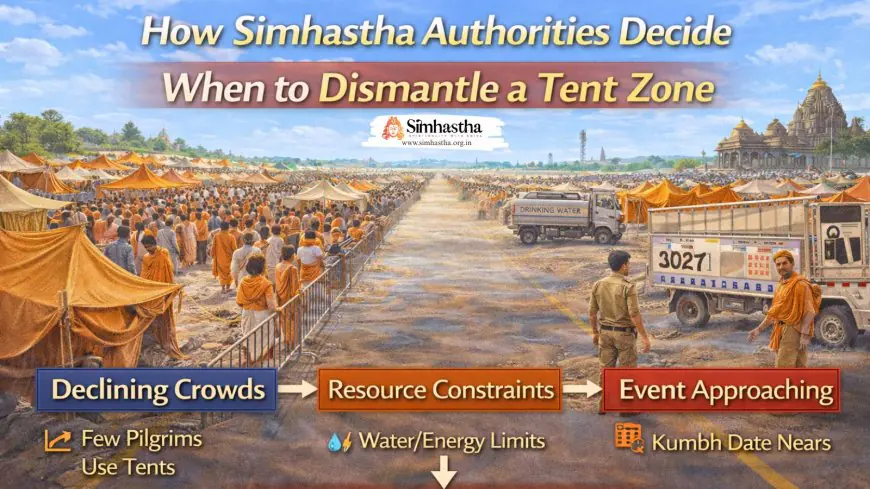
Simhastha authorities dismantle tent zones based on crowd pressure, sanitation limits, safety thresholds, ritual schedules, and real-time administrative risk assessment.


Why Tent Zones Are Never Meant to Last for the Entire Simhastha
A common misconception among pilgrims is that Simhastha tent zones are dismantled only when they are damaged, overcrowded, or no longer needed. In reality, tent zone dismantling during Simhastha is a planned administrative action, guided by predefined safety, sanitation, and crowd-movement thresholds.
From the moment a tent zone is erected, authorities already know the conditions under which it will be dismantled. This foresight is what allows Simhastha to function safely despite extreme population density.
For Every pilgrims, understanding Simhastha 2028 dates and the official Shahi Snan timeline is essential before booking flights or accommodation, as these sacred dates are completely non-negotiable.
Tent Zones as Dynamic Control Units, Not Accommodation Assets
In Simhastha tent city planning, a tent zone is treated as a dynamic control unit, not a static accommodation facility. Each zone has a limited operational life defined by:
Trending Guides Now

Affordable Hotels Near Ujjain Railway Station

Ultimate Hotel Booking Guide for Ujjain Visitors

15 Budget Hotels Near Mahakal Temple Ujjain Under ₹1500

Luxury Hotels Near Mahakaleshwar Temple Ujjain: Big Hospitality Boom Underway

Ujjain Railway Station to Mahakaleshwar Temple Distance (2026 Guide)

Ujjain Simhastha 2028 Dates Announced: Full Shahi Snan & Event Timeline

Mangalnath Temple Trip Budget: Puja, Local Transport, Food and Stay Planning

Omkareshwar Trip Budget Guide: Transport, Stay, Food and Local Travel Costs
-
Expected footfall duration
-
Sanitation absorption capacity
-
Crowd behavior patterns
-
Proximity to future ritual corridors
Once a zone approaches its operational limits, dismantling becomes a preventive safety decision, not a reactive one.
The First Trigger: Crowd Pressure Redistribution
One of the earliest signals for tent zone dismantling in Simhastha is crowd pressure imbalance. After major events like Shahi Snan, pilgrim distribution changes dramatically.

Authorities monitor:
-
Density per square meter
-
Corridor congestion levels
-
Emergency corridor accessibility
If a tent zone begins to:
-
Generate excessive pedestrian load
-
Block critical movement paths
-
Stress nearby ritual zones
it is flagged for phased dismantling.
To deepen your understanding of the spiritual customs and sacred rituals practiced during Ujjain Simhastha, read our complete Simhastha rituals and sacred practices guide that explains their meaning, timing, and significance.
Sanitation Load as a Non-Negotiable Threshold
Sanitation is one of the hardest limits in Simhastha operations. Even with continuous cleaning, a tent zone has a finite sanitation lifecycle.
Key indicators include:
-
Waste accumulation below ground
-
Drainage fatigue
-
Water contamination risk
When sanitation metrics approach unsafe levels, Simhastha authorities dismantle the tent zone regardless of crowd demand. This decision protects public health across the entire mela.
Emergency Access Degradation
Another critical trigger is emergency corridor compromise. Tent zones are dismantled if they begin to:
-
Narrow emergency routes
-
Increase ambulance response time
-
Obstruct evacuation paths
In Simhastha governance, no accommodation zone is allowed to weaken emergency response capability. Safety overrides occupancy.
first time Simhastha guide is essential because without contextual understanding, pilgrims arrive prepared for devotion but unprepared for logistics, stamina, patience, and adaptability.
Ritual Calendar and Future Movement Corridors
Simhastha unfolds in phases, and ritual priorities shift over time. Areas that are safe for accommodation early in the event may later fall within:
-
Akhara procession routes
-
Shahi Snan congregation paths
-
High-intensity ritual buffers
When a tent zone overlaps with future ritual movement needs, dismantling is scheduled in advance to prevent conflict between devotion and residence.
Structural Fatigue and Environmental Stress
Temporary infrastructure degrades faster than permanent structures. Authorities continuously assess:
-
Tent stability
-
Electrical safety
-
Wind and weather exposure
-
Ground subsidence
When structural risk increases beyond acceptable limits, dismantling is chosen over repair. At Simhastha scale, rebuilding is safer than reinforcing aged temporary setups.
Also Read | Best Time to Visit Ujjain Simhastha 2028
Crowd Behavior and Psychological Signals
Not all dismantling decisions are based on physical metrics. Crowd psychology also plays a role.
Warning signs include:
-
Increased confusion in navigation
-
Frequent disputes over space
-
Fatigue-driven non-compliance
These behavioral signals suggest that a zone is no longer functioning calmly, making dismantling and reconfiguration the safer option.
Administrative Forecasting and Risk Windows
Simhastha authorities operate on forecast models, not daily improvisation. If projections show that:
-
Incoming footfall will exceed zone capacity
-
Weather conditions will worsen
-
Emergency resources will be stretched
tent zones are dismantled before problems arise. This proactive approach is why large-scale failures are rare.
Phased Dismantling, Not Sudden Eviction
Importantly, tent zones are never dismantled abruptly. The process is phased:
-
New zones are prepared
-
Pilgrims are redirected gradually
-
Services are shifted
-
Dismantling begins only after relocation
This ensures zero panic and zero displacement chaos.
Also Read | Step-by-Step Guide to Shipra Snan at Ujjain Kumbh Mela
Coordination Between Multiple Authorities
The decision to dismantle a tent zone is never unilateral. It involves:
-
District administration
-
Police and disaster management teams
-
Sanitation and health departments
-
Infrastructure engineers
Only when all departments confirm that dismantling improves overall safety does the decision proceed.
Why Keeping a Tent Zone Too Long Is Riskier Than Removing It
From an administrative perspective, overstaying a tent zone is more dangerous than dismantling it early. Prolonged use increases:
-
Sanitation stress
-
Structural fatigue
-
Crowd complacency
Simhastha planning prioritizes preventive withdrawal over reactive crisis management.
How This Decision Framework Scales for Simhastha 2028
For Simhastha 2028, the same decision logic is being strengthened with:
-
More frequent assessments
-
Faster relocation capability
-
Modular tent infrastructure
The principle remains unchanged. Temporary cities must remain temporary to remain safe.
Also Read | Common Simhastha Mistakes Visitors Must Avoid
The Discipline Behind Invisible Decisions
Most pilgrims never notice when a tent zone quietly disappears. That invisibility is intentional.
When dismantling is done correctly:
-
There is no panic
-
No disruption
-
No headlines
In Simhastha governance, the best decisions are the ones pilgrims never realize were made.
Related Simhastha Guides:
- How Simhastha Authorities Decide When to Dismantle a Tent Zone
- Why Tent Cities Are Rebuilt Multiple Times During Simhastha
- How Emergency Corridors Are Built Inside Simhastha Zones
- Why Residential Zones and Ritual Zones Are Kept Separate in Simhastha 2028
- What Happens Inside a Simhastha Tent City After Midnight
- How Tent City Kitchens Serve Millions at Simhastha 2028 ?
- Luxury vs Budget Tent Options for Simhastha 2028: What’s Worth Your Money?
- Inside Ujjain’s Mega Tent City: What Pilgrims Can Expect at Simhastha 2028
- How Sector-Based Movement Will Control Crore-Level Crowds in Simhastha 2028
- How Akhara Camps Are Allocated in Ujjain for Simhastha 2028
- How Crowd Density Is Calculated During Simhastha 2028 ?
- How Sector-Based Crowd Flow Works in Simhastha: A Simple Guide for First-Time Visitors
- Kshipra Riverfront Zones: What Pilgrims Must Know for Simhastha 2028
- Expected Zones & Sectors of Simhastha 2028: A First Look at Ujjain’s Massive Layout
- Simhastha 2028 Dates Officially Announced: Full Event & Shahi Snan Timeline
Frequently Asked Questions