



















Transport Lessons from 2016 Used in Ujjain Simhastha 2028
Discover which transport strategies from Ujjain Simhastha 2016 are being reused and improved for 2028, including traffic zoning, rail flow, and pedestrian models.


Transport Lessons from 2016 Used in Simhastha 2028
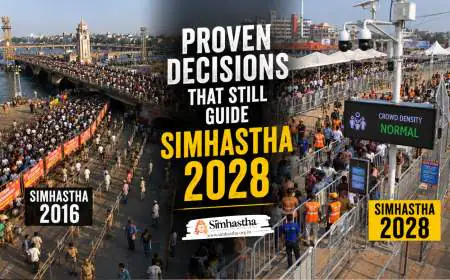
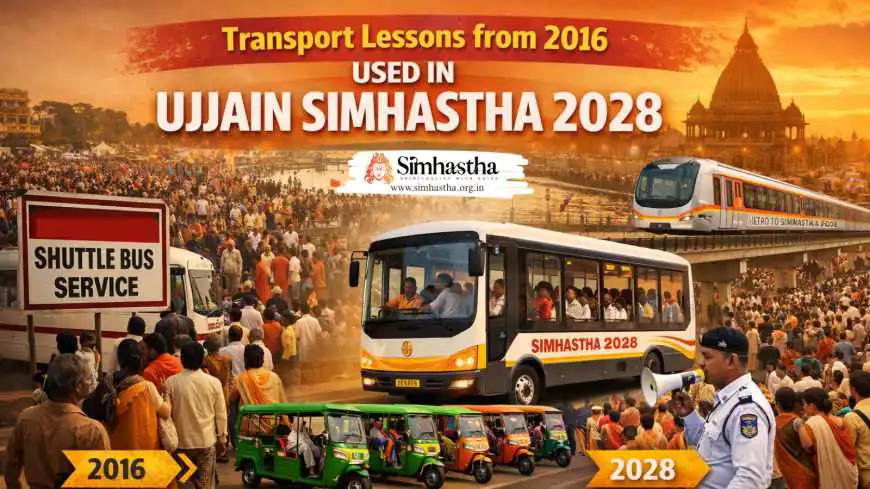
The transport strategy for Simhastha 2028 is built on key lessons from Simhastha 2016, including the need for outer parking systems, shuttle-based movement, zonal traffic control, and restricted vehicle access near ghats. These improvements aim to reduce congestion, improve crowd flow, and ensure safer, faster movement of pilgrims during peak days.
If Simhastha 2016 was a test of scale, Simhastha 2028 is a response shaped by experience. The movement of millions through Ujjain’s roads in 2016 revealed something crucial: transport is not just about vehicles, it is about flow design.
Every delay, every bottleneck, every overcrowded road became a lesson. And now, those lessons are being turned into systems that are smarter, earlier, and far more controlled.
For Every pilgrims, understanding Simhastha 2028 dates and the official Shahi Snan timeline is essential before booking flights or accommodation, as these sacred dates are completely non-negotiable.
Trending Guides Now

Simhastha 2016 Crowd Statistics: Official Figures vs Ground Estimates Explained
What Happened at Simhastha 2016 in Ujjain? Complete Overview
How Ujjain Managed Millions During Simhastha 2016 ?
How Many People Attended Simhastha 2016? Official Estimates Explained

Ujjain Railway Station to Mahakaleshwar Temple Distance (2026 Guide)

Ujjain Simhastha 2028 Dates Announced: Full Shahi Snan & Event Timeline
Mangalnath Temple Trip Budget: Puja, Local Transport, Food and Stay Planning
Omkareshwar Trip Budget Guide: Transport, Stay, Food and Local Travel Costs
The First Realization: Pilgrims Do Not Move Like Commuters
Traditional city models failed during the early phases of Ujjain Kumbh transport management because pilgrims behave differently from office traffic.
They:
-
travel in emotional clusters
-
pause for regrouping
-
slow down near symbolic landmarks
-
change direction suddenly

-
choose familiarity over shortest distance

Any system expecting mechanical movement collapses.
By mid cycle in 2016, planners shifted toward what later became known informally as the human river model. Instead of forcing straight lines, authorities shaped flexible corridors.
For Simhastha mobility strategy 2028, this behavioral understanding is foundational.
Why Distance Became the Strongest Safety Device
In early days, attempts were made to bring vehicles relatively closer to high demand areas. The outcome was congestion spirals, stalled emergency routes, and pedestrian compression.
The conclusion hardened quickly.
Closer parking equals slower movement.
So perimeters expanded. Walking distances increased. Yet paradoxically, total time improved because choke points disappeared.
For Simhastha 2028 route planning, outer parking philosophy is expected to be applied from day one.
To deepen your understanding of the spiritual customs and sacred rituals practiced during Ujjain Simhastha, read our complete Simhastha rituals and sacred practices guide that explains their meaning, timing, and significance.
The Ring Structure That Changed Everything
A major evolution during the previous cycle was development of layered control geography. Transport managers effectively designed concentric zones for Kumbh traffic control:
-
arrival capture at highways
-
staging and parking sectors
-
regulated pedestrian funnels
-
protected ritual zones
Each layer absorbed shock before it passed inward.
This became the backbone of the later Ujjain diversion plan.
For 2028, technology will enhance the same architecture rather than replace it.
Segregation Prevented Stagnation
When buses, autos, motorcycles, supply vehicles, and walkers occupied the same road, movement slowed to a crawl. Separation dramatically improved performance.
Thus emerged dedicated pedestrian corridors in Simhastha, reserved emergency lanes, and isolated service routes.
Authorities discovered that clarity beats improvisation.
Shock Arrival From Railways
Another intense lesson involved railway discharge. When multiple trains unloaded simultaneously, thousands reached city entry points at once. Without buffer strategy, density rose dangerously.
Later interventions introduced holding, staging, and timed release.
For Simhastha railway management 2028, synchronization between rail schedules and ground absorption capacity is expected to be far tighter.
Bus Depots as Volume Regulators
Rather than direct drop toward ghats, bus stations became distribution machines. Pilgrims were routed through controlled channels, smoothing the transition between arrival and ritual geography.
This philosophy now informs the projected bus movement plan for Simhastha 2028.
first time Simhastha guide is essential because without contextual understanding, pilgrims arrive prepared for devotion but unprepared for logistics, stamina, patience, and adaptability.
Communication Reduced Anxiety
In the absence of information, crowds hesitate. Hesitation becomes blockage. Informed pilgrims move with confidence.
By the latter half of 2016, expanded loudspeaker systems, visual direction boards, and volunteer lines helped stabilize psychology.
For 2028, digital plus physical guidance will likely amplify this lesson.
Dynamic Rules for Dynamic Days
Perhaps the most important realization:
one transport plan cannot serve every day.
Royal baths require a different machine than moderate days. Therefore planners developed flexible protocols.
This adaptive mindset shapes the coming peak day traffic strategy.
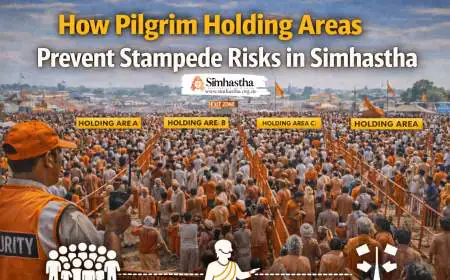
Holding Areas Saved Capacity
Temporary grounds allowed authorities to regulate forward movement rather than permitting uncontrolled surges toward the river. Release waves proved safer.
Expect upgraded versions of these buffers in Ujjain Simhastha crowd management 2028.
Local Knowledge Was Operational Gold
Officers who understood neighborhood pathways, informal shortcuts, and historical pressure points solved problems faster than centralized command.
Integration of local intelligence became standard practice.
Exit Flow Became a Priority
Originally, arrival dominated attention. Later planners recognized departure waves could be equally intense. Structured outward routing began to receive equal planning weight.
For Simhastha 2028 mobility, inbound and outbound balance will be central.
Compliance Worked When Respect Was Visible
Pilgrims cooperated when instructions were clear and humane. That relationship of trust remains critical.
What Travelers Should Expect in 2028
If these lessons remain active, visitors should prepare for:
-
earlier vehicle halts
-
significant walking
-
clearer lane separation
-
stronger enforcement near cores
-
structured release patterns
It may feel strict, but it is designed for survivability.
Also Read | Best Time to Visit Ujjain Simhastha 2028
Transport Lessons from 2016 Used in Simhastha 2028
By the time planners reached the middle of the previous cycle, Ujjain Simhastha Kumbh Mela transport management had transformed from theoretical routing into battlefield learning. Maps were corrected by footsteps. Predictions were rewritten by actual behavior.
What emerged was not embarrassment. It was intelligence.
The value for Simhastha 2028 planning lies exactly here: knowing where reality pushed back.
The Myth of Straight-Line Movement Collapsed
Early expectations assumed pilgrims would follow marked shortest paths from parking toward ghats. Instead, people drifted toward visible temple towers, loud sounds, or familiar streets.
Crowd streams curved.
The correction was immediate. More volunteers were placed at turning instincts rather than at intersections drawn on maps.
For Ujjain mobility planning, emotional navigation proved stronger than geometric design.
Narrow Streets Became Amplifiers
Certain historic lanes that seemed manageable under normal pilgrimage loads became compression chambers when tens of thousands entered simultaneously.
Authorities learned to intercept volume much earlier, preventing entry into fragile grids.
For 2028, sensitive corridors are expected to receive upstream protection instead of downstream rescue.
Parking Success Created Walking Stress
Outer parking reduced vehicular chaos, but it produced a new variable: long pedestrian journeys. Fatigue increased, especially for elderly pilgrims.
The later response involved rest points, water distribution, and medical micro stations along routes.
Thus, Simhastha pedestrian planning evolved from movement to welfare.
Information Gaps Produced Sudden Halts
When pilgrims were uncertain about which route would reopen or where a barricade led, they paused. A few seconds multiplied into thousands of stationary bodies.
After recognizing this, authorities flooded routes with continuous communication.
In Simhastha 2028 traffic communication, real-time clarity will likely be treated as critical infrastructure.
Informal Crossflows Created Chaos
People frequently attempted shortcuts across regulated lanes. Even small breaches disrupted directionality.
The lesson became firm: visible enforcement plus persuasive explanation must operate together.
Railway Exit Was More Than a Gate
In 2016, unloading from trains did not mean distribution into the city. It meant accumulation near the first decision point. When onward transport or guidance lagged, density rose sharply.
Later strategies created faster dispersal using signage, volunteers, and staggered release.
For Ujjain railway crowd planning 2028, transition speed from platform to movement corridor will be a prime metric.
Auto and Two Wheeler Demand Was Underestimated
Many pilgrims tried to negotiate short rides closer to ghats even when advisories discouraged it. This created friction at checkpoints.
Authorities responded by strengthening barrier clarity and directing traffic to formal systems.
Also Read | Step-by-Step Guide to Shipra Snan at Ujjain Kumbh Mela
Vendors Influence Flow
Markets spontaneously formed near walking paths, narrowing effective width. Later zoning separated commercial activity from primary arteries.
For 2028, pre-identified vending areas are expected to prevent organic encroachment.
VIP Movement Had Ripple Effects
When priority convoys moved, temporary pauses occurred. Managing public patience during these interruptions became essential.
Transparent announcements reduced frustration.
The Heat Factor
As temperatures rose, movement speed dropped. Shade, hydration, and medical aid became transport multipliers, not side services.
Pilgrims who feel secure keep walking.
Misjudging Return Waves
After bathing, many tried to exit through the same entry routes. Counterflow slowed everything. Later, unidirectional models improved safety.
Future Ujjain exit routing will likely be even stricter.
Night Arrivals Surprised Planners
Large numbers preferred traveling overnight to reach early baths. This shifted congestion to pre dawn hours.
Expect 2028 strategy to begin management long before sunrise.
Technology Helped but Human Presence Won
Cameras provided overview, but real breakthroughs came from field officers making immediate adjustments. Flexibility mattered more than perfection.
Psychological Comfort Increased Compliance
When volunteers explained reasons rather than only enforcing rules, cooperation improved dramatically.
This human lesson may be the most valuable inheritance.
What These Failures Gifted to 2028
They identified fragile streets, realistic walking speeds, likely hesitation points, and emotional magnets.
That dataset now shapes the upcoming Simhastha 2028 transport blueprint.
Transport Lessons from 2016 Used in Simhastha 2028
What Will Change, What Will Tighten, What Pilgrims Should Expect
By the end of the previous cycle, authorities were no longer experimenting. They had evidence. They knew how pilgrims accumulate, where impatience grows, which streets fatigue first, and how small leaks become floods.
Therefore, the transport model for Ujjain Simhastha Kumbh Mela 2028 will likely not surprise veterans. It will feel familiar, but firmer, earlier, and more data driven.
Let us look at how inheritance turns into action.
Diversions Will Begin Farther Away
If there is one lesson carved into administrative memory, it is this:
late restriction equals emergency.
In 2028, vehicles are expected to be filtered well outside ritual cores. What appeared harsh in 2016 will become standard practice.
For pilgrims, this means longer initial drop distances but smoother inner circulation.
Walking Will Be the Default, Not the Backup
Authorities discovered that once pilgrims accepted walking as inevitable, expectations aligned with reality. Friction decreased.
Hence pedestrian dominance in Simhastha transport is likely to expand. Dedicated lanes, shaded stretches, medical touchpoints, and resting pockets may become more systematic.
Checkpoints Will Be Clearer and Less Negotiable
Earlier cycles allowed occasional persuasion at barriers. Over time this created confusion. In the future, rule consistency will likely increase.
Uniform enforcement improves predictability.
Real Time Adjustments Will Happen Faster
With better surveillance and communication systems, sector commanders can close, open, or redirect flows more rapidly.
Pilgrims may notice frequent advisory updates. These are signs of responsiveness, not disorder.
Holding Areas Will Become Strategic Assets
Instead of emergency overflow, waiting grounds may function as calibrated regulators. Authorities can meter the number of people moving toward ghats depending on saturation.
This approach reduces dangerous density spikes.
Multi Route Distribution Will Expand
Rather than funneling everyone toward a few famous access points, planners are expected to promote alternate corridors aggressively.
Convincing pilgrims to trust secondary routes will be key.
Entry and Exit Separation Will Be Stronger
Counterflow proved costly. Future Ujjain movement design will probably maintain stricter one way geometries, especially after peak bathing windows.
Understanding this in advance helps travelers choose meeting points wisely.
Railway and Bus Integration Will Tighten
Arrival timing will likely be mapped more closely to ground capacity. Sudden surges may trigger controlled release instead of immediate movement.
Patience at terminals will be part of safety culture.
Digital Guidance Will Complement Human Lines
Mobile alerts, GPS based advisories, and broadcast messaging can direct people earlier than physical barricades. Yet volunteers will remain crucial for reassurance.
Technology informs, humans persuade.
Vendors Will Be More Structured
To protect walking width, commercial placement is expected to follow stricter zoning. This may change traditional habits but will improve mobility.
Emergency Lanes Will Be Protected Relentlessly
After observing how quickly blocked rescue paths create vulnerability, authorities are unlikely to compromise them again.
Pilgrims may notice firm policing here.
Crowd Education Will Begin Before Arrival
Information campaigns, booking advisories, and travel warnings may attempt to distribute attendance more evenly across the calendar.
Whether people listen remains the eternal variable.
Predictability Is the Real Upgrade
The greatest improvement from 2016 to 2028 may not be hardware. It may be expectation alignment. When pilgrims know they will walk, wait, and follow direction, they prepare mentally.
Prepared minds move better.
What This Means for Families
Planning must include time buffers. Meeting points should account for one way systems. Communication among group members becomes essential.
What This Means for Photographers and Observers
Access to dramatic moments may require earlier positioning. Late movement becomes difficult once corridors lock.
What This Means for Elderly Pilgrims
Choosing moderate days will remain the single most effective comfort strategy.
Also Read | Common Simhastha Mistakes Visitors Must Avoid
What This Means for Everyone
The system is built to handle enormous numbers, but only when cooperation exists. Resistance slows the river.
The Final Insight
When you hear that Simhastha 2028 traffic management borrows from 2016, understand what that truly means.
It means authorities already know where stress lives.
And they intend to meet it sooner.
Related Simhastha 2028 Guides :
- Simhastha 2028 Dates Officially Announced: Full Event & Shahi Snan Timeline
- Top 10 Routes to Enter Ujjain During Simhastha 2028 Without Traffic Hassles
- How to Travel Inside Ujjain During Simhastha 2028: Routes, Maps and Movement Plans
- How to Travel in Ujjain During Peak Snan Days: Do’s & Don’ts for Simhastha 2028
- Solo Travel Guide for Simhastha 2028: Safety, Budget, Stay & Movement Tips
- Mumbai to Ujjain for Simhastha 2028: Fastest Routes & Budget Tips
- Bengaluru to Ujjain for Simhastha 2028: Night Travel vs Day Travel Comparison
- Delhi to Ujjain for Simhastha 2028: Fastest Same-Day Travel Plan for Pilgrims
- Ujjain Simhastha from New York: Best Travel & Stay Guide
- Ujjain Simhastha From London: Complete Travel & Stay Guide
Frequently Asked Questions