
















What Simhastha 2016 Revealed About Peak-Day Crowd Behaviour
Simhastha 2016 in Ujjain exposed shocking crowd truths. Learn what happened on peak bathing days, stampede risks, pilgrim behaviour, and lessons for 2028.


What Really Happened When Millions Pushed Toward the Shipra
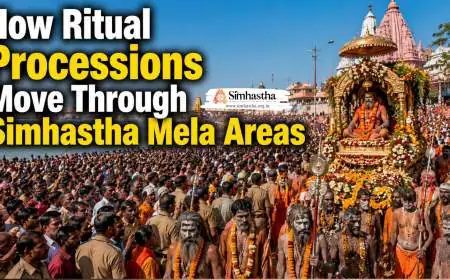
Let me take you back to May 2016. Ujjain was hosting Simhastha – the Kumbh Mela that happens once every 12 years on the banks of the Shipra River. The astrologers had calculated the most auspicious bathing dates. And on those days, something happened that no amount of planning could fully prepare for. Millions of devotees – not thousands, millions – converged on the narrow ghats of Ujjain. What we saw on those peak days was not just a religious gathering. It was a living laboratory of human crowd behaviour under extreme pressure. People pushed, shoved, cried, prayed, and somehow survived. Some did not. There were stampede-like situations, people fainting from heat and exhaustion, children separated from parents, and elderly pilgrims trampled. But here is what Simhastha 2016 truly revealed: crowd behaviour on peak days follows predictable patterns – patterns that the administration partly anticipated and partly failed to handle. In this article, I will share what I witnessed and what data later confirmed. I will talk about the psychology of a pilgrim in a crush, the mistakes the authorities made, the heroic acts of everyday devotees, and most importantly, what Simhastha 2028 must learn from 2016. If you are planning to attend the next Simhastha, you need to understand these lessons. Your safety may depend on it.
The Scale of Simhastha 2016 – Numbers You Cannot Ignore
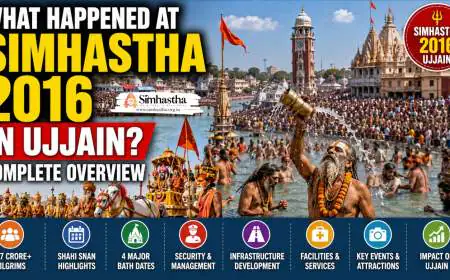
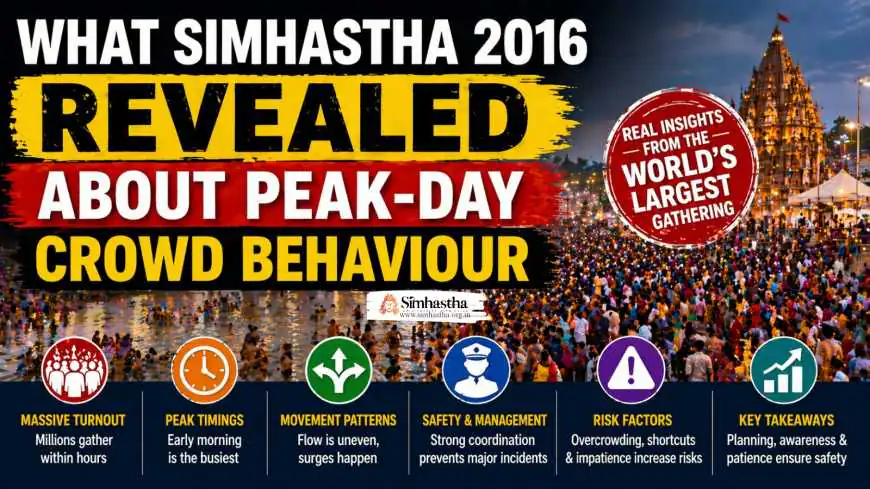
Let me give you some perspective. The 2016 Simhastha ran for about 30 days, with four main Shahi Snan (royal bath) days. On the biggest day – May 9, 2016 – an estimated 2 to 2.5 crore devotees (20 to 25 million people) took a holy dip in the Shipra. That is nearly the population of Australia packed into a few square kilometers around the river. The city of Ujjain normally has about 5 lakh (500,000) residents. Overnight, that number swelled by 40 to 50 times. The ghats – the stepped riverbanks – were designed for a few thousand people at a time. On peak days, they held hundreds of thousands.
What did that look like? Imagine being in a train compartment during rush hour, but the compartment never ends, and you cannot get off. You are pressed from all sides. Your feet barely touch the ground. You move not by walking but by being carried by the wave of bodies. That was Simhastha 2016 on its peak bathing days.
The administration had set up barricades, watchtowers, CCTV cameras, and deployed thousands of police and home guard personnel. But no amount of planning could completely tame a crowd that size, driven by a singular spiritual purpose: to bathe in the Shipra at the exact auspicious moment.
Trending Guides Now
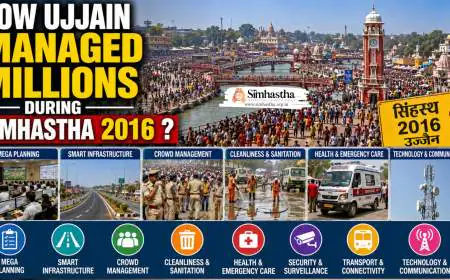
How Ujjain Managed Millions During Simhastha 2016 ?
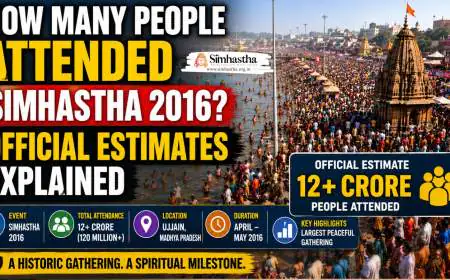
How Many People Attended Simhastha 2016? Official Estimates Explained

How Simhastha 2016 Prevented Stampedes: Crowd Safety Measures Explained
Transport Lessons from 2016 Used in Ujjain Simhastha 2028
Ujjain Railway Station to Mahakaleshwar Temple Distance (2026 Guide)

Ujjain Simhastha 2028 Dates Announced: Full Shahi Snan & Event Timeline
Benefits of Becoming a Simhastha Volunteer
Ujjain Travel During Shravan Month: What Changes for Visitors
The Psychology of a Peak-Day Pilgrim – Why Logic Fails
To understand the crowd behaviour, you have to understand the mind of a pilgrim on a peak bathing day. This is not a tourist at Disneyland. This is a devotee who may have traveled for days on a general class train, spent his last savings on the journey, and believes with every fibre of his being that bathing at that specific time will wash away lifetimes of sin.
Rational thinking shuts down. The fear of missing the auspicious moment overrides the fear of injury. People push forward not out of aggression but out of desperation. I saw elderly women elbowing young men. I saw sadhus using their wooden staffs to clear a path. I saw mothers holding babies above their heads, screaming. When you are in a crowd density of 6 to 8 people per square meter (the threshold for danger), you cannot control your own movement. You become part of a fluid – a human fluid – that flows toward the river and away from it.
One thing Simhastha 2016 revealed is that peak-day pilgrims do not respond to normal crowd control measures. Loudspeaker announcements? Useless – the noise of chanting and crying drowned them out. Police whistles? Unheard. Barricades? People climbed over them. The only thing that worked was physical presence – lines of police locking arms, forming human chains. And even those broke under pressure.
The Ghats – Where Behaviour Turned Dangerous
The ghats of Ujjain are ancient. They are narrow, uneven, and have steep steps leading into the Shipra. On normal days, they are peaceful. On May 9, 2016, they became a death trap.
I was near Ram Ghat around 4 AM. The auspicious bathing window opened at sunrise. In the darkness, with only a few floodlights, the crowd surged forward. People at the back could not see that the front was already packed to the edge. Those in front, already in the water, tried to move back but were blocked by the next wave. For about 20 minutes, there was a deadly compression – people unable to move in or out. I saw a man collapse from heat and suffocation. The crowd literally carried his body sideways until he fell into the water. Volunteers pulled him out. He was alive but unconscious.
What did this reveal? Peak-day crowd behaviour is nonlinear. A small increase in density can cause a catastrophic shift from controlled movement to uncontrolled chaos. The administration had estimated that the ghats could hold 50,000 people at a time. But on the peak day, nearly 2 lakh (200,000) tried to occupy the same space. The behavioural trigger was the announcement over loudspeakers that the auspicious time had begun. Everyone pushed simultaneously.

Another lesson: Elderly pilgrims are the most vulnerable. In the crush, they fall first. And once someone falls in a crowd of that density, they are very unlikely to get up. Simhastha 2016 had multiple reports of elderly people being trampled. Some survived with broken bones. Some did not.
Stampede Scares – When Chaos Became Minutes Away
Thankfully, there was no full-scale stampede (defined as multiple fatalities from crowd crush) at Simhastha 2016. But there were stampede scares – moments when a stampede was seconds away. I witnessed one such scare on the second major bathing day.
A section of barricades near Triveni Ghat collapsed around 6 AM. The crowd, already pressing hard, suddenly surged into the gap. People fell. Screams erupted. For about 90 seconds, there was a wave of panic. Then, miraculously, the crowd behind stopped pushing – not because they heard any announcement, but because the people in front started shouting "Ruko! Ruko!" (Stop! Stop!). The self-organization of the crowd – strangers suddenly cooperating – prevented a disaster. Within minutes, police and volunteers formed a new human chain, and the gap was closed.
What did this reveal? That crowds are not just dangerous – they are also capable of self-rescue. When people realize the danger, they can communicate and stabilize. But that realization takes time. In the first 10 seconds of a barricade collapse, the instinct is to push forward. After 30 seconds, panic sets in. Only after 60-90 seconds does collective reasoning return. The administration learned that they need to prevent the initial surge, not rely on the crowd to self-correct.
The Role of Naga Sadhus – A Behavioural Wildcard
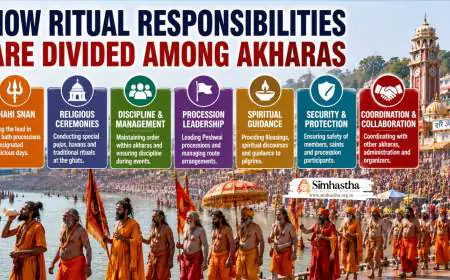
One unique aspect of Simhastha (and all Kumbh Melas) is the presence of Naga Sadhus – naked, ash-smeared ascetics who lead the Shahi Snan processions. Their behaviour is unlike any other pilgrim. They are not afraid of the crowd; they move through it with purpose and sometimes aggression. In 2016, I saw Naga Sadhus using their trishuls (tridents) and swords to clear a path for their akharas (sects). This was not random violence – it was traditional. The administration had agreed to give Naga Sadhus priority access to the ghats. But the crowd did not always part willingly. Several minor scuffles broke out.
What did this reveal? That traditional hierarchies and modern crowd management can clash. The Naga Sadhus expect deference. The common pilgrim, desperate for his own dip, may not give it. The administration had to deploy special police contingents to escort each akhara to the river. Without that, there could have been serious clashes.
What the Administration Got Right – And Wrong
Let me give credit where it is due. The Madhya Pradesh government and the Ujjain district administration learned from the disastrous 2013 Kumbh in Allahabad (where 42 people died in a stampede). For Simhastha 2016, they implemented several measures:
-
CCTV surveillance with control rooms monitoring crowd density in real time.
-
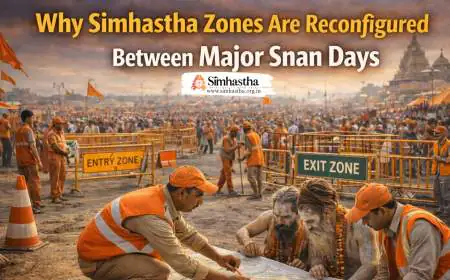
Colour-coded zones (red, yellow, green) to indicate crowd levels.
-
One-way movement systems on major roads.
-
Free shuttle buses to reduce vehicle congestion.
-
Mobile medical units stationed at every major ghat.
-
Public address systems in multiple languages.
What they got right: The one-way system on the main approach roads prevented head-on collisions of crowds. The CCTV monitoring allowed them to close certain ghats when they reached capacity – though enforcement was weak. The medical response was surprisingly effective; they treated thousands of cases of dehydration, exhaustion, and minor injuries.
What they got wrong: The barricades were not strong enough. The crowd density estimation was off by a factor of 4. The loudspeaker announcements were ineffective in the noise. The communication between control rooms and ground staff was slow – by the time an order to close a ghat reached the police on site, the crowd had already surged.
Most critically, the administration underestimated the determination of the pilgrims. They assumed that people would follow signs and announcements. They did not. A devotee who has walked 100 kilometers to reach Ujjain will not turn back because a loudspeaker tells him the ghat is full.
The Human Stories – What Behaviour Looked Like Up Close
Let me share three small moments that captured the essence of peak-day behaviour.
The mother and child. A woman in her 30s, carrying a 2-year-old on her hip, was being pushed from all sides. The child was screaming. The woman was crying. She could not move toward the river or away from it. A group of young men formed a ring around her – not pushing, just shielding. They walked her slowly to the edge of the crowd, then to a medical tent. That child survived because strangers chose cooperation over self-preservation.
The lost elderly man. An 80-year-old man, separated from his family, was sitting on the ground near a barricade, dazed. He had been stepped on. His glasses were broken. A volunteer picked him up, carried him on his back to a help centre, and reunited him with his family 6 hours later. The volunteer missed his own holy dip that day.
The angry sadhu. A Naga Sadhu, furious that the crowd was not making way, swung his trishul in wide arcs. He hit a young man on the shoulder. The man fell. For a moment, everyone froze. Then the sadhu moved on, and the crowd absorbed the fallen man. He got up, bleeding, and continued walking toward the river. He later said, "Mahakal will heal it."
These stories reveal that peak-day crowd behaviour is not monolithic. There is aggression and altruism, panic and patience, cruelty and kindness – all happening simultaneously.
Lessons for Simhastha 2028 – What Must Change
Based on what Simhastha 2016 revealed, here is what must be done for 2028.
First: Realistic capacity planning. Do not assume a ghat can hold 50,000 people. Assume half that, and close access when 60% of that is reached. Build temporary floating pontoon bridges to distribute crowd pressure across multiple entry points.
Second: Staggered bathing windows. Instead of a single "auspicious moment" that everyone rushes for, the astrologers should declare a 4-6 hour window. The administration should then allocate time slots to different akharas and community groups. This is already done in Prayagraj Kumbh with some success.
Third: Better barriers. The barricades in 2016 were standard police barriers – light and easily knocked over. For 2028, use heavy concrete barriers or water-filled barriers that cannot be moved by crowd pressure. Create buffer zones with multiple layers of barriers so that if one breaks, the next contains the surge.
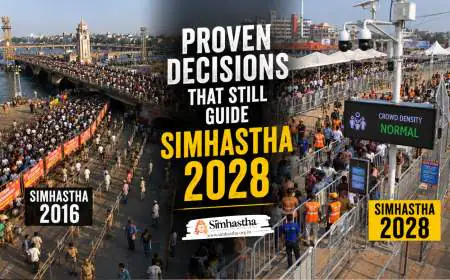
Fourth: Real-time crowd tracking using AI and drones. In 2016, CCTV was monitored by humans who could not process the data fast enough. By 2028, AI-based crowd density analysis can send automatic alerts when a zone becomes dangerous. Drones can provide aerial views that ground cameras miss.
Fifth: Mandatory registration for peak days. This is controversial, but Simhastha 2016 showed that uncontrolled crowds are unsafe. For the main Shahi Snan days, require pilgrims to register online and receive a QR code. Limit the number of registrations to the safe capacity of the ghats. Yes, this goes against the idea of "open to all." But it saves lives.
Sixth: Dedicated lanes for vulnerable pilgrims. Elderly, disabled, and families with young children should have separate, less crowded access points. In 2016, they were mixed into the general crush. That must change.
Seventh: More medical and water points. Dehydration was a major factor in crowd distress. At every 100 meters along the approach roads, set up free drinking water and ORS distribution. In 2016, these were only near the ghats – too late for people already exhausted.
Eighth: Better communication. Loudspeakers are useless in noise. Use mobile phone alerts (cell broadcast) to send text warnings to every phone in a specific zone. Use large digital screens visible from a distance. Use colour-coded flags (green, yellow, red) on tall masts that everyone can see.
Ninth: Train the police in crowd psychology. In 2016, many police officers used aggressive tactics – pushing back, hitting with batons – which escalated panic. For 2028, train them in non-aggressive crowd dispersal techniques: creating space, guiding flow, using verbal commands.
Tenth: Post-event debriefing and transparency. After 2016, there was no detailed public report on crowd incidents. The administration quietly acknowledged problems but did not share data. For 2028, commit to a transparent review so that future Kumbhs can learn.
What You Can Do as a Pilgrim – Behavioural Self-Defense
You cannot control the crowd. But you can control your own behaviour. Here is what Simhastha 2016 taught me.
Do not go to the main ghats on the peak bathing day. Yes, I know that sounds contradictory. But the most auspicious moment is not worth your life. Take your dip the day before or after. The Shipra does not check your calendar.
If you must go on the peak day, go at 2 AM – not at sunrise. The crowd builds from 3 AM to 6 AM. If you reach the ghat at 2 AM, you will have space. Take your dip early, then leave before the surge.
Wear identifiable clothing. In a crowd, families get separated. Dress everyone in the same bright colour (orange, yellow, red). Write your mobile number on a wristband for children.
Do not carry valuables. Leave your jewelry, expensive phone, and large amounts of cash at home or in a hotel locker. Carry only a small pouch with essentials.
Stay on the edges of the crowd. Do not go into the centre. The edges are less dense, and you can escape if needed.
If you feel the crowd pressure becoming unbearable (difficulty breathing, feet leaving the ground), put your hands on your chest to protect your ribs and move diagonally toward the nearest exit – not directly against the flow.
Help others. If you see someone fall, try to form a ring around them. Shout for help. Do not assume someone else will act.
Stay hydrated. Drink water every 30 minutes, even if you are not thirsty. Heat exhaustion makes you weak, and a weak person is more likely to fall.
The Uncomfortable Truth – Simhastha 2016 Was Luck, Not Management
Let me end this analysis with a hard truth. The reason there was no major stampede at Simhastha 2016 was luck – not superior management. The crowd density on May 9, 2016, at several ghats exceeded the threshold at which fatal crushes occur. The fact that only a few dozen people were seriously injured (and, as far as publicly reported, no deaths directly from the crush) is a statistical miracle. The same behaviour on a slightly different layout, with a slightly more panicked crowd, could have killed hundreds.
Simhastha 2028 will be even larger. The population of India has grown. The roads and ghats of Ujjain have not. The lessons of 2016 are clear, but they will only matter if the administration implements them and if pilgrims change their own behaviour. Do not rely on luck. Plan ahead. Stay safe. And remember: Baba Mahakal wants your devotion, not your sacrifice.
Frequently Asked Questions