















Why Ujjain Simhastha Kumbh Mela 2028 Runs 61 Days
Clear explanation of why Ujjain Simhastha Kumbh Mela 2028 lasts 61 days, covering astrology, akhara sequence, ritual layers, and calendar logic.



Why Ujjain Simhastha Kumbh Mela 2028 Continues for 61 Days
The length of Ujjain Simhastha Kumbh Mela 2028 is not an arbitrary administrative choice. It emerges from overlapping systems of Simhastha astrology, monastic protocol, ritual eligibility, and physical capacity at the ghats. When people ask why the festival runs for sixty one days, they are really asking how long the sacred clock remains open.
Inside that clock, bathing is valid. Initiations are valid. Donations are magnified. Meetings between gurus and disciples become cosmically timed. Once the alignments dissolve, the permission dissolves with them.
So the question becomes mathematical rather than emotional: how long do the required combinations survive in the sky?
For Every pilgrims, understanding Simhastha 2028 dates and the official Shahi Snan timeline is essential before booking flights or accommodation, as these sacred dates are completely non-negotiable.
Trending Guides Now
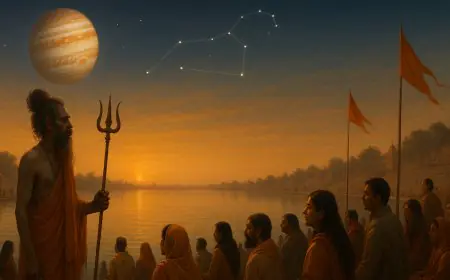
Why Simhastha Happens Only When Jupiter Enters Leo ?

Simhastha Kumbh Mela Explained for First-Time Visitors

How Simhastha 2028 Traffic Control Relies on Ring Roads and Bypass Corridors
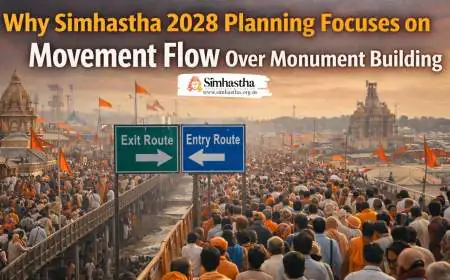
Why Simhastha 2028 Planning Focuses on Movement Flow Over Monument Building

Ujjain Railway Station to Mahakaleshwar Temple Distance (2026 Guide)

Ujjain Simhastha 2028 Dates Announced: Full Shahi Snan & Event Timeline

Ujjain Simhastha Update: CM Mohan Yadav Reviews 2028 Works

Karkateshwar Mahadev: 22/84 Mahadev of Ujjain
The Core Driver: Guru in Singh Rashi
Every cycle of Simhastha is anchored in the transit of Jupiter. When Guru occupies Leo, Ujjain’s ritual geography activates. But activation does not mean a single flash of holiness. Jupiter remains in that sign for a sustained duration, and within that stay, multiple layers of lunar days, solar positions, and nakshatra influences create waves of opportunity.
Some waves are enormous. Others are gentle. Yet all belong to the same sea.
If authorities shut the mela after the biggest wave, they would be ignoring the rest of the tide.
That is why the full Simhastha duration stretches outward.
To deepen your understanding of the spiritual customs and sacred rituals practiced during Ujjain Simhastha, read our complete Simhastha rituals and sacred practices guide that explains their meaning, timing, and significance.
Sacred Time Is a Corridor
Think of the period as a corridor with an entry gate and an exit gate.
Between them lie many rooms.
Each room corresponds to:

-
a different snan tithi
-
a different akhara priority
-
a different ritual purpose
-
a different pilgrim intention
As long as pilgrims can still enter meaningful rooms, the corridor must stay open.
Closing early would spiritually disenfranchise thousands whose vows depend on later dates.
A first time Simhastha guide is essential because without contextual understanding, pilgrims arrive prepared for devotion but unprepared for logistics, stamina, patience, and adaptability.
Why the First Day Cannot Be the Only Day
If the event were compressed to the opening moment of planetary alignment, three breakdowns would occur instantly:
-
Akhara movement conflict
-
Impossible river capacity
-
Cancellation of secondary auspicious yogas
Tradition therefore protects plurality.
Also Read | Zones And Sectors In Ujjain Simhastha Kumbh Mela
Understanding the Spread of Power
Within Ujjain Simhastha 2028, spiritual intensity is graded. Scriptures recognize hierarchy among days, yet they do not deny legitimacy to the others.
Hence we see:
-
extreme rush on royal bath dates
-
moderate gatherings on important lunar days
-
peaceful flows on ordinary yet valid mornings
This gradient is intentional. It distributes humanity across time.
Akharas Operate Like Sovereign Institutions
Each order arrives with its saints, disciples, traditions, symbols, and internal ceremonies. Establishing a camp itself is ritualized. Land is purified. Flags rise. Deities are invoked.
Before any royal bath happens, days of preparation unfold.
Then come:
-
processions
-
returns
-
celebrations
-
internal initiations
Remove duration and you erase legitimacy.
Also Read | Best Time to Visit Ujjain Simhastha 2028
Why 61 Is Close to the Minimum
If planners tried to shorten the calendar, they would face immediate resistance from multiple sides.
Astrologers would argue that several valid yogas are being ignored.
Akhara councils would object to loss of ceremonial time.
Pilgrims would lose access windows.
Thus, the number stabilizes near the smallest workable span that satisfies everyone.
The Panchang Does Not Produce a Weekend
Modern festivals often fit into holidays.
Kumbh calculation does not behave like that.
Planetary mathematics may create auspiciousness on a Tuesday dawn, again ten days later, again on a full moon, and again near a solar configuration.
To honor each of them, continuity is required.
Early Days vs Peak Days vs Closing Days
Search data shows people think mostly about peaks.
Tradition thinks about the entire arc.
Early days prepare.
Middle days erupt.
Later days complete vows and dissolutions.
Completion is as sacred as commencement.
Also Read | Step-by-Step Guide to Shipra Snan at Ujjain Kumbh Mela
Continuous Merit Availability
Another rarely discussed factor: many devotees intentionally avoid crowds. Elderly pilgrims, families with children, and those performing extended rituals prefer quieter mornings.
The 61 day frame guarantees that devotion is not monopolized by spectacle.
Economic and Service Rotation
Food distribution, medical camps, sanitation, transport, volunteer groups, and monastic kitchens all rotate personnel. Sustaining them for a few massive days would exhaust resources.
Spread equals sustainability.
If the Window Is Still Open, the Mela Continues
Religious law follows eligibility.
If astrology still grants bathing merit tomorrow, the fair cannot declare itself finished today.
This principle alone almost dictates the length.
What Most People Miss
The duration is not built by counting backward from a closing ceremony.
It is built by counting forward until the final qualifying yoga disappears.
Only then can closure rituals begin.
How Major Snan Clusters Stretch the Calendar
Inside Ujjain Simhastha Kumbh Mela 2028, bathing importance does not sit evenly across the map of days. Instead, several high-voltage tithis appear at intervals. Each of them independently justifies mass arrival.
If even three or four such dates occur within a planetary window, the mela must remain operational from the first to the last. You cannot open infrastructure only for the middle.
Between these clusters lie buffer days used for preparation, withdrawal, transport reshuffling, camp repairs, and re-sequencing of akhara bathing order.
Without buffers, the next peak would collide with the previous one.
Also Read | Common Simhastha Mistakes Visitors Must Avoid
Why Royal Processions Cannot Run Back to Back
The public mostly sees spectacle, but behind the curtain stands choreography measured in hours.
For a Shahi Snan in Ujjain, authorities must secure:
-
route clearance
-
timing slots
-
inter-akhara priority
-
animal movement
-
crowd separation corridors
After one royal day, reset time becomes essential. Camps need rest, saints require internal ceremonies, and volunteers reorganize.
If another royal day followed immediately, friction would become inevitable.
Hence the days spread outward, like rings around a bell.
The Waiting Period for Initiations
During Simhastha 2028, many aspirants request entry into monastic life. Akharas rarely grant instant approval.
Typical flow:
-
registration of intent
-
observation period
-
mentor evaluation
-
ritual purification
-
formal acceptance
-
sometimes participation in a later bath
This pipeline alone can stretch across weeks. Remove the weeks, remove the transformation.
Also Read | Ritual Purity at Ujjain Simhastha
Arrival Waves Are Not Uniform
Pilgrim behavior is patterned.
Some groups come for opening merit.
Others wait only for specific snan dates in Ujjain.
Foreign visitors may arrive mid-cycle.
Rural yatras often synchronize with agricultural calendars.
To absorb these varied waves, continuity becomes mandatory.
How River Capacity Forces Time Expansion
Let us talk plain arithmetic.
Even if a ghat can process enormous numbers per hour, crores across a single sunrise would still be impossible. Extending across 61 days converts a crushing surge into manageable currents.
Time becomes infrastructure.
Camps Are Temporary Cities
Within Ujjain Kumbh Mela 2028, each akhara operates kitchens, worship spaces, sleeping areas, and meeting halls. Setting up and dismantling them requires ritual and logistics.
Saints do not appear and vanish like tourists. They inhabit the mela.
That habitation needs duration.
Why Secondary Auspicious Days Matter
Search engines tend to highlight the biggest dates. Yet for many traditions, smaller yogas carry lineage specific significance.
If those days fall near the end of the planetary window, the mela must survive until they pass.
Otherwise entire communities lose their ordained moment.
The Domino Principle
Shorten the calendar by ten days and the consequences cascade:
-
last yogas vanish
-
initiation schedules collapse
-
transport bookings misalign
-
akhara prestige conflicts rise
Stability is preserved by respecting the full arc.
Spiritual Energy Is Considered Cumulative
Some teachers advise disciples to stay for extended periods, bathing repeatedly as planetary combinations mature. Merit is thought to build through repetition.
That philosophy naturally prefers long melas.
Governance Works Around Religion
It is tempting to assume administration decides duration. Historically, the direction is reversed.
Once scholars mark the valid span, civic systems expand to support it. Roads, security, water supply, and health services mirror sacred time.
Why the Closing Cannot Be Immediate
After the final major yoga, withdrawal rituals still remain. Flags are lowered, temporary shrines respectfully dissolved, farewells conducted.
Sacred spaces require gentle endings.
What Creates the Specific Figure of 61
When astrologers map the beginning eligibility and the last acceptable configuration for bathing in Simhastha, the count between them in this cycle becomes sixty one days.
Not round. Not symbolic. Calculated.
Bathing Hierarchy Forces Timeline Expansion
Inside Ujjain Simhastha Kumbh Mela 2028, not all water moments carry identical authority. Tradition classifies them in layers. When a higher layer appears later in the planetary window, everything before it must remain open so pilgrims can reach that summit.
Imagine announcing closure while a superior tithi is still approaching. Impossible.
Hence hierarchy automatically stretches the mela until the last major entitlement expires.
Royal Prestige and Sequential Rights
Within the world of akhara protocol, entry into the river is intertwined with honor. Some orders move first, others follow in recognized precedence. This is not a casual arrangement. It is inherited memory backed by councils and documentation.
Because of this:
-
processions cannot overlap
-
timings cannot be arbitrarily reassigned
-
preparation intervals must be respected
When several important baths appear in the calendar, sequence plus recovery days naturally multiplies the total length.
Why Seniority Prevents Compression
If organizers tried to pack events tightly, they would effectively force akharas to surrender ritual space. Senior groups would resist, junior groups would fear loss of visibility, and harmony would fracture.
Duration becomes diplomacy.
The Historical Lesson
Earlier centuries saw disagreements about access and timing. Over time, extended calendars proved to be the most reliable peace formula.
Longer windows reduced rivalry because everyone eventually received their moment under the sun.
Tradition remembers what works.
Scriptural Observances Between Major Baths
Between headline dates, saints conduct:
-
vow renewals
-
teaching sessions
-
lineage affirmations
-
deity installations
-
memorial rites
These observances cannot be teleported elsewhere. They are attached to the geography of the mela.
Therefore the event must persist.
Pilgrim Strategy Also Extends the Season
Many yatras plan arrival just after a massive rush, hoping for safer movement while still remaining inside the sacred window. Authorities know this behavior. If they ended early, trust would collapse.
Predictability maintains faith.
Astrological Decline Is Gradual
The planetary matrix does not switch off like a bulb. Its strength tapers. During tapering, several communities still consider bathing beneficial.
Hence closure waits for unmistakable completion.
Why the Last Days Are Spiritually Heavy
Late arrivals are not inferior pilgrims. In some traditions, bathing toward the end symbolizes finishing cycles of karma. Gurus intentionally schedule discourses in quieter phases.
So the tail of the mela has theological value.
Infrastructure Needs Exit Time
Millions must depart. Camps dismantle. Materials move. Animals return. If this coincided with ongoing peak bathing, chaos would bloom.
A defined but extended finish solves the puzzle.
Reputation of the Host City
Ujjain carries centuries of spiritual credibility. Preserving order among ascetic institutions protects that reputation. Decision makers therefore prefer generous calendars over risky compression.
Counting from Eligibility, Not Emotion
When scholars evaluate duration, they do not ask how long visitors might prefer. They ask: on which final date does scripture still authorize the act?
That answer defines the boundary.
Why the Number Will Rarely Be Very Small
Given the complexity of:
-
planetary overlap
-
akhara precedence
-
initiation pipelines
-
pilgrim waves
any realistic Simhastha will span many weeks. Short festivals contradict the system’s architecture.
The pilgrimage clock keeps unfolding, gear after sacred gear ⚙️????
Here comes PART 4, straight into the mechanics that silently manufacture those sixty one days.
How Lunar Cycles Multiply Opportunities
While Guru in Singh Rashi forms the backbone of Ujjain Simhastha Kumbh Mela 2028, the Moon behaves like a roaming amplifier. Every fortnight it creates fresh alignments: full moon, new moon, ekadashi clusters, special nakshatra crossings.
If Jupiter’s stay covers multiple lunar phases, then multiple legitimate bathing triggers automatically arise.
Each trigger pulls pilgrims.
Each pull requires the mela to remain alive.
Astronomy itself refuses brevity.
One Planet, Many Intersections
Imagine Jupiter sitting in Leo as a king on a throne. Now imagine the Sun, Moon, and constellations walking past that throne at different times.
Every time a significant visitor arrives, a new ceremonial moment is born.
Thus, instead of one holy date, we receive a series.
The festival stretches to host them all.
Why Full Moon and New Moon Matter So Much
Across Hindu practice, these two anchors govern vows, donations, ancestral rites, and purification. When they fall inside the Simhastha window, ignoring them would be religious negligence.
Therefore if two full moons and two new moons appear within Jupiter’s residence, the calendar expands to accommodate four mass pilgrimages automatically.
No committee vote required.
The Elastic Effect of Nakshatras
Certain star combinations are favored by particular lineages. An akhara might wait specifically for its traditional marker. If that arrives late in the cycle, the mela must still be functioning.
Hence micro astronomy lengthens macro planning.
Solar Motion Adds Another Layer
The Sun’s transit between zodiac positions modifies ritual emphasis. Even small shifts can transform an ordinary day into a powerful bath candidate.
When such a change occurs near the end of the broader window, closure becomes impossible until it passes.
Why the Calendar Looks Dense
From the outside, observers see many important days printed close together. They ask, why not combine them?
Because each one serves different vows, communities, and scriptural instructions. Merging would erase nuance.
Accumulation Rather Than Replacement
Here is the crucial principle:
new auspiciousness adds to previous legitimacy. It does not cancel it.
So as weeks pass, instead of shrinking, the list of justified days grows.
Duration follows growth.
The Mathematical Push Toward Sixty One
When scholars calculate from:
-
the first eligible alignment
-
through successive lunar and solar events
-
until the last defensible moment
the count in this cycle arrives near sixty one.
It is not poetic. It is arithmetic.
Even Weak Yogas Still Count
Some combinations are modest yet valid. Communities who value them would object if the mela vanished before their arrival. Respecting diversity means maintaining the platform.
Why the Start Cannot Be Delayed
Suppose authorities waited for the biggest date before opening. Then earlier legitimate yogas would be lost, and pilgrims who traveled based on them would be betrayed.
Opening must match the first eligibility.
The Compounding Calendar
Picture stones thrown into water at different times. Ripples overlap, creating complex patterns. The Simhastha schedule behaves similarly. By the time the final stone falls, weeks have accumulated.
When Does It Finally End
Only when:
-
Jupiter’s supportive condition weakens
-
no major lunar event remains
-
no lineage dependent nakshatra waits ahead
can scholars confidently permit closure.
Until then, the gates remain open.
Pilgrim Decision Patterns Create Duration
For Ujjain Simhastha Kumbh Mela 2028, not every devotee behaves the same way. Families from distant states calculate travel budgets, train availability, climate comfort, and advice from priests. Some rush toward headline days. Others deliberately aim for quieter yet still powerful moments.
Because intention differs, arrival spreads across weeks.
If the mela narrowed its operating window, entire categories of pilgrims would be pushed out. Continuity protects inclusiveness.
Word of Mouth Extends the Curve
Information travels through temples, village networks, and community leaders. Often groups mobilize only after hearing reports from earlier visitors.
By the time those yatras depart, several weeks may have passed. Without a long festival, their faith driven response would meet a closed gate.
Transport Systems Need Breathing Space
Railways, buses, and road corridors function in waves. Peak days overload them. Authorities therefore encourage staggered participation across the full Simhastha duration.
Time becomes the most humane traffic manager.
Why Late Participation Is Normal
A common misconception is that late arrival equals missed opportunity. In reality, many pilgrims prefer the latter half when camps stabilize, routes become familiar, and daily worship rhythms mature.
Tradition acknowledges this preference.
The Hospitality Chain Relies on Rotation
Cooking for thousands, managing water, maintaining sanitation, providing medical care, and guiding lost pilgrims require volunteers who work in shifts. Some serve early, others mid-cycle, others near closure.
A short mela would collapse this ecosystem.
Spiritual Teachers Schedule in Phases
Major gurus often announce discourses on different weeks so disciples can attend according to availability. The long span ensures maximum reach.
Without duration, access would become exclusive.
The Geography of Stay
Pilgrims rarely come only for a dip. They visit temples, attend satsangs, meet ascetics, perform donations, seek blessings. These activities spread naturally across days.
Therefore the mela must offer time generous enough to host life, not merely a moment.
Why Crowd Science Favors Length
Modern safety experts agree with ancient wisdom. When gatherings distribute across longer intervals, density reduces and emergency response improves.
Thus practical management reinforces religious logic.
Reputation Depends on Smooth Experience
A well conducted Ujjain Kumbh Mela strengthens trust for generations. Overcrowded disaster would stain memory. Extended duration is insurance for dignity.
Pilgrims Expect Availability
If scripture says the planetary window remains active tomorrow, devotees assume facilities will also exist tomorrow. Breaking that expectation would undermine confidence in future cycles.
Economic Rhythm Across Weeks
Local livelihoods, transport operators, suppliers, and artisans plan income based on multi week presence. Shortening would disrupt agreements already in motion.
Why Sixty One Days Feels Natural to Veterans
Ask returning pilgrims and many will say the mela seems to have its own tempo. Camps grow, stabilize, intensify, and finally soften. That emotional rhythm requires time.
Closure Begins Only When Eligibility Ends
In Ujjain Simhastha Kumbh Mela 2028, administrators do not wake up and decide, today we close. The decision waits for astrologers and religious authorities to confirm that no further legitimate bathing combinations remain.
As long as even a modest snan tithi survives, the framework must support it.
The end is therefore discovered, not declared.
The Tapering Phase Is Active, Not Empty
When major peaks pass, outsiders may assume the mela is over. Yet inside camps, important activities continue.
Saints conduct:
-
farewell blessings
-
completion of vows
-
distribution of charity
-
winding down of initiations
-
gratitude ceremonies for volunteers
These are spiritually dense moments. They require time.
Dismantling Is Ritual Work
Temporary temples, flags, sacred fires, and consecrated spaces cannot simply be packed like luggage. Specific rites release them respectfully.
The withdrawal period may last days, sometimes longer, depending on lineage practice.
So the mela extends to allow sacred departure.
Managing the Human Exit
Millions must leave safely. Traffic reverses direction. Supplies are returned. Lost and found centers process final claims.
If spiritual closure and physical evacuation overlapped too tightly, stress would multiply.
Hence a cushion exists at the tail.
Why Saints Rarely Leave Immediately
Many ascetics remain after their principal bath. They meet disciples who arrive late, settle community matters, or travel to nearby pilgrimage points.
The city continues hosting them until the religious clock truly stops.
Confirmation from the Panchang
Scholars recheck calculations to ensure no overlooked alignment lingers. Only when certainty emerges that the cosmic permission has faded can final closure rituals proceed.
Accuracy protects legitimacy.
Emotional Completion for Pilgrims
Devotees who stay until the end often describe a powerful quietness. Crowds thin, conversations deepen, and farewells carry weight. This atmosphere is part of the pilgrimage reward.
Ending too soon would steal it.
Transition Back to Ordinary Time
A mega festival cannot vanish overnight. Workers restore roads, remove utilities, and help neighborhoods breathe again. Gradual retreat maintains balance between sacred and civic life.
Memory Formation Happens at the End
Stories of kindness, miracles, meetings, and teachings are exchanged during the last days. They travel home and shape how future generations imagine the mela.
The ending writes the legend.
Why Sixty One Feels Complete
By the time the final eligible configuration disappears, peaks have occurred, vows fulfilled, initiations granted, knowledge transmitted, and departures arranged.
Nothing essential remains pending.
The Hidden Symmetry
Opening honored the first arrival of possibility. Closing honors its final disappearance. The span between them in this cycle happens to measure sixty one days.
A number born from alignment.
Related Simhastha 2028 Guides:
- What Are the Official Dates and Major Events of Simhastha 2028?
- Why Simhastha Happens Only When Jupiter Enters Leo ?
- Why Ujjain Was Chosen for Simhastha: Ancient Scriptures & Astral Logic
- Does Taking a Holy Bath in the Shipra River During Simhastha Remove Karmic Sins?
- Why is Ujjain Kumbh Called Simhastha?
- Simhastha 2028 Ujjain: Next Dates, Shahi Snan Schedule & Complete Spiritual Guide
- Was Ujjain the First Scindia Headquarters? Did Ranoji Start Simhastha? Full Spiritual Truth Revealed
- Top 10 Routes to Enter Ujjain During Simhastha 2028 Without Traffic Hassles
- The Cosmic Importance of Jupiter in Leo: Why It Creates Simhastha in Ujjain
- How Akhara Sector Allocation Works in Simhastha 2028: Complete Breakdown for Pilgrims
Frequently Asked Questions