

































Why Ujjain Is Called the Axis of Sacred Geography in India
Discover why Ujjain is known as the axis of sacred geography in India, blending astronomy, spirituality, and ancient cosmic alignment.



Why Ujjain Is Called the Axis of Sacred Geography in India
Ujjain occupies a rare position where geography transforms into meaning, and space becomes a living expression of cosmic order. It is called the axis of sacred geography because it integrates astronomy, spirituality, timekeeping, and ritual cycles into one unified system. Unlike ordinary cities defined by political or economic relevance, Ujjain is defined by alignment, alignment with celestial movements, alignment with sacred time, and alignment with spiritual consciousness. From ancient astronomers who used it as a reference point for measuring time to devotees who consider it the seat of Mahakal, Ujjain stands as a central axis where the physical world and cosmic rhythms intersect seamlessly.
For Every pilgrims, understanding Simhastha 2028 dates and the official Shahi Snan timeline is essential before booking flights or accommodation, as these sacred dates are completely non-negotiable
The Meaning of Sacred Geography in the Indian Tradition
The concept of sacred geography India concepts is deeply rooted in Sanatan philosophy.
In this tradition, geography is not neutral land. It is spiritually charged space where certain locations are believed to hold higher energetic significance.
Trending Guides Now
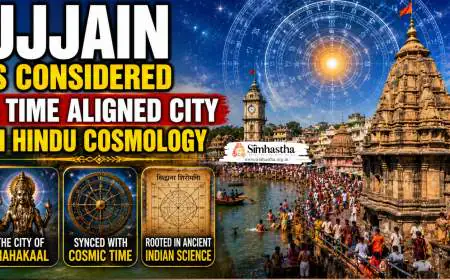
Ujjain Is Considered a Time Aligned City in Hindu Cosmology

Why is Kumbh Mela Celebrated? Origin Story, History & Spiritual Significance
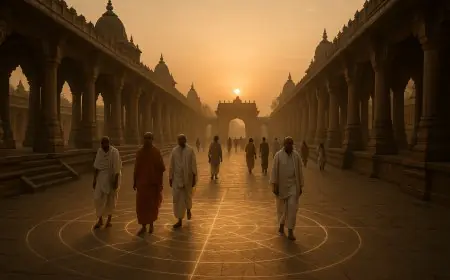
Why Ujjain Is Called the Navels of the Earth: Ancient Secrets Behind Simhastha

How Astrology Determines Simhastha’s Location: Why Ujjain Becomes the Anchor

Ujjain Railway Station to Mahakaleshwar Temple Distance (2026 Guide)

Ujjain Simhastha 2028 Dates Announced: Full Shahi Snan & Event Timeline

Benefits of Becoming a Simhastha Volunteer

Ujjain Travel During Shravan Month: What Changes for Visitors
Sacred geography connects:
- Rivers with rituals
- Mountains with meditation
- Cities with cosmic alignment
Ujjain emerges as a central node in this network because it combines multiple layers of significance within a single location.
A first time Simhastha guide is essential because without contextual understanding, pilgrims arrive prepared for devotion but unprepared for logistics, stamina, patience, and adaptability.
Ujjain as the Prime Meridian of Ancient India
One of the strongest reasons behind Ujjain’s centrality is its role in timekeeping.
The zero meridian India Ujjain concept positioned the city as the reference point for calculating time across the Indian subcontinent.
Ancient scholars and astronomers used Ujjain to:

- Determine planetary positions
- Calculate sunrise and sunset timings
- Align calendars with celestial cycles
This made Ujjain not just geographically central but temporally central.
The Role of Ancient Astronomy in Ujjain’s Identity
Ujjain’s connection with science is profound.
The ancient Indian astronomy Ujjain tradition developed highly accurate systems for observing the sky.
Astronomers in Ujjain studied:
- Planetary motion
- Lunar cycles
- Solar transitions
These observations were not isolated scientific efforts. They directly influenced rituals, festivals, and spiritual practices.
This integration of science and spirituality is what elevates Ujjain’s importance.
Couples arriving during Ujjain Simhastha should spend their first few hours adjusting to the rhythm of the pilgrimage. Walking slowly through the city allows visitors to absorb the powerful spiritual atmosphere created by the gathering of saints and devotees attending the Ujjain Kumbh Mela.To deepen your understanding of the spiritual customs and sacred rituals practiced during Ujjain Simhastha, read our complete Simhastha rituals and sacred practices guide that explains their meaning, timing, and significance.
The Significance of the Tropic of Cancer Alignment
Geographically, Ujjain lies near the Tropic of Cancer.
The Tropic of Cancer Ujjain significance adds a powerful dimension to its sacred status.
This alignment affects:
- Solar positioning during the year
- Seasonal cycles
- Agricultural and ritual timings
Such precise alignment strengthens the idea that Ujjain is not randomly significant but cosmically positioned.
Mahakaleshwar Jyotirlinga as the Spiritual Center
At the heart of Ujjain stands the Mahakaleshwar Jyotirlinga.
The Mahakaleshwar Jyotirlinga significance is central to understanding why Ujjain is considered an axis.
Mahakal represents:
- Time beyond human control
- The cycle of creation and destruction
- The eternal presence of Shiva
Unlike other Jyotirlingas, Mahakaleshwar is associated directly with time itself, making Ujjain a center of temporal and spiritual power.
Also Read | Best Time to Visit Ujjain Simhastha 2028
Ujjain in the Framework of Hindu Cosmology
In Hindu cosmology Ujjain, the city is not just a location but a point of connection between different realms.
It is believed to align:
- The earthly plane
- The celestial sphere
- The spiritual dimension
This alignment positions Ujjain as a bridge between the visible and the invisible.
Simhastha and the Cosmic Cycle of Time
Simhastha further strengthens Ujjain’s identity as a sacred axis.
The Simhastha spiritual importance is rooted in planetary alignment, particularly the movement of Jupiter.
The event is timed based on:
- Zodiac transitions
- Planetary positions
- Solar cycles
This ensures that human gatherings align with cosmic rhythms.
Also Read | Step-by-Step Guide to Shipra Snan at Ujjain Kumbh Mela
Ujjain as the Center of Time Calculation Systems
Time calculation in ancient India was deeply connected to Ujjain.
The Ujjain time calculation history reveals how the city served as a base for creating calendars and determining auspicious timings.
This central role in timekeeping reinforces its identity as an axis around which rituals and life cycles revolve.
Integration of Science and Spirituality
Ujjain represents a rare integration.
The Ujjain sacred geography system blends:
- Astronomical precision
- Spiritual philosophy
- Cultural continuity
This integration ensures that Ujjain remains relevant across different domains.
Network of Sacred Locations Connected to Ujjain
Ujjain is part of a broader spiritual network.
The axis of India spirituality connects it with:
- Other Jyotirlingas
- Sacred rivers like Shipra
- Pilgrimage routes
This network positions Ujjain as a central hub within a larger sacred system.
Cultural Continuity and Living Traditions
Ujjain’s importance has been preserved through continuous practice.
Rituals, festivals, and traditions have been maintained for centuries, ensuring that its sacred identity remains alive.
This continuity strengthens its position as a living axis.
Symbolism of Ujjain as a Cosmic Center
Symbolically, Ujjain represents balance.
It is seen as:
- The center of spiritual energy
- The meeting point of time and space
- A focal point of cosmic alignment
This symbolism is deeply embedded in cultural consciousness.
Influence on Pilgrimage and Spiritual Movement
Millions visit Ujjain seeking alignment with its energy.
The Kumbh Ujjain significance draws pilgrims during Simhastha, reinforcing its central role in spiritual movement.
This constant flow of pilgrims keeps its identity active and relevant.
Architectural Alignment and Sacred Design
Temples in Ujjain are designed with precision.
Their alignment reflects:
- Cardinal directions
- Solar paths
- Ritual requirements
This architectural planning supports the concept of sacred geography.
Ujjain as a Living Cosmic System
Ujjain functions as more than a city.
The cosmic alignment Ujjain concept shows how every element, from rituals to timekeeping, aligns with universal rhythms.
This makes it a living representation of cosmic order.
Where Geography Becomes Consciousness
Ujjain transforms geography into experience.
It is not just a place on a map but a point where time, space, and spirituality converge into a unified reality.
Its identity as the axis of sacred geography is not based on a single factor but on a complex system of alignments that connect human life with cosmic principles.
In this convergence, Ujjain stands as a timeless center where every direction leads inward, toward a deeper understanding of existence and the universe itself.
Frequently Asked Questions